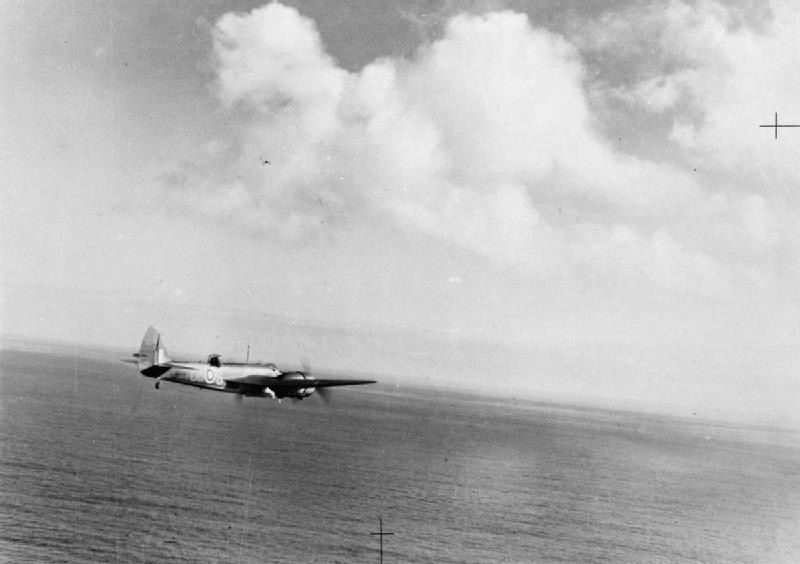
Bristol Blenheim Bomber
Die Tiefe gibt den Bereich von der Oberkante des Tauchplatzes bis zur üblichen Maximaltiefe an; „empfohlene Zertifizierung" ist das von Anbietern üblicherweise geforderte Mainstream-Agenturniveau – keine gesetzliche Vorschrift. Strömungen und Sichtweite ändern sich täglich – behandle alle Angaben hier als Planungsbereiche.
In December 1941 a Bristol Blenheim of the RAF's Malta-based strike force, damaged during an attack on Axis shipping, was ditched into the sea off Malta's southeast corner; accounts record the crew getting out before she went down. Eighty years later the aircraft rests level on pale sand at 42 m, engines and wing structure remarkably coherent, propeller hubs and cockpit frame recognizable, the rear fuselage folded where the sea took it. Aircraft wrecks are rare, intact ones rarer, and the short no-stop window at this depth gives the dive the concentrated quality of a museum visit timed by a stopwatch.
Der Moment, für den du kommst: An identifiable WWII bomber, engines and wings in place, a focused deep dive
Topografie: A WWII twin-engine bomber on flat sand at about 42 m
Einstieg: Boat dive off Malta's southeast coast near Xrobb l-Ghagin; a fixed line descent onto the aircraft, with limited bottom time at 42 m.
Was du wissen solltest, bevor du ins Wasser gehst
Gefahren: Depth is the dive: short bottom times, mandatory discipline on gas and ascent, and no shelter from current if it runs.
Naturschutz: Wartime aircraft are historic remains protected under Maltese heritage rules; nothing is touched or lifted.
Nitrox: Hier lohnt es sich – die Profile liegen in einem Bereich, in dem Nitrox die Nullzeiten spürbar verlängert (mit der entsprechenden Ausbildung).
Wen du triffst

„Hier kartiert" – Arten wurden von unseren Redakteuren anhand der Quellen auf dieser Seite erfasst. Die Zahlen sind GBIF-Vorkommensdatensätze: Beobachtungen, die seit 1990 im Umkreis von etwa 5 km um die kartierte Position protokolliert wurden, ausschließlich abgeglichen mit den Arten in unserem Katalog. Sie zeigen, was dort gesichtet wurde – keine Garantie, was du sehen wirst.
Für Fotografen
Weitwinkel: ★★★★☆ · Makro: ★☆☆☆☆ (Redaktionelle 1–5-Bewertung, was dieser Platz für jeden Fotografie-Stil bietet)