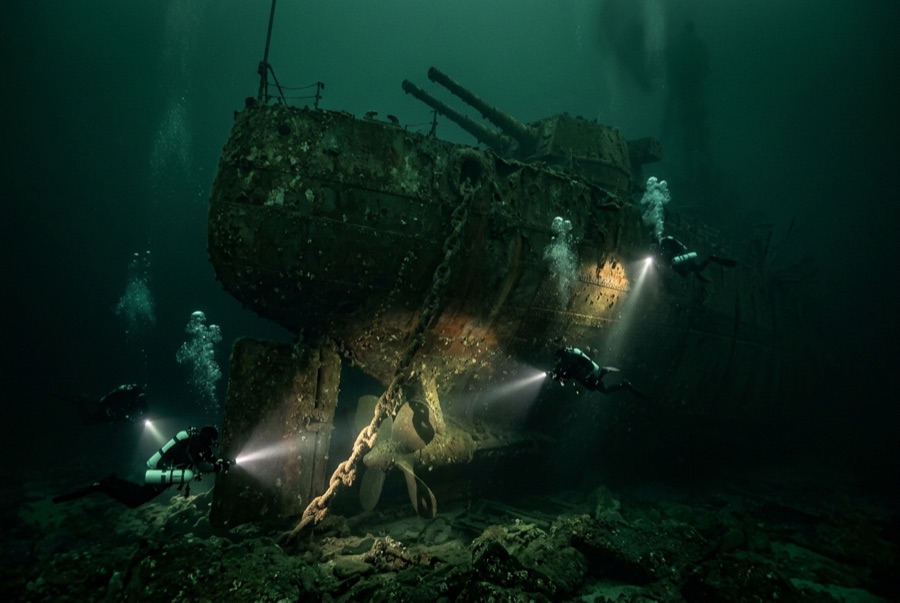
SMS Markgraf
Depth is the range from the top of the site to its usual maximum; "recommended cert" is the mainstream-agency level operators usually ask for, not a legal rule. Currents and visibility change daily, so treat everything here as planning ranges.
Markgraf fought at Jutland and now lies almost fully inverted in the deepest water of the German fleet, her upturned hull rising from around 45 m to the mid-twenties. The scale registers slowly: a wall of riveted plate longer than a football pitch, rudders raised toward the light, and along the port side the crushed gallery where casemate guns and portholes emerge from the shadows. This is a dive of atmosphere rather than easy sightseeing (dark, deep and unforgiving of poor planning), and for many wreck divers it is the single best thing in British waters.
The moment you come for: Dreadnought scale in the gloom, casemate guns along the hull side, the fleet's most prestigious tick
Topography: A Konig-class battleship lying nearly upside down on a silt-and-shell seabed at about 45 m
Entry: Shotline descent from Stromness charter boats; the deepest and most demanding of the German fleet.
Know before you splash
Hazards: Depth, darkness, silt and inverted orientation that disorients; penetration is a technical-team undertaking only.
Conservation: A scheduled monument: nothing is removed, nothing disturbed. A century of salvage history already scars the fleet; divers should not add to it.
Nitrox: Worth it here: profiles sit in the range where enriched air meaningfully extends no-stop time (with the training to use it).
Who you'll meet
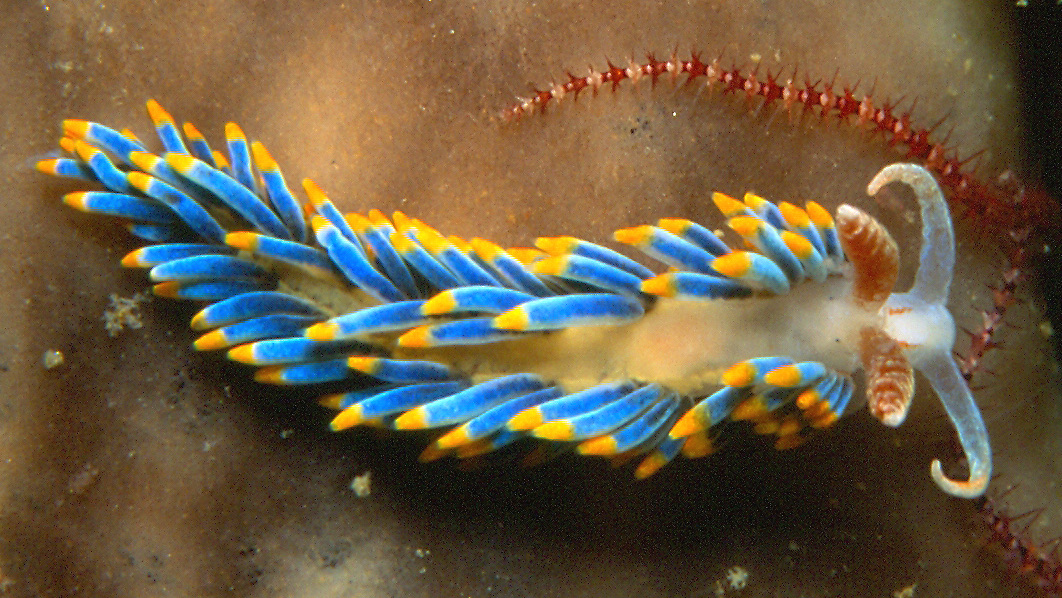
"Charted here" species were listed by our editors from the sources on this page. Counts are GBIF occurrence records: observations logged within about 5 km of the charted position since 1990, matched only against the species in our catalogue. They show what has been seen there, not a promise of what you will see.
For photographers
Wide angle: ★★★★☆ · Macro: ★★☆☆☆ (editors' 1–5 rating of what this site gives each style of shooting)