Siti di immersione, stagioni e fauna marina — ricercati, mappati, pianificati.
Menu
Destinazioni Siti di immersione Vita marina Relitti Notizie
Pianifica un viaggio Pianificatore di viaggi Quando immergersi Calcolatore dei costi Confronti Calendario della fauna marina Temperatura dell'acqua Liveaboard Operatori & resort Parchi marini Camere iperbariche Mappa del mondo
Regioni Australia, Nuova Zelanda e Asia OrientaleCaraibi e Atlantico occidentaleEuropa, Atlantico e MediterraneoOceano Indiano e Africa OrientaleIsole del Pacifico & MicronesiaMar Rosso & Medio OrienteAsia meridionale e Triangolo dei CoralliLe Americhe e il Pacifico orientale Paesi
Impara e strumenti Tutte le guide Brevetti Guide all'attrezzatura Video Interroga i dati AI Agent API
Informazioni Chi siamo Metodologia Disclaimer Contatti
La tua vista
★ Salvato

Le tue destinazioni, siti e specie preferiti — salvati in questo browser.

API GATEWAY

Accesso JSON gratuito in sola lettura ai dati in cache dell'atlante.

Modalità scura

🧭 Visualizzazione Guidata
Sei nuovo alle immersioni — profondità, correnti, livelli di brevetto? Spieghiamo ogni termine mentre navighi, in modo semplice e chiaro. Gli stessi dati, con il supporto integrato.

⚡ Visualizzazione Esperta
Conosci già la differenza tra una parete e una drift dive. Solo i dati — chiari, rapidi e compatti. Questa è la visualizzazione predefinita.

Lingua dell'interfaccia
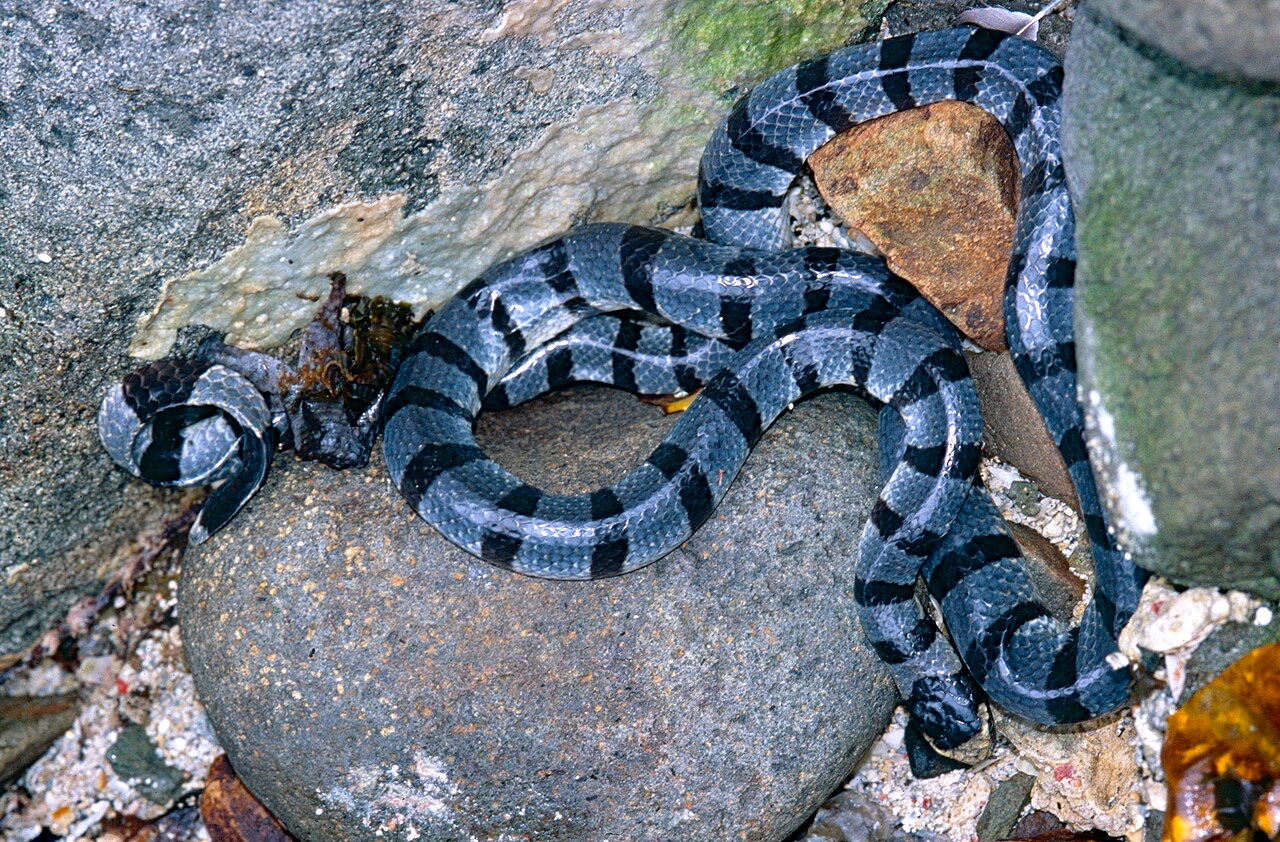
Banded Sea Krait — illustration
Illustrazione generata dall'AI per The Scuba Atlas — a scopo illustrativo, non fotografia documentaria.

Reptiles

Banded Sea Krait

Laticauda colubrina · Reptile — family Elapidae, subfamily Laticaudinae; an amphibious sea snake, also called the yellow-lipped sea krait

IUCN: LC ~0.9 m total length; females run far larger than males 0–30 m fascia di profondità Ben documentato

The banded sea krait commutes between worlds. It hunts eels in reef crevices on breath-holds that can pass half an hour, then hauls out on rocks and islets to digest, shed, drink fresh water, and lay eggs — a genuinely amphibious snake, paddle-tailed at one end and land-capable at the other. The venom is potently neurotoxic, and that fact sits beside another: unprovoked bites on divers are essentially unheard of. Kraits treat people as scenery, threading between fins and poking into holes mid-dive with total focus. The etiquette is correspondingly simple — never handle, never corner, and give a rising snake a clear lane to the surface, because it is on a breath just as you are. Females run far larger than males, and several look-alike kraits and true sea snakes share the range.

Fattore di rispetto: Medically SignificantThe venom is potently neurotoxic, yet the species is placid and unprovoked bites on divers are all but unknown; recorded bites overwhelmingly involve fishers clearing nets. Never touch, corner, or block one.

Dove e quando avvistarne uno

"Residente" significa che la maggior parte delle immersioni in quella destinazione li incontra; "stagionale" significa che sono presenti in modo affidabile nei mesi indicati; qualsiasi altra cosa è un bonus, non un piano.

DestinazioneAffidabilitàMesiNote
Sipadan & MabulMalaysia Resident — seen on most dives Tutto l'anno
Dumaguete, Dauin & Apo IslandPhilippines Resident — seen on most dives Tutto l'anno
Banda Sea & AmbonIndonesia Resident — seen on most dives Tutto l'anno
Bunaken & ManadoIndonesia Resident — seen on most dives Tutto l'anno
Beqa Lagoon & Pacific HarbourFiji Resident — seen on most dives Tutto l'anno

Il mese migliore, a colpo d'occhio

MeseDestinazioni affidabili
January Sipadan & Mabul · Dumaguete, Dauin & Apo Island · Banda Sea & Ambon · Bunaken & Manado · Beqa Lagoon & Pacific Harbour
February Sipadan & Mabul · Dumaguete, Dauin & Apo Island · Banda Sea & Ambon · Bunaken & Manado · Beqa Lagoon & Pacific Harbour
March Sipadan & Mabul · Dumaguete, Dauin & Apo Island · Banda Sea & Ambon · Bunaken & Manado · Beqa Lagoon & Pacific Harbour
April Sipadan & Mabul · Dumaguete, Dauin & Apo Island · Banda Sea & Ambon · Bunaken & Manado · Beqa Lagoon & Pacific Harbour
May Sipadan & Mabul · Dumaguete, Dauin & Apo Island · Banda Sea & Ambon · Bunaken & Manado · Beqa Lagoon & Pacific Harbour
June Sipadan & Mabul · Dumaguete, Dauin & Apo Island · Banda Sea & Ambon · Bunaken & Manado · Beqa Lagoon & Pacific Harbour
July Sipadan & Mabul · Dumaguete, Dauin & Apo Island · Banda Sea & Ambon · Bunaken & Manado · Beqa Lagoon & Pacific Harbour
August Sipadan & Mabul · Dumaguete, Dauin & Apo Island · Banda Sea & Ambon · Bunaken & Manado · Beqa Lagoon & Pacific Harbour
September Sipadan & Mabul · Dumaguete, Dauin & Apo Island · Banda Sea & Ambon · Bunaken & Manado · Beqa Lagoon & Pacific Harbour
October Sipadan & Mabul · Dumaguete, Dauin & Apo Island · Banda Sea & Ambon · Bunaken & Manado · Beqa Lagoon & Pacific Harbour
November Sipadan & Mabul · Dumaguete, Dauin & Apo Island · Banda Sea & Ambon · Bunaken & Manado · Beqa Lagoon & Pacific Harbour
December Sipadan & Mabul · Dumaguete, Dauin & Apo Island · Banda Sea & Ambon · Bunaken & Manado · Beqa Lagoon & Pacific Harbour

Capirle

Habitat: Coral reefs and adjacent shallows for hunting; rocks, islets, and shorelines for digesting, shedding, drinking, and egg-laying.

Distribuzione: Eastern Indian Ocean and western Pacific, from Sabah and the Philippines through Indonesia and New Guinea to Fiji and other Pacific islands.

Comportamento: A true amphibian commuter — forages underwater on breath-holds that can pass half an hour, then returns to land. Utterly indifferent to divers, often threading between fins mid-hunt.

Dieta: Eels above all, hunted deep in reef crevices; large females take bigger conger and moray prey than males.

Dimensioni: tipicamente intorno a 0.9 m; documentato fino a 1.5 m (total length; females run far larger than males).

Come comportarsi in sua presenza

Give a hunting krait space to work and a rising one a clear lane to the surface — it is on a breath just as you are. Hands stay away, always.

Conservazione

Listed Least Concern; localized pressure comes from coastal development of nesting shores and incidental capture in nets.

Siti mappati noti per avvistamenti

Guarda

Dai canali ufficiali

Tutti i video →

I video sono link incorporati ai canali dei rispettivi autori — non ospitiamo nulla e diamo sempre credito a tutti.

Fonti: Wikipedia ↗IUCN Red List ↗ · Dati verificati rispetto alle fonti indicate; i campi privi di riscontro sono contrassegnati come non ancora verificati.

Australia, Nuova Zelanda e Asia Orientale

Cairns & the Ribbon ReefsNingaloo ReefCoral Sea & Osprey ReefOkinawa & the Kerama IslandsPoor Knights IslandsTownsville & the YongalaGreen IslandIzu Peninsula

Caraibi e Atlantico occidentale

BonaireCozumelRiviera Maya & the CenotesBelize Barrier ReefGrand CaymanIsla Mujeres & CancúnRoatánTiger Beach & Grand Bahama

Europa, Atlantico e Mediterraneo

Malta & GozoSilfra & IcelandThe AzoresCanary IslandsLarnaca & the ZenobiaScapa FlowArctic NorwayMadeira

Oceano Indiano e Africa Orientale

North & South Malé AtollsAri AtollBaa Atoll & Hanifaru BayAliwal Shoal & UmkomaasMafia IslandMauritiusSeychellesSodwana Bay

Isole del Pacifico & Micronesia

PalauChuuk (Truk) LagoonFakaravaKona, HawaiʻiRangiroaTaveuni & Rainbow ReefBeqa Lagoon & Pacific HarbourEspiritu Santo

Mar Rosso & Medio Oriente

Sharm El Sheikh & Ras MohammedBrothers, Daedalus & St John'sDahabHurghada & El GounaMarsa Alam & the Deep SouthAqabaDaymaniyat IslandsMusandam Peninsula

Asia meridionale e Triangolo dei Coralli

Bali & Nusa PenidaKomodoRaja AmpatSipadan & MabulAnilaoCoronKoh TaoLembeh Strait

Le Americhe e il Pacifico orientale

Galápagos IslandsCocos IslandFlorida KeysSea of Cortez & Cabo PulmoSocorro & the RevillagigedosBritish ColumbiaCalifornia Channel IslandsCosta Rica Pacific Coast