Cephalopods
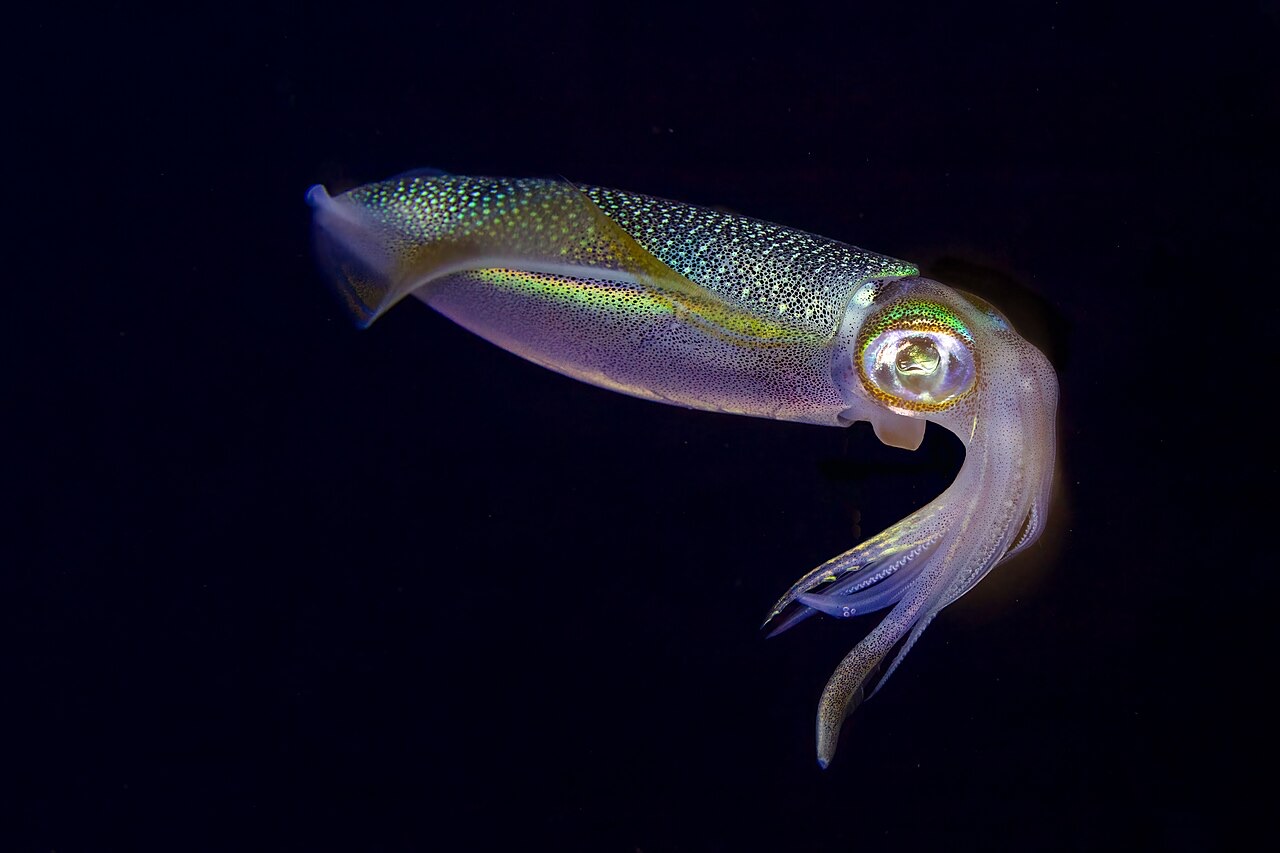
Bigfin Reef Squid
Sepioteuthis lessoniana · Cephalopod mollusk, family Loliginidae; the oval fin running the whole mantle gives a cuttlefish-like outline
Bigfin reef squid are the torch-beam regulars of tropical night diving: oval fins running the full mantle like a skirt, large forward eyes catching lamplight in green, small squads hanging in formation just beyond the sand slope. They live fast even by squid standards, growing to dinner-plate size and breeding within months, and they talk in skin: bars, blushes, and shimmer patterns passing between animals during courtship and squabbles. Females lace clusters of white egg capsules through branching coral, discarded rope, and mooring lines; the tufts are a common find long after the parents are gone. By day squads patrol reef edges and seagrass margins. They tolerate a steady light held off-axis but scatter from direct beams and pursuit. Settle low, dim the torch, and let the formation drift back overhead on its own terms.
Wo und wann man eines sieht
„Resident" bedeutet, dass die meisten Tauchgänge am jeweiligen Tauchziel eine Begegnung erwarten lassen; „saisonal" bedeutet, dass die Art in den genannten Monaten zuverlässig anzutreffen ist; alles andere ist ein Bonus, keine Planungsgrundlage.
| Ziel | Zuverlässigkeit | Monate | Hinweise |
|---|---|---|---|
| Bali & Nusa PenidaIndonesia | Resident: seen on most dives | Ganzjährig | |
| AnilaoPhilippines | Resident: seen on most dives | Ganzjährig | |
| Koh TaoThailand | Resident: seen on most dives | Ganzjährig | |
| DahabEgypt | Resident: seen on most dives | Ganzjährig | |
| Okinawa & the Kerama IslandsJapan | Resident: seen on most dives | Ganzjährig |
Bester Monat auf einen Blick
Sie verstehen
Lebensraum: Reef edges, seagrass, and harbor margins by day; shallow open water at night, readily drawn toward lights.
Verbreitung: Indo-Pacific from the Red Sea and East Africa to Hawaii and northern Australia; has spread into the eastern Mediterranean via the Suez Canal.
Verhalten: Lives fast (dinner-plate size and breeding age within months, a lifespan under a year) and communicates in shifting skin patterns; females lace clusters of white egg capsules through coral branches, ropes, and moorings.
Ernährung: Small fishes and crustaceans seized with a fast tentacle strike.
Größe: typischerweise rund 0.2 m; dokumentiert bis zu 0.35 m (mantle length).
Wie man sich in ihrer Nähe verhält
On night dives hold the torch off-axis and dim; squads scatter from direct beams and chasing but drift back over a settled, patient diver.
Naturschutz
A major food species across Asia with fast turnover; no broad conservation alarm, though egg-laying habitat on debris and moorings deserves care.
Bekannte Tauchplätze dafür
Hervorgehobene Tauchplätze wurden von unseren Redakteuren für diese Art kartiert; die Zahlen sind GBIF-Vorkommensdatensätze, die seit 1990 im Umkreis von etwa 5 km um einen Tauchplatz protokolliert wurden.
Ansehen
Aus den offiziellen Kanälen

Wildlife of Monterey | New film in our auditorium

Live Aviary Cam | Monterey Bay Aquarium

Live Aviary Cam | Monterey Bay Aquarium
Videos sind eingebettete Links zu den Kanälen der jeweiligen Ersteller – wir hosten nichts und geben für alles die Quelle an.