Cephalopods
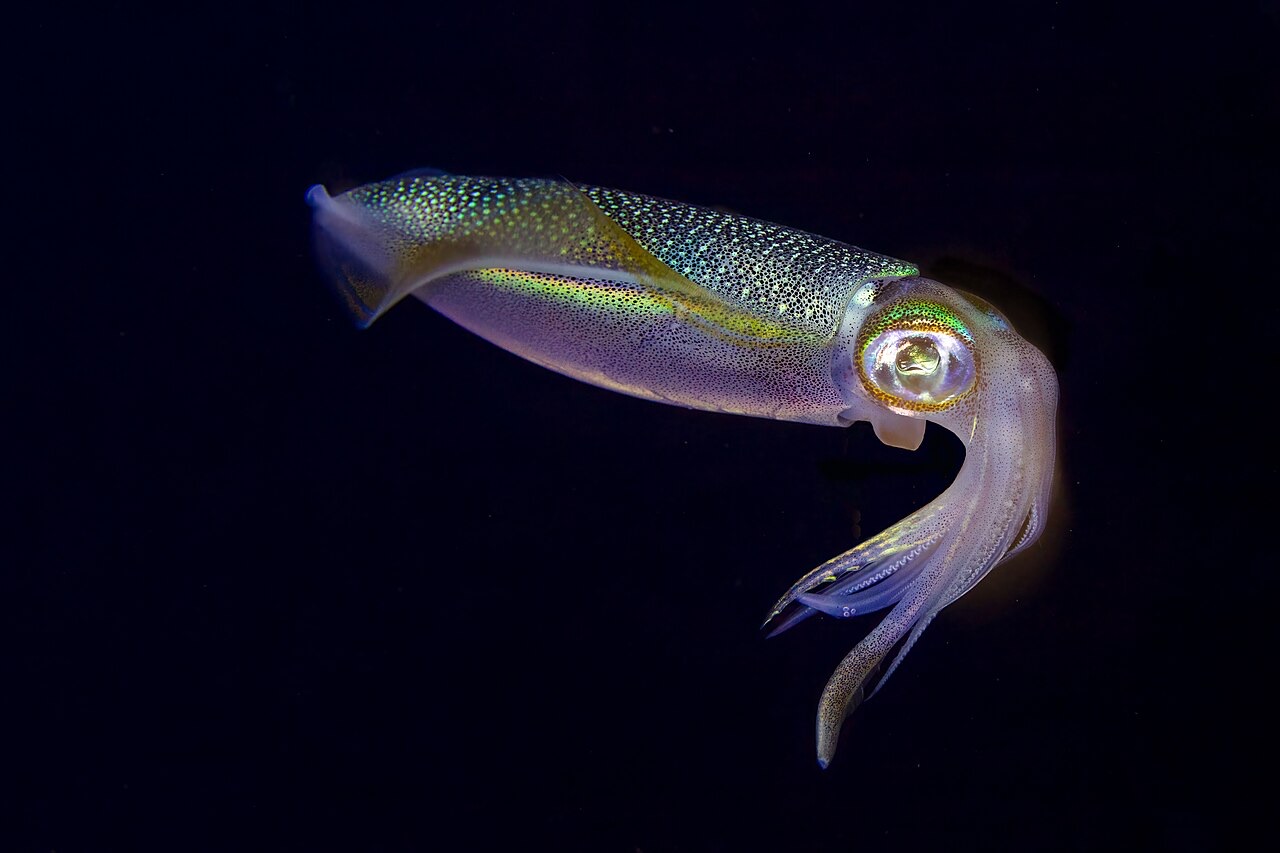
Bigfin Reef Squid
Sepioteuthis lessoniana · Cephalopod mollusk, family Loliginidae; the oval fin running the whole mantle gives a cuttlefish-like outline
Bigfin reef squid are the torch-beam regulars of tropical night diving: oval fins running the full mantle like a skirt, large forward eyes catching lamplight in green, small squads hanging in formation just beyond the sand slope. They live fast even by squid standards, growing to dinner-plate size and breeding within months, and they talk in skin: bars, blushes, and shimmer patterns passing between animals during courtship and squabbles. Females lace clusters of white egg capsules through branching coral, discarded rope, and mooring lines; the tufts are a common find long after the parents are gone. By day squads patrol reef edges and seagrass margins. They tolerate a steady light held off-axis but scatter from direct beams and pursuit. Settle low, dim the torch, and let the formation drift back overhead on its own terms.
Dónde y cuándo ver uno
"Residente" significa que la mayoría de las inmersiones en ese destino tienen encuentros con ellos; "estacional" significa que su presencia es fiable en los meses indicados; cualquier otra cosa es un extra, no algo con lo que contar.
| Destino | Fiabilidad | Meses | Notas |
|---|---|---|---|
| Bali & Nusa PenidaIndonesia | Resident: seen on most dives | Todo el año | |
| AnilaoPhilippines | Resident: seen on most dives | Todo el año | |
| Koh TaoThailand | Resident: seen on most dives | Todo el año | |
| DahabEgypt | Resident: seen on most dives | Todo el año | |
| Okinawa & the Kerama IslandsJapan | Resident: seen on most dives | Todo el año |
El mejor mes, de un vistazo
Comprendiéndolos
Hábitat: Reef edges, seagrass, and harbor margins by day; shallow open water at night, readily drawn toward lights.
Rango: Indo-Pacific from the Red Sea and East Africa to Hawaii and northern Australia; has spread into the eastern Mediterranean via the Suez Canal.
Comportamiento: Lives fast (dinner-plate size and breeding age within months, a lifespan under a year) and communicates in shifting skin patterns; females lace clusters of white egg capsules through coral branches, ropes, and moorings.
Dieta: Small fishes and crustaceans seized with a fast tentacle strike.
Tamaño: normalmente alrededor de 0.2 m; documentado hasta 0.35 m (mantle length).
Cómo comportarse cerca de uno
On night dives hold the torch off-axis and dim; squads scatter from direct beams and chasing but drift back over a settled, patient diver.
Conservación
A major food species across Asia with fast turnover; no broad conservation alarm, though egg-laying habitat on debris and moorings deserves care.
Puntos conocidos por avistamientos
Los puntos destacados fueron registrados para esta especie por nuestros editores; los números son registros de ocurrencia de GBIF anotados en un radio de unos 5 km de un punto desde 1990.
Ver
Desde los canales oficiales

Wildlife of Monterey | New film in our auditorium

Live Aviary Cam | Monterey Bay Aquarium

Live Aviary Cam | Monterey Bay Aquarium
Los vídeos son enlaces insertados a los canales de sus propios creadores. No alojamos nada y acreditamos todo.