Cephalopods
Bigfin Reef Squid
Sepioteuthis lessoniana · Cephalopod mollusk, family Loliginidae; the oval fin running the whole mantle gives a cuttlefish-like outline
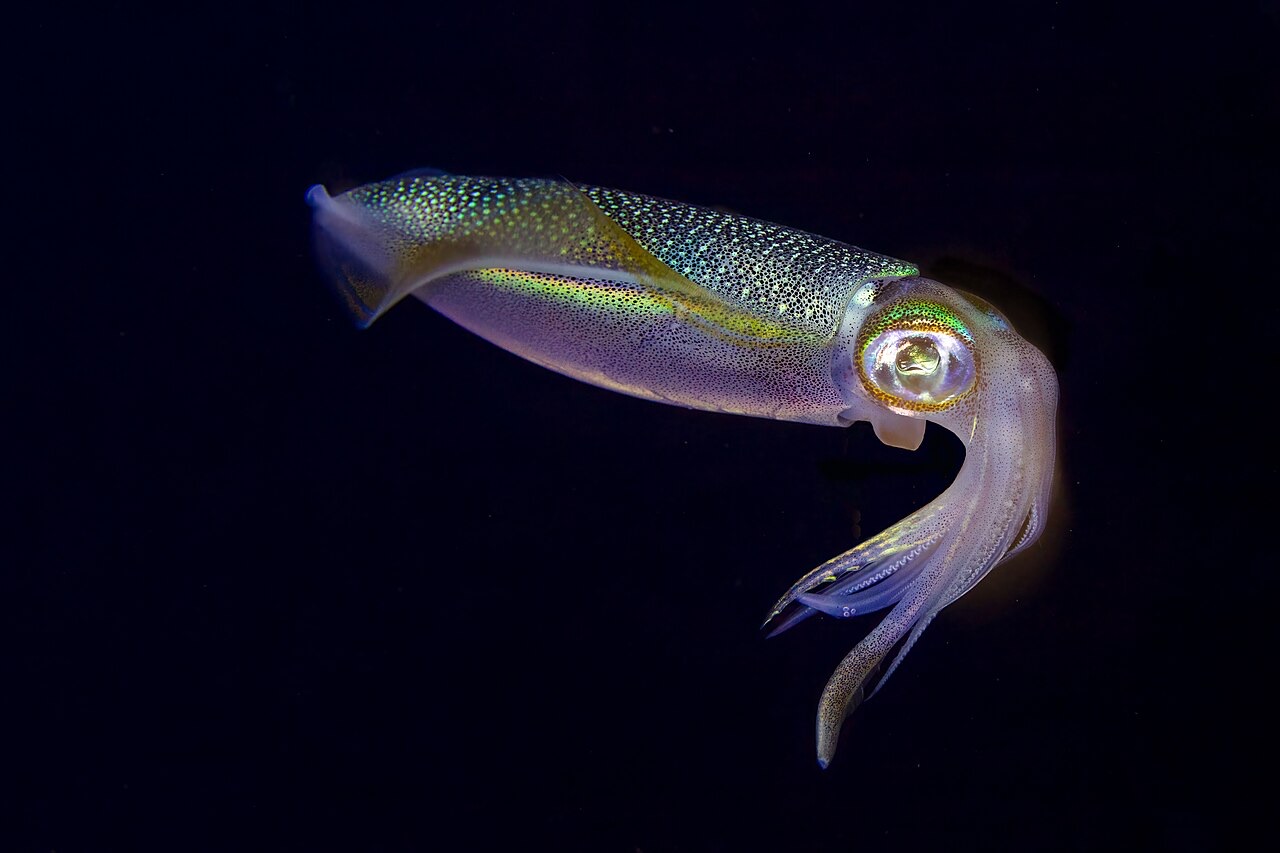
Bigfin reef squid are the torch-beam regulars of tropical night diving: oval fins running the full mantle like a skirt, large forward eyes catching lamplight in green, small squads hanging in formation just beyond the sand slope. They live fast even by squid standards, growing to dinner-plate size and breeding within months, and they talk in skin: bars, blushes, and shimmer patterns passing between animals during courtship and squabbles. Females lace clusters of white egg capsules through branching coral, discarded rope, and mooring lines; the tufts are a common find long after the parents are gone. By day squads patrol reef edges and seagrass margins. They tolerate a steady light held off-axis but scatter from direct beams and pursuit. Settle low, dim the torch, and let the formation drift back overhead on its own terms.
Où et quand en observer un
« Résident » signifie que la plupart des plongées sur ce site permettent de les observer ; « saisonnier » signifie qu'ils sont présents de manière fiable durant les mois indiqués ; tout le reste est un bonus, pas une certitude.
| Destination | Fiabilité | Mois | Notes |
|---|---|---|---|
| Bali & Nusa PenidaIndonesia | Resident: seen on most dives | Toute l'année | |
| AnilaoPhilippines | Resident: seen on most dives | Toute l'année | |
| Koh TaoThailand | Resident: seen on most dives | Toute l'année | |
| DahabEgypt | Resident: seen on most dives | Toute l'année | |
| Okinawa & the Kerama IslandsJapan | Resident: seen on most dives | Toute l'année |
Meilleur mois, en un coup d'œil
Les comprendre
Habitat: Reef edges, seagrass, and harbor margins by day; shallow open water at night, readily drawn toward lights.
Aire de répartition: Indo-Pacific from the Red Sea and East Africa to Hawaii and northern Australia; has spread into the eastern Mediterranean via the Suez Canal.
Comportement: Lives fast (dinner-plate size and breeding age within months, a lifespan under a year) and communicates in shifting skin patterns; females lace clusters of white egg capsules through coral branches, ropes, and moorings.
Régime alimentaire: Small fishes and crustaceans seized with a fast tentacle strike.
Taille: généralement autour de 0.2 m; documenté jusqu'à 0.35 m (mantle length).
Comment se comporter avec lui
On night dives hold the torch off-axis and dim; squads scatter from direct beams and chasing but drift back over a settled, patient diver.
Conservation
A major food species across Asia with fast turnover; no broad conservation alarm, though egg-laying habitat on debris and moorings deserves care.
Sites répertoriés connus pour leur présence
Les sites mis en évidence ont été cartographiés pour cette espèce par nos éditeurs ; les chiffres correspondent aux occurrences GBIF enregistrées dans un rayon d'environ 5 km d'un site depuis 1990.
Regarder
Depuis les canaux officiels

Wildlife of Monterey | New film in our auditorium

Live Aviary Cam | Monterey Bay Aquarium

Live Aviary Cam | Monterey Bay Aquarium
Les vidéos sont des liens intégrés vers les chaînes de leurs créateurs. Nous n'hébergeons rien et créditons tout.