Cephalopods
Bigfin Reef Squid
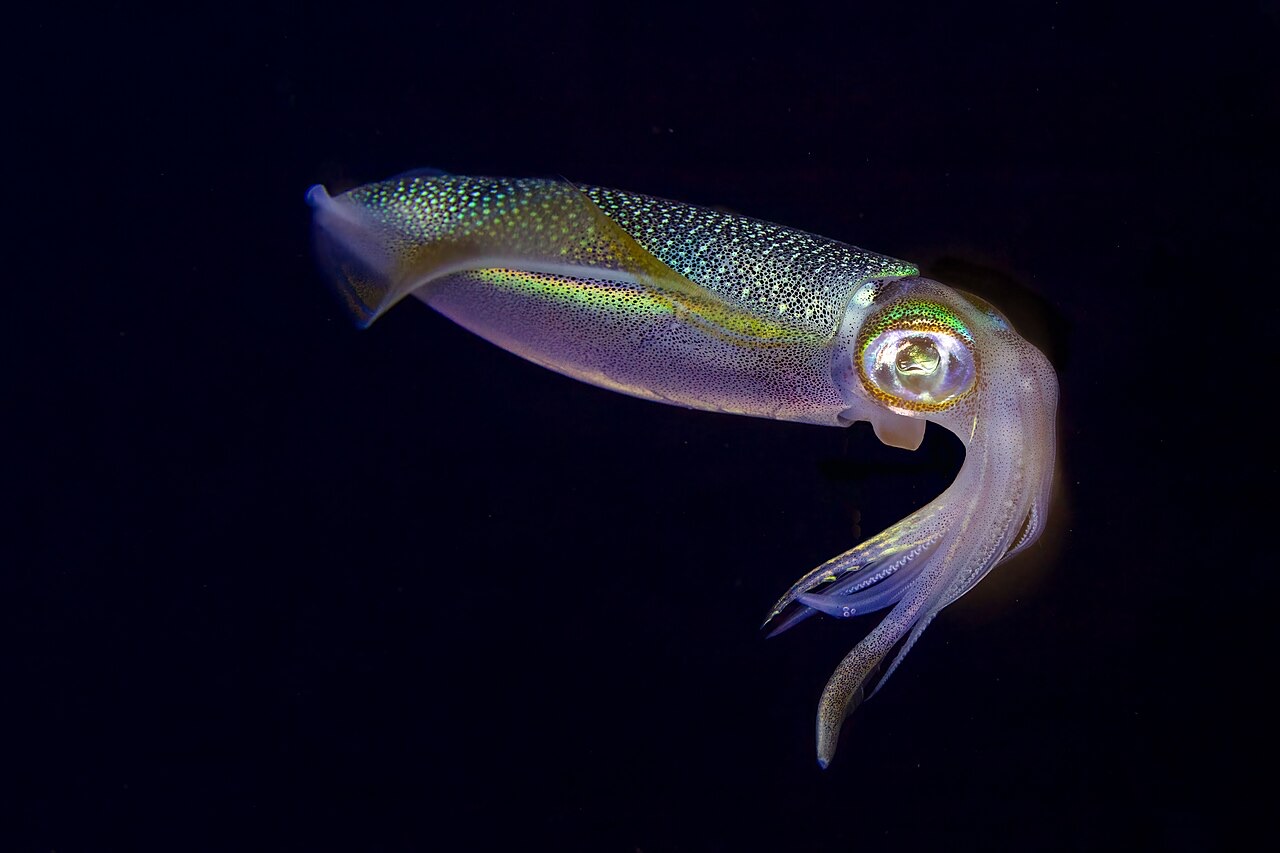
Sepioteuthis lessoniana · Cephalopod mollusk, family Loliginidae; the oval fin running the whole mantle gives a cuttlefish-like outline
Bigfin reef squid are the torch-beam regulars of tropical night diving: oval fins running the full mantle like a skirt, large forward eyes catching lamplight in green, small squads hanging in formation just beyond the sand slope. They live fast even by squid standards, growing to dinner-plate size and breeding within months, and they talk in skin: bars, blushes, and shimmer patterns passing between animals during courtship and squabbles. Females lace clusters of white egg capsules through branching coral, discarded rope, and mooring lines; the tufts are a common find long after the parents are gone. By day squads patrol reef edges and seagrass margins. They tolerate a steady light held off-axis but scatter from direct beams and pursuit. Settle low, dim the torch, and let the formation drift back overhead on its own terms.
Dove e quando avvistarne uno
"Residente" significa che la maggior parte delle immersioni in quella destinazione li incontra; "stagionale" significa che sono presenti in modo affidabile nei mesi indicati; qualsiasi altra cosa è un bonus, non un piano.
| Destinazione | Affidabilità | Mesi | Note |
|---|---|---|---|
| Bali & Nusa PenidaIndonesia | Resident: seen on most dives | Tutto l'anno | |
| AnilaoPhilippines | Resident: seen on most dives | Tutto l'anno | |
| Koh TaoThailand | Resident: seen on most dives | Tutto l'anno | |
| DahabEgypt | Resident: seen on most dives | Tutto l'anno | |
| Okinawa & the Kerama IslandsJapan | Resident: seen on most dives | Tutto l'anno |
Il mese migliore, a colpo d'occhio
Capirle
Habitat: Reef edges, seagrass, and harbor margins by day; shallow open water at night, readily drawn toward lights.
Distribuzione: Indo-Pacific from the Red Sea and East Africa to Hawaii and northern Australia; has spread into the eastern Mediterranean via the Suez Canal.
Comportamento: Lives fast (dinner-plate size and breeding age within months, a lifespan under a year) and communicates in shifting skin patterns; females lace clusters of white egg capsules through coral branches, ropes, and moorings.
Dieta: Small fishes and crustaceans seized with a fast tentacle strike.
Dimensioni: tipicamente intorno a 0.2 m; documentato fino a 0.35 m (mantle length).
Come comportarsi in sua presenza
On night dives hold the torch off-axis and dim; squads scatter from direct beams and chasing but drift back over a settled, patient diver.
Conservazione
A major food species across Asia with fast turnover; no broad conservation alarm, though egg-laying habitat on debris and moorings deserves care.
Siti mappati noti per avvistamenti
I siti evidenziati sono stati schedati per questa specie dai nostri redattori; i numeri sono record di occorrenza GBIF registrati entro circa 5 km dal sito a partire dal 1990.
Guarda
Dai canali ufficiali

Wildlife of Monterey | New film in our auditorium

Live Aviary Cam | Monterey Bay Aquarium

Live Aviary Cam | Monterey Bay Aquarium
I video sono link incorporati ai canali dei rispettivi autori. Non ospitiamo nulla e accreditiamo tutto.