Cephalopods
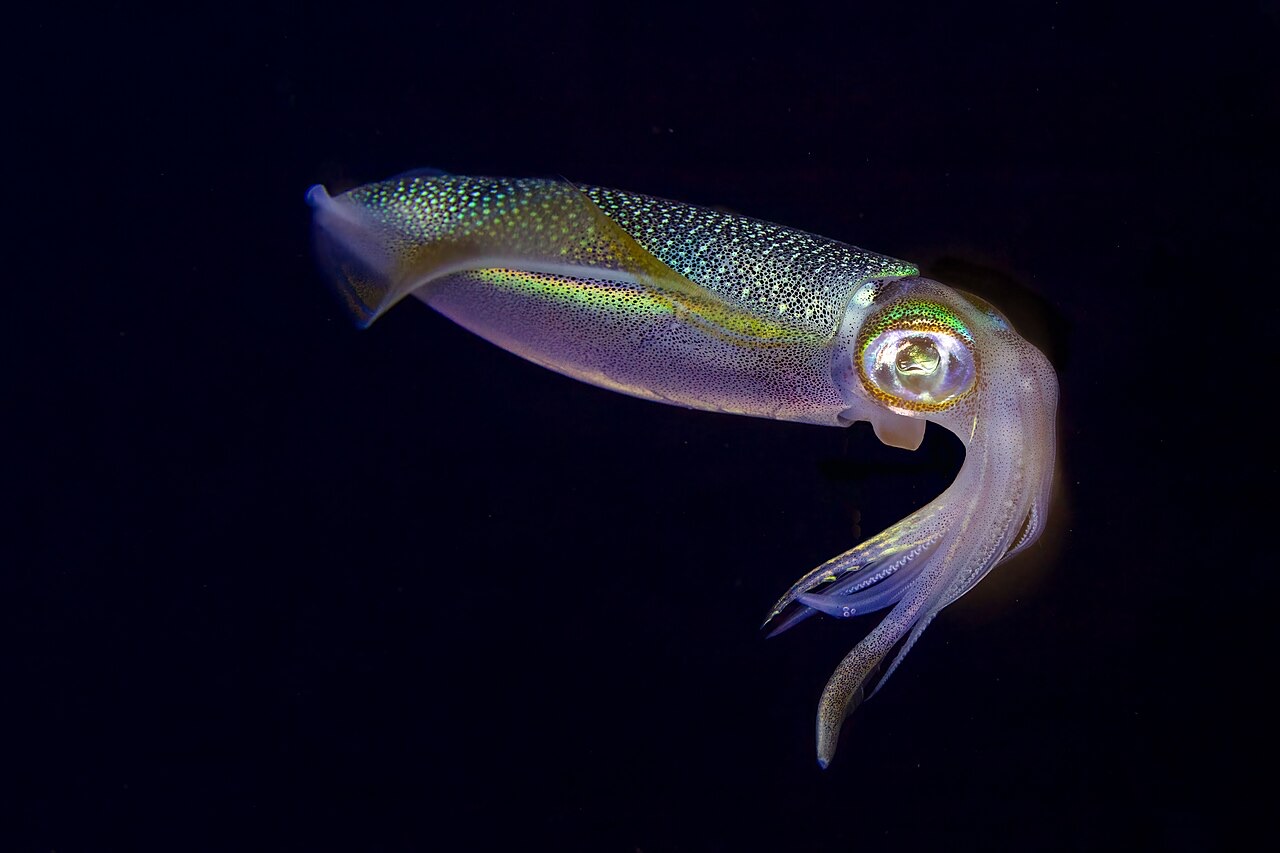
Bigfin Reef Squid
Sepioteuthis lessoniana · Cephalopod mollusk, family Loliginidae; the oval fin running the whole mantle gives a cuttlefish-like outline
Bigfin reef squid are the torch-beam regulars of tropical night diving: oval fins running the full mantle like a skirt, large forward eyes catching lamplight in green, small squads hanging in formation just beyond the sand slope. They live fast even by squid standards, growing to dinner-plate size and breeding within months, and they talk in skin: bars, blushes, and shimmer patterns passing between animals during courtship and squabbles. Females lace clusters of white egg capsules through branching coral, discarded rope, and mooring lines; the tufts are a common find long after the parents are gone. By day squads patrol reef edges and seagrass margins. They tolerate a steady light held off-axis but scatter from direct beams and pursuit. Settle low, dim the torch, and let the formation drift back overhead on its own terms.
Onde e quando ver um
"Residente" significa que a maioria dos mergulhos naquele destino os encontra; "sazonal" significa presença confiável nos meses listados; qualquer outra coisa é um bônus, não um plano.
| Destino | Fiabilidade | Meses | Notas |
|---|---|---|---|
| Bali & Nusa PenidaIndonesia | Resident: seen on most dives | Todo o ano | |
| AnilaoPhilippines | Resident: seen on most dives | Todo o ano | |
| Koh TaoThailand | Resident: seen on most dives | Todo o ano | |
| DahabEgypt | Resident: seen on most dives | Todo o ano | |
| Okinawa & the Kerama IslandsJapan | Resident: seen on most dives | Todo o ano |
Melhor mês, em resumo
Entendendo-os
Habitat: Reef edges, seagrass, and harbor margins by day; shallow open water at night, readily drawn toward lights.
Distribuição: Indo-Pacific from the Red Sea and East Africa to Hawaii and northern Australia; has spread into the eastern Mediterranean via the Suez Canal.
Comportamento: Lives fast (dinner-plate size and breeding age within months, a lifespan under a year) and communicates in shifting skin patterns; females lace clusters of white egg capsules through coral branches, ropes, and moorings.
Dieta: Small fishes and crustaceans seized with a fast tentacle strike.
Tamanho: normalmente cerca de 0.2 m; documentado até 0.35 m (mantle length).
Como se comportar perto de um
On night dives hold the torch off-axis and dim; squads scatter from direct beams and chasing but drift back over a settled, patient diver.
Conservação
A major food species across Asia with fast turnover; no broad conservation alarm, though egg-laying habitat on debris and moorings deserves care.
Pontos mapeados conhecidos por eles
Os locais destacados foram cartografados para esta espécie pelos nossos editores; os números são registos de ocorrência do GBIF num raio de cerca de 5 km do local desde 1990.
Assista
Dos canais oficiais

Wildlife of Monterey | New film in our auditorium

Live Aviary Cam | Monterey Bay Aquarium

Live Aviary Cam | Monterey Bay Aquarium
Os vídeos são ligações incorporadas para os canais dos próprios criadores. Não alojamos nada e creditamos tudo.