Marine Mammals
Bottlenose Dolphin
Tursiops truncatus · Marine mammal, family Delphinidae
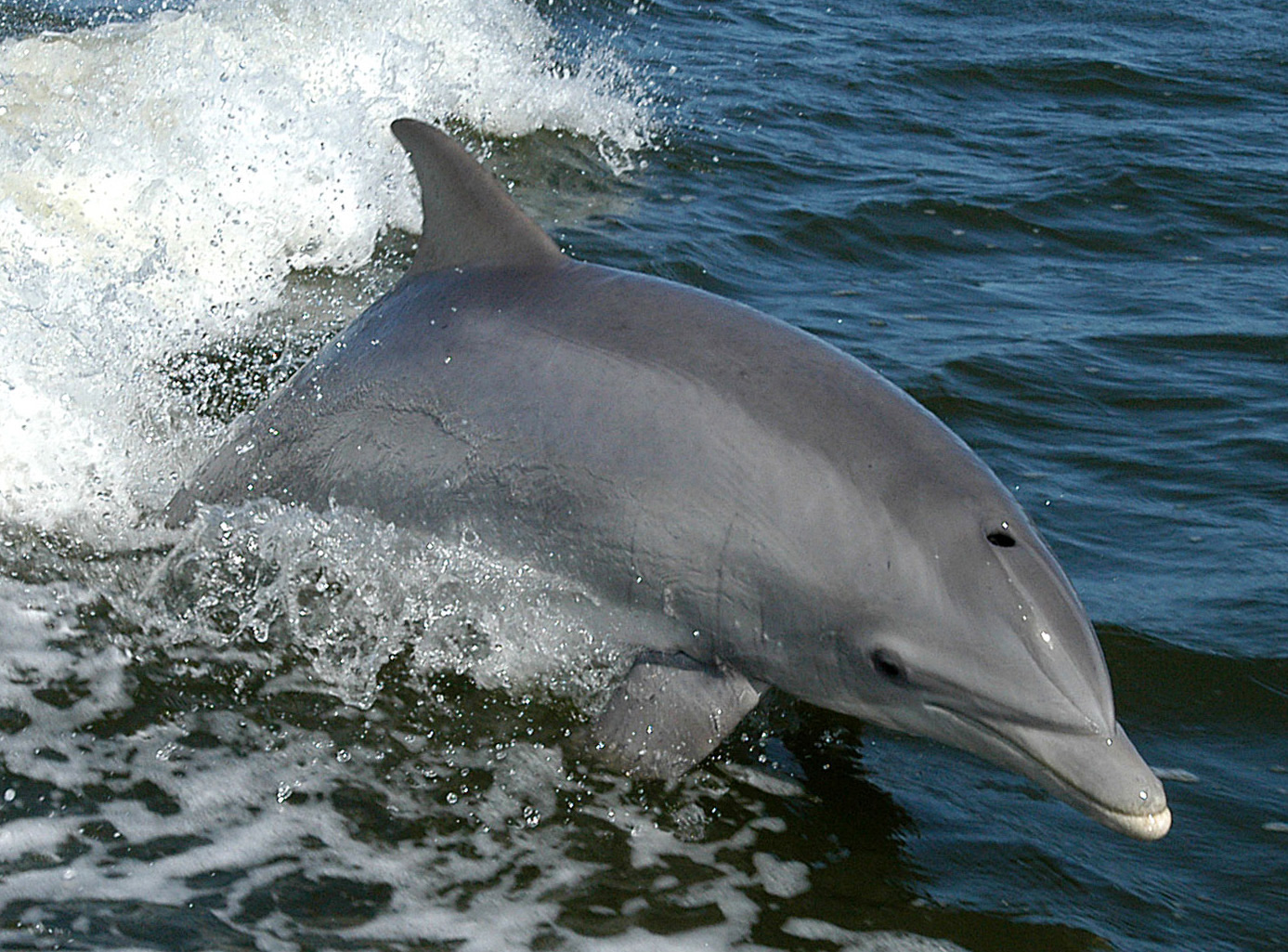
The bottlenose is the dolphin of the collective imagination: gray, grinning, and considerably more formidable in person than on screen, a muscular three meters of curiosity that can outswim anything you will ever do underwater. Most sightings worldwide are a pod arcing past on its own errands. Rangiroa rewrites the deal: a handful of resident dolphins in Tiputa Pass have spent decades choosing to visit divers hanging in the current, spiraling close, holding that bright, appraising eye a meter from your mask. Where they don't seek company, they remain magnetic, hunting cooperatively over Red Sea seagrass or surfing liveaboard bow waves in the Azores' summer blue.
Where and when to see one
"Resident" means most dives at that destination encounter them; "seasonal" means reliably present in the listed months; anything else is a bonus, not a plan.
| Destination | Reliability | Months | Notes |
|---|---|---|---|
| RangiroaFrench Polynesia | Resident: seen on most dives | Year-round | |
| Hurghada & El GounaEgypt | Resident: seen on most dives | Year-round | |
| The AzoresPortugal | Seasonal: reliable in season | May–Sep | |
| Sea of Cortez & Cabo PulmoMexico | Occasional | Year-round |
Best month, at a glance
| Month | Reliable destinations |
|---|---|
| January | Rangiroa · Hurghada & El Gouna · Sea of Cortez & Cabo Pulmo |
| February | Rangiroa · Hurghada & El Gouna · Sea of Cortez & Cabo Pulmo |
| March | Rangiroa · Hurghada & El Gouna · Sea of Cortez & Cabo Pulmo |
| April | Rangiroa · Hurghada & El Gouna · Sea of Cortez & Cabo Pulmo |
| May | Rangiroa · Hurghada & El Gouna · The Azores · Sea of Cortez & Cabo Pulmo |
| June | Rangiroa · Hurghada & El Gouna · The Azores · Sea of Cortez & Cabo Pulmo |
| July | Rangiroa · Hurghada & El Gouna · The Azores · Sea of Cortez & Cabo Pulmo |
| August | Rangiroa · Hurghada & El Gouna · The Azores · Sea of Cortez & Cabo Pulmo |
| September | Rangiroa · Hurghada & El Gouna · The Azores · Sea of Cortez & Cabo Pulmo |
| October | Rangiroa · Hurghada & El Gouna · Sea of Cortez & Cabo Pulmo |
| November | Rangiroa · Hurghada & El Gouna · Sea of Cortez & Cabo Pulmo |
| December | Rangiroa · Hurghada & El Gouna · Sea of Cortez & Cabo Pulmo |
Understanding them
Habitat: Coasts, estuaries, lagoons, reef passes, and open ocean; the great generalist of the dolphin family
Range: Worldwide in temperate and tropical seas; the encounters divers plan around are at Rangiroa's pass, Egypt's northern Red Sea reefs, and the Azores
Behavior: Big-brained, socially fluid, and boldly investigative. Most wild bottlenose ignore divers after a look; a famous few populations choose interaction: Rangiroa's pass residents approach divers mid-drift, holding eye contact and sometimes soliciting a slow parallel swim. Bow-riding is the species' oldest human game.
Diet: Fish and squid, hunted cooperatively with tactics invented locally: mud rings, strand-feeding, sponge tools in one Australian bay
Size: typically around 2.8 m; documented up to 3.8 m (body length; coastal animals run smaller than offshore ones, and the Indo-Pacific bottlenose (T. aduncus) is smaller again).
How to behave around one
Let the dolphins initiate and end contact, no touching or grabbing even when solicited, no feeding ever, and keep swim-with activities to regulated programs. At Rangiroa, follow the guides' drift line and let the residents come.
Conservation
Least Concern globally; local coastal populations face bycatch, pollution, and disturbance, and the species' charisma sustains both good regulation and bad captivity. Choose wild, managed encounters.
Charted sites known for them
Highlighted sites were charted for this species by our editors; numbers are GBIF occurrence records logged within about 5 km of a site since 1990.
Watch
From the official channels

Wildlife of Monterey | New film in our auditorium

Live Aviary Cam | Monterey Bay Aquarium

Live Aviary Cam | Monterey Bay Aquarium
Videos are embedded links to their creators' own channels. We host nothing and credit everything.