Marine Mammals
Bottlenose Dolphin
Tursiops truncatus · Marine mammal, family Delphinidae
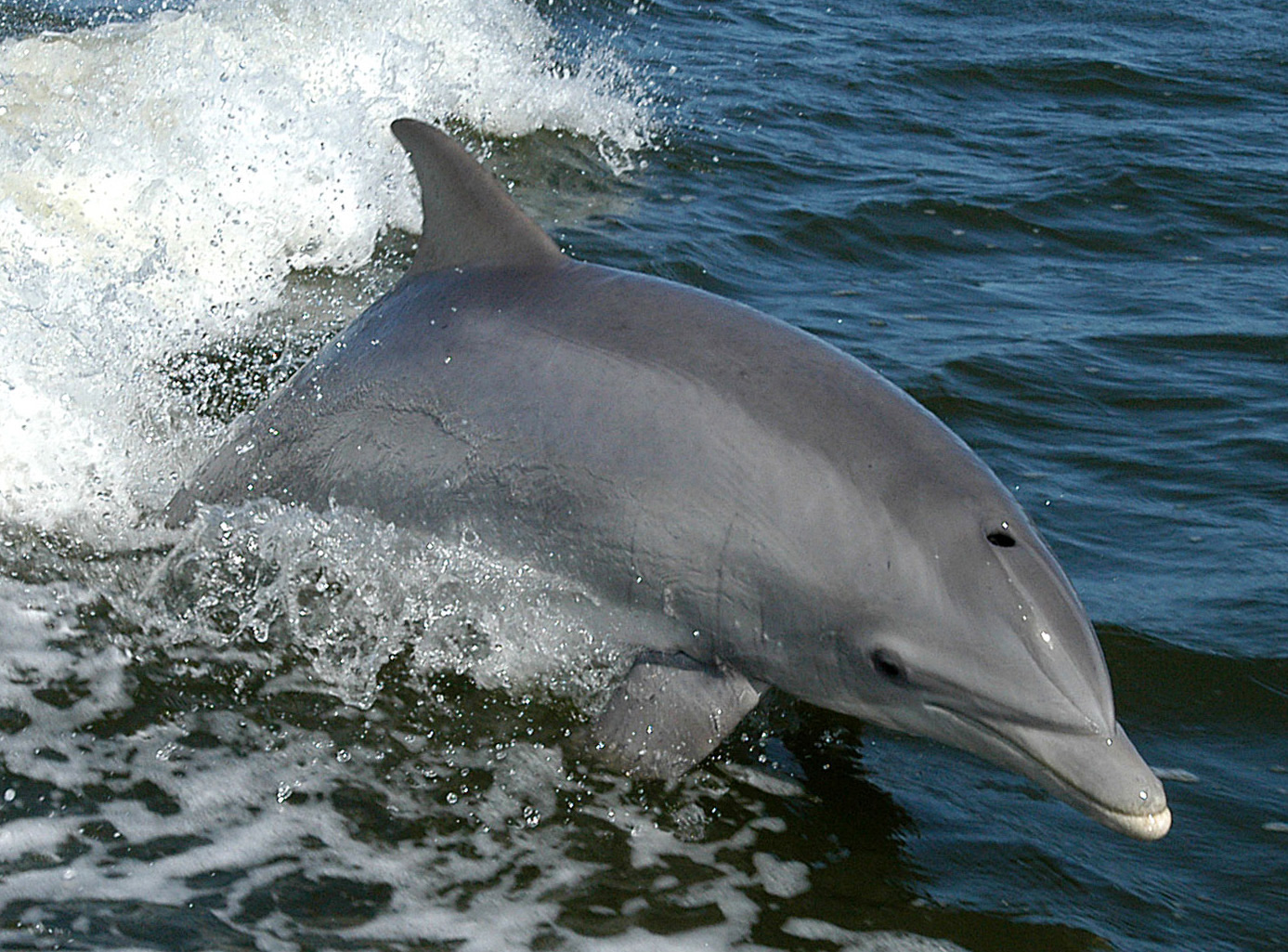
The bottlenose is the dolphin of the collective imagination: gray, grinning, and considerably more formidable in person than on screen, a muscular three meters of curiosity that can outswim anything you will ever do underwater. Most sightings worldwide are a pod arcing past on its own errands. Rangiroa rewrites the deal: a handful of resident dolphins in Tiputa Pass have spent decades choosing to visit divers hanging in the current, spiraling close, holding that bright, appraising eye a meter from your mask. Where they don't seek company, they remain magnetic, hunting cooperatively over Red Sea seagrass or surfing liveaboard bow waves in the Azores' summer blue.
Onde e quando ver um
"Residente" significa que a maioria dos mergulhos naquele destino os encontra; "sazonal" significa presença confiável nos meses listados; qualquer outra coisa é um bônus, não um plano.
| Destino | Fiabilidade | Meses | Notas |
|---|---|---|---|
| RangiroaFrench Polynesia | Resident: seen on most dives | Todo o ano | |
| Hurghada & El GounaEgypt | Resident: seen on most dives | Todo o ano | |
| The AzoresPortugal | Seasonal: reliable in season | May–Sep | |
| Sea of Cortez & Cabo PulmoMexico | Occasional | Todo o ano |
Melhor mês, em resumo
| Mês | Destinos fiáveis |
|---|---|
| January | Rangiroa · Hurghada & El Gouna · Sea of Cortez & Cabo Pulmo |
| February | Rangiroa · Hurghada & El Gouna · Sea of Cortez & Cabo Pulmo |
| March | Rangiroa · Hurghada & El Gouna · Sea of Cortez & Cabo Pulmo |
| April | Rangiroa · Hurghada & El Gouna · Sea of Cortez & Cabo Pulmo |
| May | Rangiroa · Hurghada & El Gouna · The Azores · Sea of Cortez & Cabo Pulmo |
| June | Rangiroa · Hurghada & El Gouna · The Azores · Sea of Cortez & Cabo Pulmo |
| July | Rangiroa · Hurghada & El Gouna · The Azores · Sea of Cortez & Cabo Pulmo |
| August | Rangiroa · Hurghada & El Gouna · The Azores · Sea of Cortez & Cabo Pulmo |
| September | Rangiroa · Hurghada & El Gouna · The Azores · Sea of Cortez & Cabo Pulmo |
| October | Rangiroa · Hurghada & El Gouna · Sea of Cortez & Cabo Pulmo |
| November | Rangiroa · Hurghada & El Gouna · Sea of Cortez & Cabo Pulmo |
| December | Rangiroa · Hurghada & El Gouna · Sea of Cortez & Cabo Pulmo |
Entendendo-os
Habitat: Coasts, estuaries, lagoons, reef passes, and open ocean; the great generalist of the dolphin family
Distribuição: Worldwide in temperate and tropical seas; the encounters divers plan around are at Rangiroa's pass, Egypt's northern Red Sea reefs, and the Azores
Comportamento: Big-brained, socially fluid, and boldly investigative. Most wild bottlenose ignore divers after a look; a famous few populations choose interaction: Rangiroa's pass residents approach divers mid-drift, holding eye contact and sometimes soliciting a slow parallel swim. Bow-riding is the species' oldest human game.
Dieta: Fish and squid, hunted cooperatively with tactics invented locally: mud rings, strand-feeding, sponge tools in one Australian bay
Tamanho: normalmente cerca de 2.8 m; documentado até 3.8 m (body length; coastal animals run smaller than offshore ones, and the Indo-Pacific bottlenose (T. aduncus) is smaller again).
Como se comportar perto de um
Let the dolphins initiate and end contact, no touching or grabbing even when solicited, no feeding ever, and keep swim-with activities to regulated programs. At Rangiroa, follow the guides' drift line and let the residents come.
Conservação
Least Concern globally; local coastal populations face bycatch, pollution, and disturbance, and the species' charisma sustains both good regulation and bad captivity. Choose wild, managed encounters.
Pontos mapeados conhecidos por eles
Os locais destacados foram cartografados para esta espécie pelos nossos editores; os números são registos de ocorrência do GBIF num raio de cerca de 5 km do local desde 1990.
Assista
Dos canais oficiais

Wildlife of Monterey | New film in our auditorium

Live Aviary Cam | Monterey Bay Aquarium

Live Aviary Cam | Monterey Bay Aquarium
Os vídeos são ligações incorporadas para os canais dos próprios criadores. Não alojamos nada e creditamos tudo.