Siti di immersione, stagioni e fauna marina — ricercati, mappati, pianificati.
Menu
Destinazioni Siti di immersione Vita marina Relitti Notizie
Pianifica un viaggio Pianificatore di viaggi Quando immergersi Calcolatore dei costi Confronti Calendario della fauna marina Temperatura dell'acqua Liveaboard Operatori & resort Parchi marini Camere iperbariche Mappa del mondo
Regioni Australia, Nuova Zelanda e Asia OrientaleCaraibi e Atlantico occidentaleEuropa, Atlantico e MediterraneoOceano Indiano e Africa OrientaleIsole del Pacifico & MicronesiaMar Rosso & Medio OrienteAsia meridionale e Triangolo dei CoralliLe Americhe e il Pacifico orientale Paesi
Impara e strumenti Tutte le guide Brevetti Guide all'attrezzatura Video Interroga i dati AI Agent API
Informazioni Chi siamo Metodologia Disclaimer Contatti
La tua vista
★ Salvato

Le tue destinazioni, siti e specie preferiti — salvati in questo browser.

API GATEWAY

Accesso JSON gratuito in sola lettura ai dati in cache dell'atlante.

Modalità scura

🧭 Visualizzazione Guidata
Sei nuovo alle immersioni — profondità, correnti, livelli di brevetto? Spieghiamo ogni termine mentre navighi, in modo semplice e chiaro. Gli stessi dati, con il supporto integrato.

⚡ Visualizzazione Esperta
Conosci già la differenza tra una parete e una drift dive. Solo i dati — chiari, rapidi e compatti. Questa è la visualizzazione predefinita.

Lingua dell'interfaccia
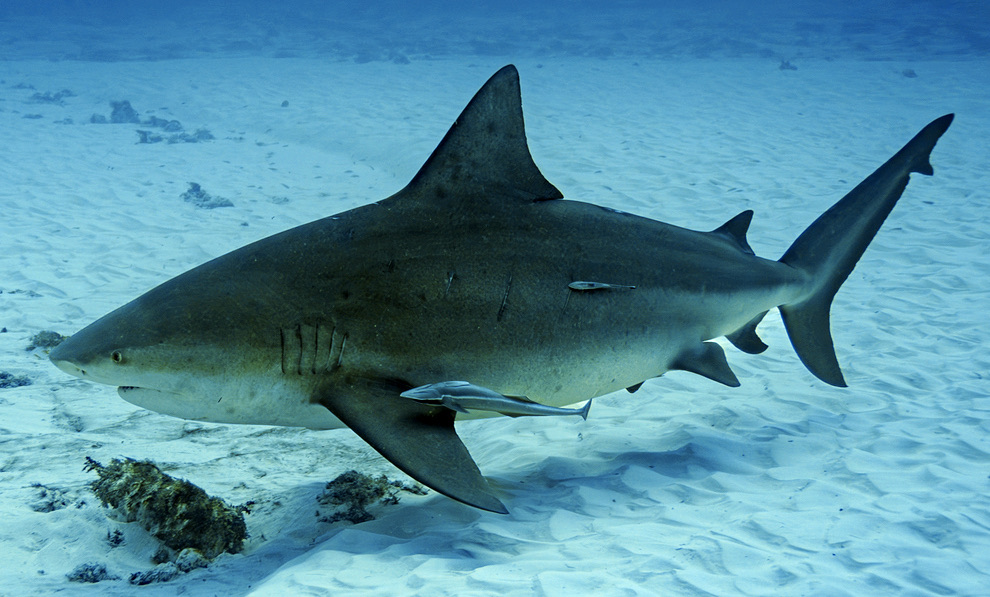
Bull Shark — illustration
Illustrazione generata dall'AI per The Scuba Atlas — a scopo illustrativo, non fotografia documentaria.

Sharks

Bull Shark

Carcharhinus leucas · Cartilaginous fish — family Carcharhinidae

IUCN: VU (decreasing) ~2.4 m total length; females are distinctly bulkier and longer than males 1–60 m fascia di profondità Ben documentato

The bull shark's reputation precedes it unfairly into the water. What divers actually meet is a thickset, cautious animal that circles wide, sizes up the scene, and commits only when comfortable — the swagger is in the physique, not the behavior. Females gather seasonally off Playa del Carmen, dozens strong in Fiji's Beqa Lagoon, and around Cabo Pulmo's reefs, giving structured, repeatable encounters with a shark that thrives where visibility fails other predators. Its party trick is physiological: bulls osmoregulate well enough to swim far up rivers, which puts them near people more often than any other large shark.

Fattore di rispetto: Treat With RespectStatistically among the species involved in serious coastal incidents, mostly with swimmers and surfers in turbid water — conditions divers largely avoid. On managed dives in good visibility, thousands of encounters proceed without contact. Respect the animal's size, avoid murky solo swims in bull habitat, and follow feed protocols exactly.

Dove e quando avvistarne uno

"Residente" significa che la maggior parte delle immersioni in quella destinazione li incontra; "stagionale" significa che sono presenti in modo affidabile nei mesi indicati; qualsiasi altra cosa è un bonus, non un piano.

DestinazioneAffidabilitàMesiNote
Sea of Cortez & Cabo PulmoMexico Resident — seen on most dives Tutto l'anno
Beqa Lagoon & Pacific HarbourFiji Resident — seen on most dives Tutto l'anno
Riviera Maya & the CenotesMexico Seasonal — reliable in season Nov–Mar
Costa Rica Pacific CoastCosta Rica Seasonal — reliable in season May–Nov
Aliwal Shoal & UmkomaasSouth Africa Occasional Tutto l'anno

Il mese migliore, a colpo d'occhio

MeseDestinazioni affidabili
January Sea of Cortez & Cabo Pulmo · Beqa Lagoon & Pacific Harbour · Riviera Maya & the Cenotes · Aliwal Shoal & Umkomaas
February Sea of Cortez & Cabo Pulmo · Beqa Lagoon & Pacific Harbour · Riviera Maya & the Cenotes · Aliwal Shoal & Umkomaas
March Sea of Cortez & Cabo Pulmo · Beqa Lagoon & Pacific Harbour · Riviera Maya & the Cenotes · Aliwal Shoal & Umkomaas
April Sea of Cortez & Cabo Pulmo · Beqa Lagoon & Pacific Harbour · Aliwal Shoal & Umkomaas
May Sea of Cortez & Cabo Pulmo · Beqa Lagoon & Pacific Harbour · Costa Rica Pacific Coast · Aliwal Shoal & Umkomaas
June Sea of Cortez & Cabo Pulmo · Beqa Lagoon & Pacific Harbour · Costa Rica Pacific Coast · Aliwal Shoal & Umkomaas
July Sea of Cortez & Cabo Pulmo · Beqa Lagoon & Pacific Harbour · Costa Rica Pacific Coast · Aliwal Shoal & Umkomaas
August Sea of Cortez & Cabo Pulmo · Beqa Lagoon & Pacific Harbour · Costa Rica Pacific Coast · Aliwal Shoal & Umkomaas
September Sea of Cortez & Cabo Pulmo · Beqa Lagoon & Pacific Harbour · Costa Rica Pacific Coast · Aliwal Shoal & Umkomaas
October Sea of Cortez & Cabo Pulmo · Beqa Lagoon & Pacific Harbour · Costa Rica Pacific Coast · Aliwal Shoal & Umkomaas
November Sea of Cortez & Cabo Pulmo · Beqa Lagoon & Pacific Harbour · Riviera Maya & the Cenotes · Costa Rica Pacific Coast · Aliwal Shoal & Umkomaas
December Sea of Cortez & Cabo Pulmo · Beqa Lagoon & Pacific Harbour · Riviera Maya & the Cenotes · Aliwal Shoal & Umkomaas

Capirle

Habitat: Murky coastal waters, river mouths, and reef slopes; uniquely tolerant of fresh water, recorded far up major rivers

Distribuzione: Worldwide in warm coastal seas — the Gulf of Mexico and Caribbean, West Africa, the Indian Ocean rim, Southeast Asia, Australia, and Pacific Central America

Comportamento: Heavy-bodied and low-slung, bulls patrol close to the bottom with short pectoral strokes and a wary, circling approach. At organized feeds they arrive in numbers and hold a respectful pattern around the bait; away from feeds they typically keep their distance from divers in clear water.

Dieta: Fish including other sharks and rays, plus turtles, birds, and carrion; an unfussy ambush hunter suited to low visibility

Dimensioni: tipicamente intorno a 2.4 m; documentato fino a 3.5 m (total length; females are distinctly bulkier and longer than males).

Come comportarsi in sua presenza

Kneel or settle where the briefing puts you, keep hands close, no cameras thrust at approaching animals, and let the feeders manage the bait line. Skip dawn and dusk swims near river mouths in bull country.

Conservazione

Assessed Vulnerable in 2020; slow reproduction and heavy inshore fishing pressure work against it, and its river-mouth habitat overlaps the most degraded coastal zones.

Siti mappati noti per avvistamenti

Guarda

Dai canali ufficiali

Tutti i video →

I video sono link incorporati ai canali dei rispettivi autori — non ospitiamo nulla e diamo sempre credito a tutti.

Fonti: Wikipedia ↗IUCN Red List ↗ · Dati verificati rispetto alle fonti indicate; i campi privi di riscontro sono contrassegnati come non ancora verificati.

Australia, Nuova Zelanda e Asia Orientale

Cairns & the Ribbon ReefsNingaloo ReefCoral Sea & Osprey ReefOkinawa & the Kerama IslandsPoor Knights IslandsTownsville & the YongalaGreen IslandIzu Peninsula

Caraibi e Atlantico occidentale

BonaireCozumelRiviera Maya & the CenotesBelize Barrier ReefGrand CaymanIsla Mujeres & CancúnRoatánTiger Beach & Grand Bahama

Europa, Atlantico e Mediterraneo

Malta & GozoSilfra & IcelandThe AzoresCanary IslandsLarnaca & the ZenobiaScapa FlowArctic NorwayMadeira

Oceano Indiano e Africa Orientale

North & South Malé AtollsAri AtollBaa Atoll & Hanifaru BayAliwal Shoal & UmkomaasMafia IslandMauritiusSeychellesSodwana Bay

Isole del Pacifico & Micronesia

PalauChuuk (Truk) LagoonFakaravaKona, HawaiʻiRangiroaTaveuni & Rainbow ReefBeqa Lagoon & Pacific HarbourEspiritu Santo

Mar Rosso & Medio Oriente

Sharm El Sheikh & Ras MohammedBrothers, Daedalus & St John'sDahabHurghada & El GounaMarsa Alam & the Deep SouthAqabaDaymaniyat IslandsMusandam Peninsula

Asia meridionale e Triangolo dei Coralli

Bali & Nusa PenidaKomodoRaja AmpatSipadan & MabulAnilaoCoronKoh TaoLembeh Strait

Le Americhe e il Pacifico orientale

Galápagos IslandsCocos IslandFlorida KeysSea of Cortez & Cabo PulmoSocorro & the RevillagigedosBritish ColumbiaCalifornia Channel IslandsCosta Rica Pacific Coast