Marine Mammals
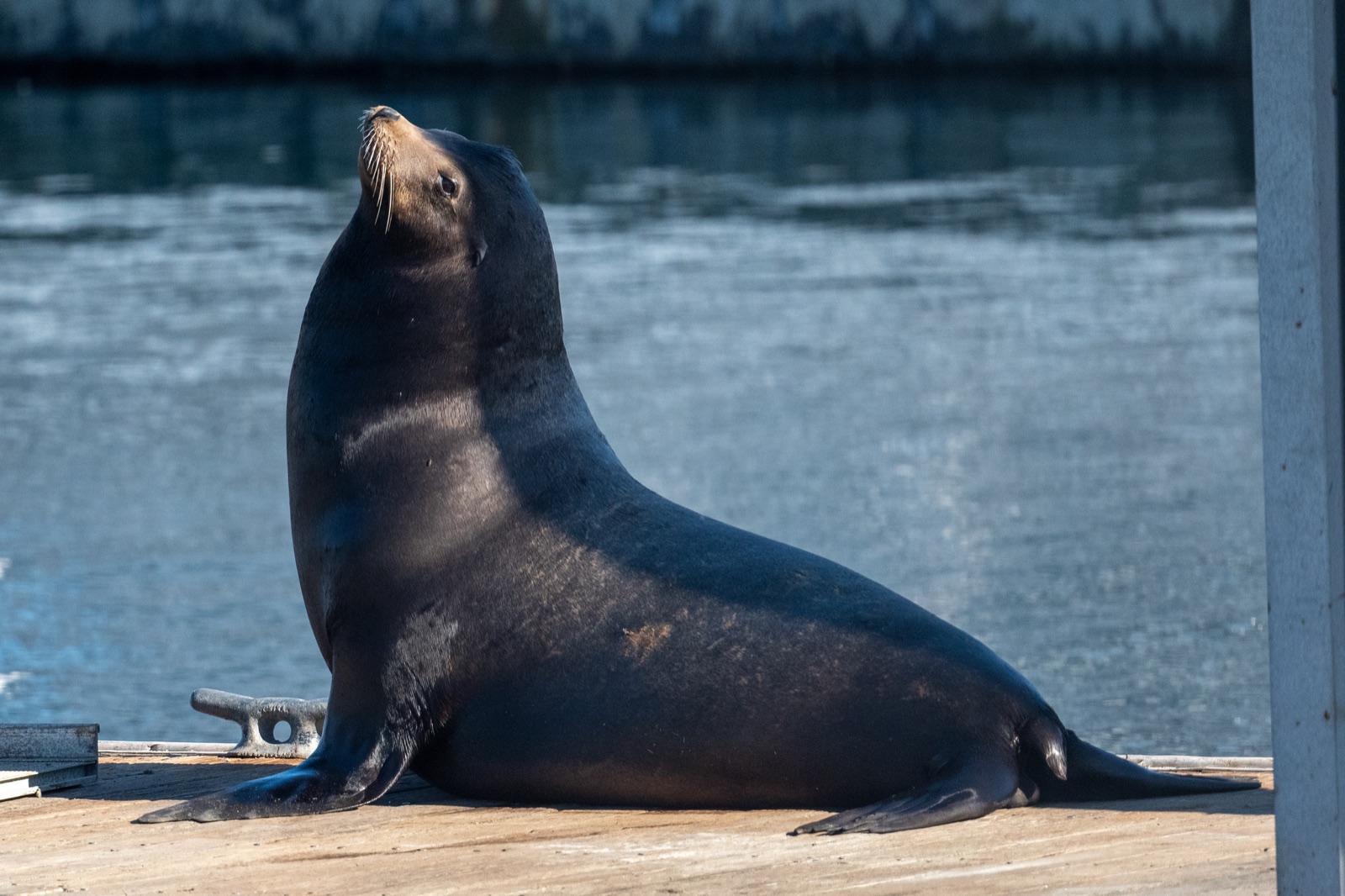
California Sea Lion
Zalophus californianus · Marine mammal, family Otariidae
Diving with California sea lions is the sport's best comedy. At Los Islotes, the pups hit you like a squadron of Labrador retrievers rebuilt for three dimensions: tugging fin tips, gnawing gently on strobe arms, hanging upside down an inch from your mask to see if you're worth further study. The adults are the real spectacle for anyone watching form: half a ton of muscle turning tighter than any fish, trailing bubbles like contrails through shafts of Baja light. Around the Channel Islands they ambush divers out of the kelp shadows in twos and tens. The colonies are loud, smelly, thriving, and pure joy from a body length away.
Dónde y cuándo ver uno
"Residente" significa que la mayoría de las inmersiones en ese destino tienen encuentros con ellos; "estacional" significa que su presencia es fiable en los meses indicados; cualquier otra cosa es un extra, no algo con lo que contar.
| Destino | Fiabilidad | Meses | Notas |
|---|---|---|---|
| Sea of Cortez & Cabo PulmoMexico | Resident: seen on most dives | Sep–May | |
| California Channel IslandsUnited States | Resident: seen on most dives | Todo el año | |
| British ColumbiaCanada | Seasonal: reliable in season | Oct–Mar |
El mejor mes, de un vistazo
| Mes | Destinos fiables |
|---|---|
| January | Sea of Cortez & Cabo Pulmo · California Channel Islands · British Columbia |
| February | Sea of Cortez & Cabo Pulmo · California Channel Islands · British Columbia |
| March | Sea of Cortez & Cabo Pulmo · California Channel Islands · British Columbia |
| April | Sea of Cortez & Cabo Pulmo · California Channel Islands |
| May | Sea of Cortez & Cabo Pulmo · California Channel Islands |
| June | California Channel Islands |
| July | California Channel Islands |
| August | California Channel Islands |
| September | Sea of Cortez & Cabo Pulmo · California Channel Islands |
| October | Sea of Cortez & Cabo Pulmo · California Channel Islands · British Columbia |
| November | Sea of Cortez & Cabo Pulmo · California Channel Islands · British Columbia |
| December | Sea of Cortez & Cabo Pulmo · California Channel Islands · British Columbia |
Comprendiéndolos
Hábitat: Rocky haul-outs, kelp forests, and sandy coves along the eastern Pacific coast
Rango: British Columbia to Mexico, including the Gulf of California; the classic dive encounters are at Baja's Los Islotes and California's Channel Islands
Comportamiento: The ocean's most committed extrovert. Juveniles treat divers as gymnasium equipment (barrel-rolling around heads, mouthing fins, blowing bubbles, mimicking postures), while females loop past in fluid arcs and territorial bulls patrol the perimeter barking. Underwater they fly; ashore they argue.
Dieta: Squid, anchovies, sardines, and whatever schooling fish the season provides
Tamaño: normalmente alrededor de 2.0 m; documentado hasta 2.4 m (body length; males up to about 350 kg dwarf the 100 kg females).
Cómo comportarse cerca de uno
Let pups initiate play and never grab back, keep clear of bulls and their harems, no feeding, and respect seasonal closures: Los Islotes shuts to visitors through the summer breeding months.
Conservación
Least Concern and abundant after decades of US protection; El Niño food crashes and toxic algal blooms drive periodic mass strandings.
Puntos conocidos por avistamientos
Los puntos destacados fueron registrados para esta especie por nuestros editores; los números son registros de ocurrencia de GBIF anotados en un radio de unos 5 km de un punto desde 1990.
Ver
Desde los canales oficiales

Wildlife of Monterey | New film in our auditorium

Live Aviary Cam | Monterey Bay Aquarium

Live Aviary Cam | Monterey Bay Aquarium
Los vídeos son enlaces insertados a los canales de sus propios creadores. No alojamos nada y acreditamos todo.