Marine Mammals
Dugong
Dugong dugon · Marine mammal, family Dugongidae (order Sirenia)
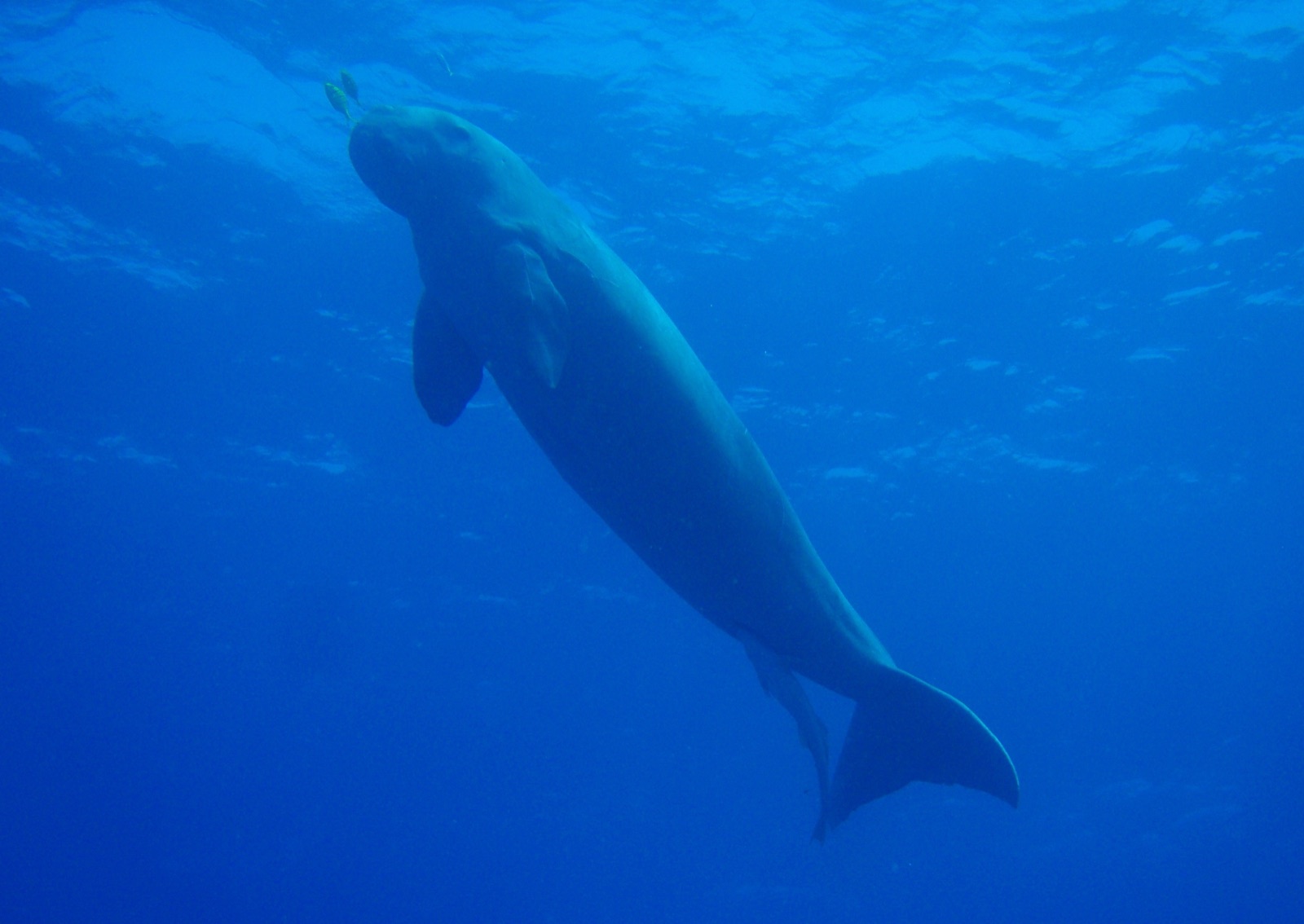
The dugong is the sea cow the mermaid myth was pinned on, which says more about sailors' deprivation than the animal. What divers actually meet is a gray, whiskery vacuum of seagrass with a fluked tail and a permanently mild expression. Watching one work a meadow at Marsa Alam or Calauit is oddly absorbing: the muzzle plows, sand billows, halos of juvenile fish snap up the leavings, and every few minutes the whole gentle apparatus levers up for a breath. It is also a species living on thin margins, dependent on seagrass beds that anchors, coastal works, and warming keep erasing.
Where and when to see one
"Resident" means most dives at that destination encounter them; "seasonal" means reliably present in the listed months; anything else is a bonus, not a plan.
| Destination | Reliability | Months | Notes |
|---|---|---|---|
| Marsa Alam & the Deep SouthEgypt | Resident: seen on most dives | Year-round | |
| CoronPhilippines | Resident: seen on most dives | Year-round | |
| Ningaloo ReefAustralia | Occasional | Year-round | |
| Espiritu SantoVanuatu | Occasional | Year-round |
Best month, at a glance
| Month | Reliable destinations |
|---|---|
| January | Marsa Alam & the Deep South · Coron · Ningaloo Reef · Espiritu Santo |
| February | Marsa Alam & the Deep South · Coron · Ningaloo Reef · Espiritu Santo |
| March | Marsa Alam & the Deep South · Coron · Ningaloo Reef · Espiritu Santo |
| April | Marsa Alam & the Deep South · Coron · Ningaloo Reef · Espiritu Santo |
| May | Marsa Alam & the Deep South · Coron · Ningaloo Reef · Espiritu Santo |
| June | Marsa Alam & the Deep South · Coron · Ningaloo Reef · Espiritu Santo |
| July | Marsa Alam & the Deep South · Coron · Ningaloo Reef · Espiritu Santo |
| August | Marsa Alam & the Deep South · Coron · Ningaloo Reef · Espiritu Santo |
| September | Marsa Alam & the Deep South · Coron · Ningaloo Reef · Espiritu Santo |
| October | Marsa Alam & the Deep South · Coron · Ningaloo Reef · Espiritu Santo |
| November | Marsa Alam & the Deep South · Coron · Ningaloo Reef · Espiritu Santo |
| December | Marsa Alam & the Deep South · Coron · Ningaloo Reef · Espiritu Santo |
Understanding them
Habitat: Shallow, sheltered seagrass meadows; the only strictly marine herbivorous mammal, wholly tied to seagrass
Range: Patchy across the Indo-West Pacific from East Africa and the Red Sea through South and Southeast Asia to northern Australia, which holds most of the world's population
Behavior: A slow, snuffling grazer that plows the bottom with a bristled, downturned muzzle, surfacing every few minutes with a soft snort. Generally shy; a handful of habituated individuals at tourism sites tolerate calm snorkelers, feeding on unconcerned while watched.
Diet: Seagrass, uprooted whole; feeding trails of bare sand snake across every meadow a dugong works
Size: typically around 2.7 m; documented up to 3.0 m (body length; adults commonly 250–400 kg).
How to behave around one
Approach from the side on snorkel, never from above or behind; no touching, no blocking its path to the surface, motor off near feeding animals, and cap group sizes per local rules. If it leaves a feeding trail, let it go.
Conservation
Vulnerable globally and worse regionally: functionally extinct in Chinese waters and declining across much of Asia; seagrass protection, netting bans, and boat rules are the levers that matter.
Charted sites known for them
Highlighted sites were charted for this species by our editors; numbers are GBIF occurrence records logged within about 5 km of a site since 1990.
Watch
From the official channels

Wildlife of Monterey | New film in our auditorium

Live Aviary Cam | Monterey Bay Aquarium

Live Aviary Cam | Monterey Bay Aquarium
Videos are embedded links to their creators' own channels. We host nothing and credit everything.