Marine Mammals
Dugong
Dugong dugon · Marine mammal, family Dugongidae (order Sirenia)
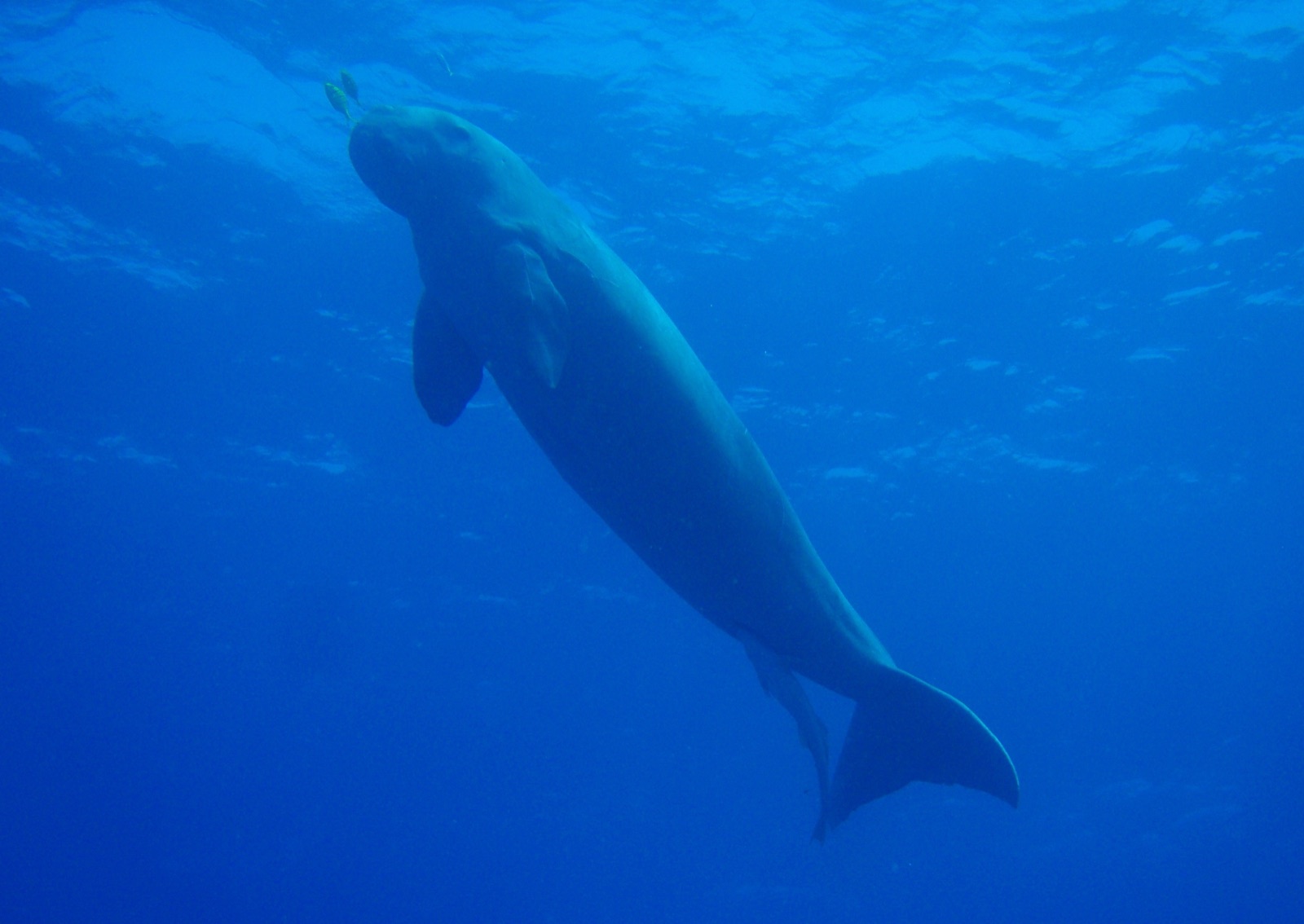
The dugong is the sea cow the mermaid myth was pinned on, which says more about sailors' deprivation than the animal. What divers actually meet is a gray, whiskery vacuum of seagrass with a fluked tail and a permanently mild expression. Watching one work a meadow at Marsa Alam or Calauit is oddly absorbing: the muzzle plows, sand billows, halos of juvenile fish snap up the leavings, and every few minutes the whole gentle apparatus levers up for a breath. It is also a species living on thin margins, dependent on seagrass beds that anchors, coastal works, and warming keep erasing.
Waar en wanneer je er een kunt zien
"Resident" betekent dat je ze bij de meeste duiken op die bestemming tegenkomt; "seizoensgebonden" betekent betrouwbaar aanwezig in de vermelde maanden; al het andere is een bonus, geen garantie.
| Bestemming | Betrouwbaarheid | Maanden | Notities |
|---|---|---|---|
| Marsa Alam & the Deep SouthEgypt | Resident: seen on most dives | Het hele jaar door | |
| CoronPhilippines | Resident: seen on most dives | Het hele jaar door | |
| Ningaloo ReefAustralia | Occasional | Het hele jaar door | |
| Espiritu SantoVanuatu | Occasional | Het hele jaar door |
Beste maand, in één oogopslag
| Maand | Betrouwbare bestemmingen |
|---|---|
| January | Marsa Alam & the Deep South · Coron · Ningaloo Reef · Espiritu Santo |
| February | Marsa Alam & the Deep South · Coron · Ningaloo Reef · Espiritu Santo |
| March | Marsa Alam & the Deep South · Coron · Ningaloo Reef · Espiritu Santo |
| April | Marsa Alam & the Deep South · Coron · Ningaloo Reef · Espiritu Santo |
| May | Marsa Alam & the Deep South · Coron · Ningaloo Reef · Espiritu Santo |
| June | Marsa Alam & the Deep South · Coron · Ningaloo Reef · Espiritu Santo |
| July | Marsa Alam & the Deep South · Coron · Ningaloo Reef · Espiritu Santo |
| August | Marsa Alam & the Deep South · Coron · Ningaloo Reef · Espiritu Santo |
| September | Marsa Alam & the Deep South · Coron · Ningaloo Reef · Espiritu Santo |
| October | Marsa Alam & the Deep South · Coron · Ningaloo Reef · Espiritu Santo |
| November | Marsa Alam & the Deep South · Coron · Ningaloo Reef · Espiritu Santo |
| December | Marsa Alam & the Deep South · Coron · Ningaloo Reef · Espiritu Santo |
Ze begrijpen
Habitat: Shallow, sheltered seagrass meadows; the only strictly marine herbivorous mammal, wholly tied to seagrass
Verspreidingsgebied: Patchy across the Indo-West Pacific from East Africa and the Red Sea through South and Southeast Asia to northern Australia, which holds most of the world's population
Gedrag: A slow, snuffling grazer that plows the bottom with a bristled, downturned muzzle, surfacing every few minutes with a soft snort. Generally shy; a handful of habituated individuals at tourism sites tolerate calm snorkelers, feeding on unconcerned while watched.
Dieet: Seagrass, uprooted whole; feeding trails of bare sand snake across every meadow a dugong works
Grootte: doorgaans rond 2.7 m; gedocumenteerd tot 3.0 m (body length; adults commonly 250–400 kg).
Hoe je je ertegenover gedraagt
Approach from the side on snorkel, never from above or behind; no touching, no blocking its path to the surface, motor off near feeding animals, and cap group sizes per local rules. If it leaves a feeding trail, let it go.
Behoud
Vulnerable globally and worse regionally: functionally extinct in Chinese waters and declining across much of Asia; seagrass protection, netting bans, and boat rules are the levers that matter.
Gekende duiksites waar je ze tegenkomt
Gemarkeerde locaties zijn voor deze soort in kaart gebracht door onze redacteurs; de getallen zijn GBIF-waarnemingsrecords vastgelegd binnen ongeveer 5 km van een locatie sinds 1990.
Bekijk
Via de officiële kanalen

Wildlife of Monterey | New film in our auditorium

Live Aviary Cam | Monterey Bay Aquarium

Live Aviary Cam | Monterey Bay Aquarium
Video's zijn ingesloten links naar de eigen kanalen van de makers. We hosten niets en vermelden altijd de bron.