Big Fish
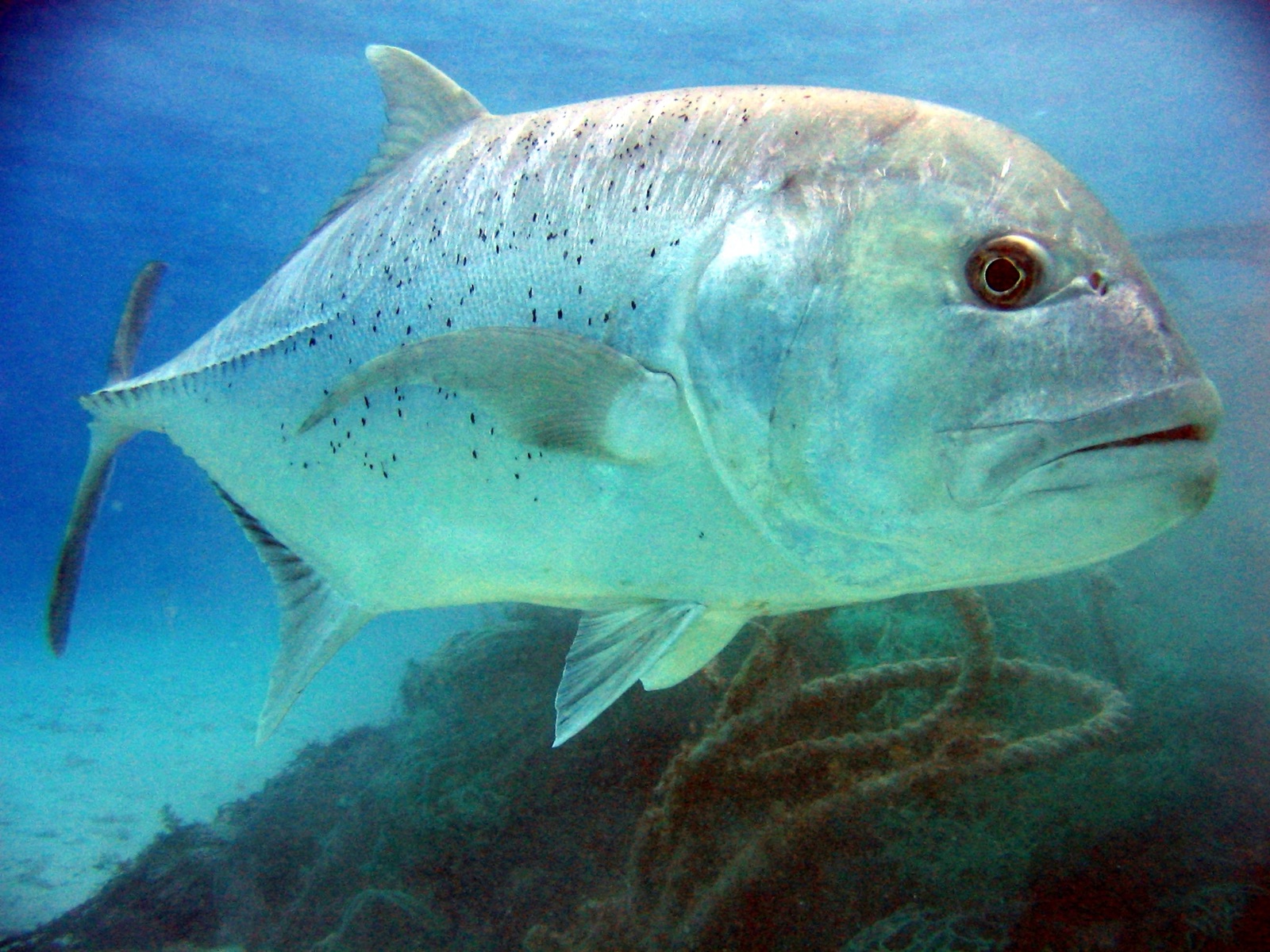
Giant Trevally
Caranx ignobilis · Bony fish, family Carangidae
A big GT reads as pure intent. The build is all shoulders (a steep silver forehead, scythe fins, a tail built for zero-to-full-speed), and the demeanor alternates between idling menace and detonations of speed that scatter fusilier schools like shrapnel. Divers in Polynesian and Maldivian passes watch them use every trick in the book: shadowing sharks, hiding in exhaled bubbles, timing runs to the panic of the school. Old males turn coal black and patrol alone like site security. For fly fishermen the species is a grail; for divers it is the reef's reminder that predation is mostly geometry and timing, performed at a pace nothing else on the reef can match.
Dove e quando avvistarne uno
"Residente" significa che la maggior parte delle immersioni in quella destinazione li incontra; "stagionale" significa che sono presenti in modo affidabile nei mesi indicati; qualsiasi altra cosa è un bonus, non un piano.
| Destinazione | Affidabilità | Mesi | Note |
|---|---|---|---|
| Cairns & the Ribbon ReefsAustralia | Resident: seen on most dives | Tutto l'anno | |
| North & South Malé AtollsMaldives | Resident: seen on most dives | Tutto l'anno | |
| PalauPalau | Resident: seen on most dives | Tutto l'anno | |
| FakaravaFrench Polynesia | Resident: seen on most dives | Tutto l'anno | |
| Sipadan & MabulMalaysia | Occasional | Tutto l'anno |
Il mese migliore, a colpo d'occhio
Capirle
Habitat: Reef passes, drop-offs, lagoons, and surge zones, anywhere baitfish can be pinned against structure or surface
Distribuzione: Tropical Indo-Pacific from South Africa and the Red Sea to Hawaii and the central Pacific atolls
Comportamento: The reef's linebacker: a deep-bodied silver-black predator that hunts in blitzing runs, alone or in packs, using divers' bubbles and even sharks as cover for ambushes. In passes it stacks into current with the grey reef sharks, waiting on the tide; around spawns it gathers in agitated hundreds.
Dieta: Fish, crustaceans, and cephalopods; documented snatching seabirds off the surface at some atolls
Dimensioni: tipicamente intorno a 0.9 m; documentato fino a 1.7 m (total length; big adults exceed 60 kg, exceptional fish 80).
Come comportarsi in sua presenza
No feeding, keep catch well away from your body where spearfishing is practiced, and enjoy the ambush behavior without trying to herd baitfish toward the hunters.
Conservazione
Least Concern overall but locally depleted near population centers, where its size and boldness make it an easy spear and line target; atoll reserves hold the great concentrations.
Siti mappati noti per avvistamenti
I siti evidenziati sono stati schedati per questa specie dai nostri redattori; i numeri sono record di occorrenza GBIF registrati entro circa 5 km dal sito a partire dal 1990.
Guarda
Dai canali ufficiali

Wildlife of Monterey | New film in our auditorium

Live Aviary Cam | Monterey Bay Aquarium

Live Aviary Cam | Monterey Bay Aquarium
I video sono link incorporati ai canali dei rispettivi autori. Non ospitiamo nulla e accreditiamo tutto.