Big Fish
Atlantic Goliath Grouper
Epinephelus itajara · Bony fish, family Epinephelidae
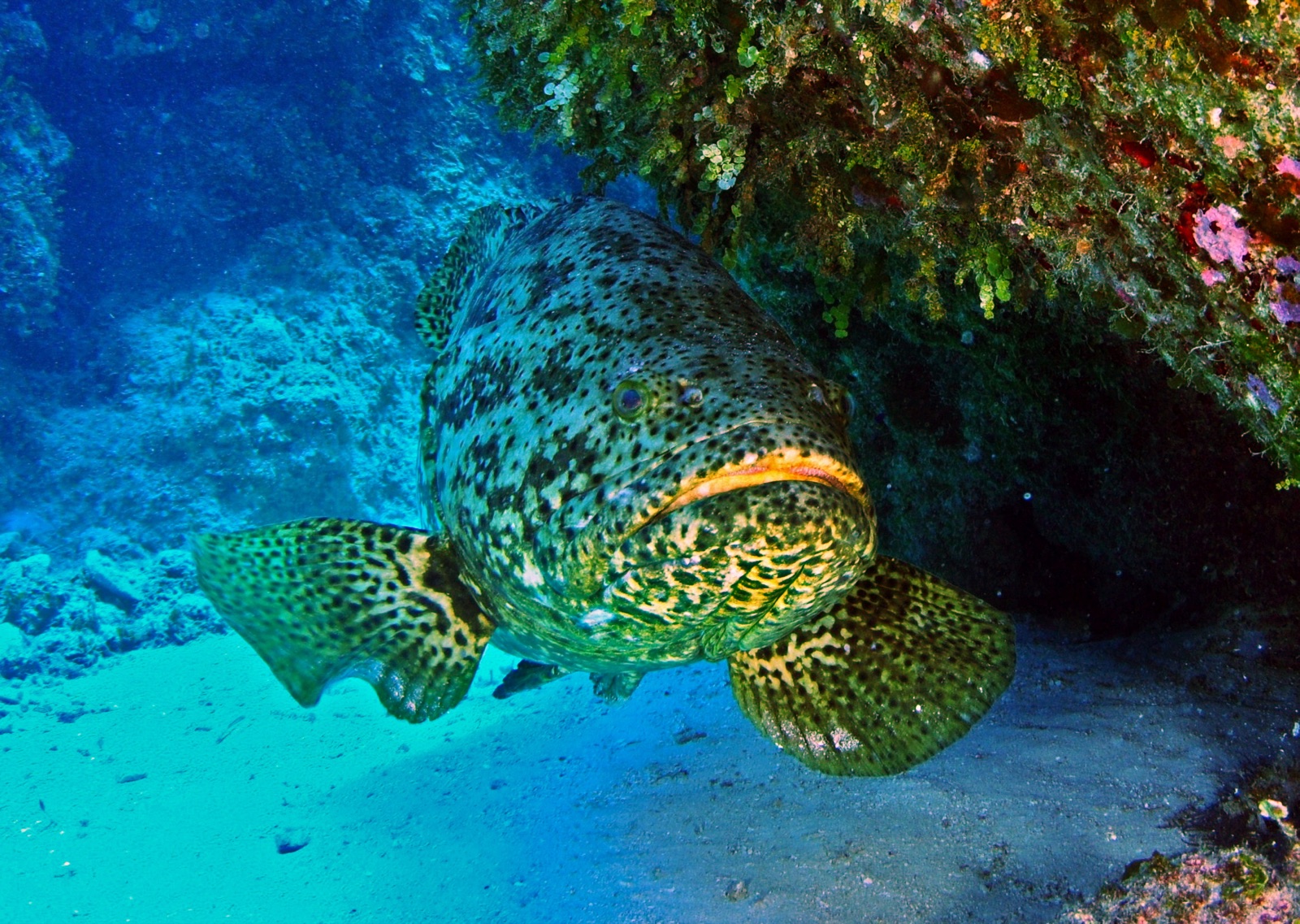
Meeting a goliath grouper is the closest diving comes to encountering furniture with opinions. The fish is a van-sized wedge of mottled brown, fins like barn doors, hanging under a wreck deck with a retinue of cigar minnows around its head. It watches you approach with a boulder's patience. Then the boom hits, a bass drum in your chest cavity, and the negotiation is over. Wiped out across the Caribbean by the 1980s, the species rebuilt itself in Florida under a fishing ban into one of conservation's loudest comebacks, literally: on late-summer wrecks off the state's coasts, aggregations of giants drum through the gloom like war drums. Cuba's protected gardens shelter the other great survivors.
Onde e quando ver um
"Residente" significa que a maioria dos mergulhos naquele destino os encontra; "sazonal" significa presença confiável nos meses listados; qualquer outra coisa é um bônus, não um plano.
| Destino | Fiabilidade | Meses | Notas |
|---|---|---|---|
| Florida KeysUnited States | Resident: seen on most dives | Jul–Sep | |
| Jardines de la ReinaCuba | Resident: seen on most dives | Todo o ano | |
| Belize Barrier ReefBelize | Rare | Todo o ano |
Melhor mês, em resumo
| Mês | Destinos fiáveis |
|---|---|
| January | Jardines de la Reina · Belize Barrier Reef |
| February | Jardines de la Reina · Belize Barrier Reef |
| March | Jardines de la Reina · Belize Barrier Reef |
| April | Jardines de la Reina · Belize Barrier Reef |
| May | Jardines de la Reina · Belize Barrier Reef |
| June | Jardines de la Reina · Belize Barrier Reef |
| July | Florida Keys · Jardines de la Reina · Belize Barrier Reef |
| August | Florida Keys · Jardines de la Reina · Belize Barrier Reef |
| September | Florida Keys · Jardines de la Reina · Belize Barrier Reef |
| October | Jardines de la Reina · Belize Barrier Reef |
| November | Jardines de la Reina · Belize Barrier Reef |
| December | Jardines de la Reina · Belize Barrier Reef |
Entendendo-os
Habitat: Wrecks, ledges, and high-relief reef; juveniles rear for years in mangrove creeks
Distribuição: Tropical western Atlantic from Florida and the Gulf of Mexico through the Caribbean to Brazil, plus a West African population
Comportamento: A sedentary ambush giant that holds tight to structure, defending a favored wreck for years. Famously unafraid, it approaches divers closely and produces a concussive boom (audible and physical) by drumming its swim bladder, both threat display and courtship call. Late-summer spawning gathers dozens of giants on Florida wrecks.
Dieta: Crustaceans (spiny lobster above all), slow fish, octopus, and juvenile sea turtles, inhaled whole with a vacuum gulp
Tamanho: normalmente cerca de 1.8 m; documentado até 2.5 m (total length; the Atlantic's largest grouper, with big fish past 300 kg).
Como se comportar perto de um
No feeding or touching, keep speared fish sealed away, and during Florida's spawning season follow the state's guidance on distance and lights at aggregation sites. The gatherings are the species' whole future.
Conservação
Downlisted from Critically Endangered to Vulnerable in 2021 after Florida's decades-long harvest ban rebuilt the population; a limited, contested Florida harvest reopened in the 2020s, and Caribbean recovery remains thin.
Pontos mapeados conhecidos por eles
Os locais destacados foram cartografados para esta espécie pelos nossos editores; os números são registos de ocorrência do GBIF num raio de cerca de 5 km do local desde 1990.
Assista
Dos canais oficiais

Wildlife of Monterey | New film in our auditorium

Live Aviary Cam | Monterey Bay Aquarium

Live Aviary Cam | Monterey Bay Aquarium
Os vídeos são ligações incorporadas para os canais dos próprios criadores. Não alojamos nada e creditamos tudo.