Marine Mammals
Humpback Whale
Megaptera novaeangliae · Marine mammal, family Balaenopteridae
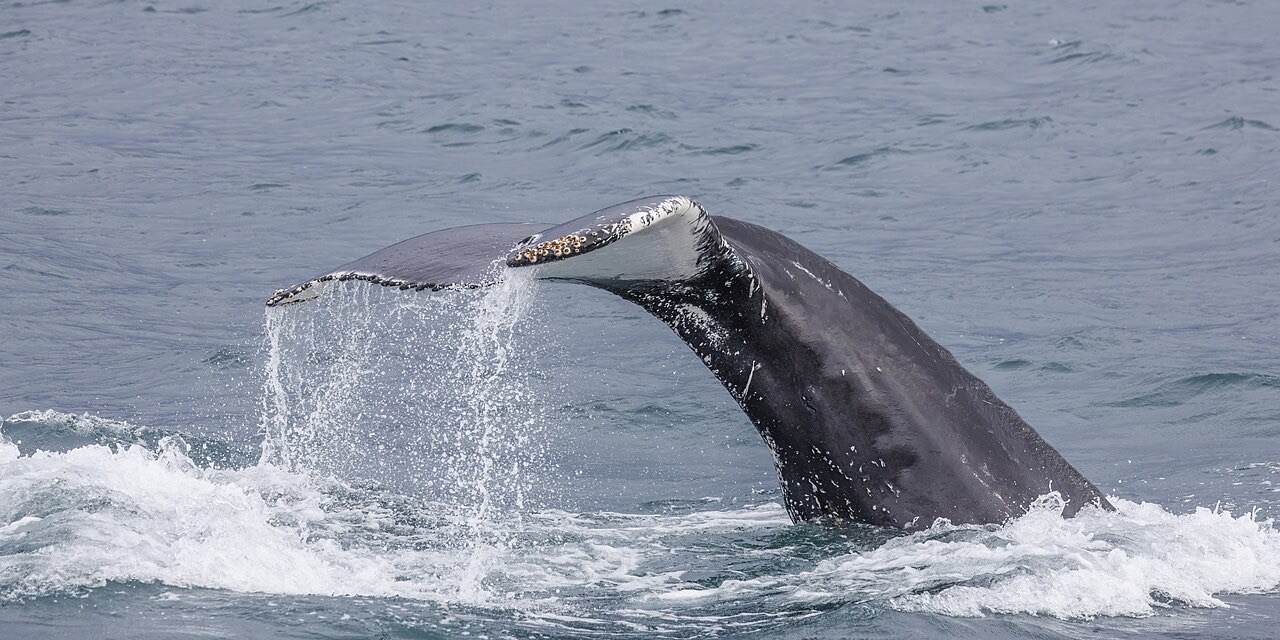
Nothing in the water prepares you for the moment a humpback resolves below: first as a turquoise glow, then as a shape the size of a bus rising with absurd grace, one white pectoral fin longer than you are tall sweeping past in silence. In Tonga's Vava'u the encounter is a managed swim: floaters at the surface, a mother dozing below, her calf spiraling up to breathe and inspect the visitors. Elsewhere the species performs above the waterline, hurling itself skyward off every warm coast it winters on. Hunted to remnants and now rebounding strongly, the humpback is the whale that taught tourism what recovery sounds like: its song is the soundtrack of half the dives in this atlas's winter seas.
Where and when to see one
"Resident" means most dives at that destination encounter them; "seasonal" means reliably present in the listed months; anything else is a bonus, not a plan.
| Destination | Reliability | Months | Notes |
|---|---|---|---|
| Ningaloo ReefAustralia | Seasonal: reliable in season | Aug–Oct | |
| Socorro & the RevillagigedosMexico | Seasonal: reliable in season | Jan–Apr | |
| VavaʻuTonga | Seasonal: reliable in season | Jul–Oct | |
| Maui & MolokiniUnited States | Seasonal: reliable in season | Dec–Mar | |
| The Sardine Run (Wild Coast)South Africa | Seasonal: reliable in season | Jun–Jul | |
| Arctic NorwayNorway | Seasonal: reliable in season | Nov–Jan |
Best month, at a glance
| Month | Reliable destinations |
|---|---|
| January | Socorro & the Revillagigedos · Maui & Molokini · Arctic Norway |
| February | Socorro & the Revillagigedos · Maui & Molokini |
| March | Socorro & the Revillagigedos · Maui & Molokini |
| April | Socorro & the Revillagigedos |
| June | The Sardine Run (Wild Coast) |
| July | Vavaʻu · The Sardine Run (Wild Coast) |
| August | Ningaloo Reef · Vavaʻu |
| September | Ningaloo Reef · Vavaʻu |
| October | Ningaloo Reef · Vavaʻu |
| November | Arctic Norway |
| December | Maui & Molokini · Arctic Norway |
Understanding them
Habitat: Migrates between polar feeding grounds and tropical breeding grounds; winter encounters happen over shallow banks and lee coasts
Range: All oceans; swim-with encounters center on breeding grounds in Tonga, Australia, French Polynesia, and the Dominican Republic's banks, with feeding-ground encounters at high latitudes
Behavior: The showman of the great whales: breaching, pec-slapping, tail-lobbing, and singing structured songs that carry for kilometers and evolve across ocean basins yearly. Winter grounds hold nursing mothers with calves, singing escorts, and heat runs of competing males; in-water encounters are drift-and-wait affairs governed by the whale's tolerance.
Diet: Krill and schooling fish, engulfed in lunges and corralled with bubble-net cooperation on the feeding grounds; breeding-season whales largely fast
Size: typically around 14.0 m; documented up to 17.0 m (body length; females run larger than males, with adults of 25–35 tonnes).
How to behave around one
Swim-with only where legal and licensed (Tonga and Ningaloo among them; Hawaii prohibits approach within 100 yards). Enter quietly on the guide's call, stay grouped at the surface, no diving down on animals, no engines near mother-calf pairs, and accept that many drops end with a distant fluke.
Conservation
A conservation landmark: most populations have rebounded strongly since the whaling ban and the species is globally Least Concern, though entanglement and ship strikes still kill whales yearly and a few subpopulations remain depleted.
Charted sites known for them
Highlighted sites were charted for this species by our editors; numbers are GBIF occurrence records logged within about 5 km of a site since 1990.
Watch
From the official channels

Wildlife of Monterey | New film in our auditorium

Live Aviary Cam | Monterey Bay Aquarium

Live Aviary Cam | Monterey Bay Aquarium
Videos are embedded links to their creators' own channels. We host nothing and credit everything.