Rays
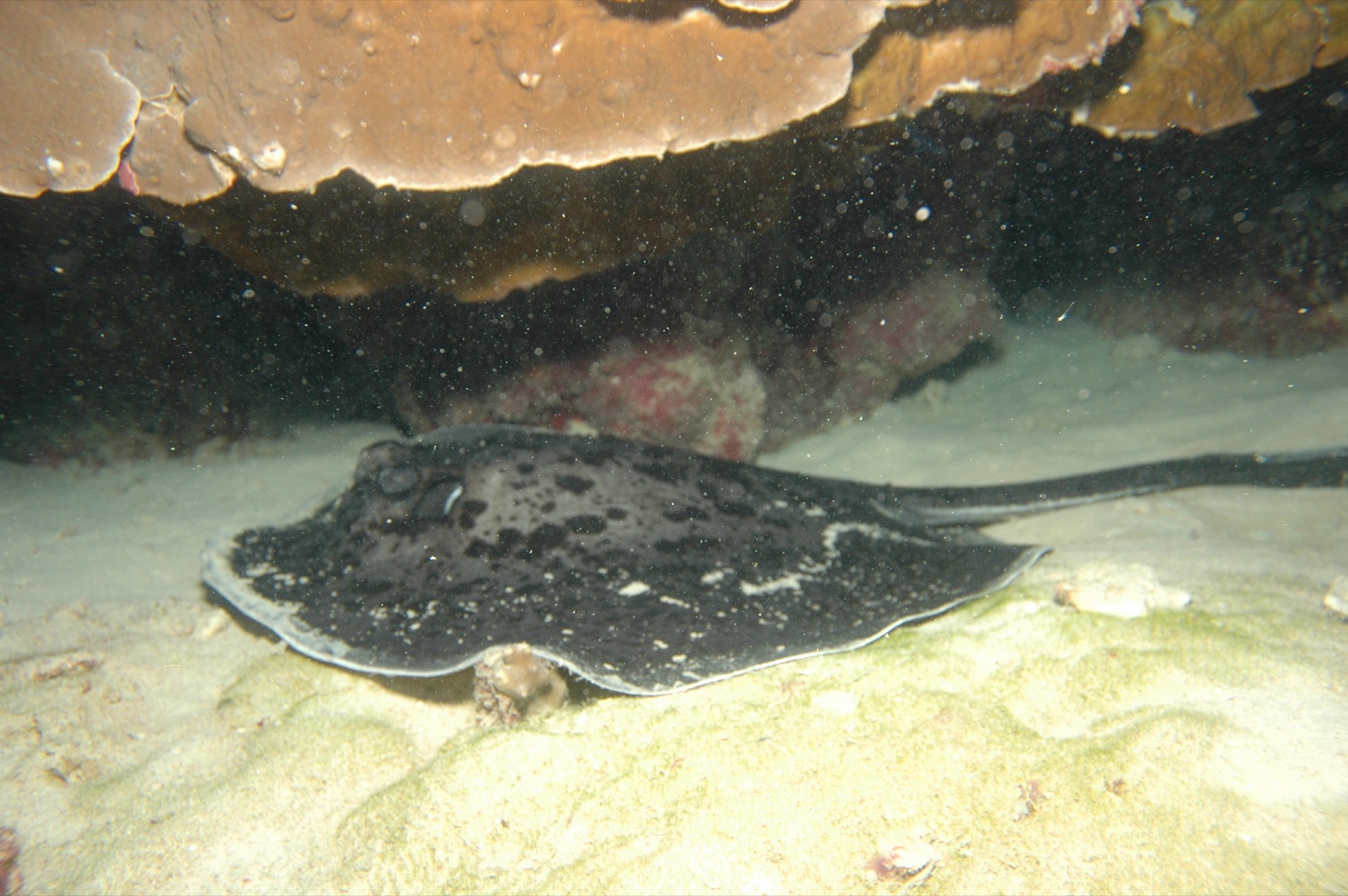
Marbled Ray
Taeniurops meyeni · Cartilaginous fish, family Dasyatidae
The marbled ray is the stingray built to seamount scale: a smoky, mottled disc nearly two meters across, so heavy it seems to settle into the reef rather than rest on it. At Cocos Island they are everywhere: layered on cleaning ledges, flapping ponderously between coral heads, shadowing the hammerhead schools like gray moons. The marbling that names it ranges from salt-and-pepper speckle to black storm-cloud blotches, no two alike. Divers who know only the skittish smaller dasyatids are startled by its composure; it will hold its patch of sand while an entire group files past, eye swiveling, tail undisturbed.
Dove e quando avvistarne uno
"Residente" significa che la maggior parte delle immersioni in quella destinazione li incontra; "stagionale" significa che sono presenti in modo affidabile nei mesi indicati; qualsiasi altra cosa è un bonus, non un piano.
| Destinazione | Affidabilità | Mesi | Note |
|---|---|---|---|
| Galápagos IslandsEcuador | Resident: seen on most dives | Tutto l'anno | |
| Cocos IslandCosta Rica | Resident: seen on most dives | Tutto l'anno | |
| MalpeloColombia | Resident: seen on most dives | Tutto l'anno | |
| Socorro & the RevillagigedosMexico | Occasional | Tutto l'anno |
Il mese migliore, a colpo d'occhio
Capirle
Habitat: Rocky and coral reefs, seamount plateaus, and adjacent sand; often at cleaning stations
Distribuzione: Tropical Indo-Pacific from the Red Sea and East Africa to Japan and Australia, plus Eastern Pacific outposts, famously abundant at Cocos Island and the Galápagos
Comportamento: A ponderous, dignified giant that drapes itself over rocks and sand like a thrown blanket, mottled black-and-gray above with a fringe of rippling disc edge. At Cocos they pile onto cleaning stations several deep and trail hunting hammerheads and jacks scavenging behind them.
Dieta: Bottom fish, crabs, and shrimp pinned beneath the disc
Dimensioni: tipicamente intorno a 1.4 m; documentato fino a 1.8 m (disc width; a genuinely massive stingray, thick-bodied and round).
Come comportarsi in sua presenza
Do not settle on sand without scanning it first, keep off cleaning stations, and never swim low over a resting ray's back. Approach from the side where it can see you.
Conservazione
Assessed Vulnerable; taken widely in inshore and trawl fisheries across the Indo-Pacific, with reserves in the Eastern Pacific protecting its most visible populations.
Siti mappati noti per avvistamenti
I siti evidenziati sono stati schedati per questa specie dai nostri redattori; i numeri sono record di occorrenza GBIF registrati entro circa 5 km dal sito a partire dal 1990.
Guarda
Dai canali ufficiali

Wildlife of Monterey | New film in our auditorium

Live Aviary Cam | Monterey Bay Aquarium

Live Aviary Cam | Monterey Bay Aquarium
I video sono link incorporati ai canali dei rispettivi autori. Non ospitiamo nulla e accreditiamo tutto.