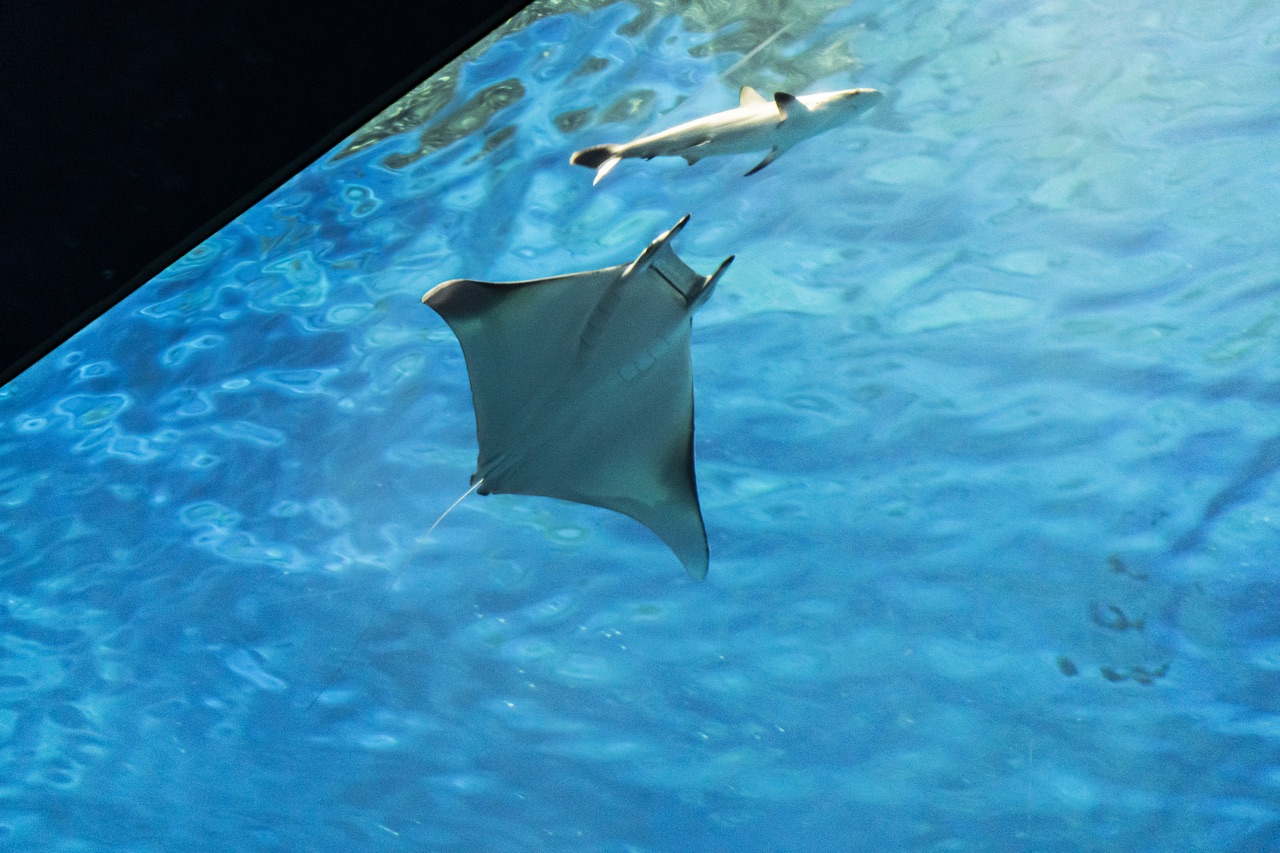
Rays
Mobula (Devil) Ray
Mobula spp. · Cartilaginous fish, family Mobulidae
A mobula school in full procession is one of the sea's great crowd scenes: hundreds or thousands of small devil rays stacked wing to wing, banking in unison so the formation flickers black-white-black as bellies catch the light. Off Baja California in spring the schools stretch beyond sight, and their acrobatics, rays flinging themselves skyward to land with a crack, turn boat rides into spectacle. At the Azores, deep-bodied sicklefin devil rays circle seamount summits in stately squadrons instead. The gill-plate trade that hammered mantas hits these smaller mobulids just as hard, and every species in the genus now carries international trade protection.
Where and when to see one
"Resident" means most dives at that destination encounter them; "seasonal" means reliably present in the listed months; anything else is a bonus, not a plan.
| Destination | Reliability | Months | Notes |
|---|---|---|---|
| Sea of Cortez & Cabo PulmoMexico | Seasonal: reliable in season | Apr–Jul | |
| The AzoresPortugal | Seasonal: reliable in season | Jul–Sep | |
| Galápagos IslandsEcuador | Occasional | Year-round | |
| Socorro & the RevillagigedosMexico | Occasional | Year-round |
Best month, at a glance
| Month | Reliable destinations |
|---|---|
| January | Galápagos Islands · Socorro & the Revillagigedos |
| February | Galápagos Islands · Socorro & the Revillagigedos |
| March | Galápagos Islands · Socorro & the Revillagigedos |
| April | Sea of Cortez & Cabo Pulmo · Galápagos Islands · Socorro & the Revillagigedos |
| May | Sea of Cortez & Cabo Pulmo · Galápagos Islands · Socorro & the Revillagigedos |
| June | Sea of Cortez & Cabo Pulmo · Galápagos Islands · Socorro & the Revillagigedos |
| July | Sea of Cortez & Cabo Pulmo · The Azores · Galápagos Islands · Socorro & the Revillagigedos |
| August | The Azores · Galápagos Islands · Socorro & the Revillagigedos |
| September | The Azores · Galápagos Islands · Socorro & the Revillagigedos |
| October | Galápagos Islands · Socorro & the Revillagigedos |
| November | Galápagos Islands · Socorro & the Revillagigedos |
| December | Galápagos Islands · Socorro & the Revillagigedos |
Understanding them
Habitat: Open coastal waters and offshore banks; surface schools by day, with tagged animals making extreme deep dives at night
Range: Warm oceans worldwide; the great schooling spectacles are in Mexico's Sea of Cortez, with sicklefin devil ray aggregations at the Azores' seamounts and scattered schools through the tropics
Behavior: The manta's smaller, more restless cousins: horned cephalic fins, swept wings, and a taste for aggregation. Munk's devil rays off Baja form schools of thousands that ripple the surface, and their habit of launching into flips and belly-flops meters above the water remains only partly explained. Encounters are mostly snorkel drifts alongside moving schools.
Diet: Zooplankton and small schooling fish strained from the water in coordinated feeding runs
Size: typically around 1.1 m; documented up to 3.7 m (disc width; spans the genus: schooling Munk's devil rays average about a meter, while sicklefin devil rays exceed 3 m).
How to behave around one
Slip into the water quietly ahead of a school's path rather than dropping onto it, no chasing or free-dive bombing through the formation, and follow local swim-with rules. Encounters are snorkel-only with most operators.
Conservation
Every Mobula species assessed is threatened (mostly Vulnerable or Endangered) from gill-plate fisheries and purse-seine bycatch; all are on CITES Appendix II.
Charted sites known for them
Highlighted sites were charted for this species by our editors; numbers are GBIF occurrence records logged within about 5 km of a site since 1990.
Watch
From the official channels

Wildlife of Monterey | New film in our auditorium

Live Aviary Cam | Monterey Bay Aquarium

Live Aviary Cam | Monterey Bay Aquarium
Videos are embedded links to their creators' own channels. We host nothing and credit everything.