Rays
Mobula (Devil) Ray
Mobula spp. · Cartilaginous fish, family Mobulidae
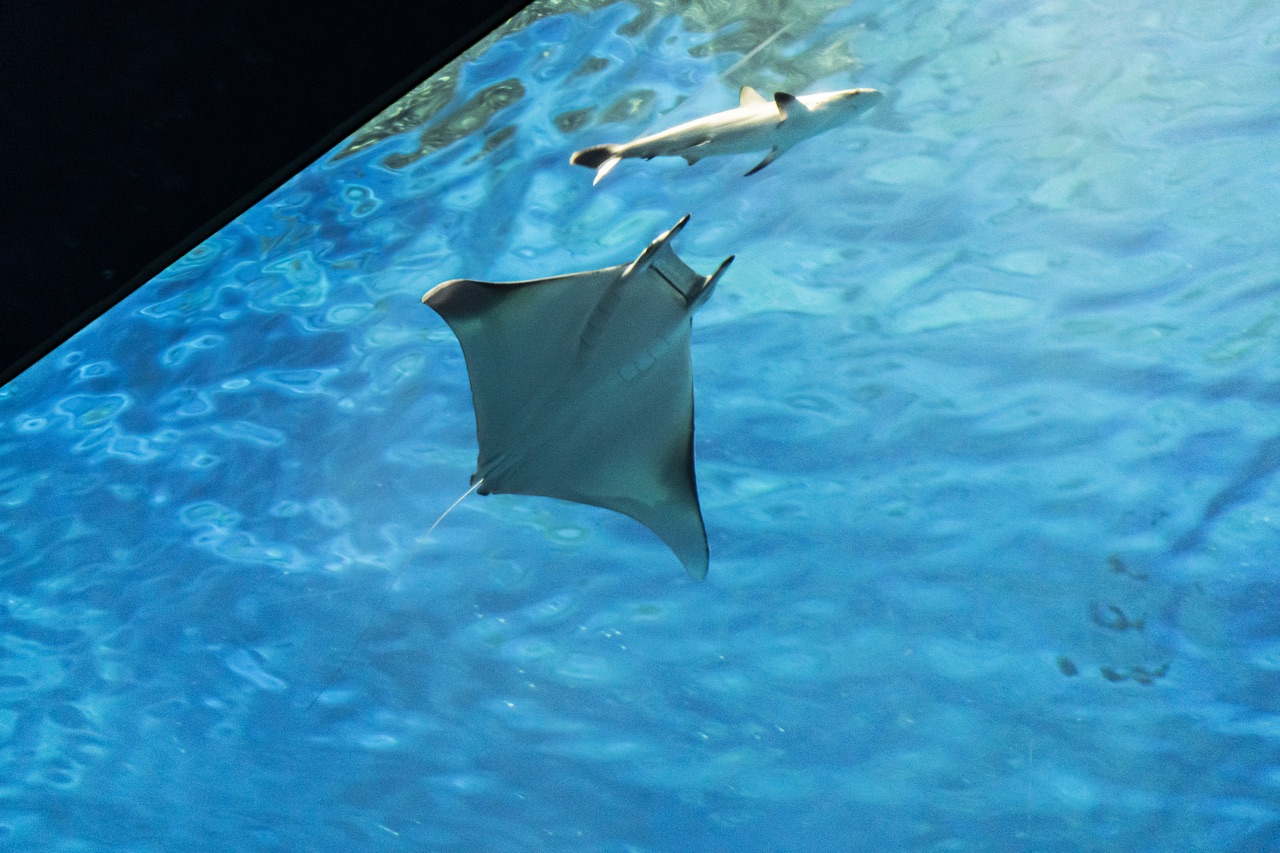
A mobula school in full procession is one of the sea's great crowd scenes: hundreds or thousands of small devil rays stacked wing to wing, banking in unison so the formation flickers black-white-black as bellies catch the light. Off Baja California in spring the schools stretch beyond sight, and their acrobatics, rays flinging themselves skyward to land with a crack, turn boat rides into spectacle. At the Azores, deep-bodied sicklefin devil rays circle seamount summits in stately squadrons instead. The gill-plate trade that hammered mantas hits these smaller mobulids just as hard, and every species in the genus now carries international trade protection.
Dónde y cuándo ver uno
"Residente" significa que la mayoría de las inmersiones en ese destino tienen encuentros con ellos; "estacional" significa que su presencia es fiable en los meses indicados; cualquier otra cosa es un extra, no algo con lo que contar.
| Destino | Fiabilidad | Meses | Notas |
|---|---|---|---|
| Sea of Cortez & Cabo PulmoMexico | Seasonal: reliable in season | Apr–Jul | |
| The AzoresPortugal | Seasonal: reliable in season | Jul–Sep | |
| Galápagos IslandsEcuador | Occasional | Todo el año | |
| Socorro & the RevillagigedosMexico | Occasional | Todo el año |
El mejor mes, de un vistazo
| Mes | Destinos fiables |
|---|---|
| January | Galápagos Islands · Socorro & the Revillagigedos |
| February | Galápagos Islands · Socorro & the Revillagigedos |
| March | Galápagos Islands · Socorro & the Revillagigedos |
| April | Sea of Cortez & Cabo Pulmo · Galápagos Islands · Socorro & the Revillagigedos |
| May | Sea of Cortez & Cabo Pulmo · Galápagos Islands · Socorro & the Revillagigedos |
| June | Sea of Cortez & Cabo Pulmo · Galápagos Islands · Socorro & the Revillagigedos |
| July | Sea of Cortez & Cabo Pulmo · The Azores · Galápagos Islands · Socorro & the Revillagigedos |
| August | The Azores · Galápagos Islands · Socorro & the Revillagigedos |
| September | The Azores · Galápagos Islands · Socorro & the Revillagigedos |
| October | Galápagos Islands · Socorro & the Revillagigedos |
| November | Galápagos Islands · Socorro & the Revillagigedos |
| December | Galápagos Islands · Socorro & the Revillagigedos |
Comprendiéndolos
Hábitat: Open coastal waters and offshore banks; surface schools by day, with tagged animals making extreme deep dives at night
Rango: Warm oceans worldwide; the great schooling spectacles are in Mexico's Sea of Cortez, with sicklefin devil ray aggregations at the Azores' seamounts and scattered schools through the tropics
Comportamiento: The manta's smaller, more restless cousins: horned cephalic fins, swept wings, and a taste for aggregation. Munk's devil rays off Baja form schools of thousands that ripple the surface, and their habit of launching into flips and belly-flops meters above the water remains only partly explained. Encounters are mostly snorkel drifts alongside moving schools.
Dieta: Zooplankton and small schooling fish strained from the water in coordinated feeding runs
Tamaño: normalmente alrededor de 1.1 m; documentado hasta 3.7 m (disc width; spans the genus: schooling Munk's devil rays average about a meter, while sicklefin devil rays exceed 3 m).
Cómo comportarse cerca de uno
Slip into the water quietly ahead of a school's path rather than dropping onto it, no chasing or free-dive bombing through the formation, and follow local swim-with rules. Encounters are snorkel-only with most operators.
Conservación
Every Mobula species assessed is threatened (mostly Vulnerable or Endangered) from gill-plate fisheries and purse-seine bycatch; all are on CITES Appendix II.
Puntos conocidos por avistamientos
Los puntos destacados fueron registrados para esta especie por nuestros editores; los números son registros de ocurrencia de GBIF anotados en un radio de unos 5 km de un punto desde 1990.
Ver
Desde los canales oficiales

Wildlife of Monterey | New film in our auditorium

Live Aviary Cam | Monterey Bay Aquarium

Live Aviary Cam | Monterey Bay Aquarium
Los vídeos son enlaces insertados a los canales de sus propios creadores. No alojamos nada y acreditamos todo.