Marine Mammals
Orca (Killer Whale)
Orcinus orca · Marine mammal, family Delphinidae
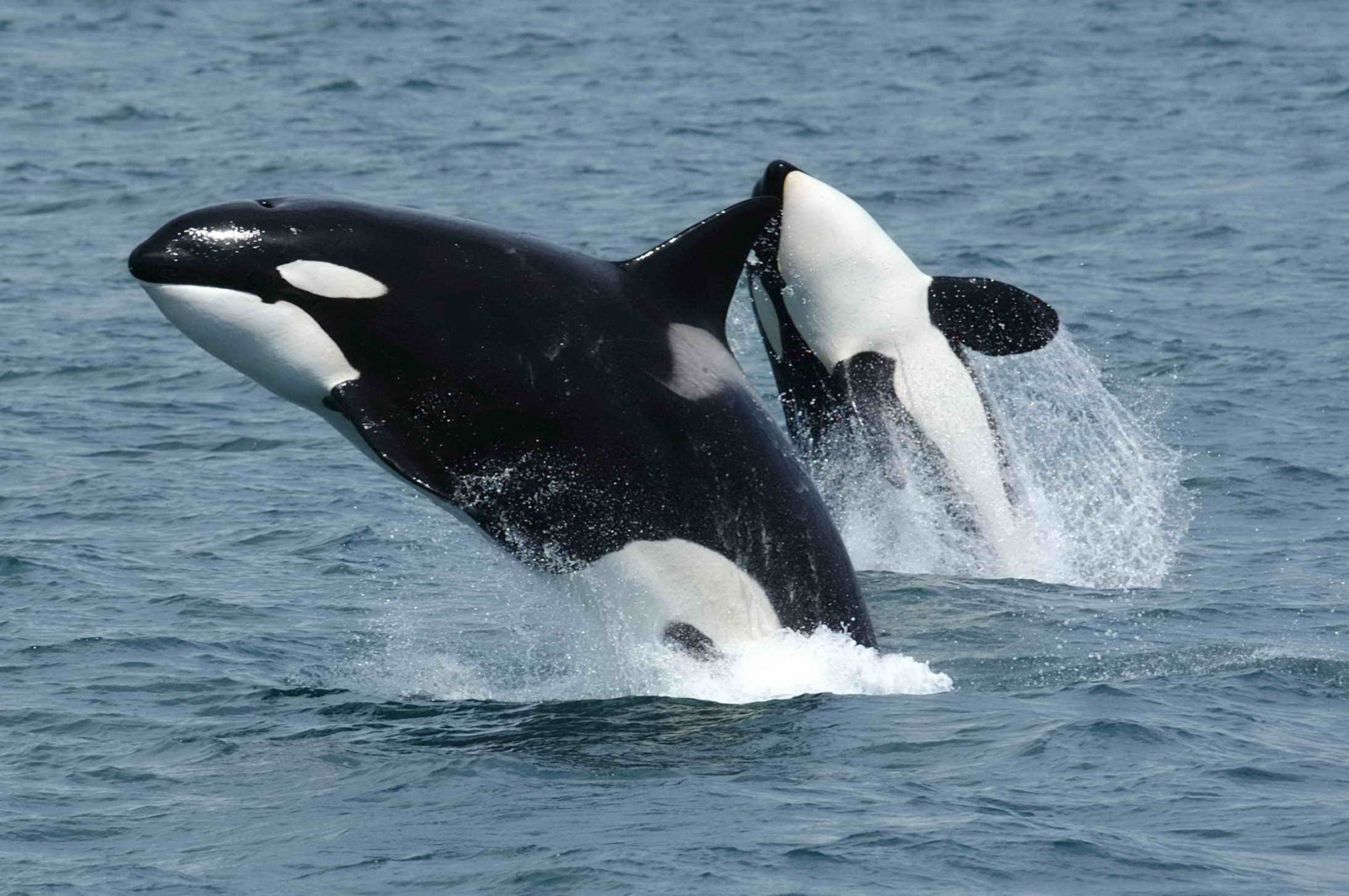
Meeting orcas in a Norwegian fjord in November is diving distilled to essentials: near-darkness at noon, four degrees of water, and then the pane-of-glass moment when a two-meter dorsal fin steams past and a matriarch turns her white eyepatch on you. The herring runs inside the Arctic fjords gather hundreds of whales into weeks of feasting, along with the humpbacks that gatecrash the work. Encounters are snorkel drifts under expedition rules, brief and jolting; the whales' curiosity (a juvenile's flyby, a burst of echolocation you feel in your teeth) is granted, never taken. Everywhere else in the world, an orca sighting on a dive trip is simple jackpot.
Where and when to see one
"Resident" means most dives at that destination encounter them; "seasonal" means reliably present in the listed months; anything else is a bonus, not a plan.
| Destination | Reliability | Months | Notes |
|---|---|---|---|
| Arctic NorwayNorway | Seasonal: reliable in season | Nov–Jan | |
| Galápagos IslandsEcuador | Rare | Year-round | |
| Sea of Cortez & Cabo PulmoMexico | Rare | Year-round |
Best month, at a glance
| Month | Reliable destinations |
|---|---|
| January | Arctic Norway · Galápagos Islands · Sea of Cortez & Cabo Pulmo |
| February | Galápagos Islands · Sea of Cortez & Cabo Pulmo |
| March | Galápagos Islands · Sea of Cortez & Cabo Pulmo |
| April | Galápagos Islands · Sea of Cortez & Cabo Pulmo |
| May | Galápagos Islands · Sea of Cortez & Cabo Pulmo |
| June | Galápagos Islands · Sea of Cortez & Cabo Pulmo |
| July | Galápagos Islands · Sea of Cortez & Cabo Pulmo |
| August | Galápagos Islands · Sea of Cortez & Cabo Pulmo |
| September | Galápagos Islands · Sea of Cortez & Cabo Pulmo |
| October | Galápagos Islands · Sea of Cortez & Cabo Pulmo |
| November | Arctic Norway · Galápagos Islands · Sea of Cortez & Cabo Pulmo |
| December | Arctic Norway · Galápagos Islands · Sea of Cortez & Cabo Pulmo |
Understanding them
Habitat: All marine habitats from polar pack ice to the tropics; encounter settings are cold-water herring fjords and chance meetings on baitball runs
Range: Cosmopolitan: the most widely distributed mammal after humans, organized into ecotypes with distinct prey, dialects, and cultures
Behavior: An apex predator that is also the ocean's most sophisticated socialite: stable matrilines, inherited dialects, cooperative hunting refined into local technique. Norway's winter orcas carousel-feed, herding herring into balls and stunning them with tail slaps while snorkelers watch from the margins.
Diet: Ecotype-dependent: herring in Norway, seals among pack-ice specialists, salmon for Pacific residents, rays and even white sharks for others; each population hunts what its culture teaches
Size: typically around 7.0 m; documented up to 9.8 m (body length; males carry the two-meter dorsal fin and reach well beyond females' size).
How to behave around one
Winter fjord operations are snorkel-only, drysuit, guide-marshaled: slide in quietly, stay in a tight surface line, never swim at the whales or between hunters and their herring ball, and leave the water on the guide's signal.
Conservation
Listed Data Deficient globally because the ecotypes differ so much; several (the Pacific southern residents among them) are gravely depleted, with prey collapse, PCBs, and noise the leading threats.
Charted sites known for them
Highlighted sites were charted for this species by our editors; numbers are GBIF occurrence records logged within about 5 km of a site since 1990.
Watch
From the official channels

Wildlife of Monterey | New film in our auditorium

Live Aviary Cam | Monterey Bay Aquarium

Live Aviary Cam | Monterey Bay Aquarium
Videos are embedded links to their creators' own channels. We host nothing and credit everything.