Marine Mammals
Spinner Dolphin
Stenella longirostris · Marine mammal, family Delphinidae
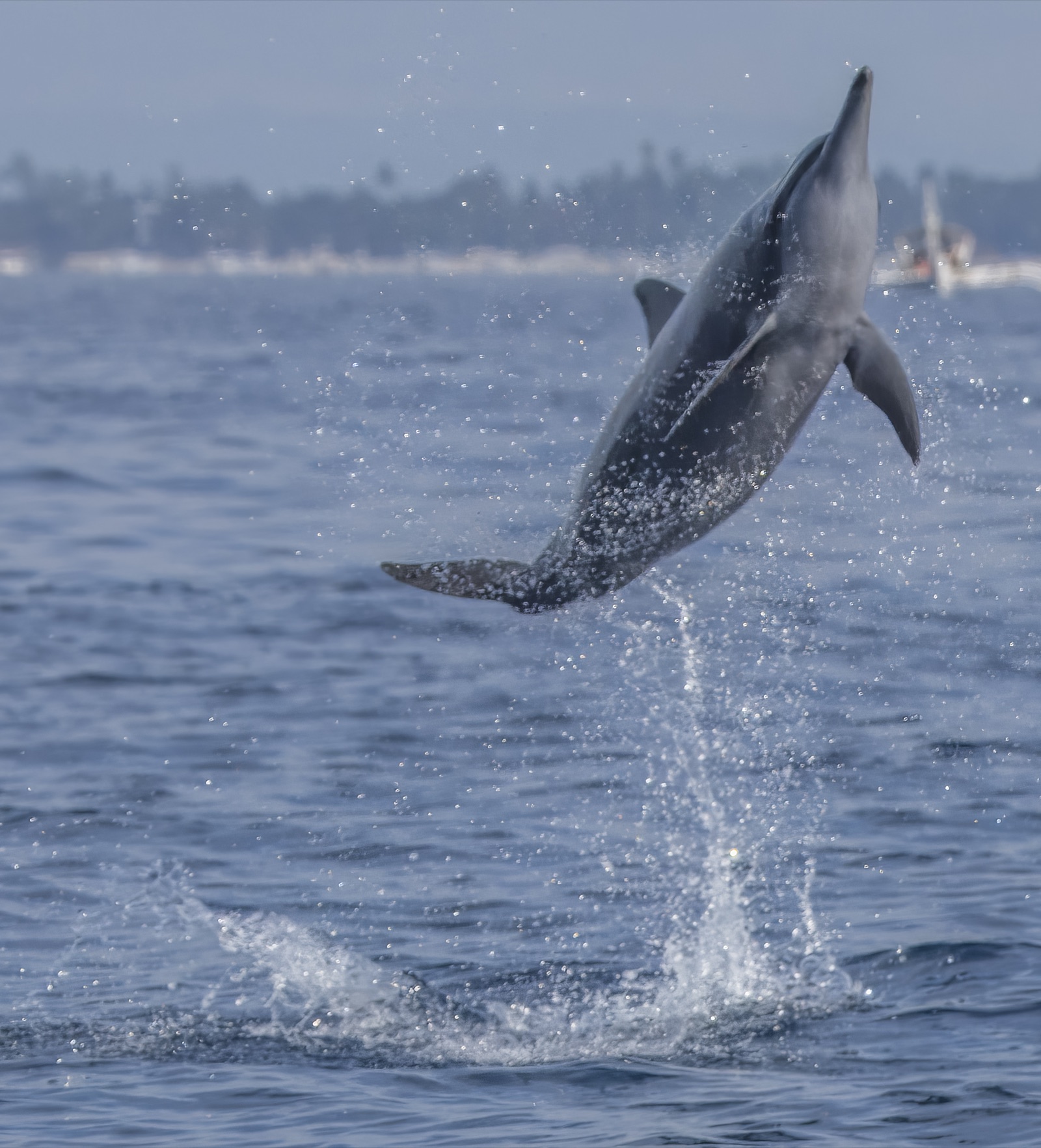
Spinners are the ocean's early-morning acrobats: slim, three-toned dolphins that erupt from the surface in corkscrew leaps nobody has fully explained, whether signal, parasite-shedding, or exuberance. Divers and snorkelers meet them where pods rest through daylight in shallow turquoise bays: Sataya's crescent lagoon in Egypt's deep south, Fernando de Noronha's protected coves, the Kona coast. Watching a resting pod glide beneath you in synchronized silence, calves tucked into slipstreams, is a quiet counterpoint to the pyrotechnics. Their fidelity to the same bays makes them findable, and makes disciplined, hands-off conduct the entire game.
Where and when to see one
"Resident" means most dives at that destination encounter them; "seasonal" means reliably present in the listed months; anything else is a bonus, not a plan.
| Destination | Reliability | Months | Notes |
|---|---|---|---|
| Marsa Alam & the Deep SouthEgypt | Resident: seen on most dives | Year-round | |
| Kona, HawaiʻiUnited States | Resident: seen on most dives | Year-round | |
| Fernando de NoronhaBrazil | Resident: seen on most dives | Year-round | |
| OʻahuUnited States | Resident: seen on most dives | Year-round |
Best month, at a glance
Understanding them
Habitat: Rests by day in shallow, sandy-bottomed bays and lagoons; hunts offshore at night over deep water
Range: Pantropical: Hawaii, the Red Sea, Brazil's oceanic islands, East Africa, and warm oceans worldwide
Behavior: Named for its aerial signature: leaping spins of up to several rotations, snapped off in volleys. The daily rhythm is strict: exhausting night hunts offshore, then daytime rest in traditional shallow bays, swimming slowly in tight formation with eyes half shut. That schedule is exactly why swim-with pressure became a welfare problem.
Diet: Small mesopelagic fish, squid, and shrimp taken on nighttime dives as the deep scattering layer rises
Size: typically around 1.8 m; documented up to 2.4 m (body length; a slender, long-beaked dolphin).
How to behave around one
Respect resting-bay rules everywhere: in Hawaii, federal law prohibits swimming with or approaching spinners within 50 yards. At Egyptian and Brazilian sites, stay within designated zones, no chasing or cutting off the pod, and let interactions begin and end with the animals.
Conservation
Least Concern globally, but the eastern Pacific stocks devastated by tuna purse-seining remain depressed, and chronic tourism disturbance at resting bays drove the modern approach rules.
Charted sites known for them
Highlighted sites were charted for this species by our editors; numbers are GBIF occurrence records logged within about 5 km of a site since 1990.
Watch
From the official channels

Wildlife of Monterey | New film in our auditorium

Live Aviary Cam | Monterey Bay Aquarium

Live Aviary Cam | Monterey Bay Aquarium
Videos are embedded links to their creators' own channels. We host nothing and credit everything.