Marine Mammals
Spinner Dolphin
Stenella longirostris · Marine mammal, family Delphinidae
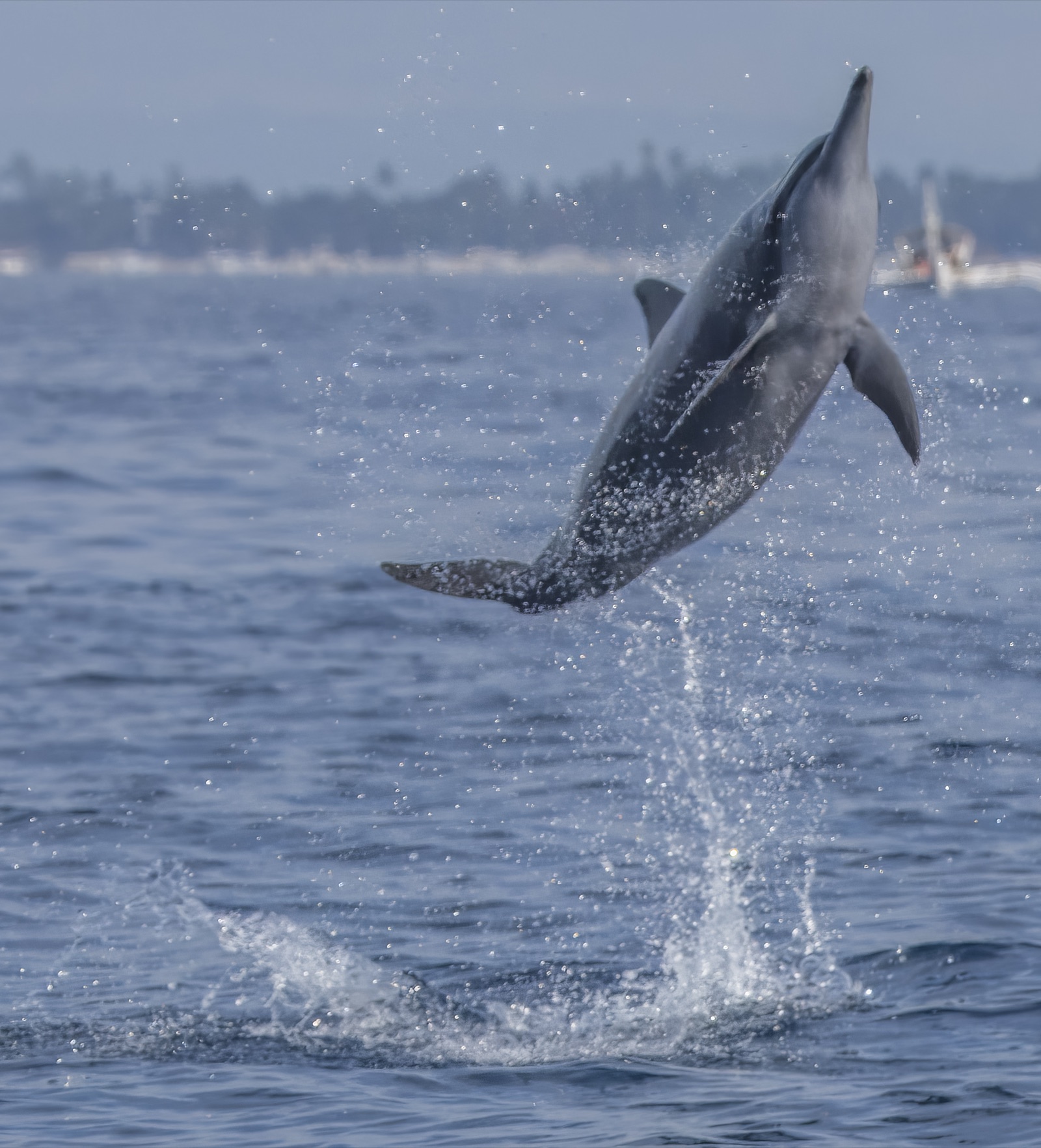
Spinners are the ocean's early-morning acrobats: slim, three-toned dolphins that erupt from the surface in corkscrew leaps nobody has fully explained, whether signal, parasite-shedding, or exuberance. Divers and snorkelers meet them where pods rest through daylight in shallow turquoise bays: Sataya's crescent lagoon in Egypt's deep south, Fernando de Noronha's protected coves, the Kona coast. Watching a resting pod glide beneath you in synchronized silence, calves tucked into slipstreams, is a quiet counterpoint to the pyrotechnics. Their fidelity to the same bays makes them findable, and makes disciplined, hands-off conduct the entire game.
Dónde y cuándo ver uno
"Residente" significa que la mayoría de las inmersiones en ese destino tienen encuentros con ellos; "estacional" significa que su presencia es fiable en los meses indicados; cualquier otra cosa es un extra, no algo con lo que contar.
| Destino | Fiabilidad | Meses | Notas |
|---|---|---|---|
| Marsa Alam & the Deep SouthEgypt | Resident: seen on most dives | Todo el año | |
| Kona, HawaiʻiUnited States | Resident: seen on most dives | Todo el año | |
| Fernando de NoronhaBrazil | Resident: seen on most dives | Todo el año | |
| OʻahuUnited States | Resident: seen on most dives | Todo el año |
El mejor mes, de un vistazo
| Mes | Destinos fiables |
|---|---|
| January | Marsa Alam & the Deep South · Kona, Hawaiʻi · Fernando de Noronha · Oʻahu |
| February | Marsa Alam & the Deep South · Kona, Hawaiʻi · Fernando de Noronha · Oʻahu |
| March | Marsa Alam & the Deep South · Kona, Hawaiʻi · Fernando de Noronha · Oʻahu |
| April | Marsa Alam & the Deep South · Kona, Hawaiʻi · Fernando de Noronha · Oʻahu |
| May | Marsa Alam & the Deep South · Kona, Hawaiʻi · Fernando de Noronha · Oʻahu |
| June | Marsa Alam & the Deep South · Kona, Hawaiʻi · Fernando de Noronha · Oʻahu |
| July | Marsa Alam & the Deep South · Kona, Hawaiʻi · Fernando de Noronha · Oʻahu |
| August | Marsa Alam & the Deep South · Kona, Hawaiʻi · Fernando de Noronha · Oʻahu |
| September | Marsa Alam & the Deep South · Kona, Hawaiʻi · Fernando de Noronha · Oʻahu |
| October | Marsa Alam & the Deep South · Kona, Hawaiʻi · Fernando de Noronha · Oʻahu |
| November | Marsa Alam & the Deep South · Kona, Hawaiʻi · Fernando de Noronha · Oʻahu |
| December | Marsa Alam & the Deep South · Kona, Hawaiʻi · Fernando de Noronha · Oʻahu |
Comprendiéndolos
Hábitat: Rests by day in shallow, sandy-bottomed bays and lagoons; hunts offshore at night over deep water
Rango: Pantropical: Hawaii, the Red Sea, Brazil's oceanic islands, East Africa, and warm oceans worldwide
Comportamiento: Named for its aerial signature: leaping spins of up to several rotations, snapped off in volleys. The daily rhythm is strict: exhausting night hunts offshore, then daytime rest in traditional shallow bays, swimming slowly in tight formation with eyes half shut. That schedule is exactly why swim-with pressure became a welfare problem.
Dieta: Small mesopelagic fish, squid, and shrimp taken on nighttime dives as the deep scattering layer rises
Tamaño: normalmente alrededor de 1.8 m; documentado hasta 2.4 m (body length; a slender, long-beaked dolphin).
Cómo comportarse cerca de uno
Respect resting-bay rules everywhere: in Hawaii, federal law prohibits swimming with or approaching spinners within 50 yards. At Egyptian and Brazilian sites, stay within designated zones, no chasing or cutting off the pod, and let interactions begin and end with the animals.
Conservación
Least Concern globally, but the eastern Pacific stocks devastated by tuna purse-seining remain depressed, and chronic tourism disturbance at resting bays drove the modern approach rules.
Puntos conocidos por avistamientos
Los puntos destacados fueron registrados para esta especie por nuestros editores; los números son registros de ocurrencia de GBIF anotados en un radio de unos 5 km de un punto desde 1990.
Ver
Desde los canales oficiales

Wildlife of Monterey | New film in our auditorium

Live Aviary Cam | Monterey Bay Aquarium

Live Aviary Cam | Monterey Bay Aquarium
Los vídeos son enlaces insertados a los canales de sus propios creadores. No alojamos nada y acreditamos todo.