Puntos de buceo, temporadas y vida marina — investigados, cartografiados, planificados.
Menú
Destinos Puntos de buceo Vida marina Pecios Noticias
Planifica un viaje Planificador de viajes Cuándo bucear Calculadora de costes Comparativas Calendario de fauna marina Temperatura del agua Liveaboards Operadores y resorts Parques marinos Cámaras hiperbáricas Mapa mundial
Regiones Australia, Nueva Zelanda y Asia OrientalCaribe y Atlántico occidentalEuropa, Atlántico y MediterráneoOcéano Índico y África OrientalIslas del Pacífico y MicronesiaMar Rojo y Oriente MedioSudeste Asiático y el Triángulo del CoralLas Américas y el Pacífico Oriental Países
Aprender y herramientas Todas las guías Certificaciones Guías de equipo Vídeos Consulta los datos Agentes de IA API
Acerca de Quiénes somos Metodología Aviso legal Contacto
Tu vista
★ Guardado

Tus destinos, sitios y especies favoritos — guardados en este navegador.

API GATEWAY

Acceso JSON gratuito de solo lectura a los datos en caché del atlas.

Modo oscuro

🧭 Vista guiada
¿Nuevo en el buceo? ¿Profundidades, corrientes, niveles de certificación? Explicamos cada término mientras navegas, en un lenguaje claro. Los mismos datos, con la ayuda integrada.

⚡ Vista experta
Ya conoces la diferencia entre una pared y un drift dive. Solo los datos — claros, rápidos y concisos. Esta es la vista predeterminada.

Idioma de la interfaz

Comparativa

The Galápagos vs Cocos Island
Galápagos Islands

Galápagos Islands

Ecuador
Cocos Island

Cocos Island

Costa Rica
La respuesta cortaBoth are cool-water, current-swept hammerhead theaters reached by liveaboard, and neither is a beginner's trip. The Galápagos adds breadth: whale sharks at Darwin in the June-to-November cool season, mola and marine iguanas in the warm months, and Ecuador's flights and park machinery to navigate. Cocos asks for roughly a day and a half of open-Pacific steaming each way and repays it with dense cleaning-station schools, reliable tiger sharks, and almost no other boats. Budgets land in the same high bracket; stomach and schedule often decide.
Elige Galápagos Islands Pick the Galápagos for the broader spectacle — hammerhead walls plus whale sharks in season, endemic oddities, and wildlife above the waterline.
Elige Cocos Island Pick Cocos if you are a shark purist with sea legs, trading a thirty-six-hour crossing for cleaning-station hammerheads in near-total solitude.

Los números, uno al lado del otro

Galápagos IslandsCocos Island
Mejores mesesJun–NovJun–Nov
Agua (rango documentado)17–27 °C / 63–81 °F24–29 °C / 75–84 °F
Visibilidad10–25 m12–30 m
NivelAdvancedExpedition
Buceo en barco de dos inmersiones$160–$260
Sitios cartografiados76
Sitios desde orilla00
Pecios00
Liveaboards que operan en33
Especies grandes y fiables Galápagos SharkGreen Sea TurtleGalápagos Sea LionScalloped HammerheadMarbled RayWhitetip Reef Shark Scalloped HammerheadWhitetip Reef SharkMarbled RaySilky SharkTiger Shark

Cada cifra extraída en tiempo real de los dos registros de destino — los rangos y las etiquetas de confianza se aplican igual que en sus páginas propias.

La respuesta más completa

These are the eastern Pacific's two great shark pilgrimages, and they share DNA: seamount-and-island diving, surge and thermoclines, negative entries, and scalloped hammerheads schooling overhead like weather. The differences are logistics and supporting cast.

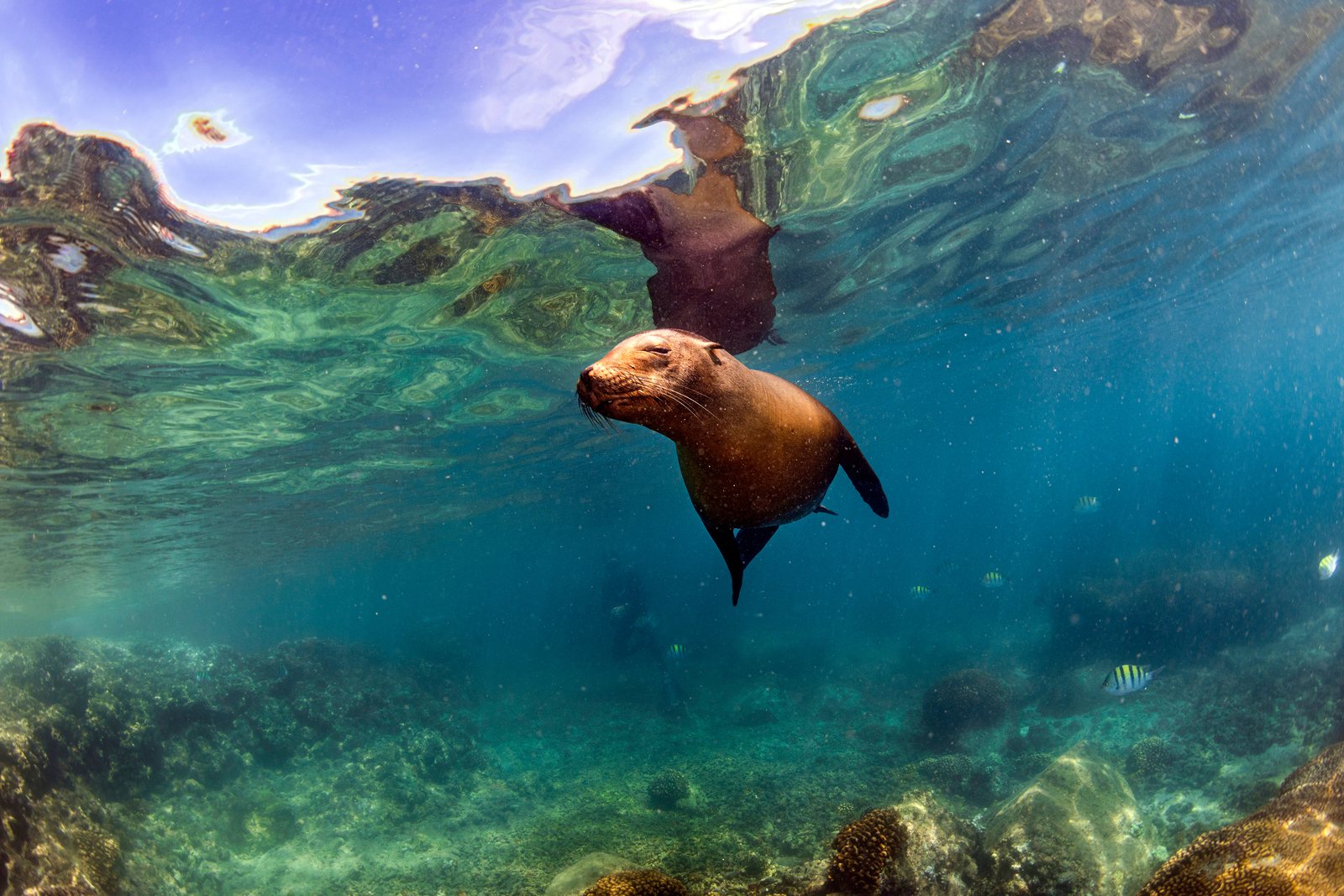
The Galápagos is reached by air through mainland Ecuador, so the liveaboard week starts without an ocean crossing, and the archipelago runs two distinct seasons. The cool, nutrient-rich June-to-November period brings the giants — whale sharks, most of them enormous females, cruise Darwin's reef — while the warmer December-to-May window clears the water for mantas and mobulas. Between shark dives the islands add what nowhere else can: mola at cold upwellings, penguins, sea lions in your safety stop, and marine iguanas grazing algae in the shallows. Land visits are limited on dive itineraries, but the wildlife comes to you.

Cocos is subtraction rather than addition. An uninhabited Costa Rican island 550 kilometers offshore, it is liveaboard-only after roughly 36 hours of steaming from Puntarenas, and apart from a ranger station there is nothing there but ocean life. Hammerheads queue at cleaning stations on Alcyone's deep plateau, tiger sharks patrol Manuelita with regularity, and the rainy June-to-November season delivers the biggest schools along with the roughest crossings. Boats are few and expedition-grade.

Operators on both routes expect advanced certification and real drift experience. If seasickness is a genuine concern, the Galápagos is the kinder itinerary; if crowds are, Cocos wins outright.

Estimación editorial

Profundiza más

Australia, Nueva Zelanda y Asia Oriental

Cairns & the Ribbon ReefsNingaloo ReefCoral Sea & Osprey ReefOkinawa & the Kerama IslandsPoor Knights IslandsTownsville & the YongalaGreen IslandIzu Peninsula

Caribe y Atlántico occidental

BonaireCozumelRiviera Maya & the CenotesBelize Barrier ReefGrand CaymanIsla Mujeres & CancúnRoatánTiger Beach & Grand Bahama

Europa, Atlántico y Mediterráneo

Malta & GozoSilfra & IcelandThe AzoresCanary IslandsLarnaca & the ZenobiaScapa FlowArctic NorwayMadeira

Océano Índico y África Oriental

North & South Malé AtollsAri AtollBaa Atoll & Hanifaru BayAliwal Shoal & UmkomaasMafia IslandMauritiusSeychellesSodwana Bay

Islas del Pacífico y Micronesia

PalauChuuk (Truk) LagoonFakaravaKona, HawaiʻiRangiroaTaveuni & Rainbow ReefBeqa Lagoon & Pacific HarbourEspiritu Santo

Mar Rojo y Oriente Medio

Sharm El Sheikh & Ras MohammedBrothers, Daedalus & St John'sDahabHurghada & El GounaMarsa Alam & the Deep SouthAqabaDaymaniyat IslandsMusandam Peninsula

Sudeste Asiático y el Triángulo del Coral

Bali & Nusa PenidaKomodoRaja AmpatSipadan & MabulAnilaoCoronKoh TaoLembeh Strait

Las Américas y el Pacífico Oriental

Galápagos IslandsCocos IslandFlorida KeysSea of Cortez & Cabo PulmoSocorro & the RevillagigedosBritish ColumbiaCalifornia Channel IslandsCosta Rica Pacific Coast