Sites de plongée, saisons et vie marine — recherchés, cartographiés, planifiés.
Menu
Destinations Sites de plongée Vie marine Épaves Actualités
Planifier un voyage Planificateur de séjour Quand plonger Calculateur de coût Comparaisons Calendrier de la faune marine Température de l'eau Liveaboards Opérateurs & resorts Parcs marins Caissons hyperbares Carte du monde
Régions Australie, Nouvelle-Zélande & Asie de l'EstCaraïbes & Atlantique occidentalEurope, Atlantique & MéditerranéeOcéan Indien & Afrique de l'EstÎles du Pacifique & MicronésieMer Rouge & Moyen-OrientAsie du Sud-Est et Triangle de CorailLes Amériques et Pacifique Est Pays
Apprendre & Outils Tous les guides Certifications Guides d'équipement Vidéos Interroger les données Agents IA API
À propos À propos de nous Méthodologie Avertissement Contact
Votre vue
★ Enregistré

Vos destinations, sites et espèces favoris — enregistrés dans ce navigateur.

API GATEWAY

Accès JSON gratuit en lecture seule aux données en cache de l'atlas.

Mode sombre

🧭 Vue Guidée
Nouveau dans la plongée — profondeurs, courants, niveaux de certification ? Nous expliquons chaque terme au fil de votre navigation, en langage clair. Les mêmes données, avec l'aide intégrée.

⚡ Vue Expert
Vous connaissez déjà la différence entre un tombant et un drift. Juste les données — claires, rapides et compactes. C'est la vue par défaut.

Langue de l'interface

Comparaison

The Galápagos vs Cocos Island
Galápagos Islands

Galápagos Islands

Ecuador
Cocos Island

Cocos Island

Costa Rica
La réponse rapideBoth are cool-water, current-swept hammerhead theaters reached by liveaboard, and neither is a beginner's trip. The Galápagos adds breadth: whale sharks at Darwin in the June-to-November cool season, mola and marine iguanas in the warm months, and Ecuador's flights and park machinery to navigate. Cocos asks for roughly a day and a half of open-Pacific steaming each way and repays it with dense cleaning-station schools, reliable tiger sharks, and almost no other boats. Budgets land in the same high bracket; stomach and schedule often decide.
Choisir Galápagos Islands Pick the Galápagos for the broader spectacle — hammerhead walls plus whale sharks in season, endemic oddities, and wildlife above the waterline.
Choisir Cocos Island Pick Cocos if you are a shark purist with sea legs, trading a thirty-six-hour crossing for cleaning-station hammerheads in near-total solitude.

Les chiffres, côté à côté

Galápagos IslandsCocos Island
Meilleurs moisJun–NovJun–Nov
Eau (plage documentée)17–27 °C / 63–81 °F24–29 °C / 75–84 °F
Visibilité10–25 m12–30 m
NiveauAdvancedExpedition
Sortie bateau deux blocs$160–$260
Sites cartographiés76
Sites de rivage00
Épaves00
Liveaboards desservant33
Espèces emblématiques fiables Galápagos SharkGreen Sea TurtleGalápagos Sea LionScalloped HammerheadMarbled RayWhitetip Reef Shark Scalloped HammerheadWhitetip Reef SharkMarbled RaySilky SharkTiger Shark

Chaque chiffre extrait en direct des deux fiches de destination — les fourchettes et les niveaux de fiabilité s'appliquent comme sur leurs propres pages.

La réponse en détail

These are the eastern Pacific's two great shark pilgrimages, and they share DNA: seamount-and-island diving, surge and thermoclines, negative entries, and scalloped hammerheads schooling overhead like weather. The differences are logistics and supporting cast.

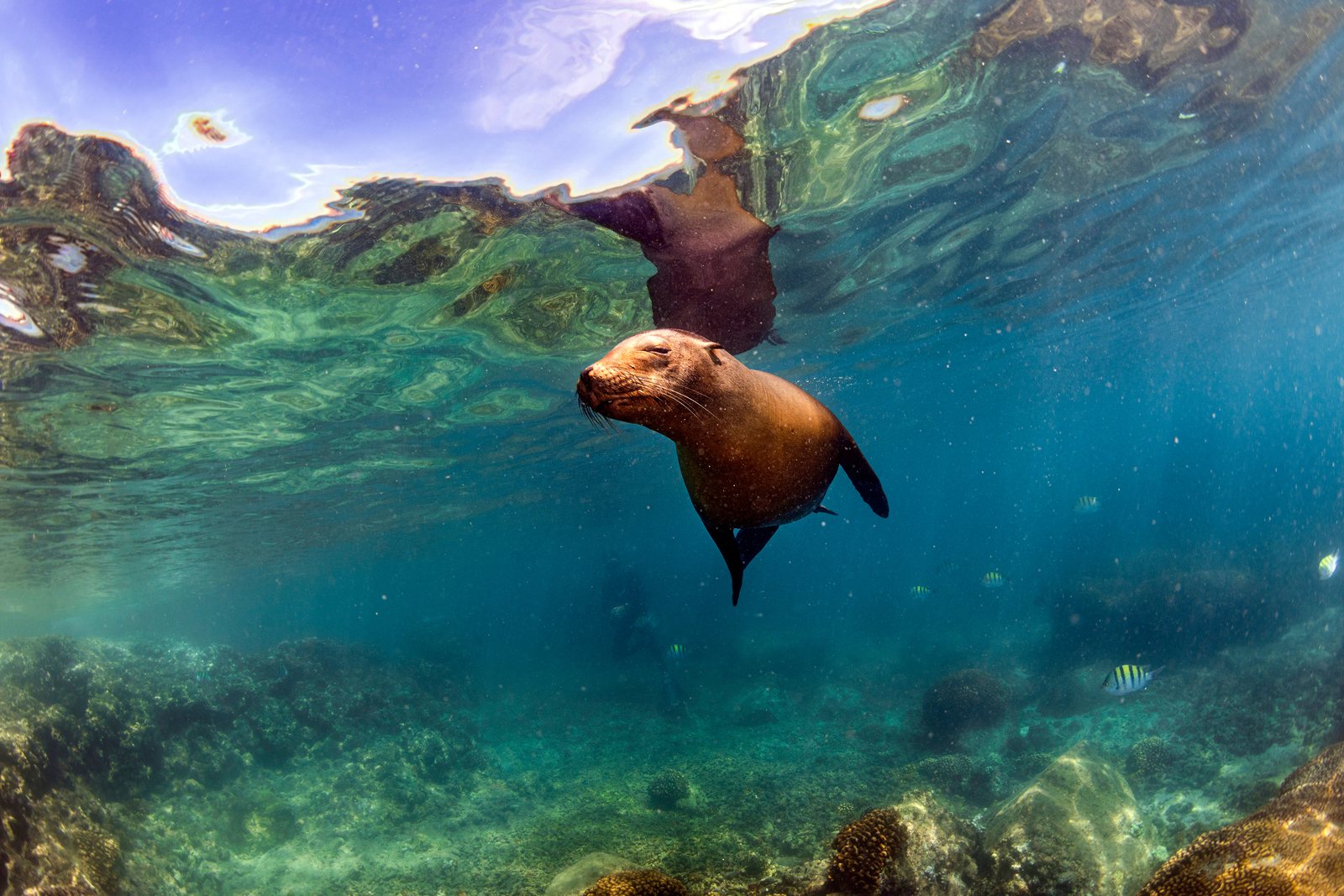
The Galápagos is reached by air through mainland Ecuador, so the liveaboard week starts without an ocean crossing, and the archipelago runs two distinct seasons. The cool, nutrient-rich June-to-November period brings the giants — whale sharks, most of them enormous females, cruise Darwin's reef — while the warmer December-to-May window clears the water for mantas and mobulas. Between shark dives the islands add what nowhere else can: mola at cold upwellings, penguins, sea lions in your safety stop, and marine iguanas grazing algae in the shallows. Land visits are limited on dive itineraries, but the wildlife comes to you.

Cocos is subtraction rather than addition. An uninhabited Costa Rican island 550 kilometers offshore, it is liveaboard-only after roughly 36 hours of steaming from Puntarenas, and apart from a ranger station there is nothing there but ocean life. Hammerheads queue at cleaning stations on Alcyone's deep plateau, tiger sharks patrol Manuelita with regularity, and the rainy June-to-November season delivers the biggest schools along with the roughest crossings. Boats are few and expedition-grade.

Operators on both routes expect advanced certification and real drift experience. If seasickness is a genuine concern, the Galápagos is the kinder itinerary; if crowds are, Cocos wins outright.

Estimation éditoriale

Aller plus loin

Australie, Nouvelle-Zélande & Asie de l'Est

Cairns & the Ribbon ReefsNingaloo ReefCoral Sea & Osprey ReefOkinawa & the Kerama IslandsPoor Knights IslandsTownsville & the YongalaGreen IslandIzu Peninsula

Caraïbes & Atlantique occidental

BonaireCozumelRiviera Maya & the CenotesBelize Barrier ReefGrand CaymanIsla Mujeres & CancúnRoatánTiger Beach & Grand Bahama

Europe, Atlantique & Méditerranée

Malta & GozoSilfra & IcelandThe AzoresCanary IslandsLarnaca & the ZenobiaScapa FlowArctic NorwayMadeira

Océan Indien & Afrique de l'Est

North & South Malé AtollsAri AtollBaa Atoll & Hanifaru BayAliwal Shoal & UmkomaasMafia IslandMauritiusSeychellesSodwana Bay

Îles du Pacifique & Micronésie

PalauChuuk (Truk) LagoonFakaravaKona, HawaiʻiRangiroaTaveuni & Rainbow ReefBeqa Lagoon & Pacific HarbourEspiritu Santo

Mer Rouge & Moyen-Orient

Sharm El Sheikh & Ras MohammedBrothers, Daedalus & St John'sDahabHurghada & El GounaMarsa Alam & the Deep SouthAqabaDaymaniyat IslandsMusandam Peninsula

Asie du Sud-Est et Triangle de Corail

Bali & Nusa PenidaKomodoRaja AmpatSipadan & MabulAnilaoCoronKoh TaoLembeh Strait

Les Amériques et Pacifique Est

Galápagos IslandsCocos IslandFlorida KeysSea of Cortez & Cabo PulmoSocorro & the RevillagigedosBritish ColumbiaCalifornia Channel IslandsCosta Rica Pacific Coast