الغوص في Ecuador
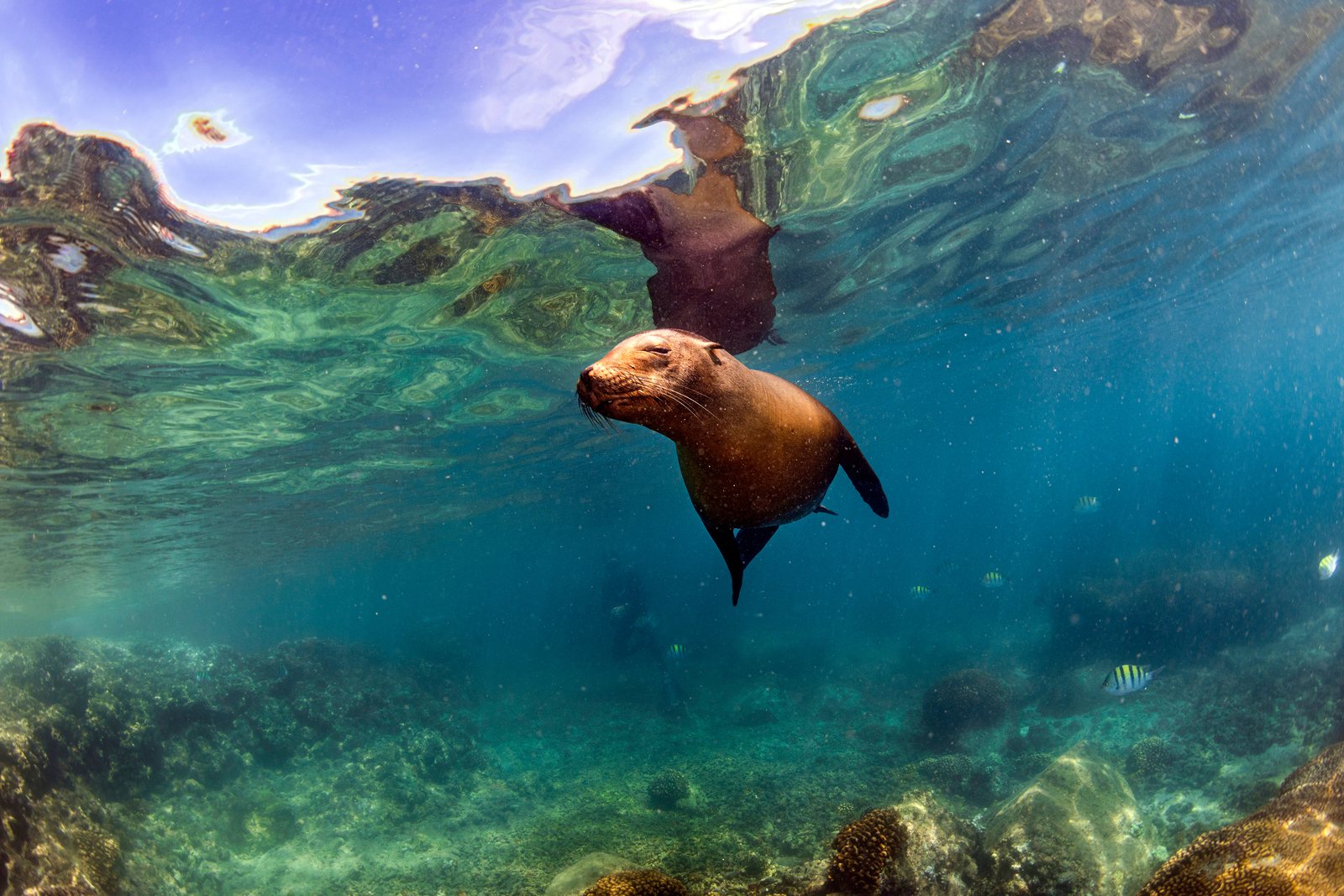
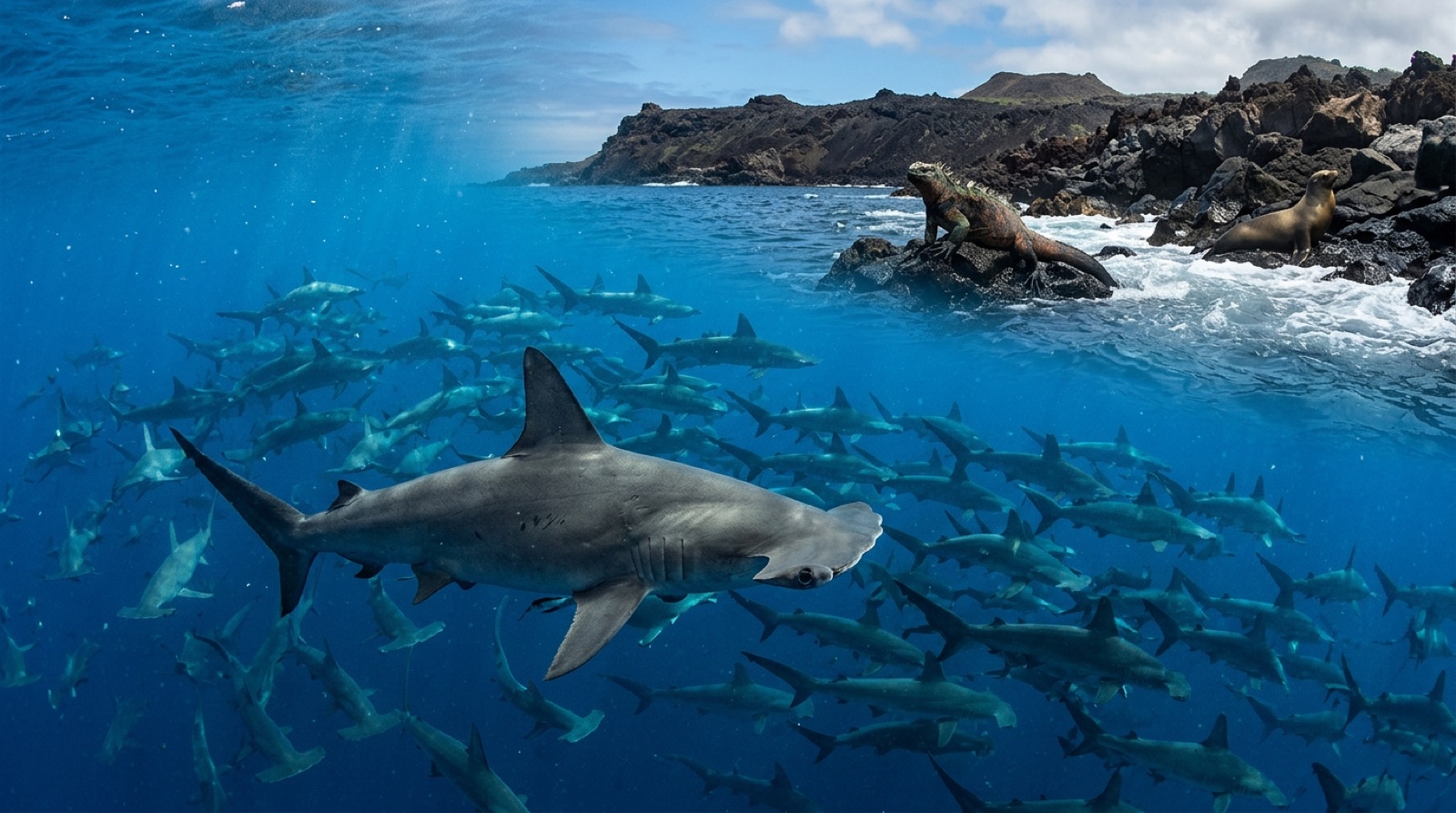
Ecuador's diving is the Galápagos, and the Galápagos is unlike anywhere else in the sport. Cold, nutrient-loaded currents collide at these equatorial volcanoes and produce an absurd concentration of large animals: schooling scalloped hammerheads at Wolf and Darwin, whale sharks the size of buses in the cool season, marine iguanas grazing algae underwater, penguins and sea lions flying past on the same dive. Conditions are the price of admission: surge, current, thermoclines that can drop water temperatures ten degrees mid-dive, and negative entries onto washing-machine corners. Liveaboards with permits reach the far northern islands; land-based diving from Santa Cruz covers seamounts like Gordon Rocks. Strict national park control keeps numbers limited and costs high, and nearly everyone who goes calls it the best big-animal diving of their lives.
The Galápagos Islands are the single registry destination with two tiers: land-based day diving from Puerto Ayora on Santa Cruz to sites like Gordon Rocks, Seymour, and Floreana, and permit-holding liveaboards running week-long loops to Wolf and Darwin in the far north, where the hammerhead and whale-shark action concentrates. Mainland Ecuador serves as the staging ground rather than a dive draw.
تجارب مميزة: Hammerheads in the hundreds at Darwin's Arch area; whale sharks cruising the drop-off between roughly June and November; marine iguanas feeding underwater at Cabo Douglas on select itineraries; sea lion play at Champion Islet; the washing-machine thrill of Gordon Rocks.
المواسم: Two seasons, both good: the cool garúa season, roughly June through November, brings the Humboldt-fed water that draws whale sharks and peak hammerhead schools, along with colder thermoclines and chop. December through May is warmer, calmer, and clearer, with mantas and mobulas more prominent. Wetsuit thickness changes more than the wildlife quality does.
الوجهات
مواقع الغوص المميزة
| الموقع | الوجهة | النوع | العمق | المستوى |
|---|---|---|---|---|
| Cabo Douglas | Galápagos Islands | Shore | 3–15 m | Intermediate |
| Cousins Rock | Galápagos Islands | Reef | 8–30 m | Intermediate |
| Darwin's Arch (Darwin's Pillars) | Galápagos Islands | Reef | 6–30 m | Advanced |
| Gordon Rocks | Galápagos Islands | Pinnacle | 12–32 m | Advanced |
| Kicker Rock (Leon Dormido) | Galápagos Islands | Channel | 5–30 m | Intermediate |
| Punta Vicente Roca | Galápagos Islands | Wall | 5–30 m | Intermediate |
| Wolf Island (Landslide & Shark Bay) | Galápagos Islands | Reef | 10–35 m | Advanced |
كل موقع مرسوم على الخريطة في Ecuador →
الحياة البحرية
الملف العملي
الوصول إلى هناك: Fly to Quito (UIO) or Guayaquil (GYE), then on to Baltra (GPS) or San Cristóbal (SCY); all Galápagos flights route through Guayaquil. A transit control card and park fee are handled at the airports. Liveaboards board near Baltra or San Cristóbal; day-dive operators cluster in Puerto Ayora.
الدخول والتأشيرات: Most nationalities enter Ecuador visa-free for short tourist stays, while the Galápagos additionally requires a transit control card and park entry fee on arrival. Verify current requirements and fee levels before travel.
تكلفة الغطس: Galápagos liveaboards generally run about USD 5,500-8,000 for a week plus flights, park entry, and fees; land-based two-tank days from Puerto Ayora cost roughly USD 200-260. The park entry fee was raised in 2024, so budget for current figures.
اللغة: Spanish is the national language; Galápagos dive crews and naturalist guides generally speak good English.
البقشيش: Liveaboard custom is a crew tip of roughly 5-10 percent of the trip price, often split between crew and guides; ashore, 10 percent appears on many restaurant bills as a service line.
سلامة السفر: The Galápagos themselves are calm and tightly managed. Mainland Ecuador's security situation has been more volatile in recent years, particularly in Guayaquil, so use airport-to-hotel transfers, avoid wandering at night, and check current advisories. Underwater, this is genuinely advanced diving: strong current, surge, and cold pockets argue for recent experience, gloves-off reef discipline, and a personal surface marker and locator beacon, which many boats require.
تغطية غرفة الضغط العلاجي: A recompression facility operates on Santa Cruz near Puerto Ayora, with further care available on the mainland in Guayaquil. Availability changes; emergencies run through the boat or shop, park authorities, EMS, and DAN.