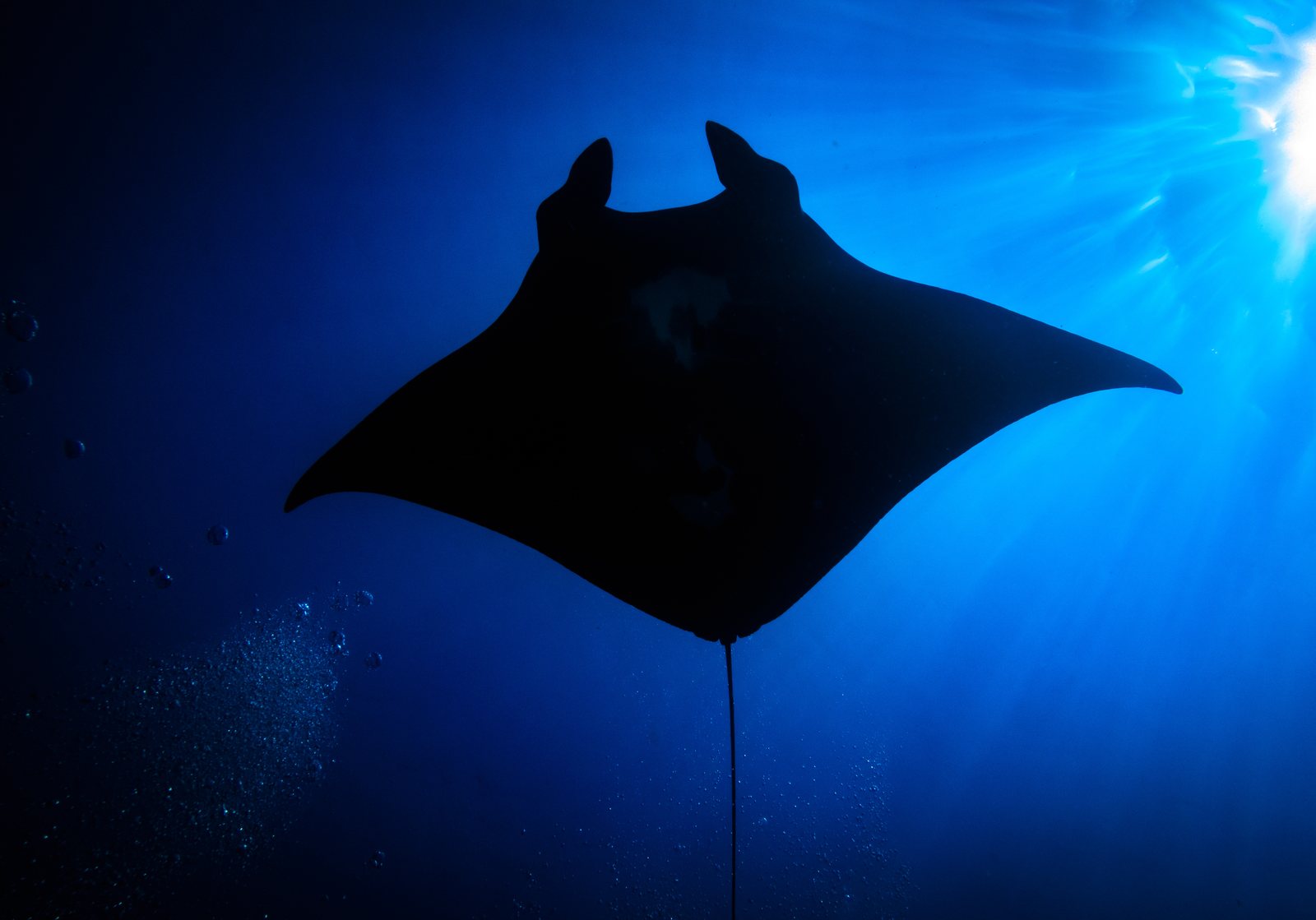
Komodo
Komodo National Park straddles the strait between Sumbawa and Flores, where the Indian Ocean and Flores Sea trade enormous volumes of water every tide. The result is some of the fishiest, most current-charged diving in Indonesia: pinnacles mobbed by sharks and trevally in the north, manta drifts in the middle, and cold, invertebrate-crusted seamounts in the south, all within a UNESCO World Heritage park that also guards the Komodo dragon.
Pourquoi plonger ici
Few places compress this much contrast into one park. Off the northern islands, Castle Rock and Crystal Rock sit in blue water where grey reef sharks strafe fusilier schools and dogtooth tuna patrol the down-current point. Batu Bolong, a rock barely breaking the surface mid-strait, hides a fish-packed wall in its lee. Drift the rubble flats of Karang Makassar and reef mantas glide past in trains, while the Cauldron's channel fires divers along on the tide. Then the park changes character: south of Rinca, in Horseshoe Bay, upwelled water turns green and cool, and Cannibal Rock disappears under sea apples, crinoids, and soft coral in circus colors. Labuan Bajo's airport puts day boats within reach of the central sites, liveaboards cover the rest, and a morning walk among dragons on Komodo or Rinca rounds out the trip. Currents rule here; divers who respect them get Komodo at full volume.
Mois par mois
The park splits by monsoon. Northern and central sites are at their best in the southeast-trade dry season, roughly April to November, with the clearest water mid-year. The south coast is exposed then, and its upwelling keeps southern sites markedly colder all year; the sheltered season for Horseshoe Bay and Manta Alley runs approximately November through March, when the northwest monsoon flips the pattern, flattening the south while making the north choppy and rainy. Liveaboards time their routes around this split, and January to February is the quietest, wettest stretch.
| Mois | Eau | Visibilité | Ce que c'est comme |
|---|---|---|---|
| January●●●○○ | 23–28 °C / 73–82 °F | 5–20 m | Northwest monsoon: rain and chop in the north, calmer diving in the south; fewest boats. |
| February●●●○○ | 23–28 °C / 73–82 °F | 5–20 m | Wet season continues; southern bays are the reliable option. |
| March●●●●○ | 24–28 °C / 75–82 °F | 10–20 m | Transition; seas begin settling and central sites reopen reliably. |
| April●●●●○ | 24–28 °C / 75–82 °F | 10–25 m | Dry season starts; good conditions park-wide before the south roughens. |
| May●●●●● | 24–28 °C / 75–82 °F | 15–25 m | Excellent month in the north and center; manta traffic steady. |
| June●●●●● | 22–28 °C / 72–82 °F | 15–30 m | Peak clarity begins in the north; southern upwelling turns cold and green. |
| July●●●●● | 20–28 °C / 68–82 °F | 15–30 m | High season; northern pinnacles at their best, south cold and swell-exposed. |
| August●●●●● | 20–28 °C / 68–82 °F | 15–30 m | Peak season and peak crowds; book boats ahead. |
| September●●●●● | 21–28 °C / 70–82 °F | 15–30 m | Superb diving continues with slightly thinner crowds. |
| October●●●●● | 23–28 °C / 73–82 °F | 15–25 m | Trades ease; often a sweet spot of calm seas and fish action park-wide. |
| November●●●●○ | 24–29 °C / 75–84 °F | 10–25 m | Shoulder month; south-coast season begins as the north stays workable. |
| December●●●○○ | 24–29 °C / 75–84 °F | 5–20 m | Rains build; itineraries shift toward sheltered central and southern sites. |
Fiabilité des données mensuelles: Documented. Les mois sans ligne ne disposent d'aucune donnée vérifiée. Nous préférons montrer un vide plutôt qu'en inventer un.
Les sites de plongée (8)
| Site | Type | Profondeur | Niveau | Accès | |
|---|---|---|---|---|---|
| Batu Bolong Wall-to-wall fish in the lee; hunting tuna and trevally at the current… | Pinnacle | 3–40 m | Advanced | Boat | |
| Cannibal Rock Sea apples and carpet invertebrate cover; dense macro; the signature dive… | Seamount | 5–30 m | Intermediate | Liveaboard | |
| Castle Rock Sharks hunting fusilier schools; reef-hook front seats at the current… | Seamount | 4–30 m | Advanced | Boat | |
| Crystal Rock Vividly clear water in season; soft-coral faces; tuna and sharks on the… | Seamount | 2–30 m | Advanced | Boat | |
| Manta Alley Feeding aggregations of reef mantas; wild south-coast setting; shark and… | Reef | 5–25 m | Intermediate | Liveaboard | |
| Manta Point (Karang Makassar) Chains of reef mantas; cleaning-station holds; an easy shallow drift… | Drift | 5–15 m | Beginner | Boat | |
| Shotgun The ride through the funnel; mantas feeding in the stream; garden-eel bowl… | Channel | 5–25 m | Advanced | Boat | |
| Siaba Besar Green turtles in bulk; relaxed shallow profiles; surprisingly good macro in… | Reef | 3–20 m | Beginner | Boat |
La vie marine, planifiée à l'avance
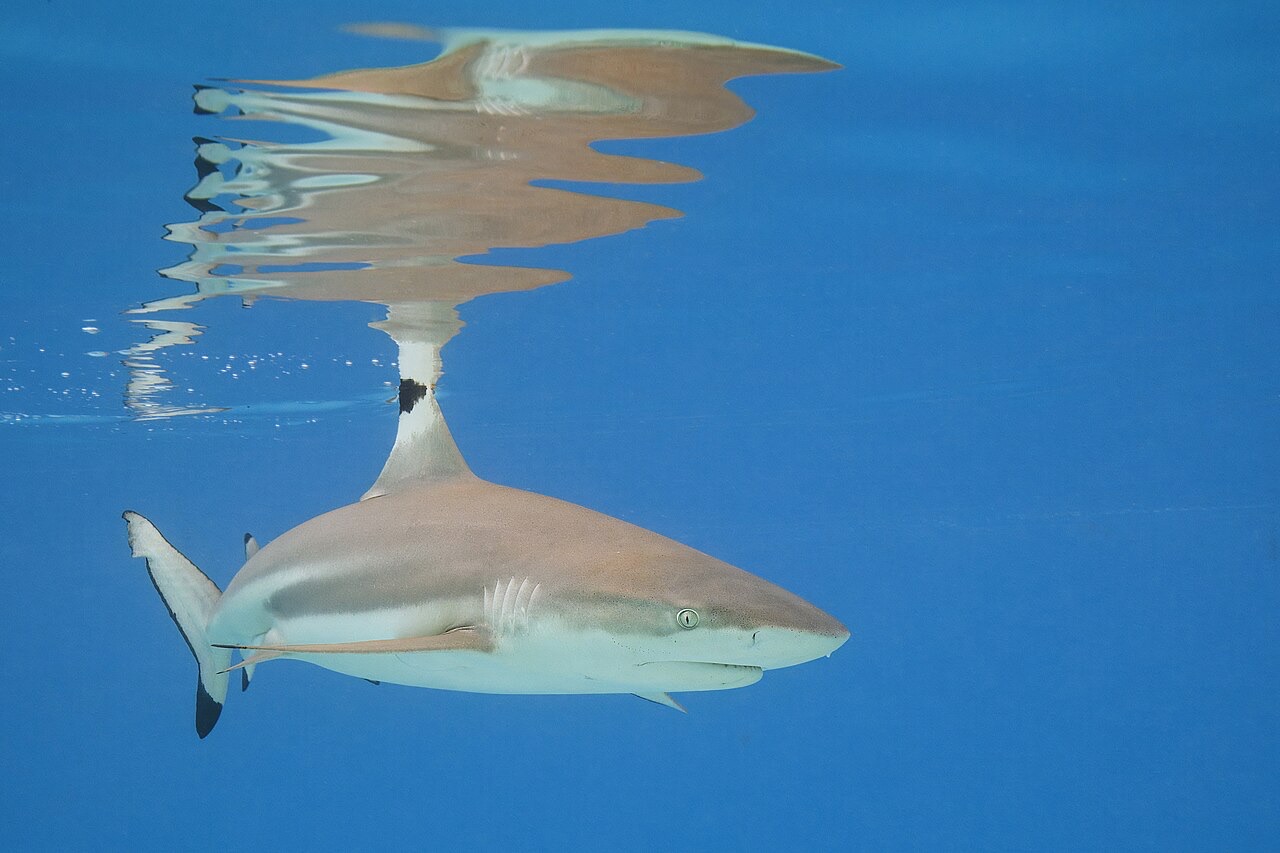
Blacktip Reef Shark
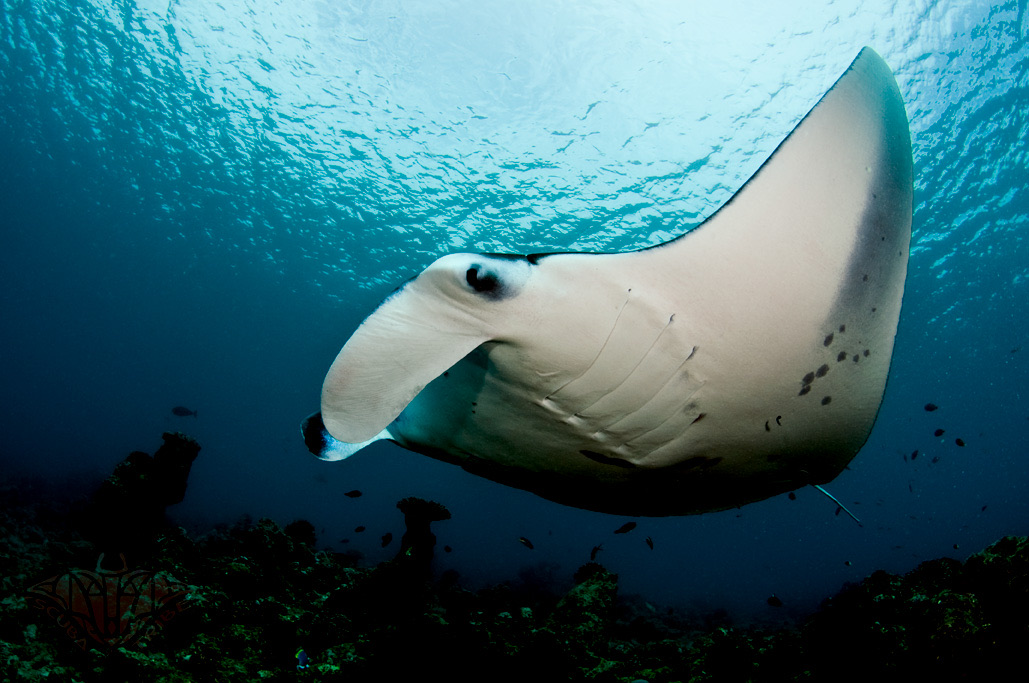
Reef Manta Ray
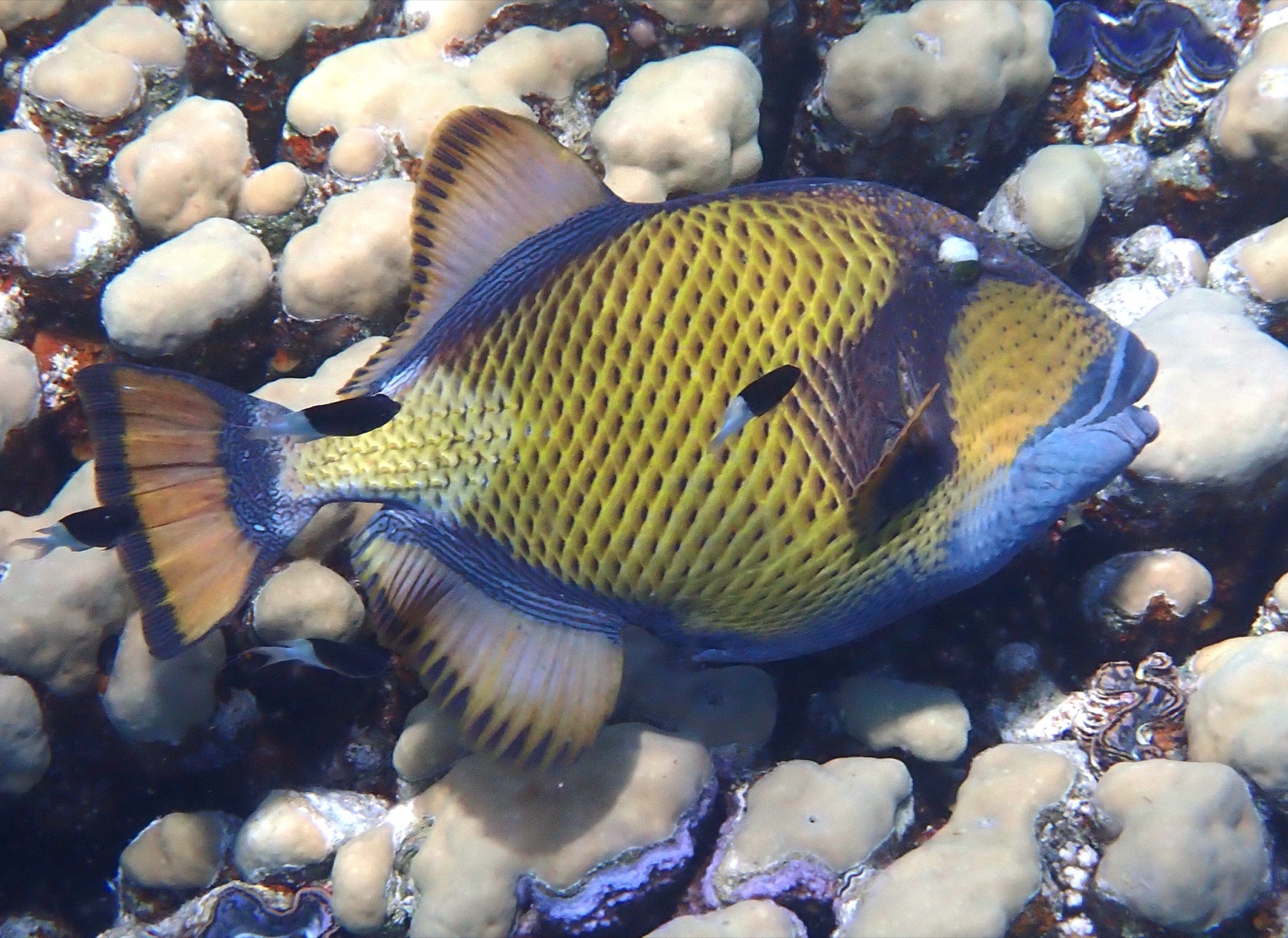
Titan Triggerfish
Reef mantas year-round, grey and whitetip reef sharks, dogtooth tuna, giant trevally, turtles, bumphead parrotfish, and in the cool south a spectacular invertebrate community of sea apples, crinoids, frogfish, and nudibranchs; dolphins and occasional whales transit the straits.
Comment s'y rendre & se loger
Comment s'y rendre: Fly to Labuan Bajo on Flores from Bali or Jakarta, then join a day boat or liveaboard from the harbor. Central-park sites are one to two hours out by speedboat; the far north and south are liveaboard territory.
Où séjourner: Labuan Bajo has everything from backpacker rooms to hilltop resorts, all a short ride from the harbor. Liveaboards from budget phinisi to luxury yachts do 3-to-8-night park circuits; there is no accommodation inside the park itself beyond boats.
Liveaboards: Liveaboards run 3-to-8-night circuits from Labuan Bajo year-round, following the seasons: north-focused mid-year, more southern time from about November to March. Day boats cover the central park well in settled weather.
Coûts: Labuan Bajo day boats commonly run two to three dives; park entrance and diving fees are charged per day on top and are paid in rupiah. Fee structures have changed several times in recent years, so check current rates rather than relying on older figures.
Entre les plongées: Ranger-guided dragon walks on Komodo and Rinca, the Padar Island saddle viewpoint at sunrise, Pink Beach, and flying-fox mass departures at dusk from the mangrove islands near Labuan Bajo.
Sécurité & aspects pratiques
Dangers: Strong tidal currents, down-currents, and washing-machine eddies at the famous pinnacles; cold thermoclines in the south; long distances between sites. Currents here have carried divers away from boats, so briefings, SMBs, and conservative timing around slack water matter.
Dive the big-name sites with operators who read the tide tables and put guides in the water first. Carry an SMB, consider a reef hook for the northern pinnacles, and end dives with generous reserves; this is not a place to chase a schedule against the tide.
Caisson de recompression le plus proche: Labuan Bajo has at times lacked any functioning recompression chamber, and evacuation to Bali is the working assumption for serious decompression illness. Availability changes; route any emergency through EMS and DAN.