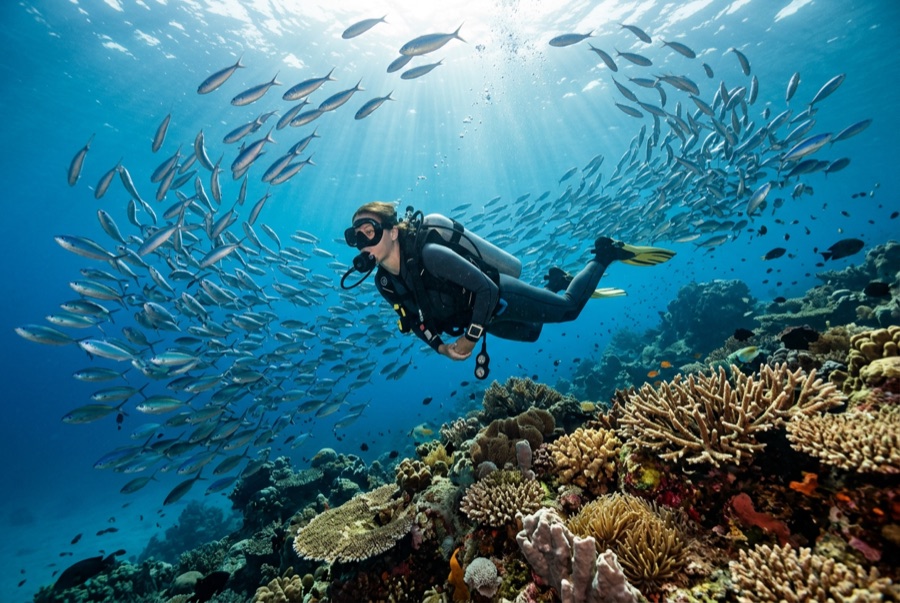
Coconut Point (Apo Island)
La profondeur correspond à la plage allant du sommet du site jusqu'à son maximum habituel ; le « niveau recommandé » est le niveau demandé en général par les opérateurs auprès des grandes agences, pas une règle légale. Les courants et la visibilité varient chaque jour, traitez donc tout cela comme des plages indicatives de planification.
Coconut is Apo Island's espresso shot. Water piling around the island's northern point runs over terraced hard coral and turns the dive into a conveyor: divers tuck into the lee of coral ridges while bigeye trevally wheel overhead in barrel formations, midnight snapper stack in the flow, and green turtles, absurdly, graze on as though the river of water were not there. Sea kraits hunt the terraces between surges. When the current peaks, the group flies the last stretch and surfaces grinning in open water. It demands comfort with drift procedure and rewards it disproportionately.
Le moment pour lequel vous venez: Trevally barrels in ripping current, turtles indifferent to the flow, Apo's signature drift
Topographie: Sloping hard-coral terraces funneling into a current-swept point
Courant: The island's current machine; flow can accelerate mid-dive and briefings cover reef-hook-free positioning.
Entrée: Dived on the tide; guides position the drop so the current carries the group along the point.
À savoir avant de plonger
Dangers: Strong, building current with occasional down-eddies off the point; surface marker and tight groups required.
Permis & règlements: Island and sanctuary fees collected on arrival; group sizes are limited.
Conservation: Apo's community-managed protection dates to the 1980s; fees, group caps, and no-touch rules are enforced by the village.
Qui vous croiserez
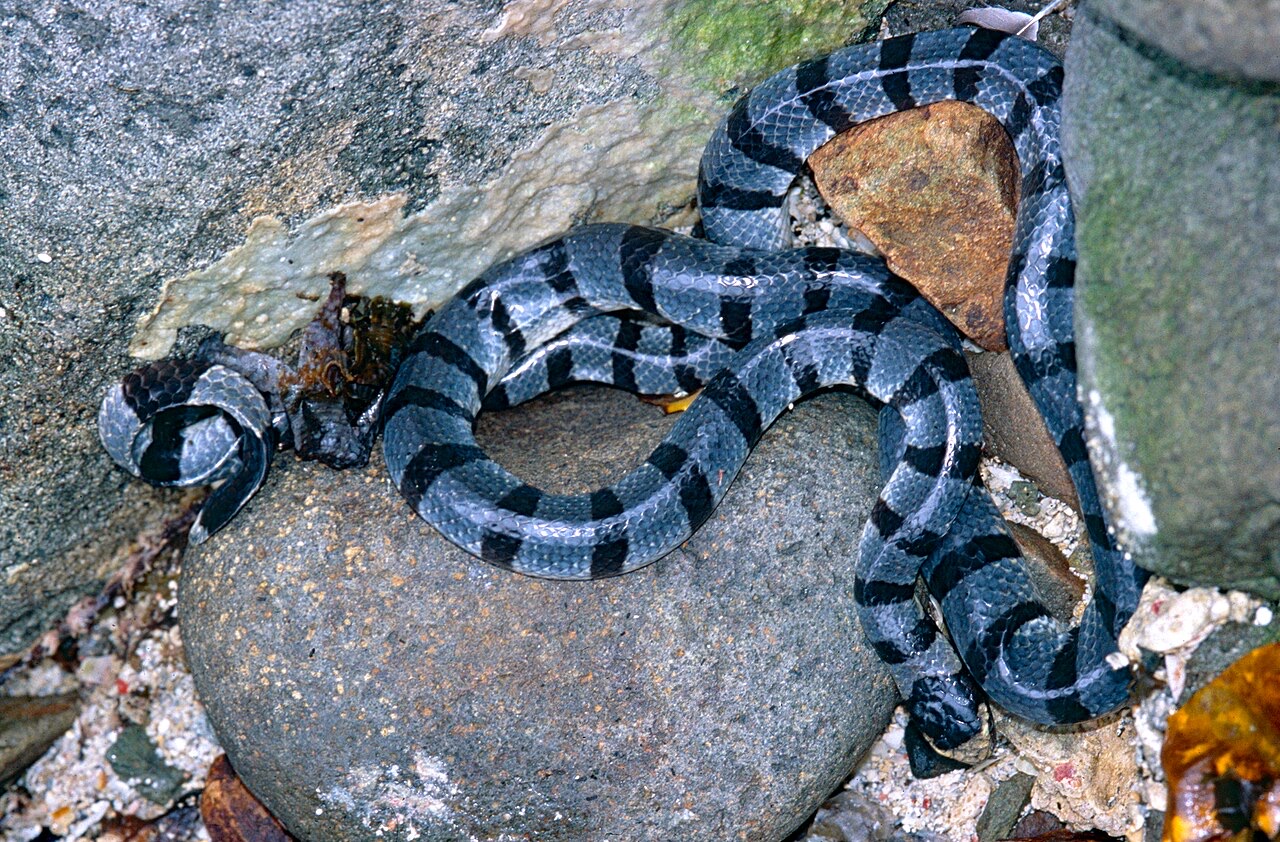
Banded Sea Krait
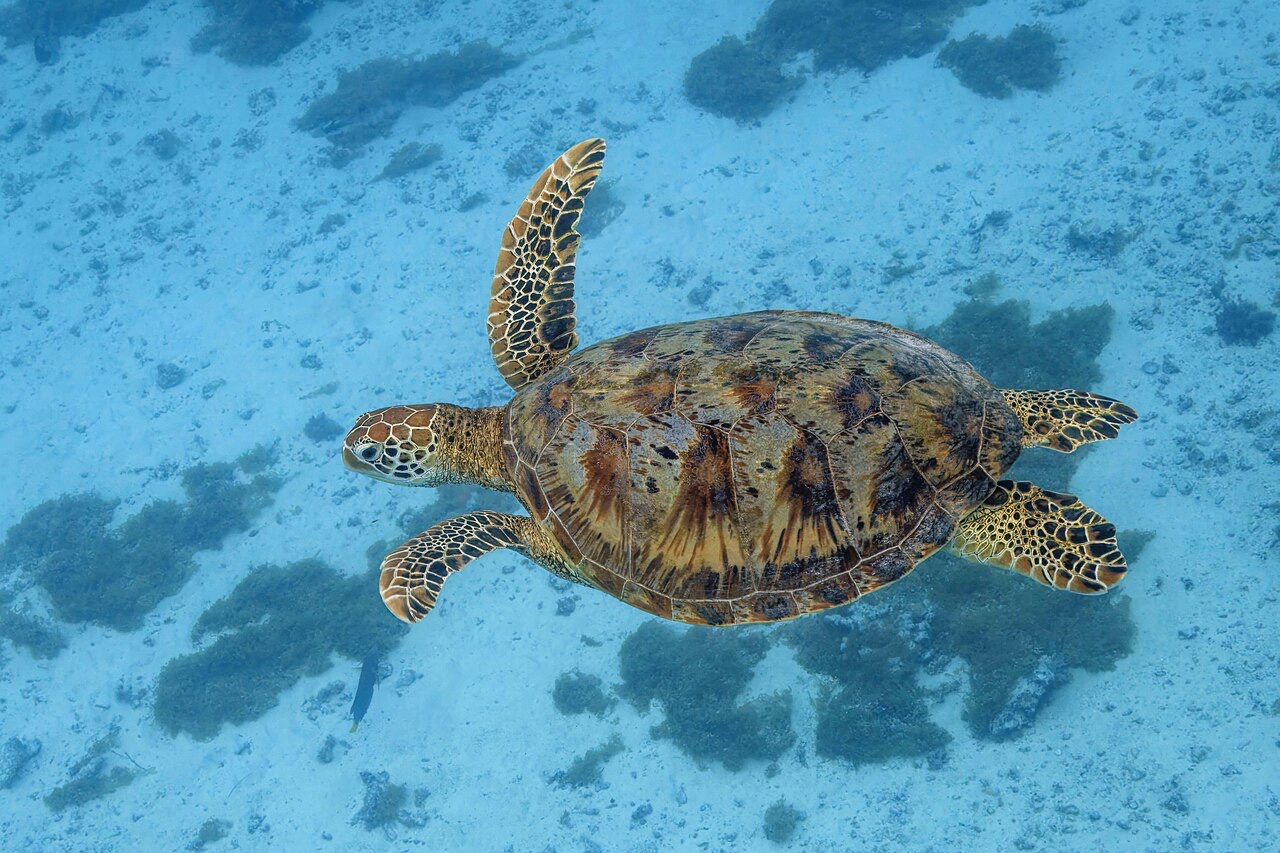
Green Sea Turtle
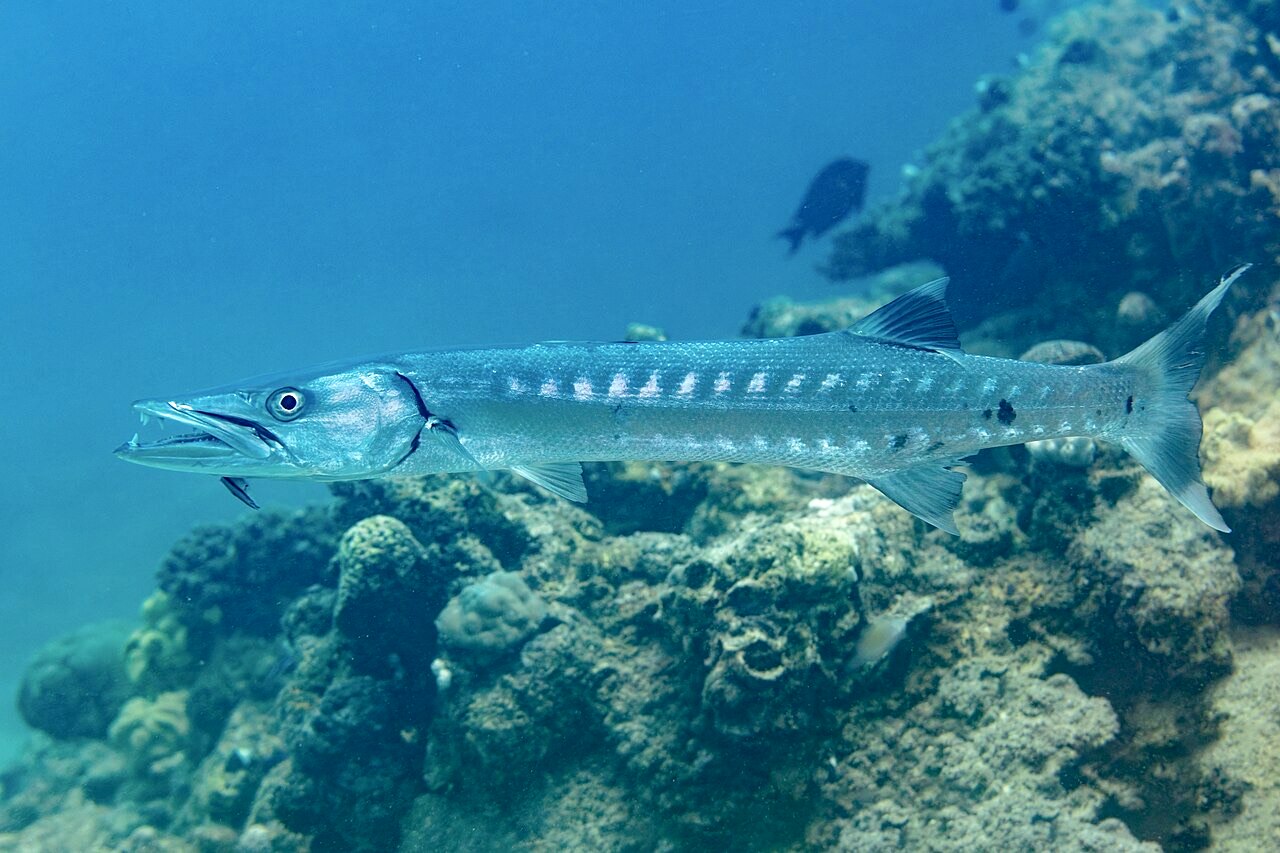
Great Barracuda
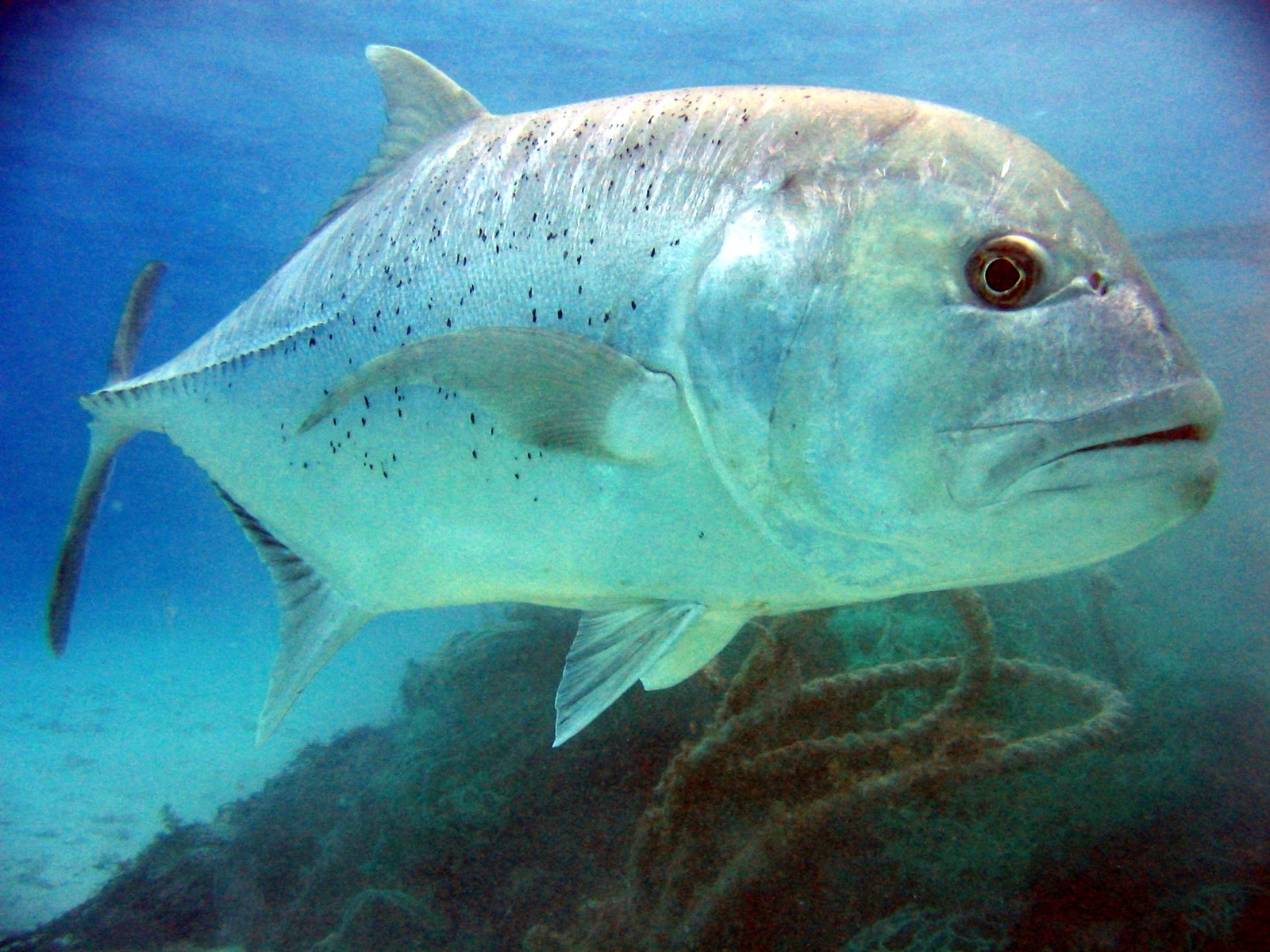
Giant Trevally
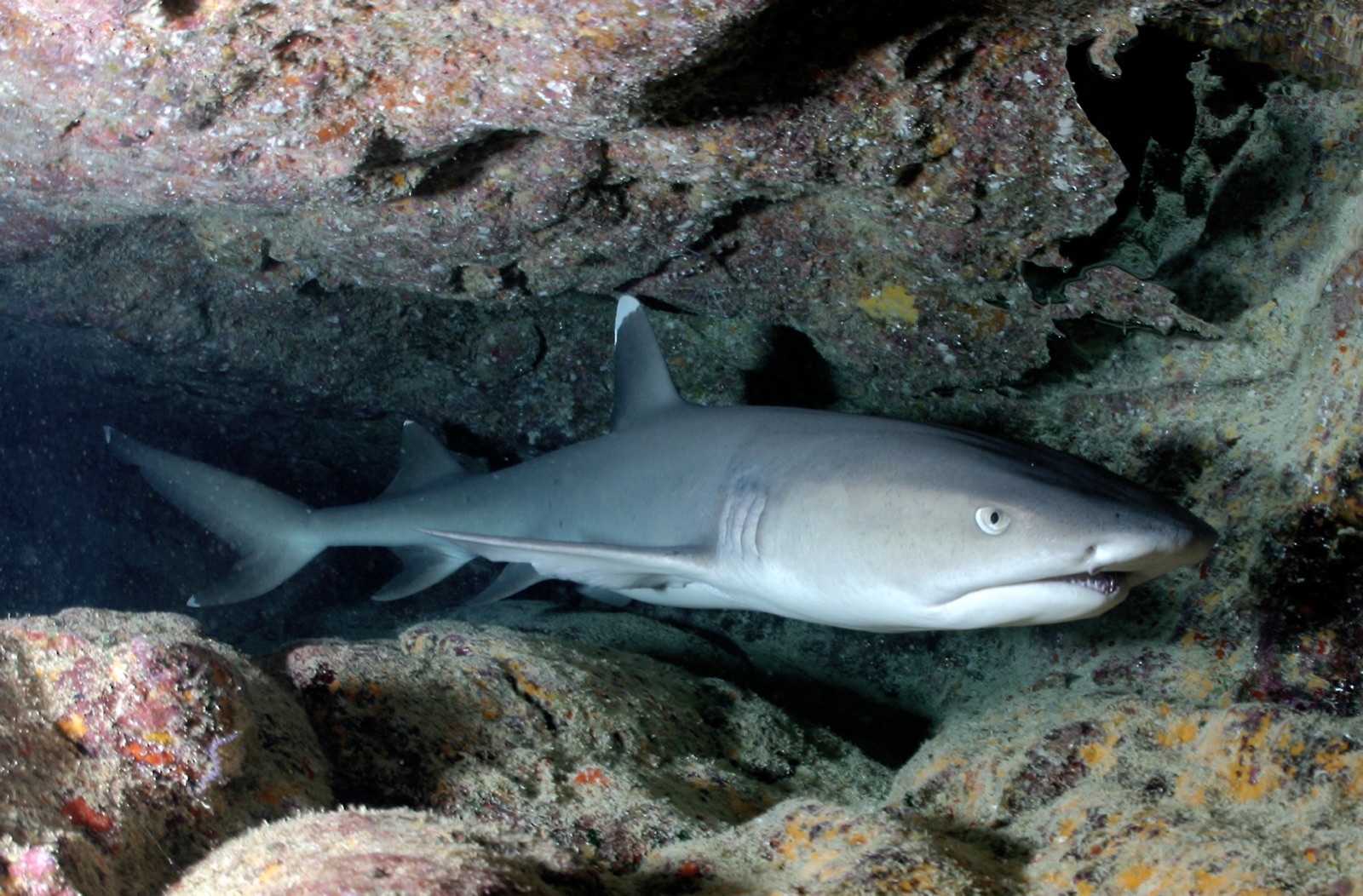
Whitetip Reef Shark
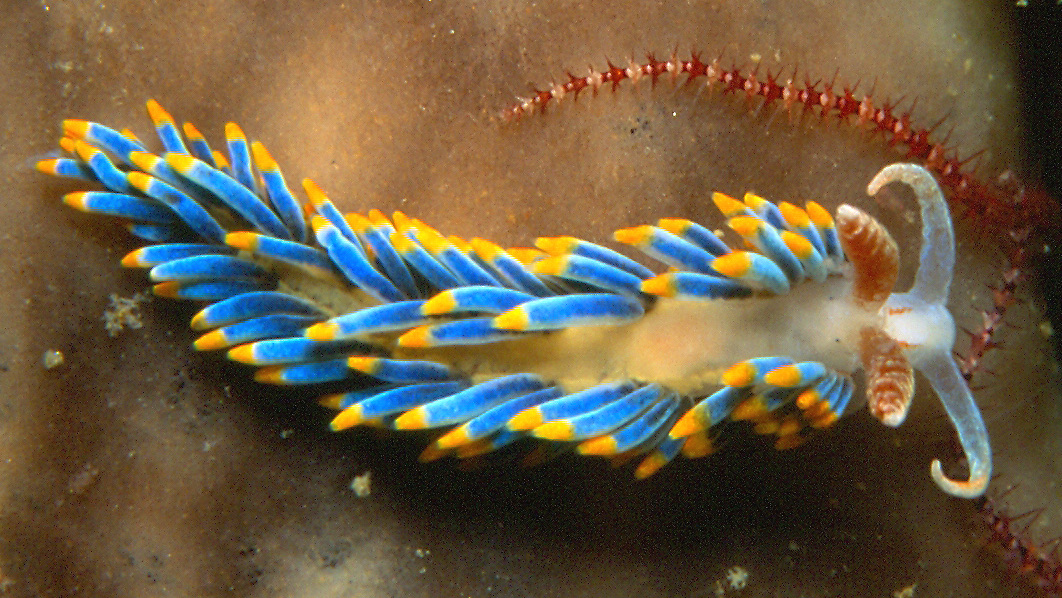
Nudibranchs
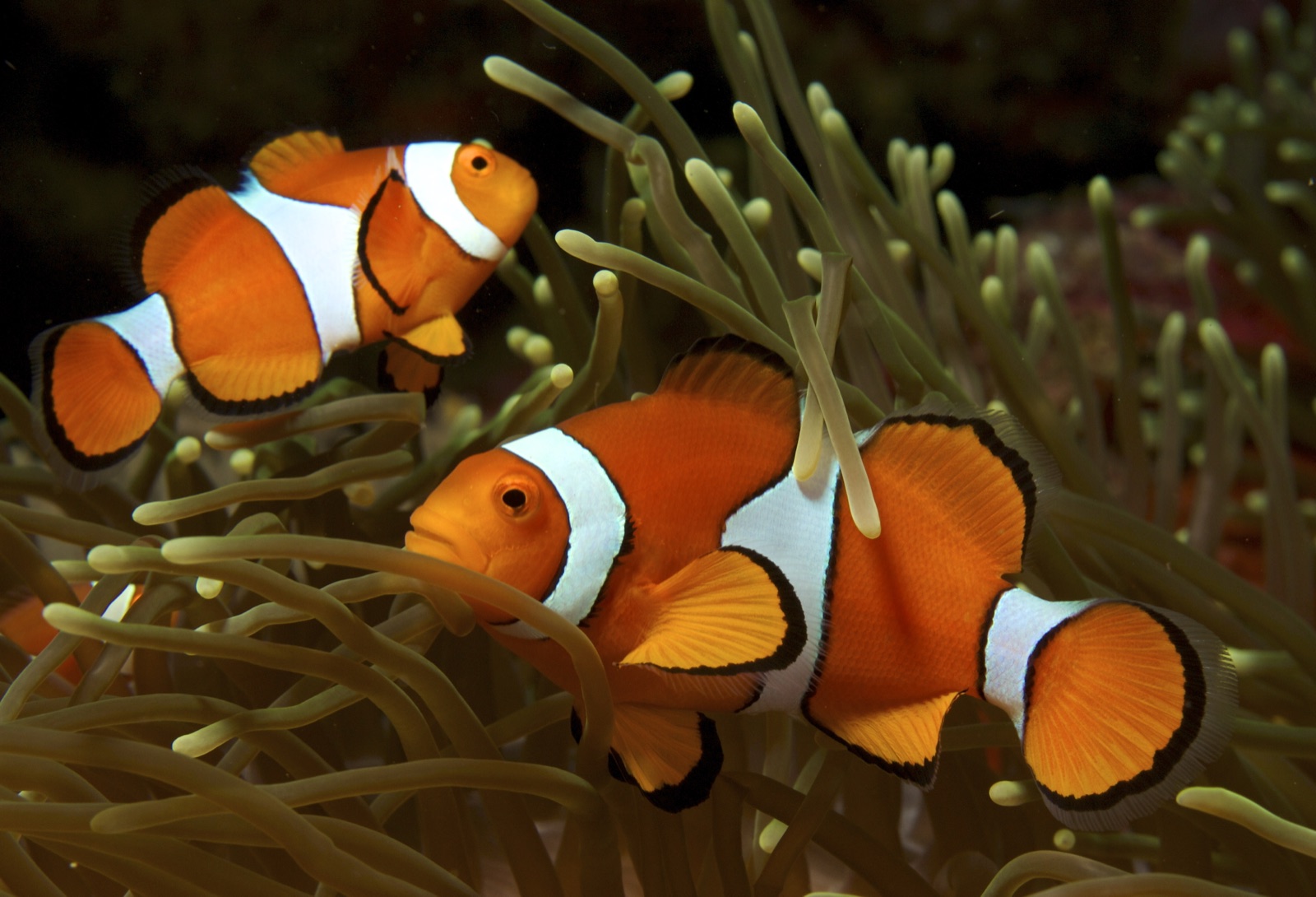
Clownfish & Anemonefish
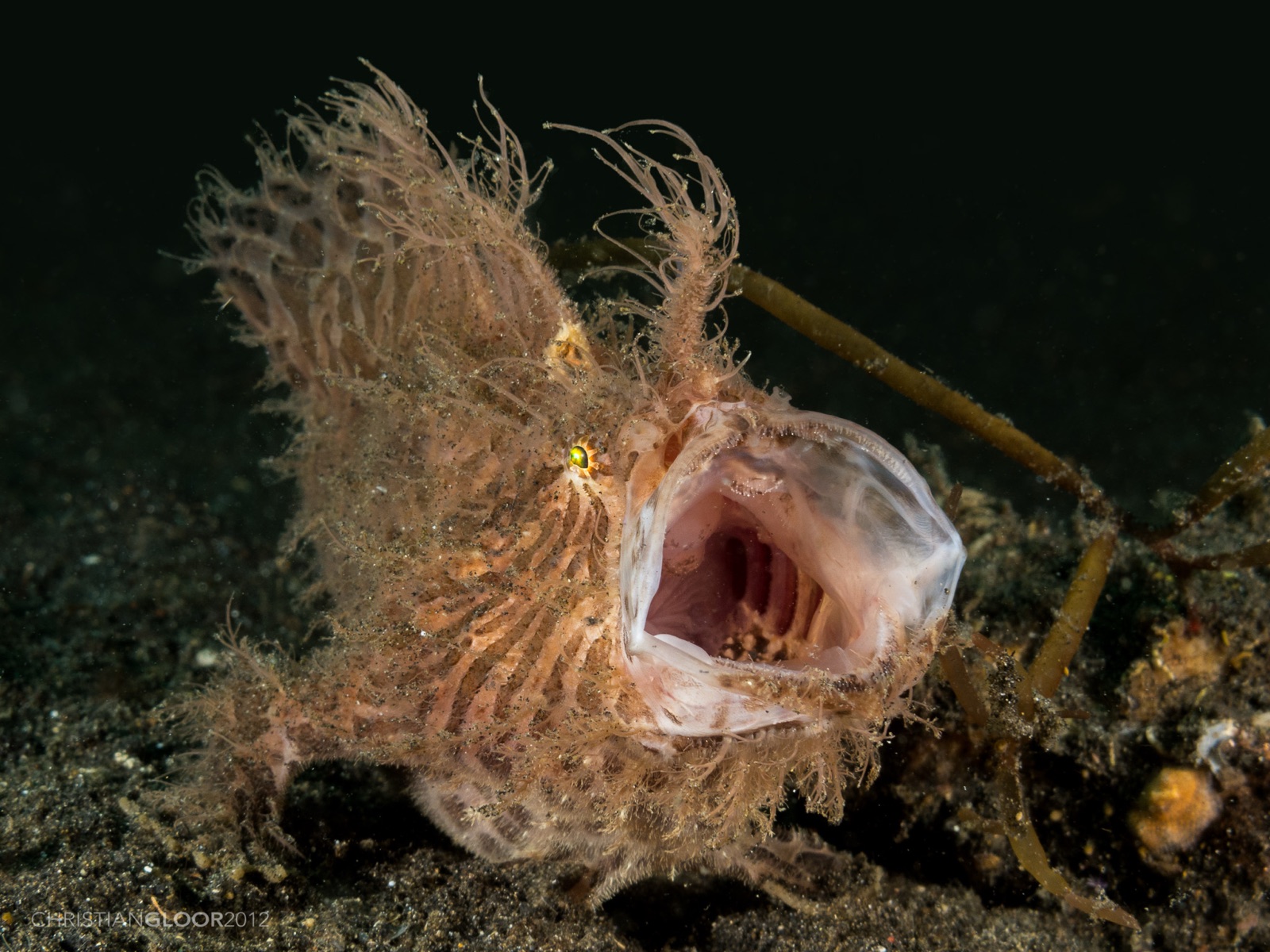
Frogfish
Également observé à proximité
Les espèces « cartographiées ici » ont été répertoriées par nos éditeurs à partir des sources indiquées sur cette page. Les comptages correspondent aux occurrences GBIF : observations enregistrées dans un rayon d'environ 5 km autour de la position cartographiée depuis 1990, comparées uniquement aux espèces de notre catalogue. Ils indiquent ce qui a été observé à cet endroit, sans garantir ce que vous y verrez.
Pour les photographes
Grand angle: ★★★★☆ · Macro: ★☆☆☆☆ (note 1–5 des éditeurs sur ce que ce site offre à chaque style de prise de vue)