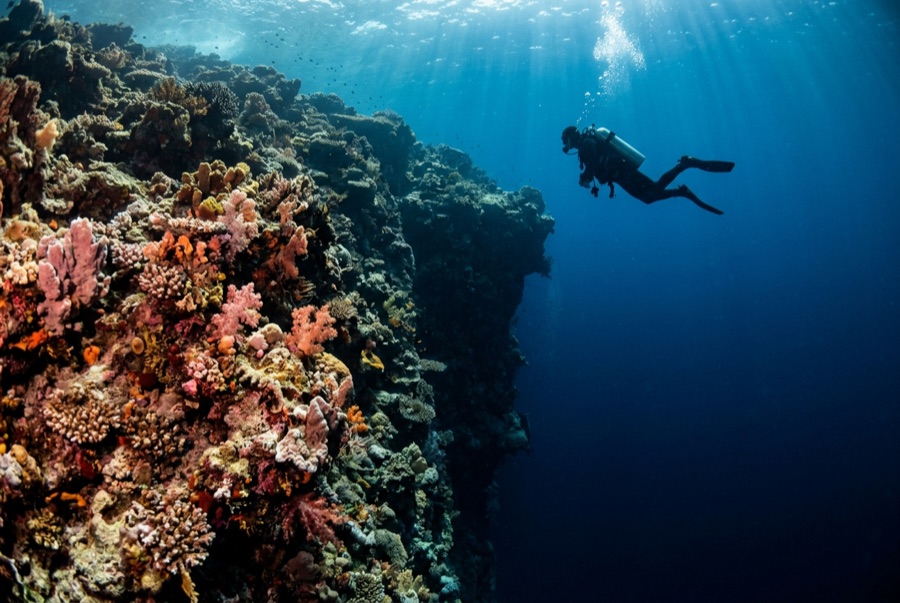
Punta Sur, Devil's Throat
La profondeur correspond à la plage allant du sommet du site jusqu'à son maximum habituel ; le « niveau recommandé » est le niveau demandé en général par les opérateurs auprès des grandes agences, pas une règle légale. Les courants et la visibilité varient chaque jour, traitez donc tout cela comme des plages indicatives de planification.
Devil's Throat is Cozumel's rite of passage: a coral tunnel that swallows the group in single file, bends downward through the dark, and spits you out on the open wall around 40 m with blue in every direction. The passage itself is short but committing (no turning a group around mid-tube), and the surrounding Punta Sur reef keeps the drama going with deep cuts, black coral, and the chance of a reef shark cruising the point. Bottom time is brief and the ascent is a long, scenic decompression-style drift up the wall shoulder.
Le moment pour lequel vous venez: The tunnel exit at 40 m, cathedral-like passages, black coral, big-animal potential at the point.
Topographie: Steep coral promontory riddled with tunnels; the Throat is a narrowing passage that exits on the wall face near 40 m.
Courant: Current at the island's southern tip can be unpredictable and switch with the tide.
Entrée: Exposed southern site; dived only when conditions allow, with prompt descents onto the reef shoulder.
À savoir avant de plonger
Dangers: Overhead passage, depth at the exit, short no-deco window, current at the point. Not a dive for the unpracticed.
Conservation: Marine-park site; guides limit group sizes through the tunnels.
Nitrox: Pertinent ici : les profils se situent dans la plage où le nitrox prolonge significativement le temps sans palier (avec la formation pour l'utiliser).
Qui vous croiserez
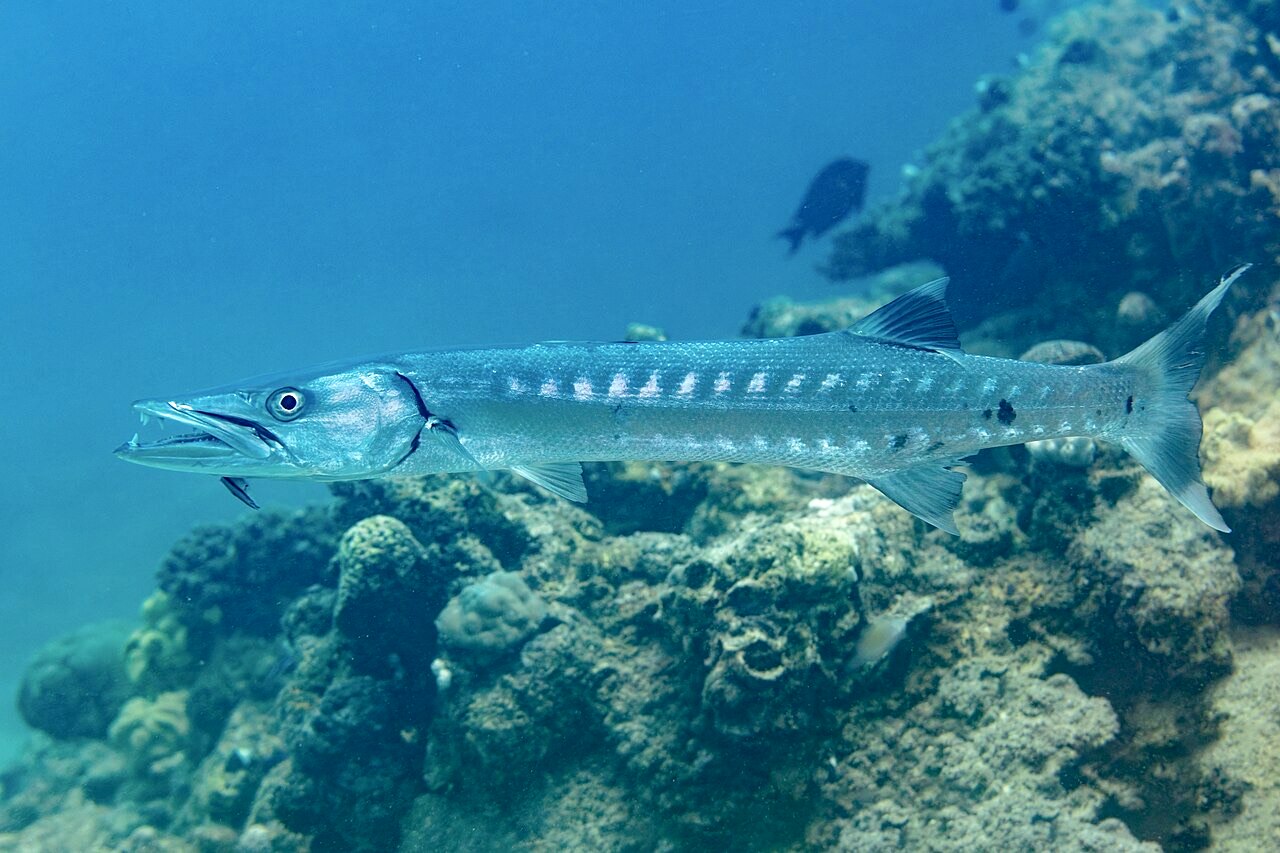
Great Barracuda
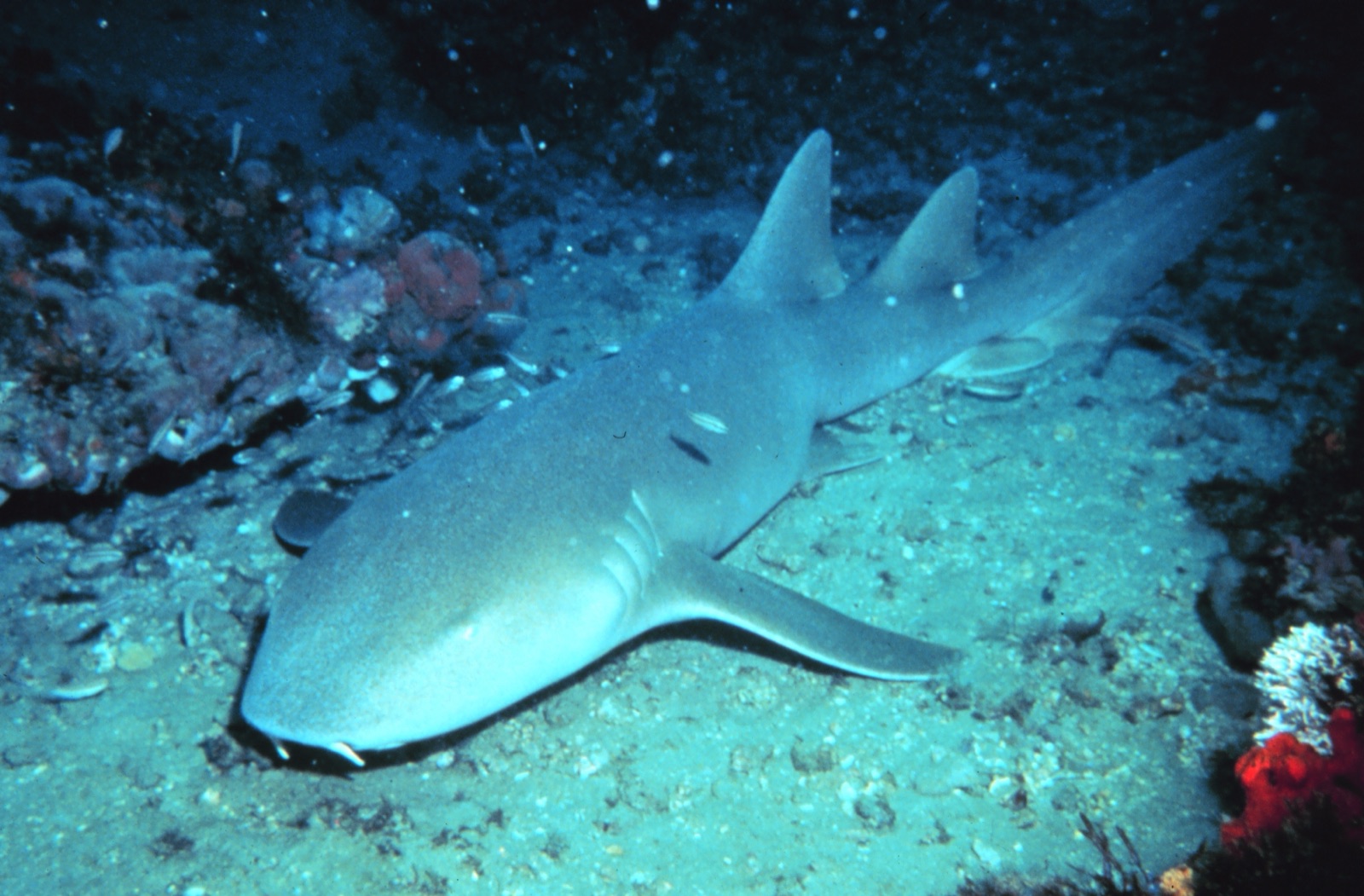
Nurse Shark
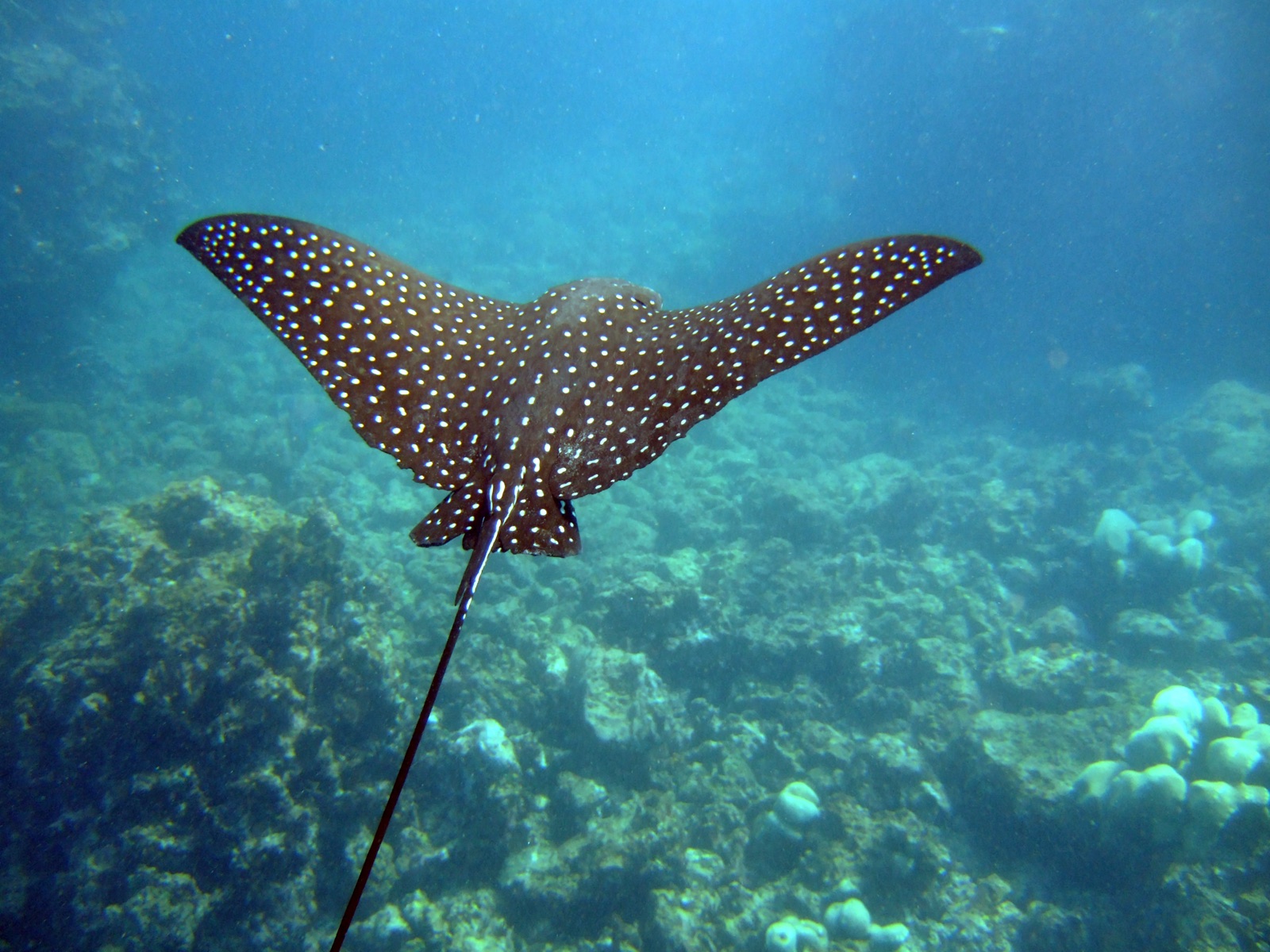
Spotted Eagle Ray
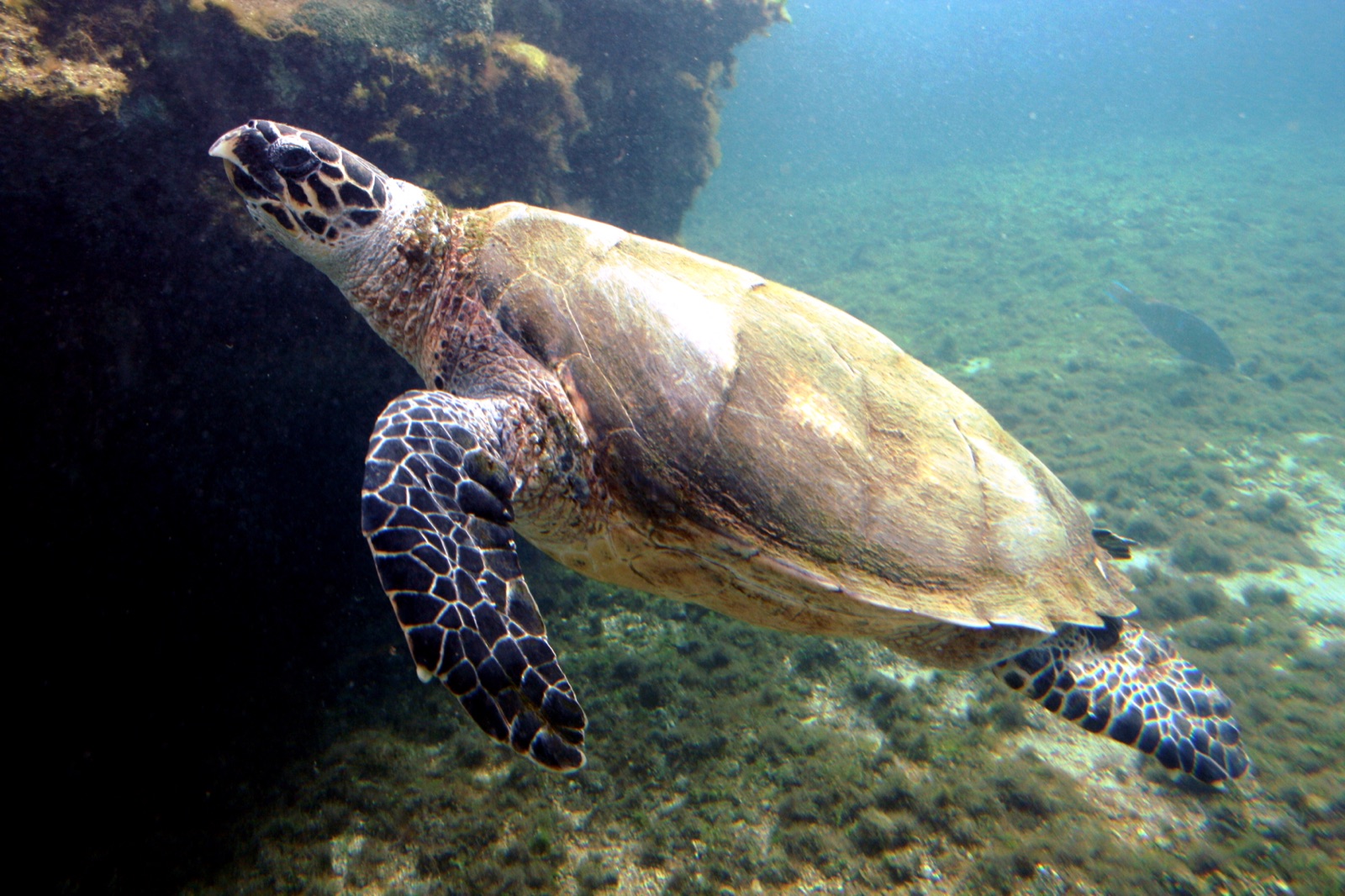
Hawksbill Turtle
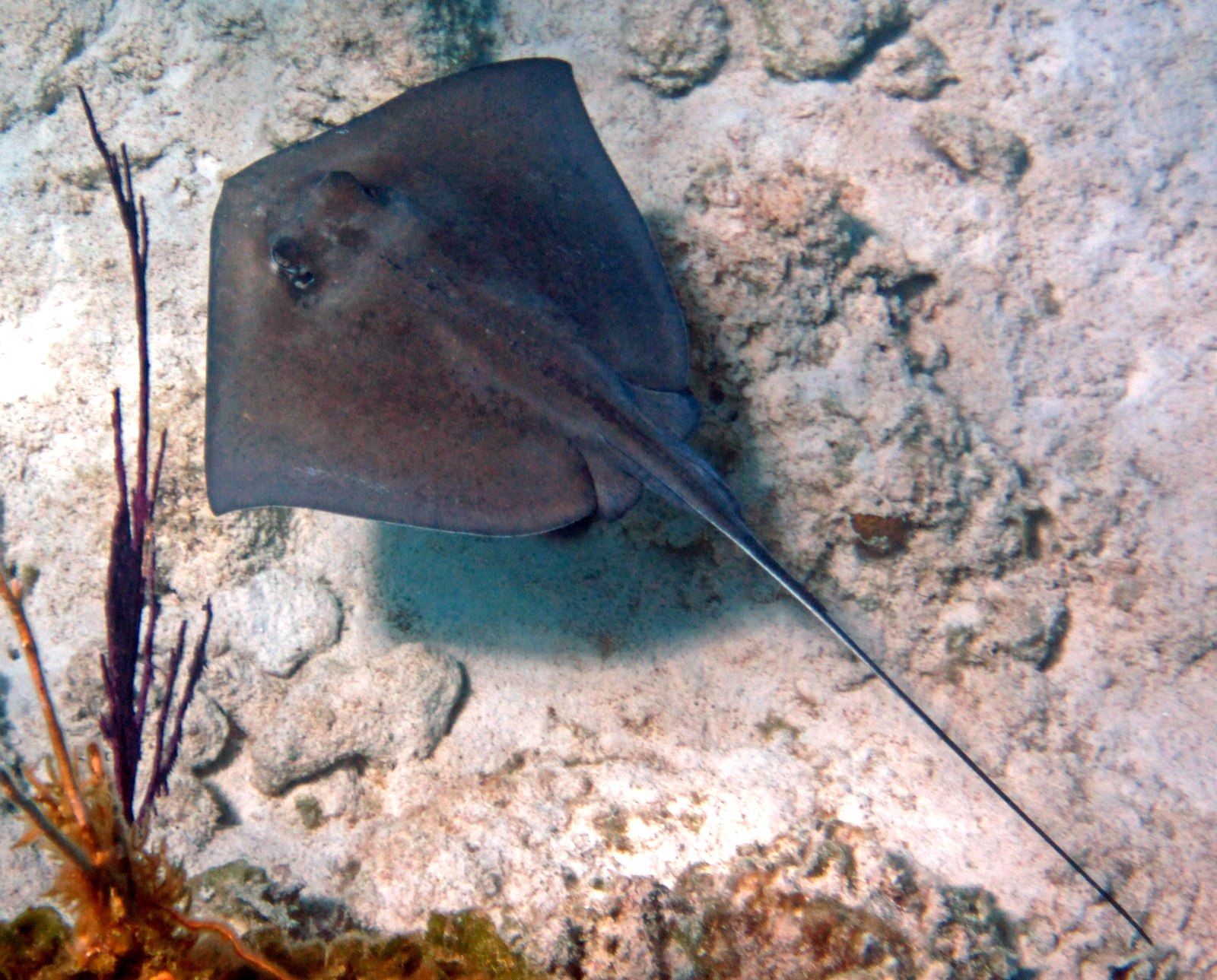
Southern Stingray
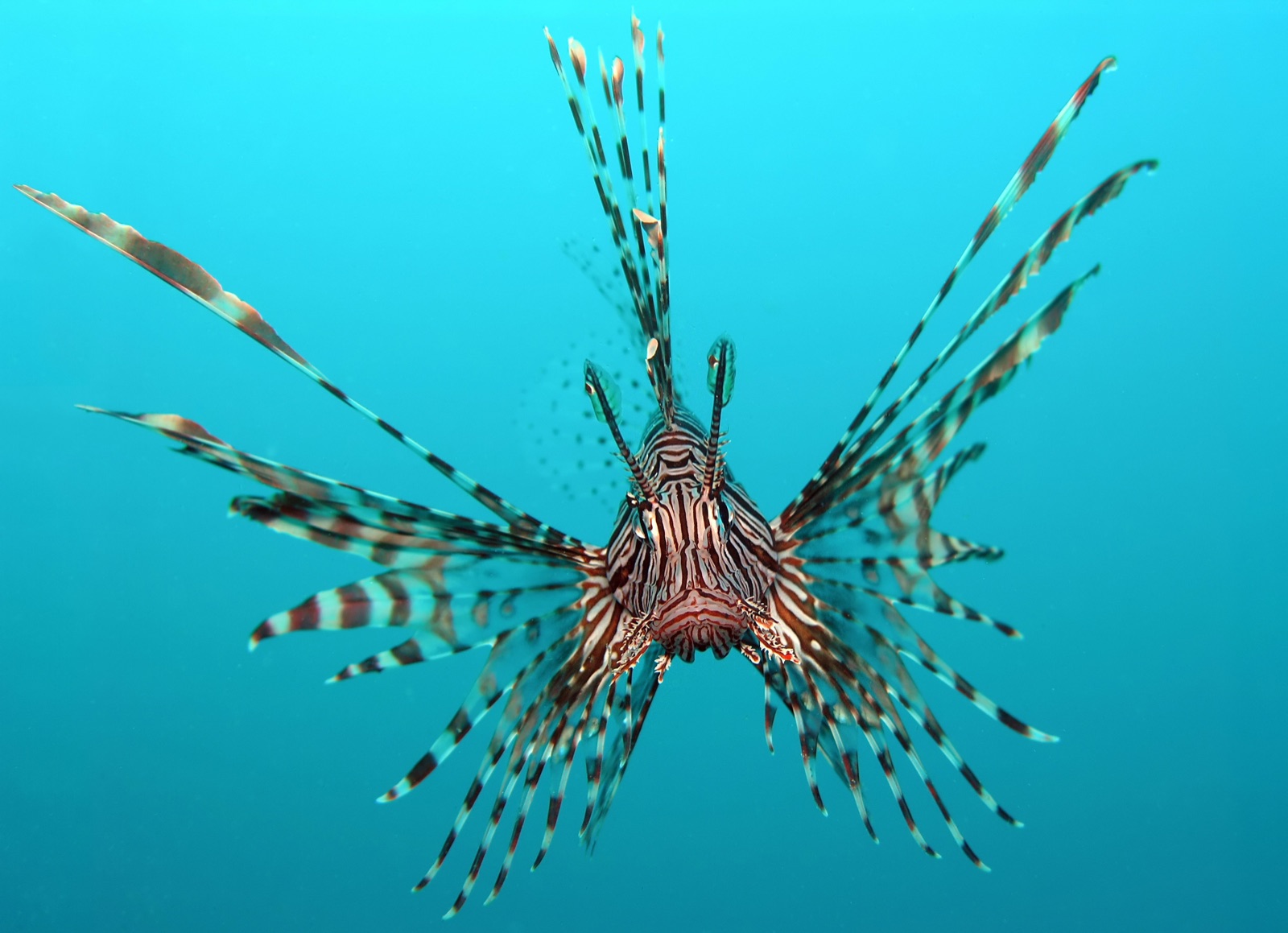
Lionfish
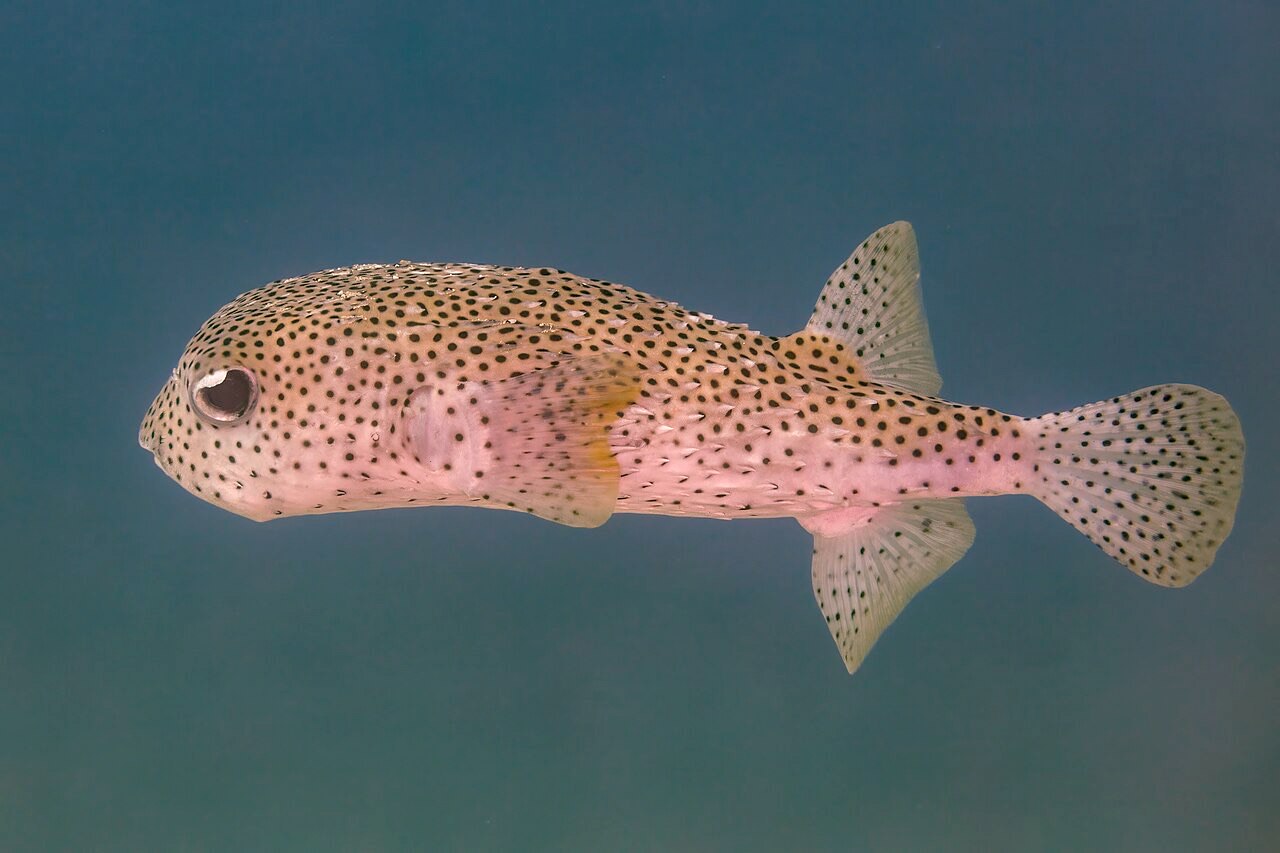
Porcupinefish
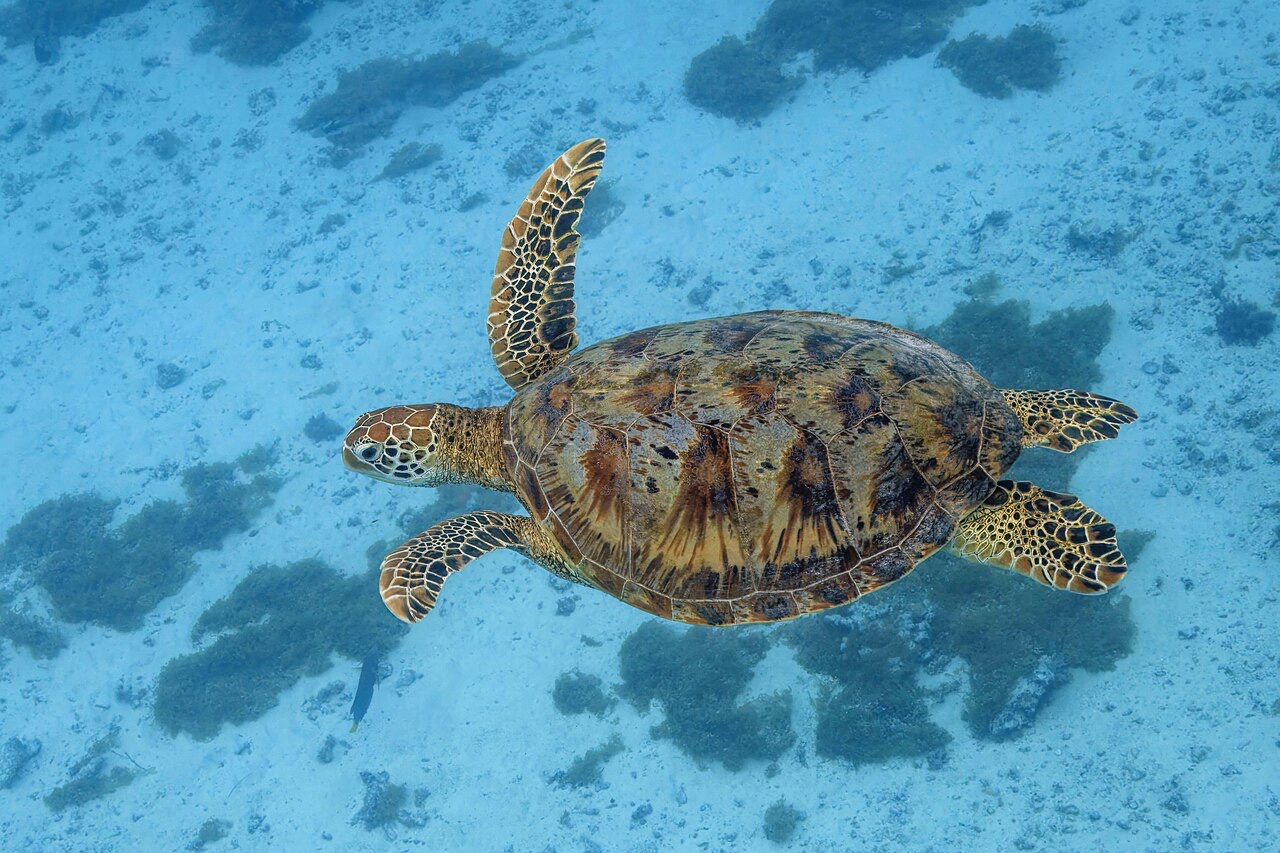
Green Sea Turtle
Également observé à proximité
Les espèces « cartographiées ici » ont été répertoriées par nos éditeurs à partir des sources indiquées sur cette page. Les comptages correspondent aux occurrences GBIF : observations enregistrées dans un rayon d'environ 5 km autour de la position cartographiée depuis 1990, comparées uniquement aux espèces de notre catalogue. Ils indiquent ce qui a été observé à cet endroit, sans garantir ce que vous y verrez.
Pour les photographes
Grand angle: ★★★★★ · Macro: ★☆☆☆☆ (note 1–5 des éditeurs sur ce que ce site offre à chaque style de prise de vue)