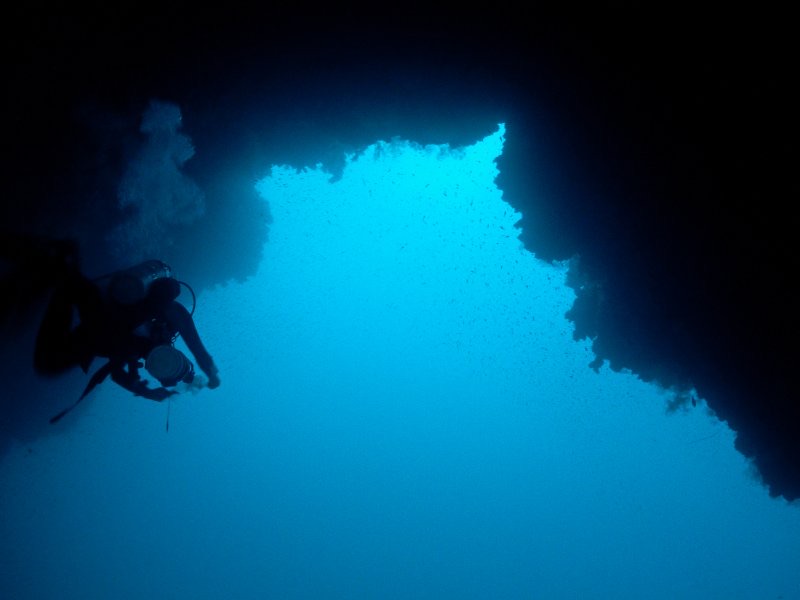
Blue Hole
Die Tiefe gibt den Bereich von der Oberkante des Tauchplatzes bis zur üblichen Maximaltiefe an; „empfohlene Zertifizierung" ist das von Anbietern üblicherweise geforderte Mainstream-Agenturniveau – keine gesetzliche Vorschrift. Strömungen und Sichtweite ändern sich täglich – behandle alle Angaben hier als Planungsbereiche.
Dahab's famous sinkhole is really two dive sites sharing an address. The one most people do is lovely and undemanding: drop through the Bells chimney, drift south along an outer wall stepped with coral, and glide over the shallow saddle into the sunlit bowl. The other - the Arch, a roughly 26-meter tunnel through the reef wall with its ceiling near 55 meters - belongs to technical diving, and the site's grim reputation was earned almost entirely by people who attempted it without the training, gas, or support it requires. No official count exists; conservative estimates put the deaths well past one hundred, and memorial plaques line the cliff above the entry. Dived within limits, it is a calm, current-free pleasure. The shaft itself bottoms out somewhere between about 92 and 120 meters depending on the survey.
Der Moment, für den du kommst: The Bells chimney entry; the saddle crossing into blue light; freediving culture at the surface; sobering memorial wall ashore.
Topografie: A collapsed circular shaft in the fringing reef, its floor far below recreational depths, ringed by living coral walls
Einstieg: The classic dive enters at the Bells, a narrow chimney north of the hole, follows the outer wall south, and crosses the saddle at about 7 meters into the hole itself. Proof of certification is checked.
Was du wissen solltest, bevor du ins Wasser gehst
Gefahren: The Arch has killed experienced divers as well as reckless ones - depth, narcosis, and a deceptive exit; freedivers and scuba traffic share the bowl; midday snorkeler crowds.
Genehmigungen & Regeln: Protectorate entry fee; guides and proof of certification required, with technical dives subject to additional checks.
Naturschutz: Inside the Ras Abu Galum protectorate; entry tickets fund management. The saddle's corals take heavy traffic - keep fins up.
Nitrox: Hier lohnt es sich – die Profile liegen in einem Bereich, in dem Nitrox die Nullzeiten spürbar verlängert (mit der entsprechenden Ausbildung).
Wen du triffst
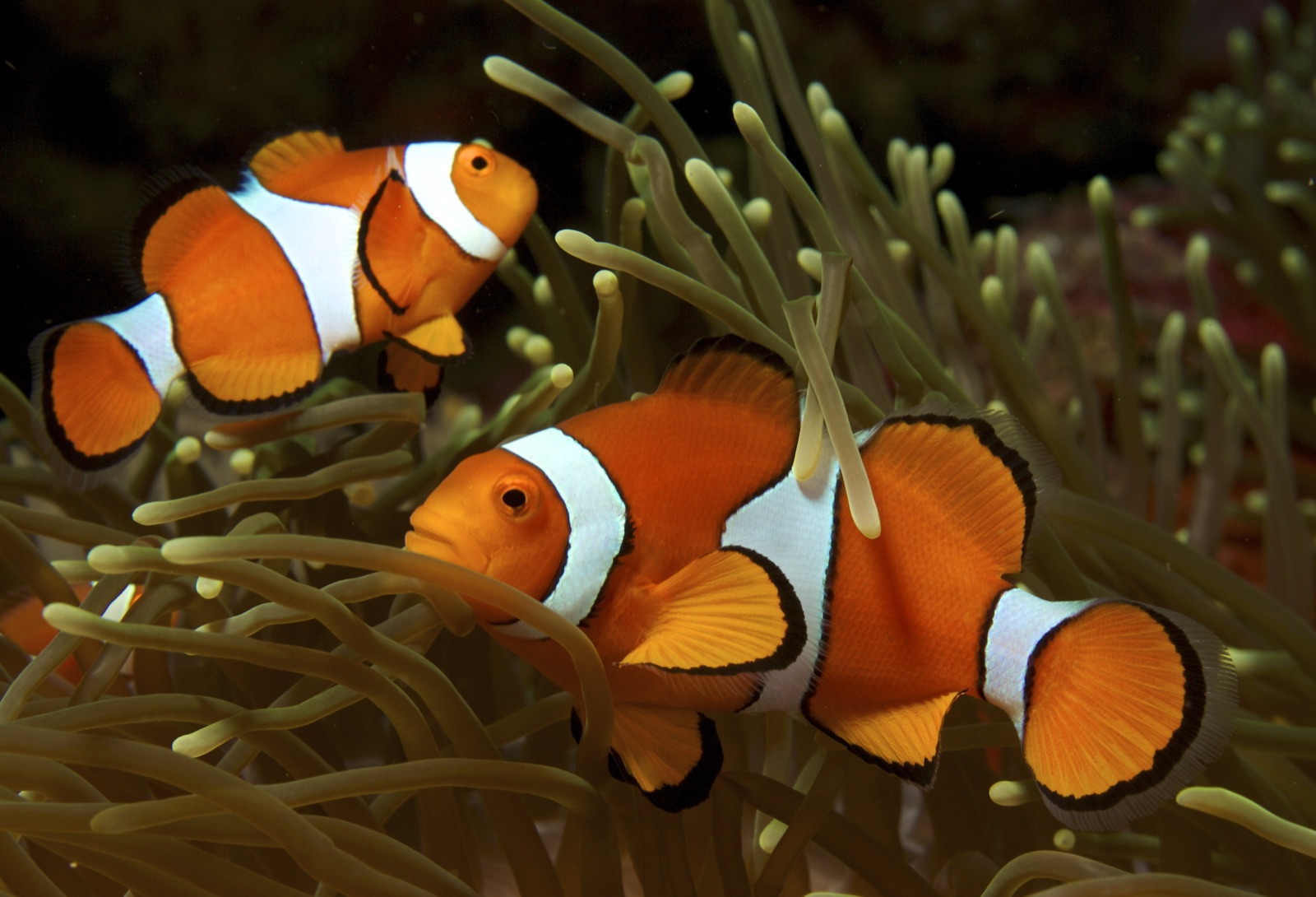
Clownfish & Anemonefish
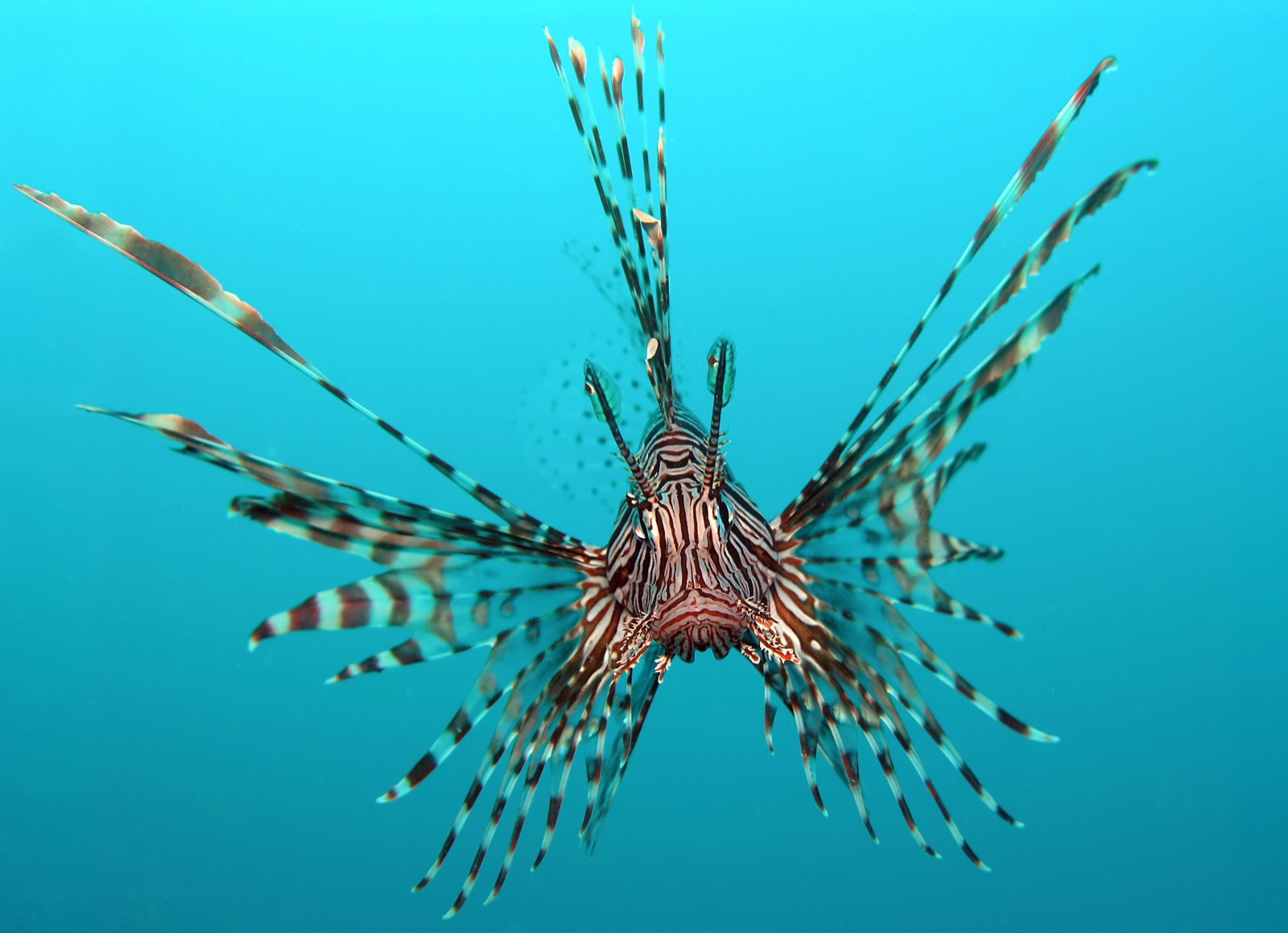
Lionfish
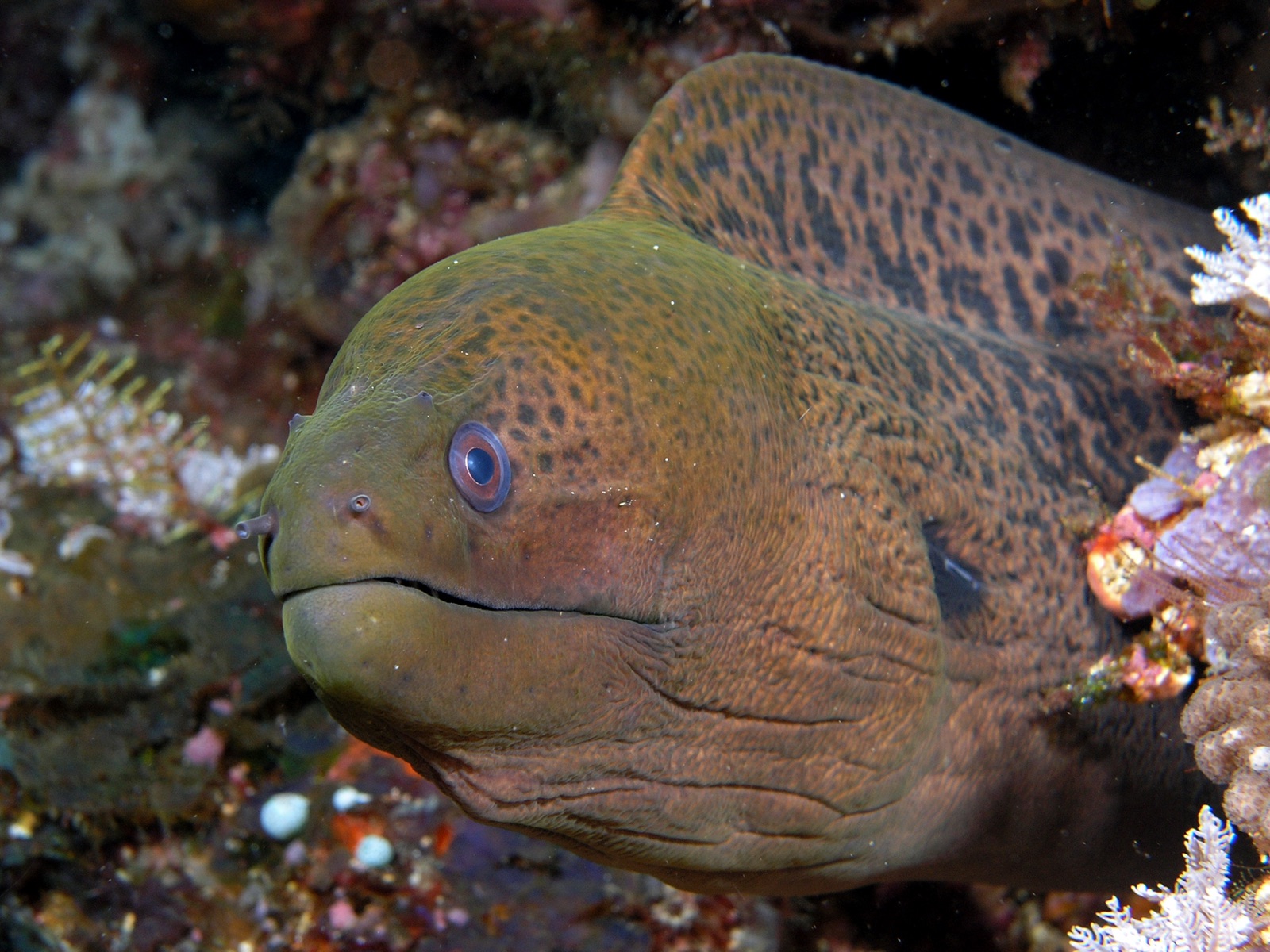
Giant Moray Eel
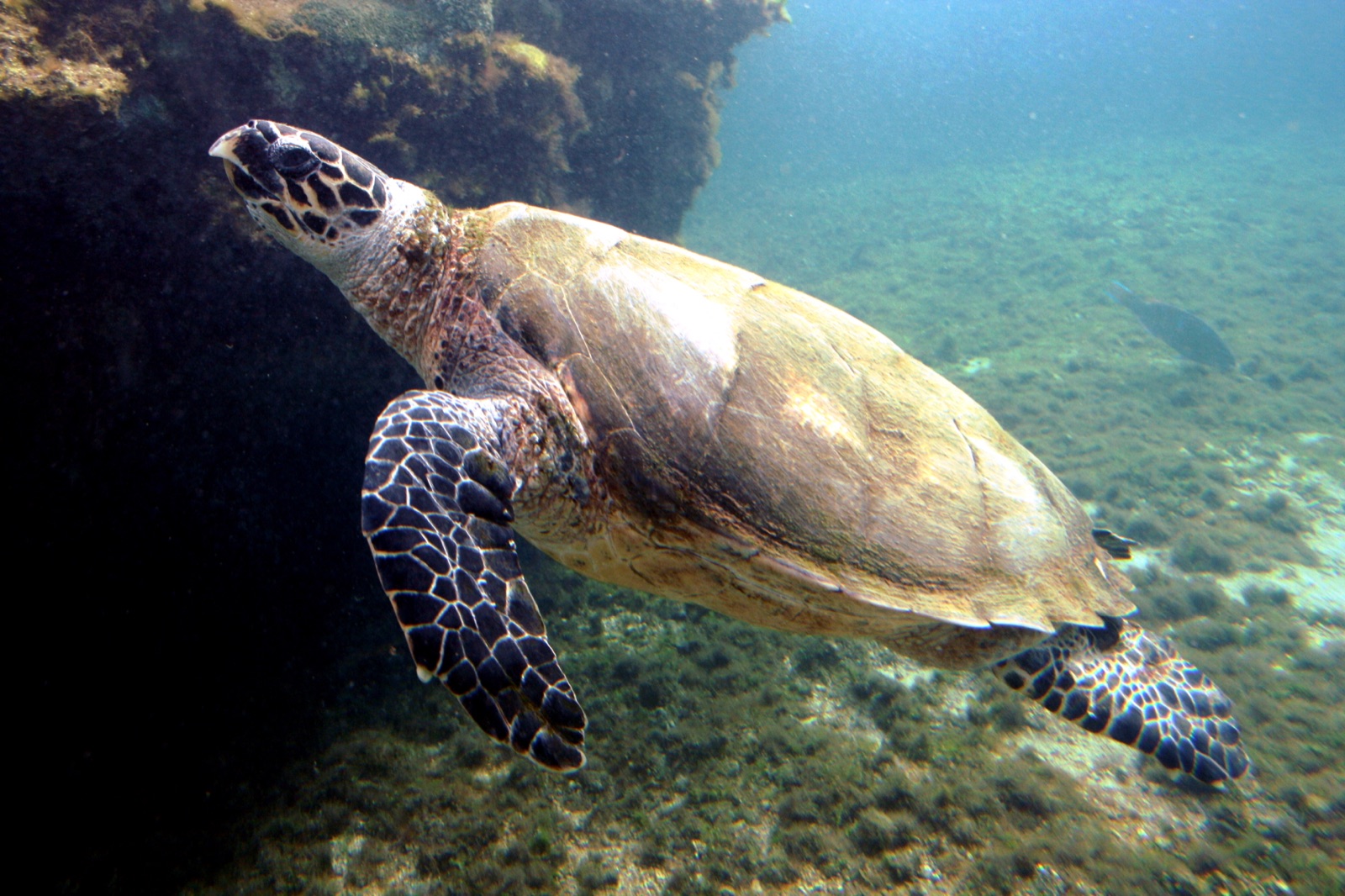
Hawksbill Turtle
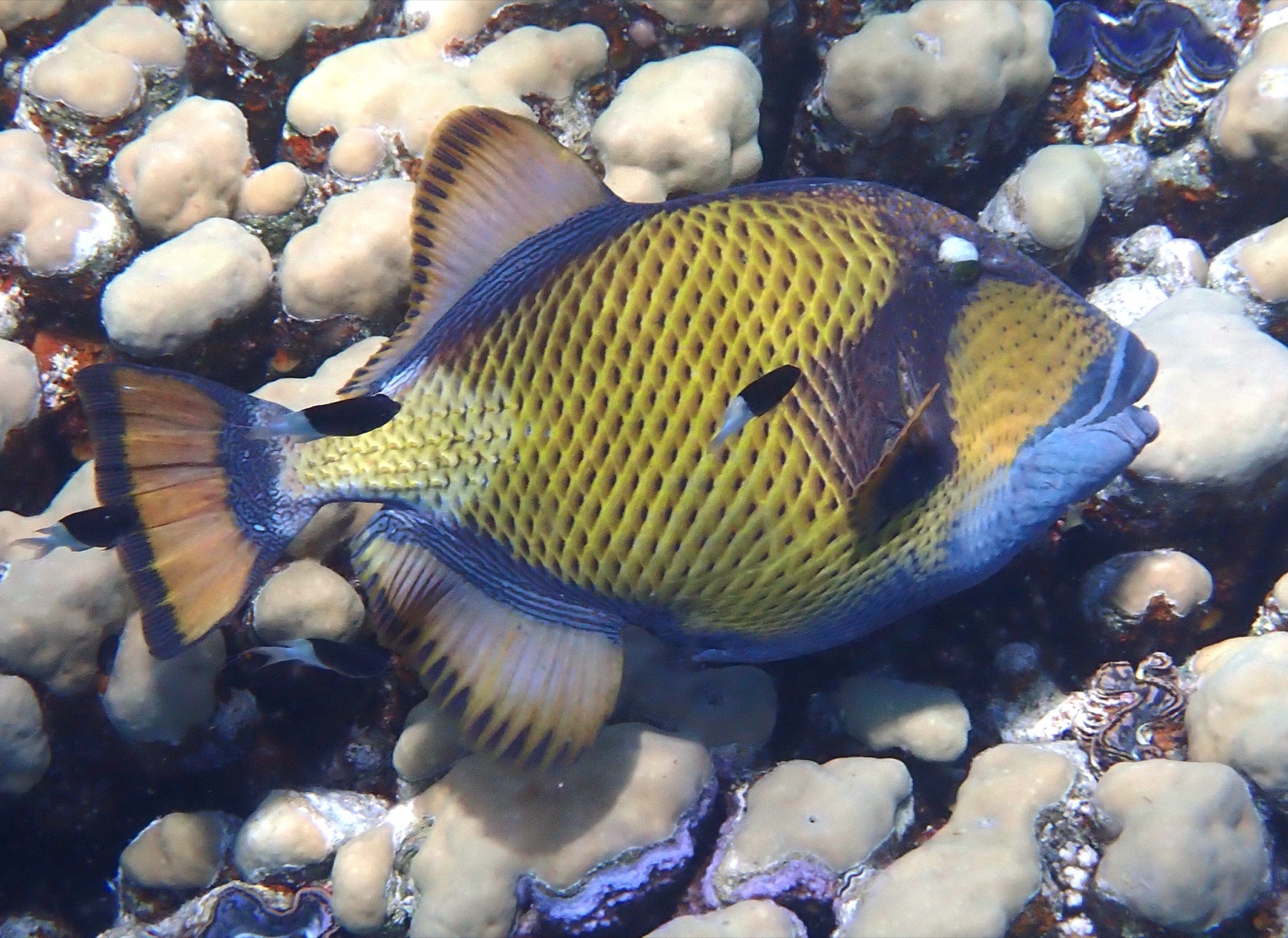
Titan Triggerfish
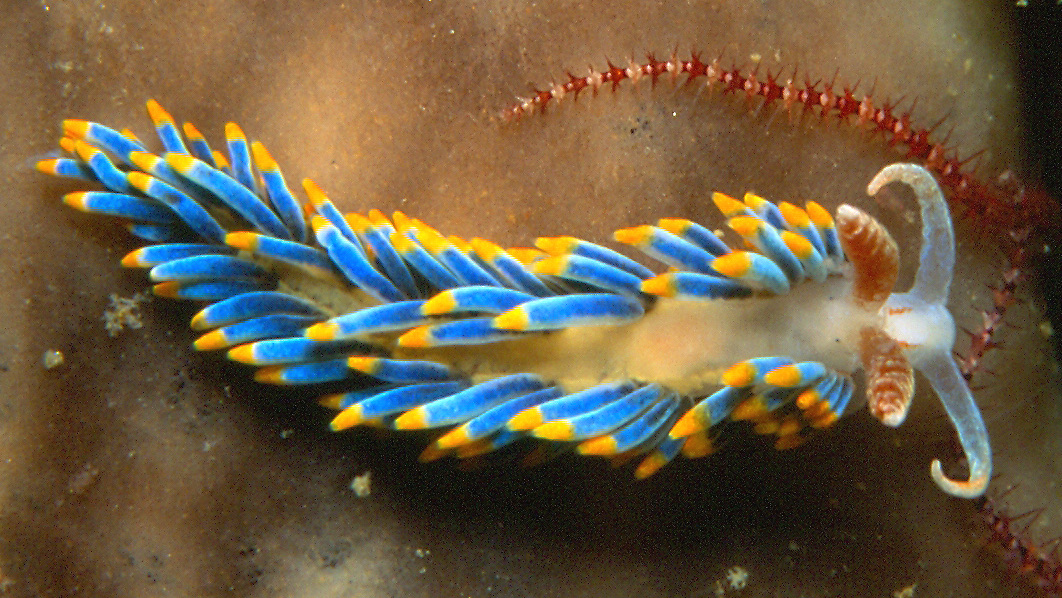
Nudibranchs
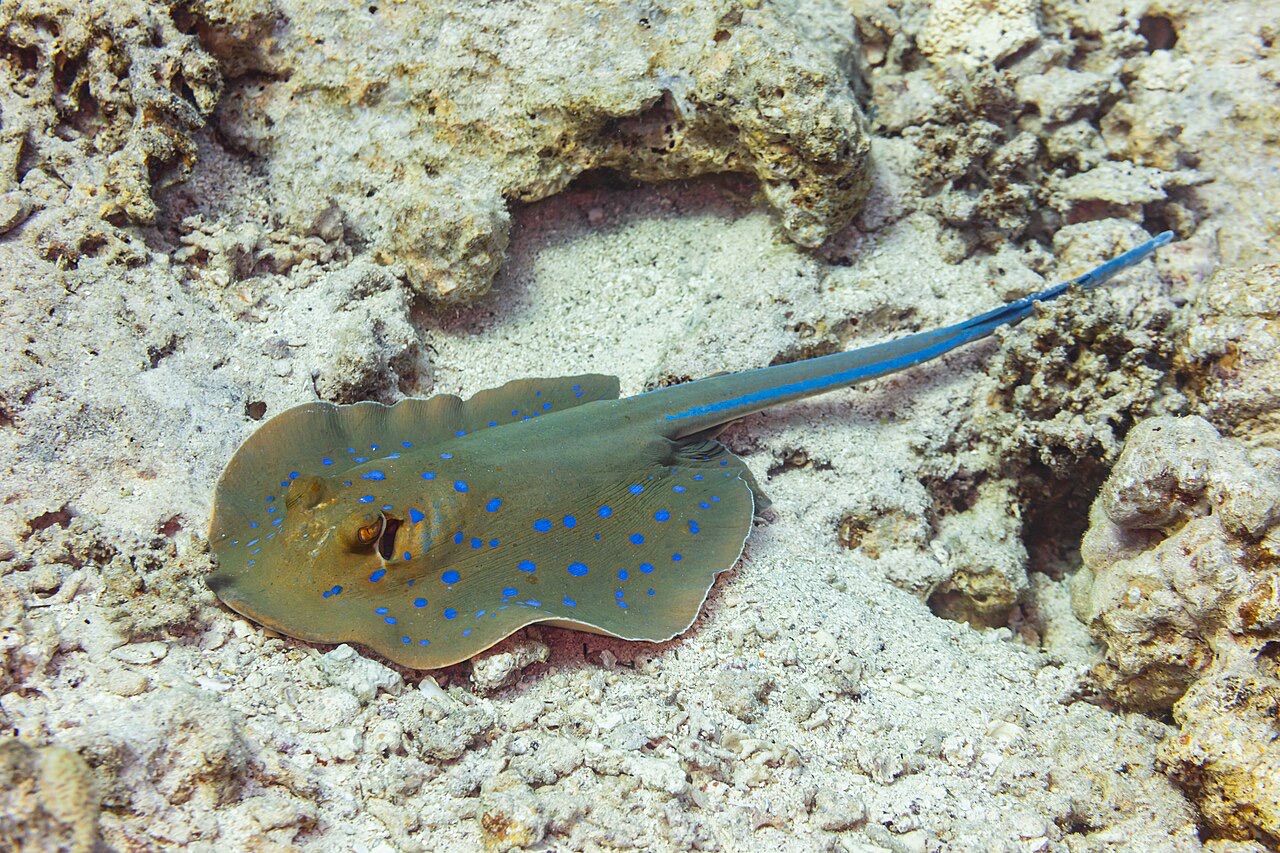
Blue-Spotted Ribbontail Ray
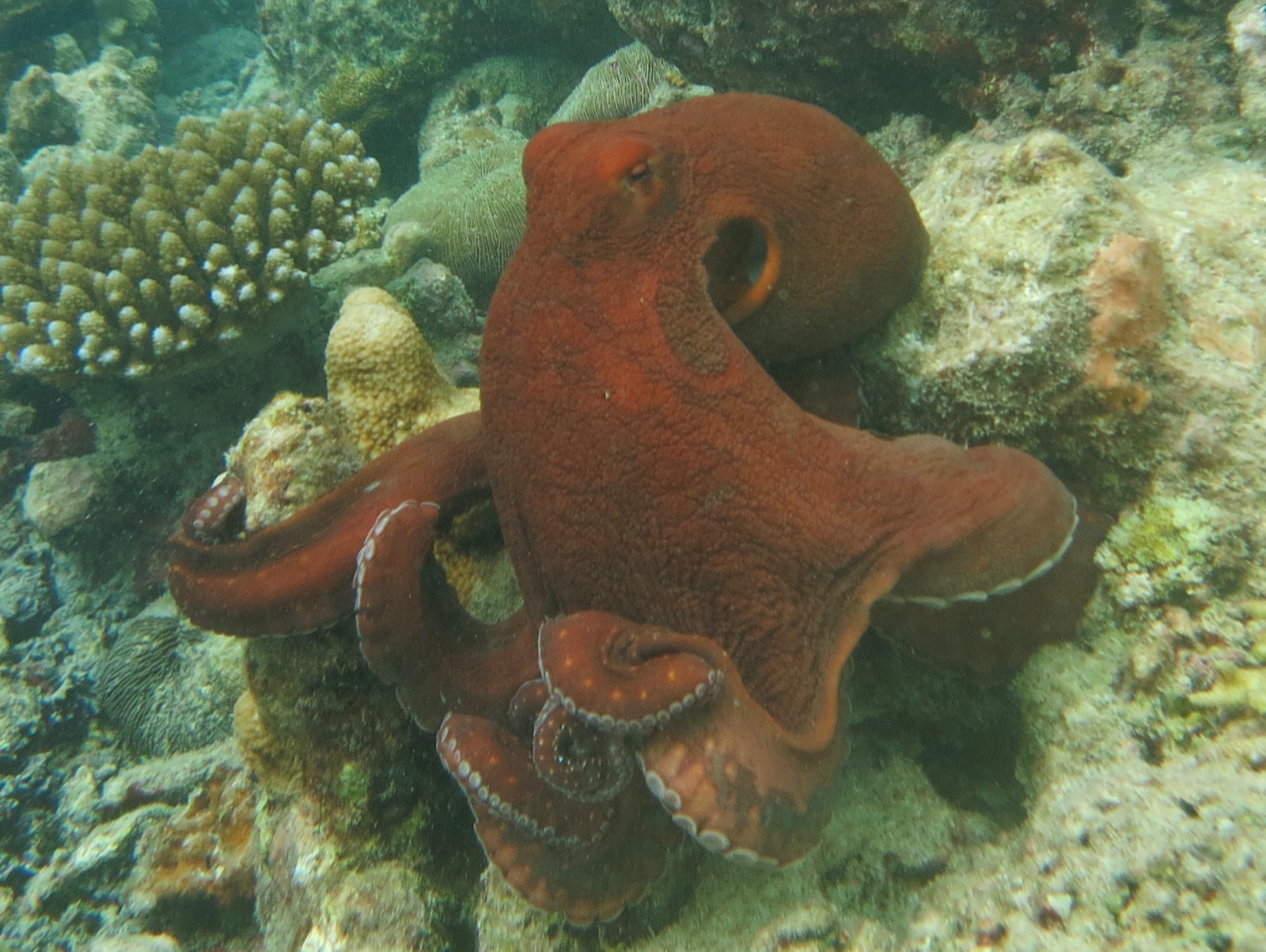
Common Reef (Day) Octopus
Auch in der Nähe nachgewiesen
„Hier kartiert" – Arten wurden von unseren Redakteuren anhand der Quellen auf dieser Seite erfasst. Die Zahlen sind GBIF-Vorkommensdatensätze: Beobachtungen, die seit 1990 im Umkreis von etwa 5 km um die kartierte Position protokolliert wurden, ausschließlich abgeglichen mit den Arten in unserem Katalog. Sie zeigen, was dort gesichtet wurde – keine Garantie, was du sehen wirst.
Für Fotografen
Weitwinkel: ★★★★☆ · Makro: ★★☆☆☆ (Redaktionelle 1–5-Bewertung, was dieser Platz für jeden Fotografie-Stil bietet)