Big Fish
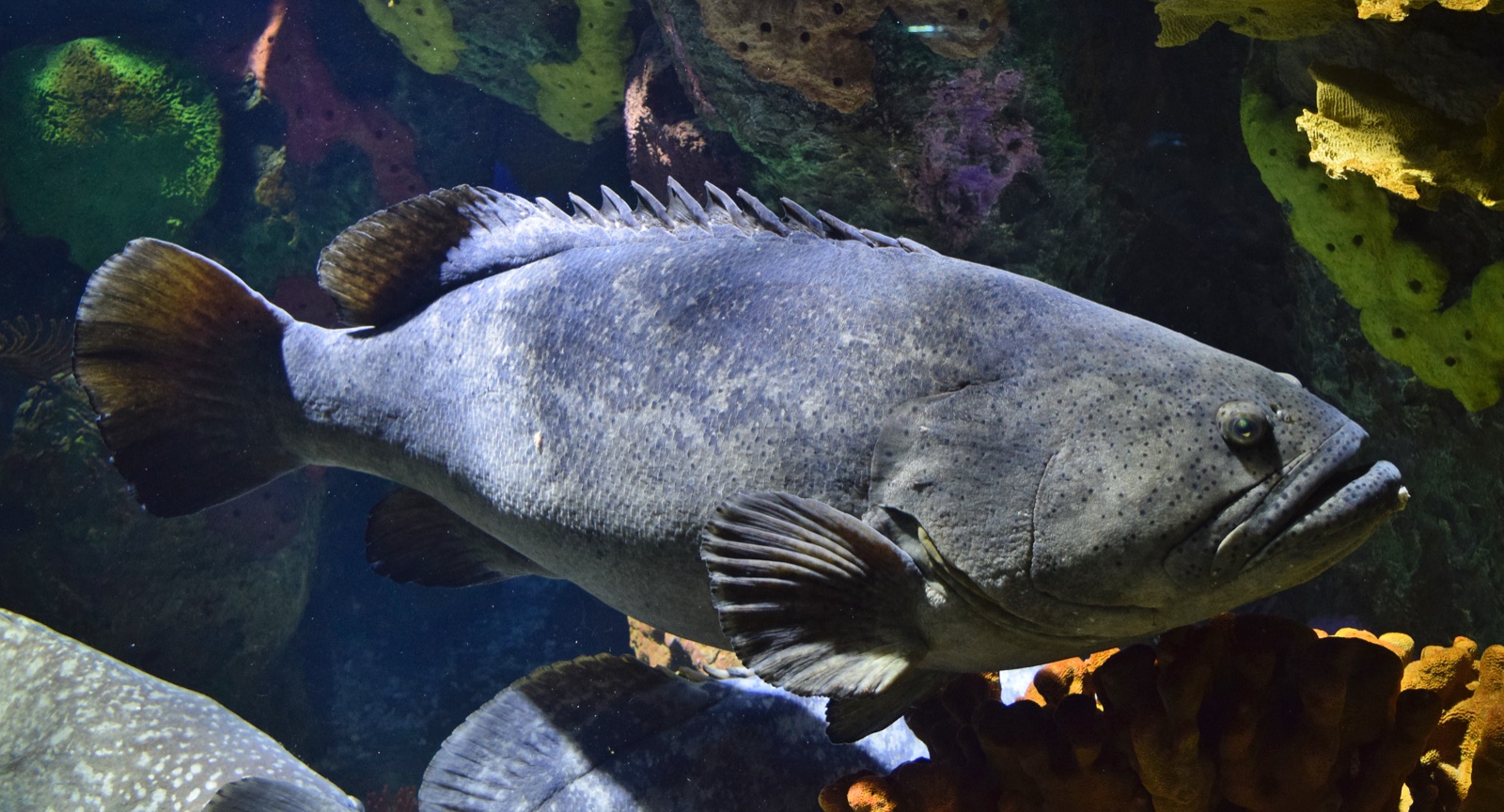
Giant Grouper
Epinephelus lanceolatus · Bony fish, family Epinephelidae
The giant grouper is the Indo-Pacific's resident submarine: a fish the size of a chest freezer, drab olive-gray with a vast frog mouth, hanging in the shade of a wreck companionway with tiny eyes tracking everything. Australia's Yongala wreck made the species famous among divers: its resident giants loom out of the gloom beside bull rays and sea snakes, treating the hull as a fiefdom. Encounters elsewhere are scattered and memorable for their rarity; wild adults have been fished out of most of Asia, and a giant meeting you at depth with calm, proprietary curiosity is a privilege fewer reefs can offer each decade. Aquaculture now supplies the food trade the wild fish once fed.
Where and when to see one
"Resident" means most dives at that destination encounter them; "seasonal" means reliably present in the listed months; anything else is a bonus, not a plan.
| Destination | Reliability | Months | Notes |
|---|---|---|---|
| Townsville & the YongalaAustralia | Resident: seen on most dives | Year-round | |
| Cairns & the Ribbon ReefsAustralia | Occasional | Year-round | |
| Sipadan & MabulMalaysia | Occasional | Year-round |
Best month, at a glance
| Month | Reliable destinations |
|---|---|
| January | Townsville & the Yongala · Cairns & the Ribbon Reefs · Sipadan & Mabul |
| February | Townsville & the Yongala · Cairns & the Ribbon Reefs · Sipadan & Mabul |
| March | Townsville & the Yongala · Cairns & the Ribbon Reefs · Sipadan & Mabul |
| April | Townsville & the Yongala · Cairns & the Ribbon Reefs · Sipadan & Mabul |
| May | Townsville & the Yongala · Cairns & the Ribbon Reefs · Sipadan & Mabul |
| June | Townsville & the Yongala · Cairns & the Ribbon Reefs · Sipadan & Mabul |
| July | Townsville & the Yongala · Cairns & the Ribbon Reefs · Sipadan & Mabul |
| August | Townsville & the Yongala · Cairns & the Ribbon Reefs · Sipadan & Mabul |
| September | Townsville & the Yongala · Cairns & the Ribbon Reefs · Sipadan & Mabul |
| October | Townsville & the Yongala · Cairns & the Ribbon Reefs · Sipadan & Mabul |
| November | Townsville & the Yongala · Cairns & the Ribbon Reefs · Sipadan & Mabul |
| December | Townsville & the Yongala · Cairns & the Ribbon Reefs · Sipadan & Mabul |
Understanding them
Habitat: Wrecks, caves, and lagoon pinnacles; solitary adults hold large territories around favored structure
Range: Tropical Indo-Pacific from the Red Sea and East Africa to Australia, Japan, and the central Pacific, nowhere common
Behavior: A cave-dwelling colossus that spends daylight suspended in shade, drifting out to inspect visitors with ponderous confidence. Individual fish occupy the same wreck or bommie for many years and become local celebrities. Like its Atlantic counterpart it can produce a booming territorial drum.
Diet: Spiny lobsters, crabs, fish including small sharks and rays, and juvenile turtles, engulfed whole
Size: typically around 1.8 m; documented up to 2.7 m (total length; the largest bony fish resident on coral reefs, reportedly to 400 kg).
How to behave around one
No feeding (it rewired the behavior of famous individuals in the past), no touching, and give the fish the right of way in wreck corridors and caves.
Conservation
Currently assessed Data Deficient: wild populations are sparse and hard to census after decades of the live reef-food-fish trade; several range states protect it outright.
Charted sites known for them
Highlighted sites were charted for this species by our editors; numbers are GBIF occurrence records logged within about 5 km of a site since 1990.
Watch
From the official channels

Wildlife of Monterey | New film in our auditorium

Live Aviary Cam | Monterey Bay Aquarium

Live Aviary Cam | Monterey Bay Aquarium
Videos are embedded links to their creators' own channels. We host nothing and credit everything.