Turtles
Hawksbill Turtle
Eretmochelys imbricata · Marine reptile, family Cheloniidae
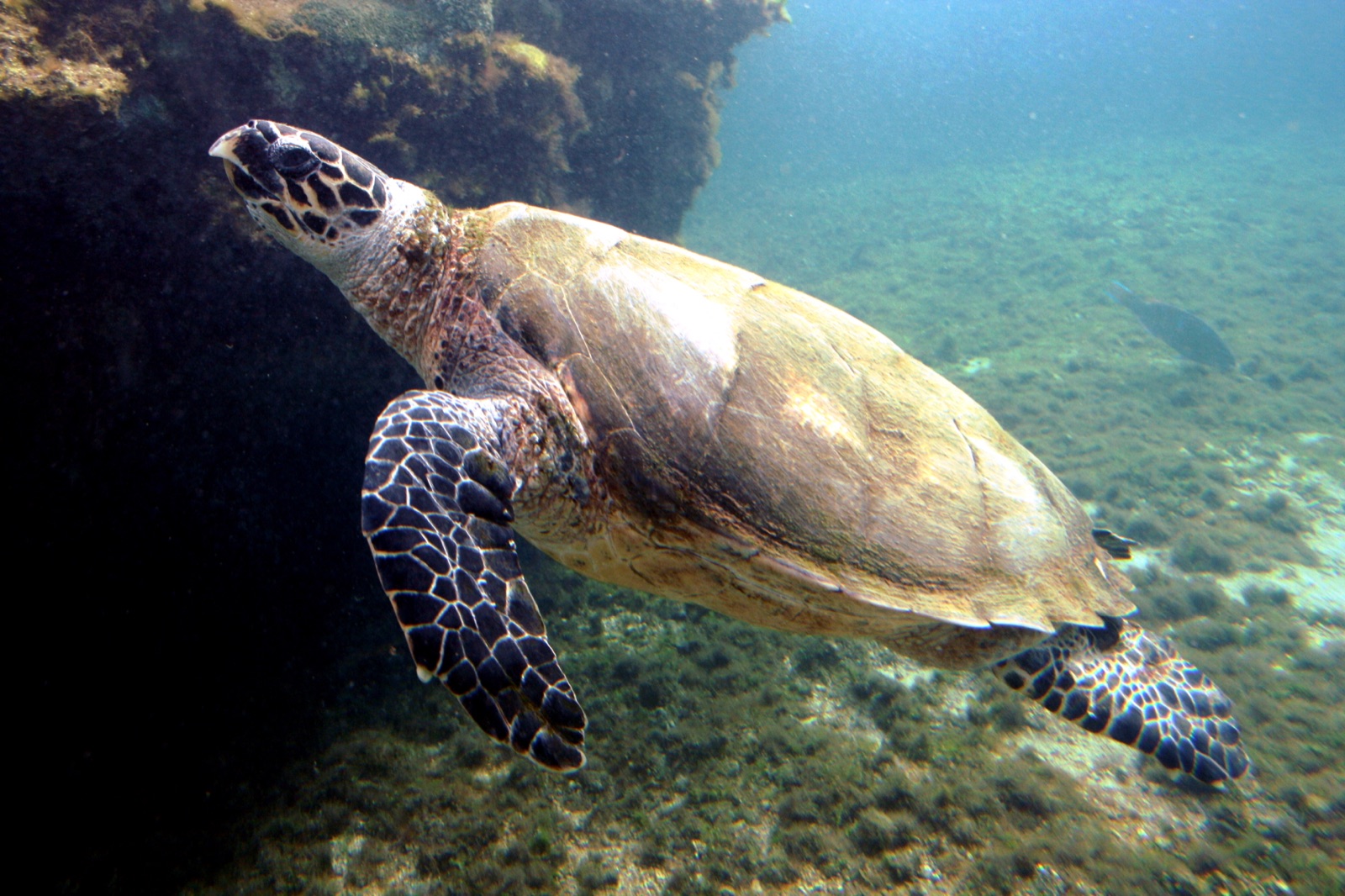
Every reef diver's favorite worker, the hawksbill is a compact turtle with a raptor's beak, tortoiseshell shingles overlapping down its back, and no time to waste. You hear one before you see it (the rasp and crunch of a sponge being demolished), then find the animal head-down in a crevice, hind flippers braced, scattering fragments for the wrasses that attend it. That tortoiseshell, amber marbled with black, drove centuries of harvest for combs and spectacle frames and pushed the species to Critically Endangered; trade is banned now, and reefs from Cozumel to Sipadan still offer daily audiences with the survivor.
Dónde y cuándo ver uno
"Residente" significa que la mayoría de las inmersiones en ese destino tienen encuentros con ellos; "estacional" significa que su presencia es fiable en los meses indicados; cualquier otra cosa es un extra, no algo con lo que contar.
| Destino | Fiabilidad | Meses | Notas |
|---|---|---|---|
| CozumelMexico | Resident: seen on most dives | Todo el año | |
| BonaireBonaire | Resident: seen on most dives | Todo el año | |
| Sharm El Sheikh & Ras MohammedEgypt | Resident: seen on most dives | Todo el año | |
| Tubbataha ReefsPhilippines | Resident: seen on most dives | Mar–Jun | |
| SeychellesSeychelles | Resident: seen on most dives | Oct–Feb |
El mejor mes, de un vistazo
| Mes | Destinos fiables |
|---|---|
| January | Cozumel · Bonaire · Sharm El Sheikh & Ras Mohammed · Seychelles |
| February | Cozumel · Bonaire · Sharm El Sheikh & Ras Mohammed · Seychelles |
| March | Cozumel · Bonaire · Sharm El Sheikh & Ras Mohammed · Tubbataha Reefs |
| April | Cozumel · Bonaire · Sharm El Sheikh & Ras Mohammed · Tubbataha Reefs |
| May | Cozumel · Bonaire · Sharm El Sheikh & Ras Mohammed · Tubbataha Reefs |
| June | Cozumel · Bonaire · Sharm El Sheikh & Ras Mohammed · Tubbataha Reefs |
| July | Cozumel · Bonaire · Sharm El Sheikh & Ras Mohammed |
| August | Cozumel · Bonaire · Sharm El Sheikh & Ras Mohammed |
| September | Cozumel · Bonaire · Sharm El Sheikh & Ras Mohammed |
| October | Cozumel · Bonaire · Sharm El Sheikh & Ras Mohammed · Seychelles |
| November | Cozumel · Bonaire · Sharm El Sheikh & Ras Mohammed · Seychelles |
| December | Cozumel · Bonaire · Sharm El Sheikh & Ras Mohammed · Seychelles |
Comprendiéndolos
Hábitat: Coral reefs above all; forages among sponges on walls and ledges, resting in crevices
Rango: Circumtropical, tied tightly to coral reef systems of the Caribbean, Red Sea, Indian Ocean, Coral Triangle, and Pacific
Comportamiento: The busiest of the turtles: where greens graze placidly, hawksbills work the reef like foragers on a deadline, tearing at sponges with the hooked beak, wedging under plate corals, surfacing briefly and diving back to the job. Usually solitary and often indifferent to a quiet diver at close range.
Dieta: A sponge specialist (one of very few vertebrates that can live on toxic reef sponges) plus tunicates, anemones, and jellyfish
Tamaño: normalmente alrededor de 0.8 m; documentado hasta 1.0 m (carapace length).
Cómo comportarse cerca de uno
Stay off the reef while watching one feed, no touching or trailing a foraging animal from above, and let it breathe unobstructed: hawksbills spook if boxed against the wall.
Conservación
Critically Endangered after centuries of tortoiseshell trade; CITES bans the trade and many nesting beaches are guarded, but illegal trinket sales persist. Buy nothing made of shell.
Puntos conocidos por avistamientos
Los puntos destacados fueron registrados para esta especie por nuestros editores; los números son registros de ocurrencia de GBIF anotados en un radio de unos 5 km de un punto desde 1990.
Ver
Desde los canales oficiales

Wildlife of Monterey | New film in our auditorium

Live Aviary Cam | Monterey Bay Aquarium

Live Aviary Cam | Monterey Bay Aquarium
Los vídeos son enlaces insertados a los canales de sus propios creadores. No alojamos nada y acreditamos todo.