Turtles
Leatherback Turtle
Dermochelys coriacea · Marine reptile, family Dermochelyidae
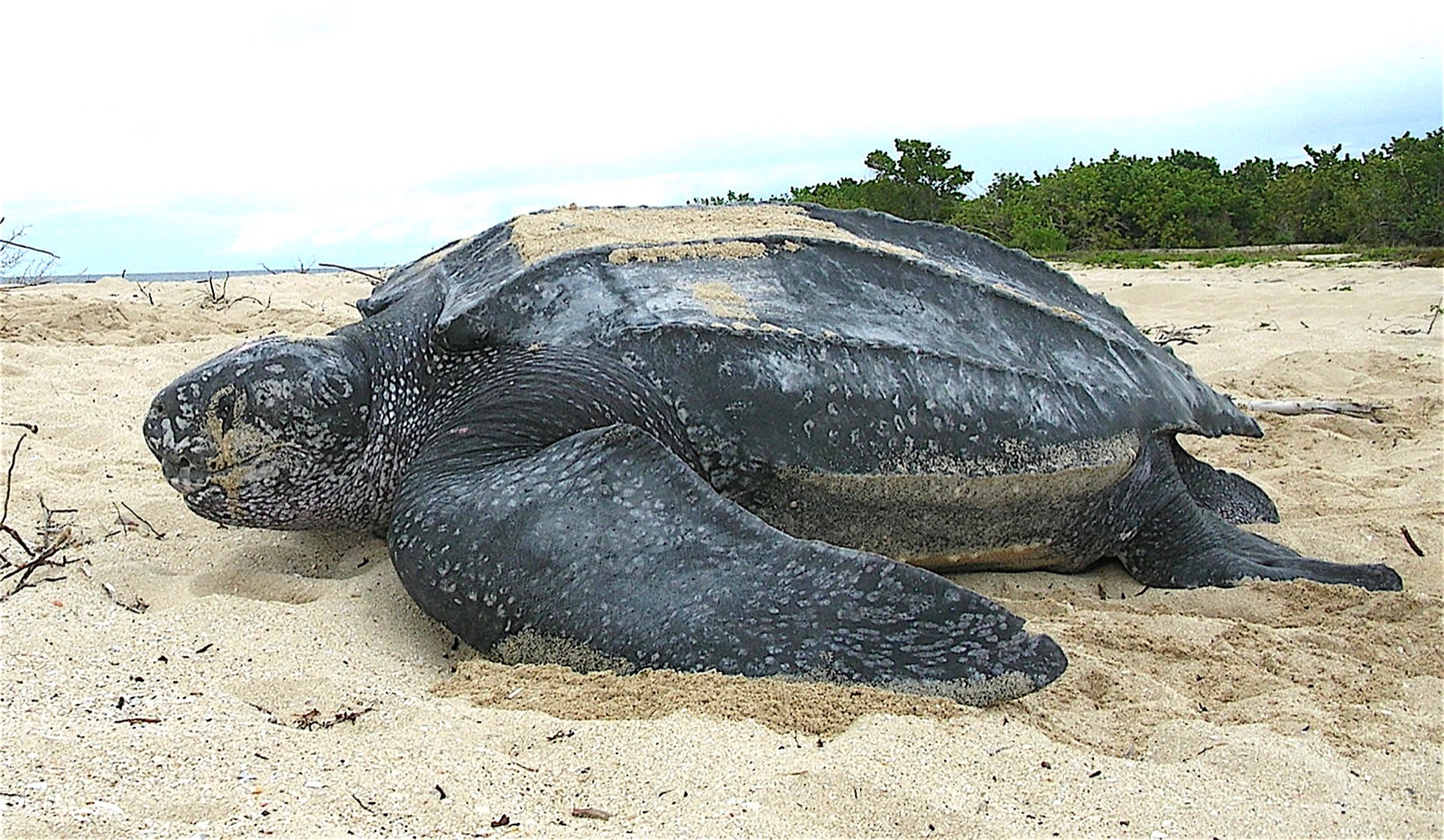
The leatherback barely seems like a turtle at all. There is no hard shell, just a ridged carapace of black, leathery skin flecked with white, streamlined like a seed pod, hung with the longest front flippers in the family. It is a deep-ocean animal on a jellyfish economy, warm-blooded enough in practice to cruise off Nova Scotia and Norway, and it crosses entire oceans between nesting beaches and feeding grounds. Divers almost never meet one by design; the realistic encounter is a nesting female (an armored rowboat heaving up a tropical beach by night) or a heart-stopping pass in open water during a baitball season. List it among the ocean's privileges, not its itineraries.
Where and when to see one
"Resident" means most dives at that destination encounter them; "seasonal" means reliably present in the listed months; anything else is a bonus, not a plan.
| Destination | Reliability | Months | Notes |
|---|---|---|---|
| GrenadaGrenada | Rare | Apr–Jul | |
| Sodwana BaySouth Africa | Rare | Nov–Jan | |
| The Sardine Run (Wild Coast)South Africa | Rare | Jun–Jul | |
| DominicaDominica | Rare | Mar–Jul |
Best month, at a glance
| Month | Reliable destinations |
|---|---|
| January | Sodwana Bay |
| March | Dominica |
| April | Grenada · Dominica |
| May | Grenada · Dominica |
| June | Grenada · The Sardine Run (Wild Coast) · Dominica |
| July | Grenada · The Sardine Run (Wild Coast) · Dominica |
| November | Sodwana Bay |
| December | Sodwana Bay |
Understanding them
Habitat: The open ocean; a pelagic wanderer that dives past 1,000 m for jellyfish and comes ashore only to nest
Range: The widest range of any reptile, from tropical nesting beaches to sub-polar feeding grounds in both hemispheres
Behavior: A warm-bodied ocean nomad: gigantothermy and specialized circulation let it hunt jellyfish in cold, deep water no other turtle tolerates. It almost never lingers where divers are; encounters are brief, awe-struck crossings in blue water or the regulated privilege of watching a female nest at night.
Diet: Jellyfish and other gelatinous animals almost exclusively, swallowed past backward-pointing throat spines
Size: typically around 1.5 m; documented up to 1.8 m (carapace length; the largest turtle alive, commonly 300–500 kg, with exceptional individuals larger still).
How to behave around one
In-water: keep distance and never touch or impede. It will not stop for you anyway. On nesting beaches: permitted guided tours only, red or no lights, no flash, stay behind the guide, and never handle eggs or hatchlings.
Conservation
Vulnerable globally with Pacific subpopulations in severe decline; egg harvest, longline bycatch, and plastic bags mistaken for jellyfish are the persistent killers. Beach protection in the Atlantic has produced real recoveries.
Charted sites known for them
Highlighted sites were charted for this species by our editors; numbers are GBIF occurrence records logged within about 5 km of a site since 1990.
Watch
From the official channels

Wildlife of Monterey | New film in our auditorium

Live Aviary Cam | Monterey Bay Aquarium

Live Aviary Cam | Monterey Bay Aquarium
Videos are embedded links to their creators' own channels. We host nothing and credit everything.