Turtles
Leatherback Turtle
Dermochelys coriacea · Marine reptile, family Dermochelyidae
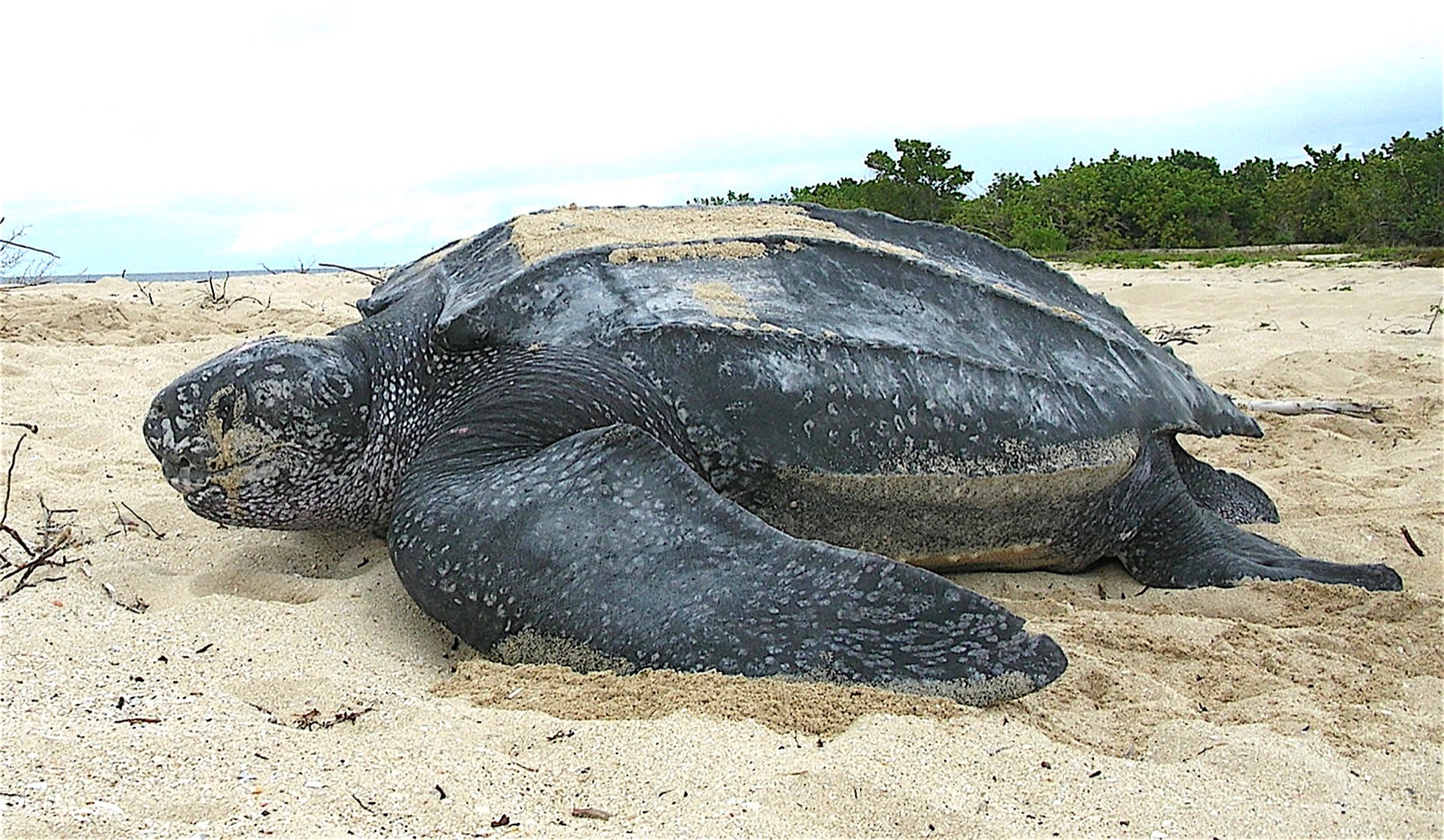
The leatherback barely seems like a turtle at all. There is no hard shell, just a ridged carapace of black, leathery skin flecked with white, streamlined like a seed pod, hung with the longest front flippers in the family. It is a deep-ocean animal on a jellyfish economy, warm-blooded enough in practice to cruise off Nova Scotia and Norway, and it crosses entire oceans between nesting beaches and feeding grounds. Divers almost never meet one by design; the realistic encounter is a nesting female (an armored rowboat heaving up a tropical beach by night) or a heart-stopping pass in open water during a baitball season. List it among the ocean's privileges, not its itineraries.
Dove e quando avvistarne uno
"Residente" significa che la maggior parte delle immersioni in quella destinazione li incontra; "stagionale" significa che sono presenti in modo affidabile nei mesi indicati; qualsiasi altra cosa è un bonus, non un piano.
| Destinazione | Affidabilità | Mesi | Note |
|---|---|---|---|
| GrenadaGrenada | Rare | Apr–Jul | |
| Sodwana BaySouth Africa | Rare | Nov–Jan | |
| The Sardine Run (Wild Coast)South Africa | Rare | Jun–Jul | |
| DominicaDominica | Rare | Mar–Jul |
Il mese migliore, a colpo d'occhio
| Mese | Destinazioni affidabili |
|---|---|
| January | Sodwana Bay |
| March | Dominica |
| April | Grenada · Dominica |
| May | Grenada · Dominica |
| June | Grenada · The Sardine Run (Wild Coast) · Dominica |
| July | Grenada · The Sardine Run (Wild Coast) · Dominica |
| November | Sodwana Bay |
| December | Sodwana Bay |
Capirle
Habitat: The open ocean; a pelagic wanderer that dives past 1,000 m for jellyfish and comes ashore only to nest
Distribuzione: The widest range of any reptile, from tropical nesting beaches to sub-polar feeding grounds in both hemispheres
Comportamento: A warm-bodied ocean nomad: gigantothermy and specialized circulation let it hunt jellyfish in cold, deep water no other turtle tolerates. It almost never lingers where divers are; encounters are brief, awe-struck crossings in blue water or the regulated privilege of watching a female nest at night.
Dieta: Jellyfish and other gelatinous animals almost exclusively, swallowed past backward-pointing throat spines
Dimensioni: tipicamente intorno a 1.5 m; documentato fino a 1.8 m (carapace length; the largest turtle alive, commonly 300–500 kg, with exceptional individuals larger still).
Come comportarsi in sua presenza
In-water: keep distance and never touch or impede. It will not stop for you anyway. On nesting beaches: permitted guided tours only, red or no lights, no flash, stay behind the guide, and never handle eggs or hatchlings.
Conservazione
Vulnerable globally with Pacific subpopulations in severe decline; egg harvest, longline bycatch, and plastic bags mistaken for jellyfish are the persistent killers. Beach protection in the Atlantic has produced real recoveries.
Siti mappati noti per avvistamenti
I siti evidenziati sono stati schedati per questa specie dai nostri redattori; i numeri sono record di occorrenza GBIF registrati entro circa 5 km dal sito a partire dal 1990.
Guarda
Dai canali ufficiali

Wildlife of Monterey | New film in our auditorium

Live Aviary Cam | Monterey Bay Aquarium

Live Aviary Cam | Monterey Bay Aquarium
I video sono link incorporati ai canali dei rispettivi autori. Non ospitiamo nulla e accreditiamo tutto.