Reef Fish
Mandarinfish
Synchiropus splendidus · Bony fish, family Callionymidae (dragonets)
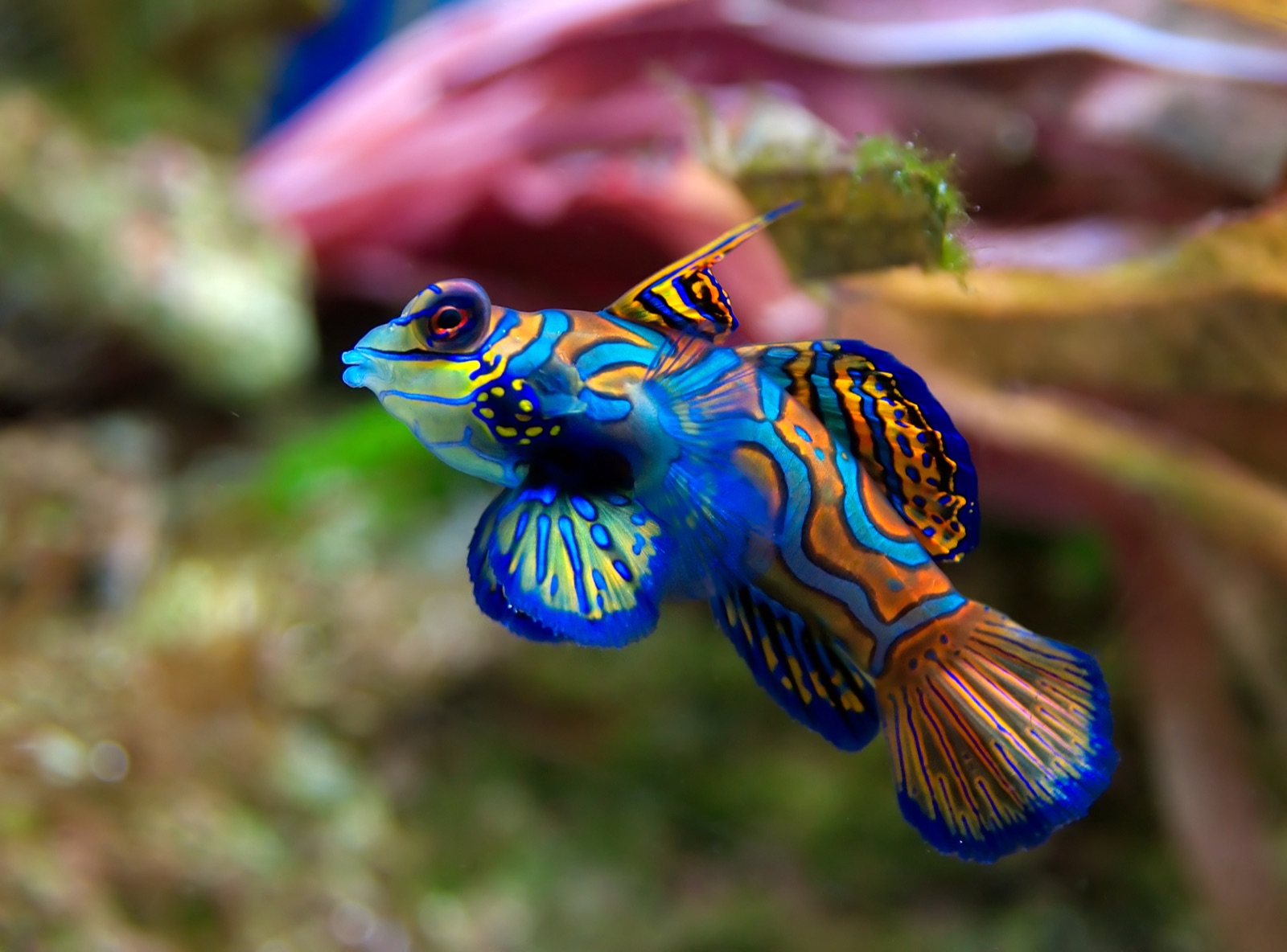
Few reef events run on a schedule this exact. By day mandarinfish thread through coral rubble almost invisibly; in the last light they change program entirely. Males circle and spar, then pair with females, press cheek to cheek, and rise slowly half a meter or more above the rubble before releasing gametes in a shiver and darting back into cover. The ritual repeats at dusk essentially every evening of the year, which makes this one of the most dependable animal behaviors in diving. The fish itself is a thumb-length dragonet painted in orange scrawls over saturated blue, one of very few vertebrates known to produce blue color in dedicated pigment cells. Success is a patience game: settle early, shield your light, skip the strobe until pairs rise, and never chase.
Où et quand en observer un
« Résident » signifie que la plupart des plongées sur ce site permettent de les observer ; « saisonnier » signifie qu'ils sont présents de manière fiable durant les mois indiqués ; tout le reste est un bonus, pas une certitude.
| Destination | Fiabilité | Mois | Notes |
|---|---|---|---|
| PalauPalau | Resident: seen on most dives | Toute l'année | |
| MalapascuaPhilippines | Resident: seen on most dives | Toute l'année | |
| AnilaoPhilippines | Resident: seen on most dives | Toute l'année | |
| Lembeh StraitIndonesia | Resident: seen on most dives | Toute l'année | |
| YapFederated States of Micronesia | Resident: seen on most dives | Toute l'année | |
| Dumaguete, Dauin & Apo IslandPhilippines | Resident: seen on most dives | Toute l'année |
Meilleur mois, en un coup d'œil
Les comprendre
Habitat: Sheltered lagoon and inshore rubble, especially broken branching-coral beds with deep hiding space.
Aire de répartition: Western Pacific from the Ryukyu Islands through the Philippines, Indonesia, and Micronesia to Australia and New Caledonia.
Comportement: Cryptic by day, then a ritualized dusk courtship: males display and spar, pairs press flank to flank and rise above the rubble to spawn at last light, every evening of the year.
Régime alimentaire: Tiny benthic crustaceans, worms, and eggs picked continuously from the rubble.
Taille: généralement autour de 0.05 m; documenté jusqu'à 0.07 m (total length; males noticeably larger than females).
Comment se comporter avec lui
Arrive before sunset, settle on sand, and keep torches shielded or red-filtered; save the strobe for the spawning rise and never chase a pair back into the rubble.
Conservation
Locally pressured by aquarium collection in parts of the Philippines and Indonesia; dive-tourism value gives resident populations real protection at established sites.
Sites répertoriés connus pour leur présence
Les sites mis en évidence ont été cartographiés pour cette espèce par nos éditeurs ; les chiffres correspondent aux occurrences GBIF enregistrées dans un rayon d'environ 5 km d'un site depuis 1990.
Regarder
Depuis les canaux officiels

Wildlife of Monterey | New film in our auditorium

Live Aviary Cam | Monterey Bay Aquarium

Live Aviary Cam | Monterey Bay Aquarium
Les vidéos sont des liens intégrés vers les chaînes de leurs créateurs. Nous n'hébergeons rien et créditons tout.