Sharks
Nurse Shark
Ginglymostoma cirratum · Cartilaginous fish, family Ginglymostomatidae
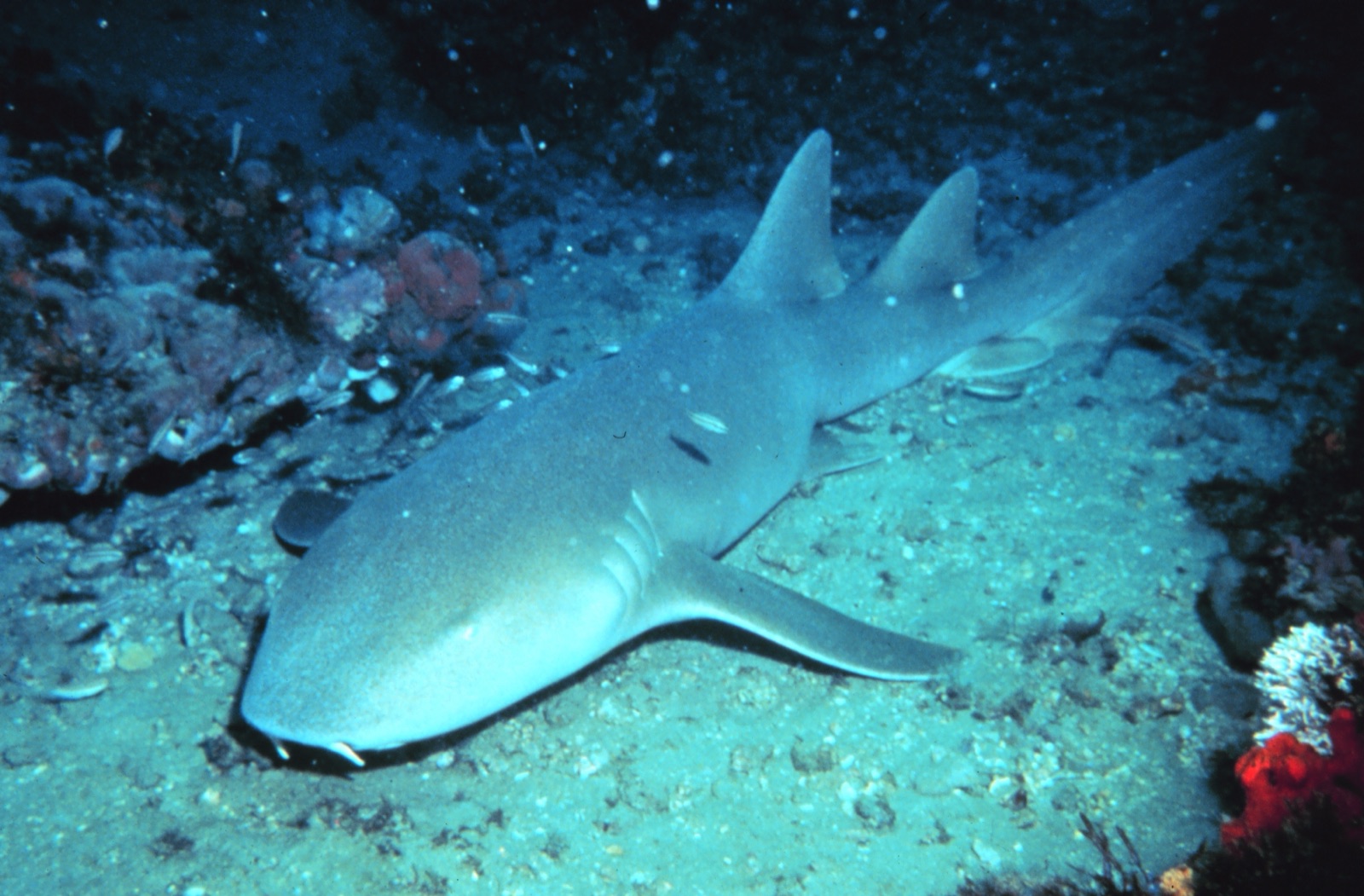
The nurse shark is the Caribbean's resident couch dweller: a heavy-bodied, small-eyed animal the color of wet sand, folded under a ledge with its barbels drooping and its tail poking into the current. It can pump water over its gills while motionless, so entire dives pass while it does precisely nothing. Then a night dive reveals the other nurse shark, nosing urgently through coral and inhaling octopus with an audible thump. At Belize's Shark Ray Alley and Bahamian feed sites they swarm like eager dogs. Its mellow reputation is deserved, right up until someone grabs one.
Where and when to see one
"Resident" means most dives at that destination encounter them; "seasonal" means reliably present in the listed months; anything else is a bonus, not a plan.
| Destination | Reliability | Months | Notes |
|---|---|---|---|
| CozumelMexico | Resident: seen on most dives | Year-round | |
| Belize Barrier ReefBelize | Resident: seen on most dives | Year-round | |
| Florida KeysUnited States | Resident: seen on most dives | Year-round | |
| Grand CaymanCayman Islands | Resident: seen on most dives | Year-round | |
| Nassau & New ProvidenceThe Bahamas | Resident: seen on most dives | Year-round |
Best month, at a glance
Understanding them
Habitat: Reefs, ledges, mangrove channels, and seagrass flats; rests by day under overhangs, often in piles
Range: Tropical western Atlantic from Florida and the Bahamas to Brazil, plus the eastern Pacific coast of the Americas; the similar tawny nurse shark replaces it in the Indo-Pacific
Behavior: A sedentary, nocturnal bottom-dweller with barbels like a catfish and a tail that trails behind it lazily. Days are spent wedged beneath ledges, frequently stacked on other nurse sharks; nights are spent slurping prey out of holes. Habituated animals at feed sites become boldly food-focused.
Diet: Crustaceans, mollusks, and small fish vacuumed off the bottom with a powerful suction feed you can sometimes hear
Size: typically around 2.3 m; documented up to 3.1 m (total length).
How to behave around one
No tail-pulling, no riding, no lifting resting animals for photos: behavior once common and now rightly banned. Give resting sharks their ledge and keep bait well managed at feed sites.
Conservation
Moved to Vulnerable in 2020 as inshore fishing and habitat loss eroded populations outside protected areas; still locally abundant in Florida, the Bahamas, and Belize.
Charted sites known for them
Highlighted sites were charted for this species by our editors; numbers are GBIF occurrence records logged within about 5 km of a site since 1990.
Watch
From the official channels

Wildlife of Monterey | New film in our auditorium

Live Aviary Cam | Monterey Bay Aquarium

Live Aviary Cam | Monterey Bay Aquarium
Videos are embedded links to their creators' own channels. We host nothing and credit everything.