Sharks
Nurse Shark
Ginglymostoma cirratum · Cartilaginous fish, family Ginglymostomatidae
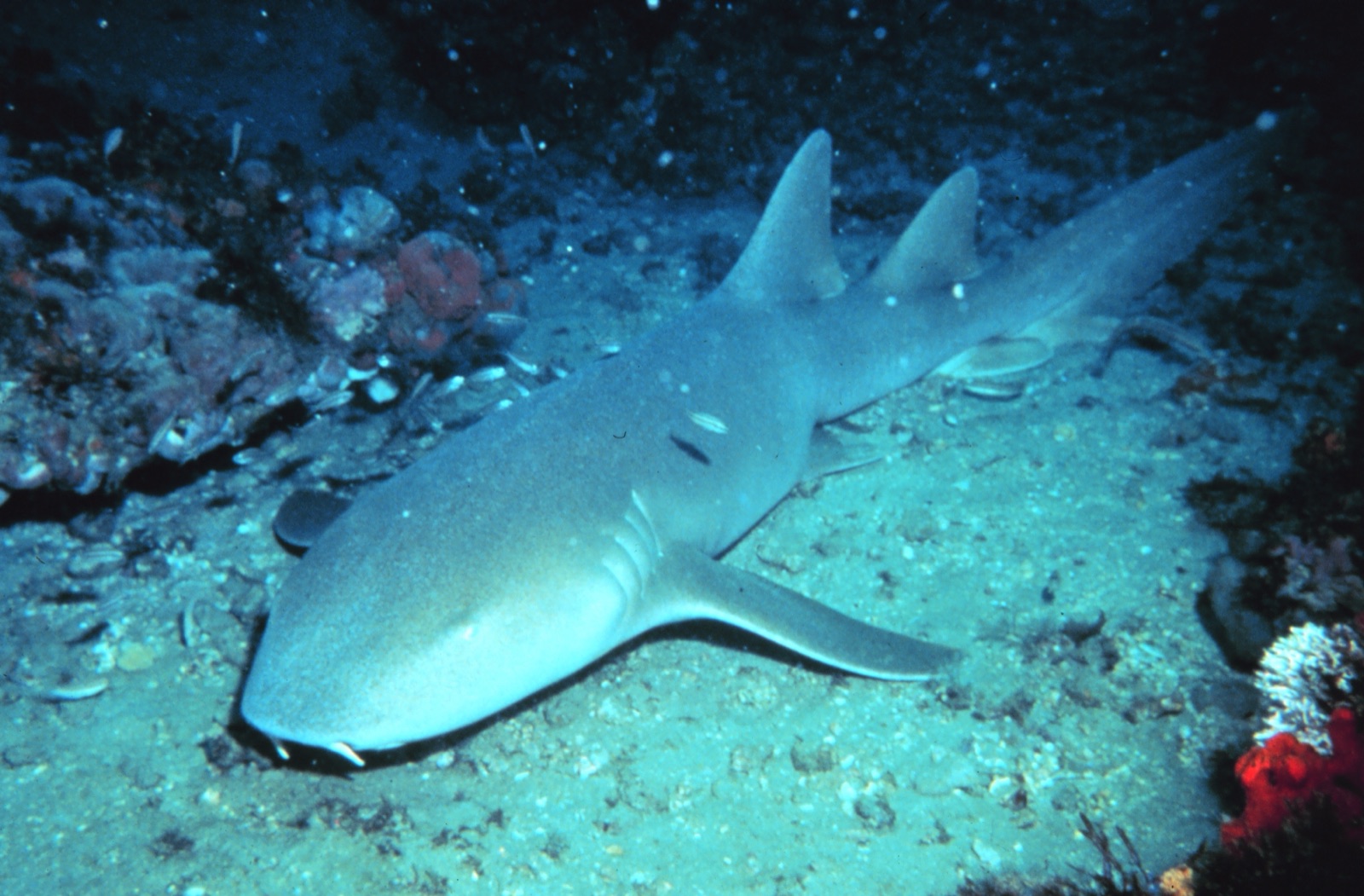
The nurse shark is the Caribbean's resident couch dweller: a heavy-bodied, small-eyed animal the color of wet sand, folded under a ledge with its barbels drooping and its tail poking into the current. It can pump water over its gills while motionless, so entire dives pass while it does precisely nothing. Then a night dive reveals the other nurse shark, nosing urgently through coral and inhaling octopus with an audible thump. At Belize's Shark Ray Alley and Bahamian feed sites they swarm like eager dogs. Its mellow reputation is deserved, right up until someone grabs one.
Di mana dan kapan melihatnya
"Resident" berarti sebagian besar penyelaman di destinasi tersebut akan menjumpai mereka; "seasonal" berarti kehadirannya dapat diandalkan pada bulan-bulan yang tercantum; selain itu adalah bonus, bukan rencana.
| Destinasi | Keandalan | Bulan | Catatan |
|---|---|---|---|
| CozumelMexico | Resident: seen on most dives | Sepanjang tahun | |
| Belize Barrier ReefBelize | Resident: seen on most dives | Sepanjang tahun | |
| Florida KeysUnited States | Resident: seen on most dives | Sepanjang tahun | |
| Grand CaymanCayman Islands | Resident: seen on most dives | Sepanjang tahun | |
| Nassau & New ProvidenceThe Bahamas | Resident: seen on most dives | Sepanjang tahun |
Bulan terbaik, sekilas pandang
Memahaminya
Habitat: Reefs, ledges, mangrove channels, and seagrass flats; rests by day under overhangs, often in piles
Sebaran: Tropical western Atlantic from Florida and the Bahamas to Brazil, plus the eastern Pacific coast of the Americas; the similar tawny nurse shark replaces it in the Indo-Pacific
Perilaku: A sedentary, nocturnal bottom-dweller with barbels like a catfish and a tail that trails behind it lazily. Days are spent wedged beneath ledges, frequently stacked on other nurse sharks; nights are spent slurping prey out of holes. Habituated animals at feed sites become boldly food-focused.
Diet: Crustaceans, mollusks, and small fish vacuumed off the bottom with a powerful suction feed you can sometimes hear
Ukuran: biasanya sekitar 2.3 m; terdokumentasi hingga 3.1 m (total length).
Cara berperilaku di sekitarnya
No tail-pulling, no riding, no lifting resting animals for photos: behavior once common and now rightly banned. Give resting sharks their ledge and keep bait well managed at feed sites.
Konservasi
Moved to Vulnerable in 2020 as inshore fishing and habitat loss eroded populations outside protected areas; still locally abundant in Florida, the Bahamas, and Belize.
Situs-situs terdata yang dikenal dengan hal itu
Lokasi yang disorot dipetakan untuk spesies ini oleh editor kami; angka-angkanya adalah catatan kemunculan GBIF yang dicatat dalam radius sekitar 5 km dari suatu lokasi sejak 1990.
Tonton
Dari saluran resmi

Wildlife of Monterey | New film in our auditorium

Live Aviary Cam | Monterey Bay Aquarium

Live Aviary Cam | Monterey Bay Aquarium
Video adalah tautan tertanam ke saluran milik kreatornya sendiri. Kami tidak meng-host apa pun dan selalu mencantumkan kredit.