Rays
Spotted Eagle Ray
Aetobatus narinari · Cartilaginous fish, family Aetobatidae
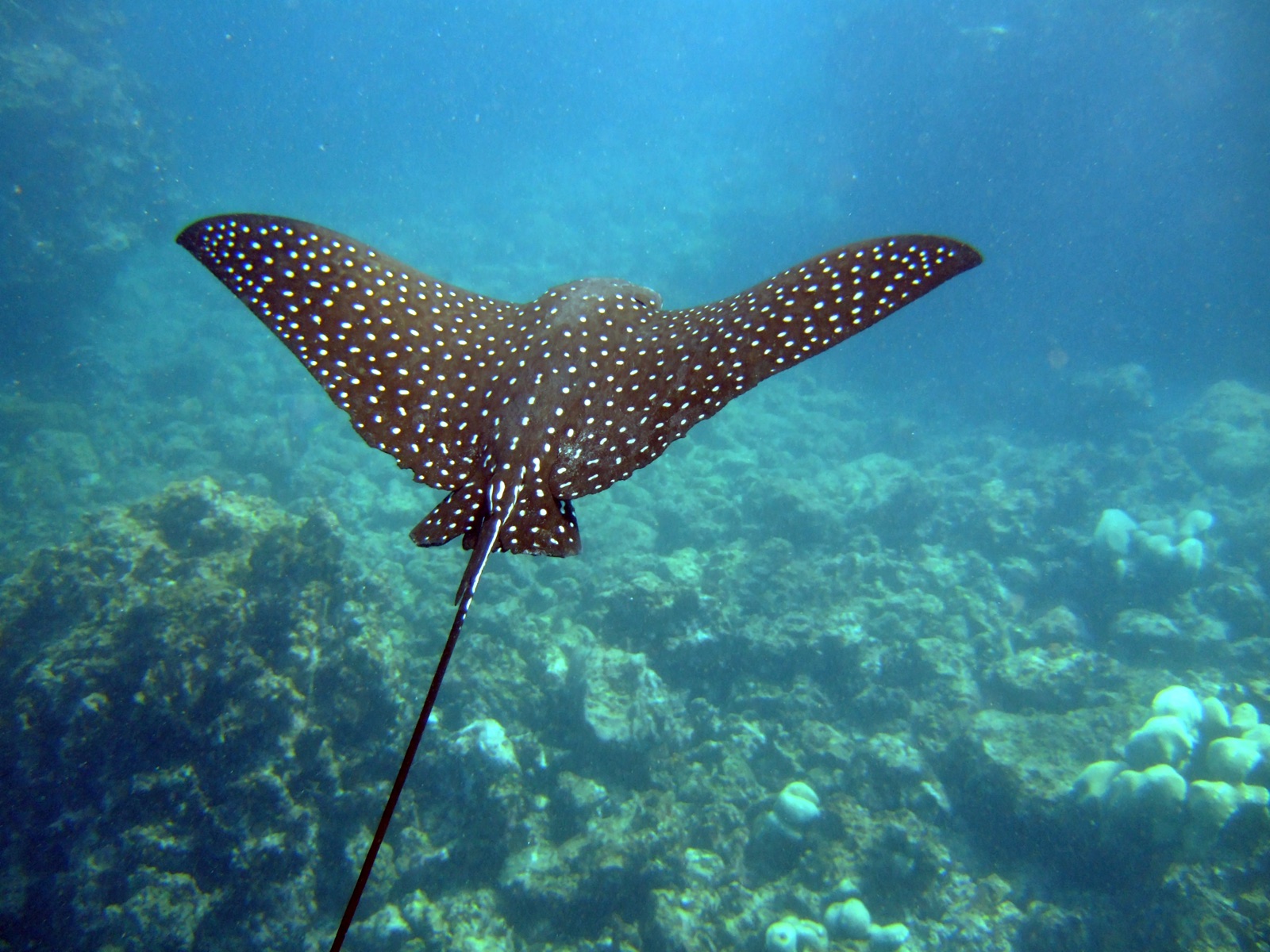
The spotted eagle ray is the ocean's best argument that elegance scales. The dorsal surface is midnight blue stippled with white polka dots, the head oddly duck-like with its flattened snout, and the flight (there is no better word) is a slow, powerful glide on wings that can span three meters. Cozumel divers watch winter squadrons stack in formation off the northern walls like migrating geese; Caymanian and Bonairean reef regulars see singles rooting craters into the sand for buried conch, wreathed in opportunistic snappers. Fast, wary, and long-tailed, it grants close passes strictly on its own terms.
Dónde y cuándo ver uno
"Residente" significa que la mayoría de las inmersiones en ese destino tienen encuentros con ellos; "estacional" significa que su presencia es fiable en los meses indicados; cualquier otra cosa es un extra, no algo con lo que contar.
| Destino | Fiabilidad | Meses | Notas |
|---|---|---|---|
| Grand CaymanCayman Islands | Resident: seen on most dives | Todo el año | |
| CozumelMexico | Seasonal: reliable in season | Dec–Mar | |
| BonaireBonaire | Occasional | Todo el año | |
| Belize Barrier ReefBelize | Occasional | Todo el año |
El mejor mes, de un vistazo
| Mes | Destinos fiables |
|---|---|
| January | Grand Cayman · Cozumel · Bonaire · Belize Barrier Reef |
| February | Grand Cayman · Cozumel · Bonaire · Belize Barrier Reef |
| March | Grand Cayman · Cozumel · Bonaire · Belize Barrier Reef |
| April | Grand Cayman · Bonaire · Belize Barrier Reef |
| May | Grand Cayman · Bonaire · Belize Barrier Reef |
| June | Grand Cayman · Bonaire · Belize Barrier Reef |
| July | Grand Cayman · Bonaire · Belize Barrier Reef |
| August | Grand Cayman · Bonaire · Belize Barrier Reef |
| September | Grand Cayman · Bonaire · Belize Barrier Reef |
| October | Grand Cayman · Bonaire · Belize Barrier Reef |
| November | Grand Cayman · Bonaire · Belize Barrier Reef |
| December | Grand Cayman · Cozumel · Bonaire · Belize Barrier Reef |
Comprendiéndolos
Hábitat: Sand flats, channel mouths, and the open water off reef walls; digs in sand for buried prey
Rango: Tropical western Atlantic and Caribbean; Indo-Pacific animals are now treated as the closely related ocellated eagle ray (Aetobatus ocellatus), all but identical to divers
Comportamiento: Flies rather than swims: long pointed wings beating in slow strokes as it patrols walls solo or in echelon squadrons. Wary of divers, it holds a polite distance and departs with two unhurried wingbeats. Winter gatherings off Cozumel's northern walls can number dozens.
Dieta: Clams, conch, whelks, and crustaceans crushed with plate-like teeth built for shell-cracking
Tamaño: normalmente alrededor de 1.7 m; documentado hasta 3.3 m (disc width; the whip tail can more than double the animal's total length).
Cómo comportarse cerca de uno
Hold your line along the wall and let squadrons pass. Swimming at them ends the encounter for the whole group. Never corner one against the reef or grab the trailing tail.
Conservación
Endangered: inshore net fisheries take a heavy toll across the range, and slow reproduction gives little resilience; protected in several Caribbean jurisdictions where it anchors dive tourism.
Puntos conocidos por avistamientos
Los puntos destacados fueron registrados para esta especie por nuestros editores; los números son registros de ocurrencia de GBIF anotados en un radio de unos 5 km de un punto desde 1990.
Ver
Desde los canales oficiales

Wildlife of Monterey | New film in our auditorium

Live Aviary Cam | Monterey Bay Aquarium

Live Aviary Cam | Monterey Bay Aquarium
Los vídeos son enlaces insertados a los canales de sus propios creadores. No alojamos nada y acreditamos todo.