Rays
Spotted Eagle Ray
Aetobatus narinari · Cartilaginous fish, family Aetobatidae
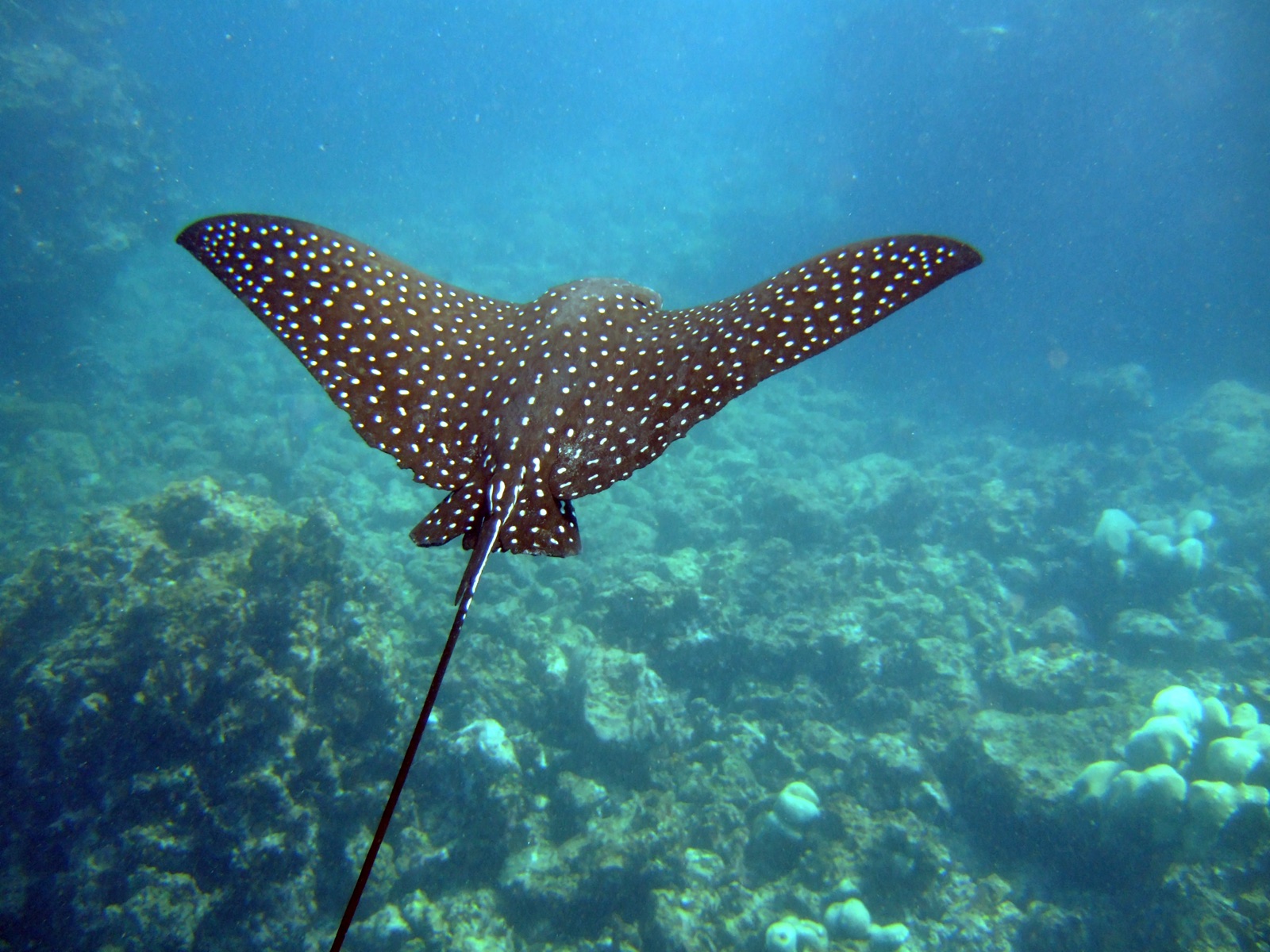
The spotted eagle ray is the ocean's best argument that elegance scales. The dorsal surface is midnight blue stippled with white polka dots, the head oddly duck-like with its flattened snout, and the flight (there is no better word) is a slow, powerful glide on wings that can span three meters. Cozumel divers watch winter squadrons stack in formation off the northern walls like migrating geese; Caymanian and Bonairean reef regulars see singles rooting craters into the sand for buried conch, wreathed in opportunistic snappers. Fast, wary, and long-tailed, it grants close passes strictly on its own terms.
Di mana dan kapan melihatnya
"Resident" berarti sebagian besar penyelaman di destinasi tersebut akan menjumpai mereka; "seasonal" berarti kehadirannya dapat diandalkan pada bulan-bulan yang tercantum; selain itu adalah bonus, bukan rencana.
| Destinasi | Keandalan | Bulan | Catatan |
|---|---|---|---|
| Grand CaymanCayman Islands | Resident: seen on most dives | Sepanjang tahun | |
| CozumelMexico | Seasonal: reliable in season | Dec–Mar | |
| BonaireBonaire | Occasional | Sepanjang tahun | |
| Belize Barrier ReefBelize | Occasional | Sepanjang tahun |
Bulan terbaik, sekilas pandang
| Bulan | Destinasi yang dapat diandalkan |
|---|---|
| January | Grand Cayman · Cozumel · Bonaire · Belize Barrier Reef |
| February | Grand Cayman · Cozumel · Bonaire · Belize Barrier Reef |
| March | Grand Cayman · Cozumel · Bonaire · Belize Barrier Reef |
| April | Grand Cayman · Bonaire · Belize Barrier Reef |
| May | Grand Cayman · Bonaire · Belize Barrier Reef |
| June | Grand Cayman · Bonaire · Belize Barrier Reef |
| July | Grand Cayman · Bonaire · Belize Barrier Reef |
| August | Grand Cayman · Bonaire · Belize Barrier Reef |
| September | Grand Cayman · Bonaire · Belize Barrier Reef |
| October | Grand Cayman · Bonaire · Belize Barrier Reef |
| November | Grand Cayman · Bonaire · Belize Barrier Reef |
| December | Grand Cayman · Cozumel · Bonaire · Belize Barrier Reef |
Memahaminya
Habitat: Sand flats, channel mouths, and the open water off reef walls; digs in sand for buried prey
Sebaran: Tropical western Atlantic and Caribbean; Indo-Pacific animals are now treated as the closely related ocellated eagle ray (Aetobatus ocellatus), all but identical to divers
Perilaku: Flies rather than swims: long pointed wings beating in slow strokes as it patrols walls solo or in echelon squadrons. Wary of divers, it holds a polite distance and departs with two unhurried wingbeats. Winter gatherings off Cozumel's northern walls can number dozens.
Diet: Clams, conch, whelks, and crustaceans crushed with plate-like teeth built for shell-cracking
Ukuran: biasanya sekitar 1.7 m; terdokumentasi hingga 3.3 m (disc width; the whip tail can more than double the animal's total length).
Cara berperilaku di sekitarnya
Hold your line along the wall and let squadrons pass. Swimming at them ends the encounter for the whole group. Never corner one against the reef or grab the trailing tail.
Konservasi
Endangered: inshore net fisheries take a heavy toll across the range, and slow reproduction gives little resilience; protected in several Caribbean jurisdictions where it anchors dive tourism.
Situs-situs terdata yang dikenal dengan hal itu
Lokasi yang disorot dipetakan untuk spesies ini oleh editor kami; angka-angkanya adalah catatan kemunculan GBIF yang dicatat dalam radius sekitar 5 km dari suatu lokasi sejak 1990.
Tonton
Dari saluran resmi

Wildlife of Monterey | New film in our auditorium

Live Aviary Cam | Monterey Bay Aquarium

Live Aviary Cam | Monterey Bay Aquarium
Video adalah tautan tertanam ke saluran milik kreatornya sendiri. Kami tidak meng-host apa pun dan selalu mencantumkan kredit.