Tauchen in Mexico
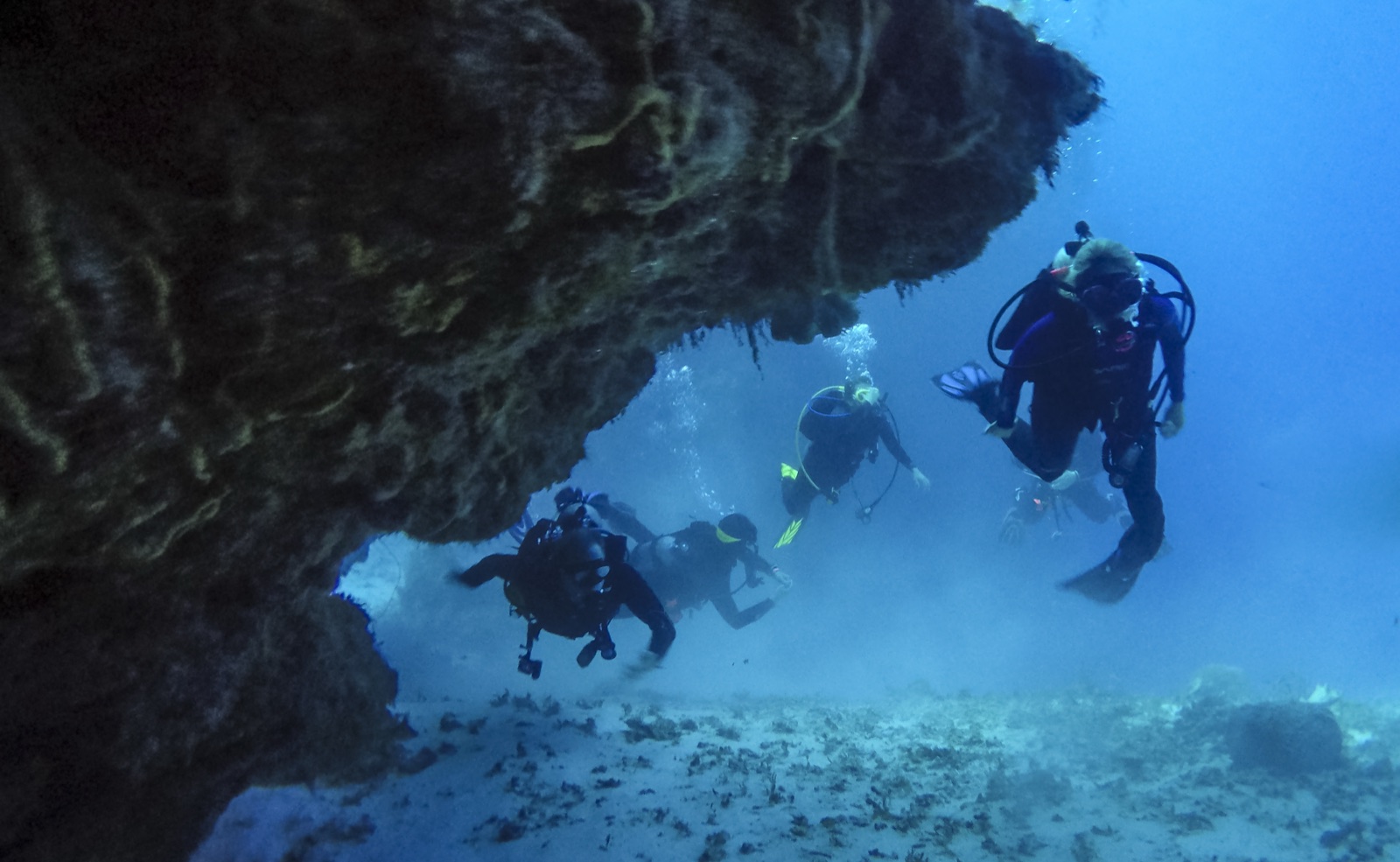
Mexico may be the most complete dive country on earth, because its two coastlines barely share a genre. The Caribbean side offers Cozumel's effortless drift diving along sculpted walls, the Riviera Maya's cenotes, sunbeams slicing through gin-clear freshwater caverns, and summer whale-shark aggregations off Isla Mujeres that can number in the hundreds. The Pacific side plays for bigger stakes: the Sea of Cortez, Steinbeck's aquarium of the world, with sea lion colonies and mobula storms; Cabo Pulmo's recovered national-park reef; and the Revillagigedo archipelago at Socorro, where giant oceanic mantas seek out divers and dolphins join dives uninvited. One honest caveat belongs up front: Guadalupe Island's famous white-shark cage diving was closed by the Mexican government and remains so. Even without it, no single country covers more of diving's range.
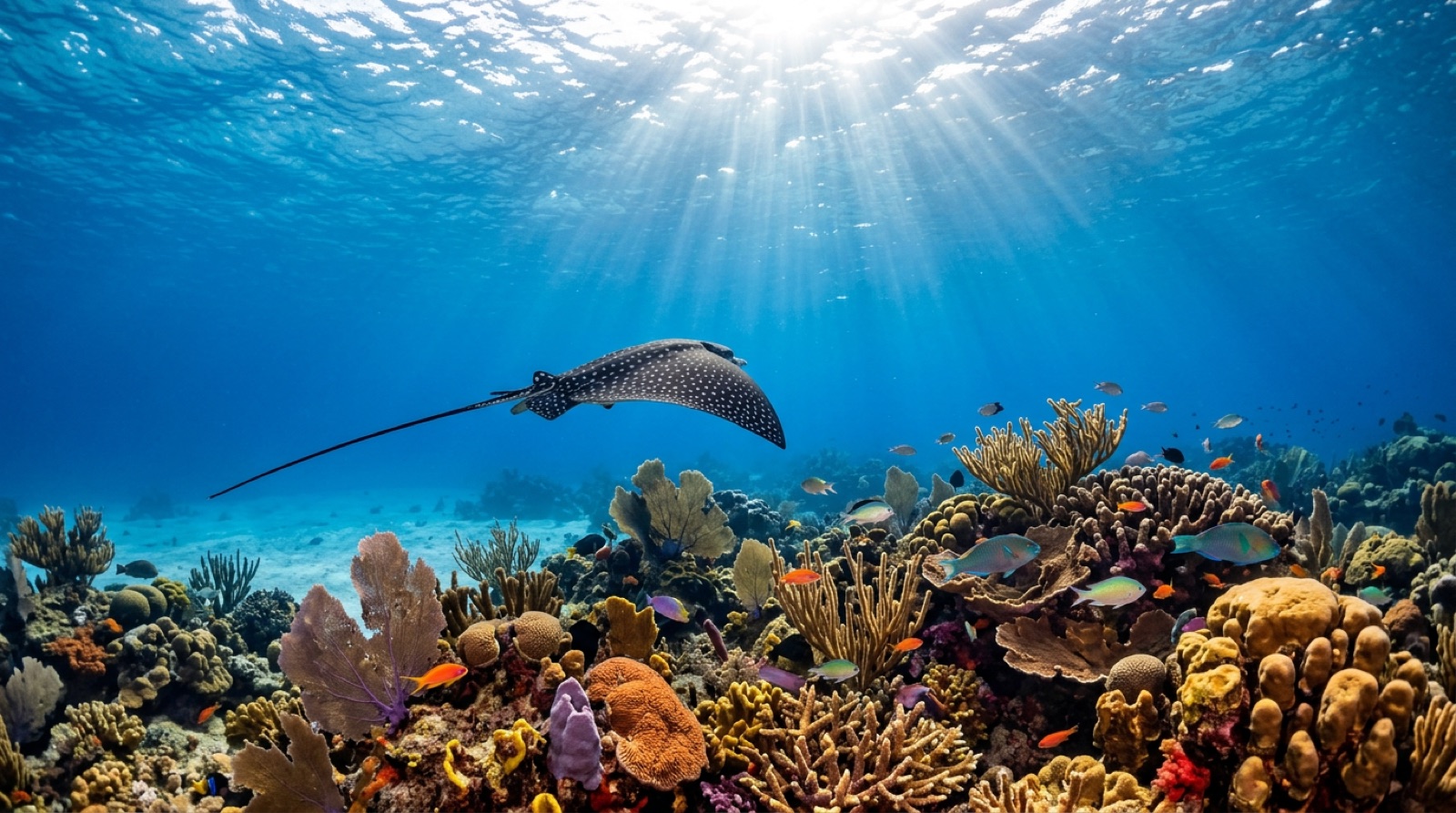
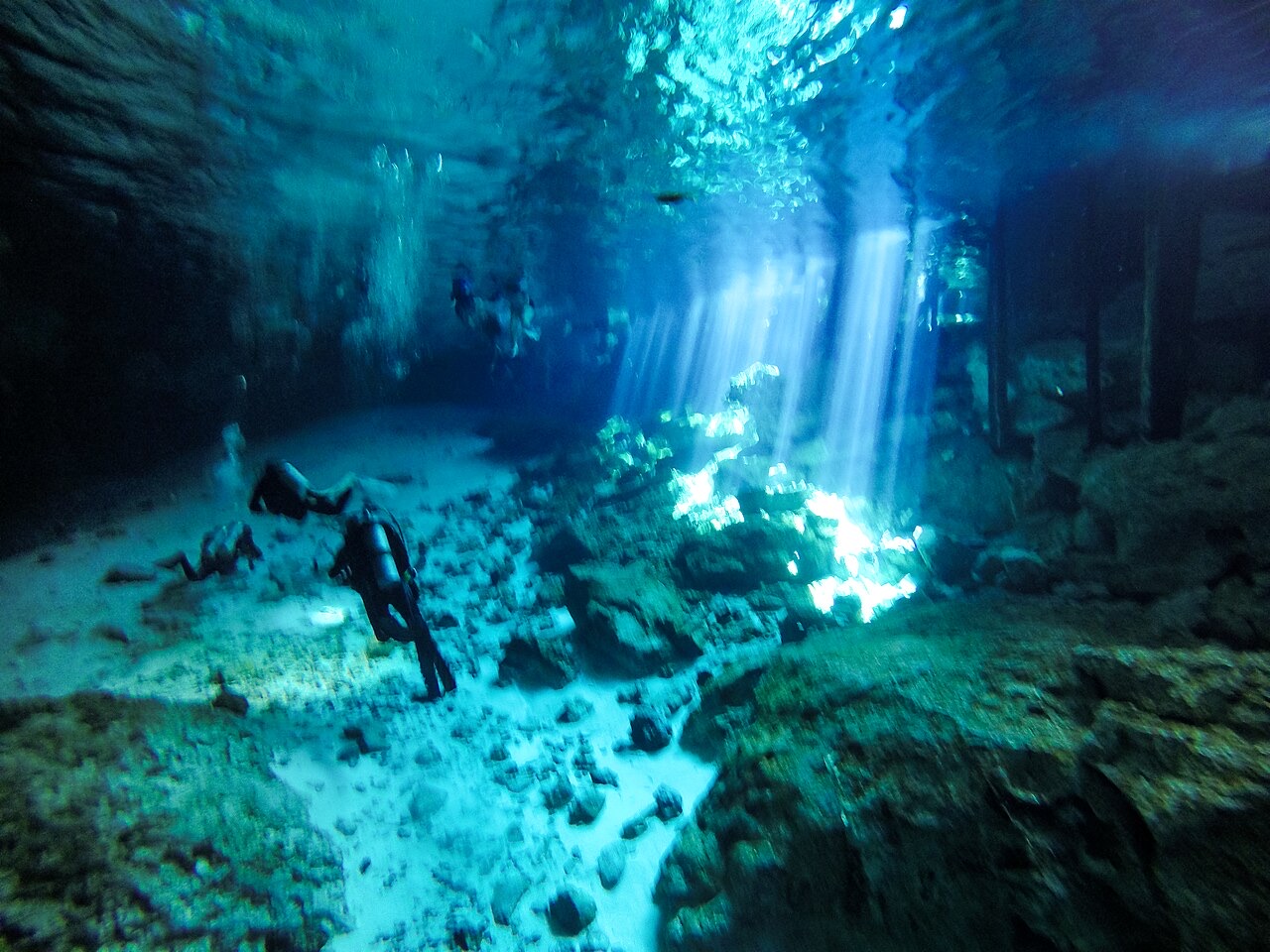
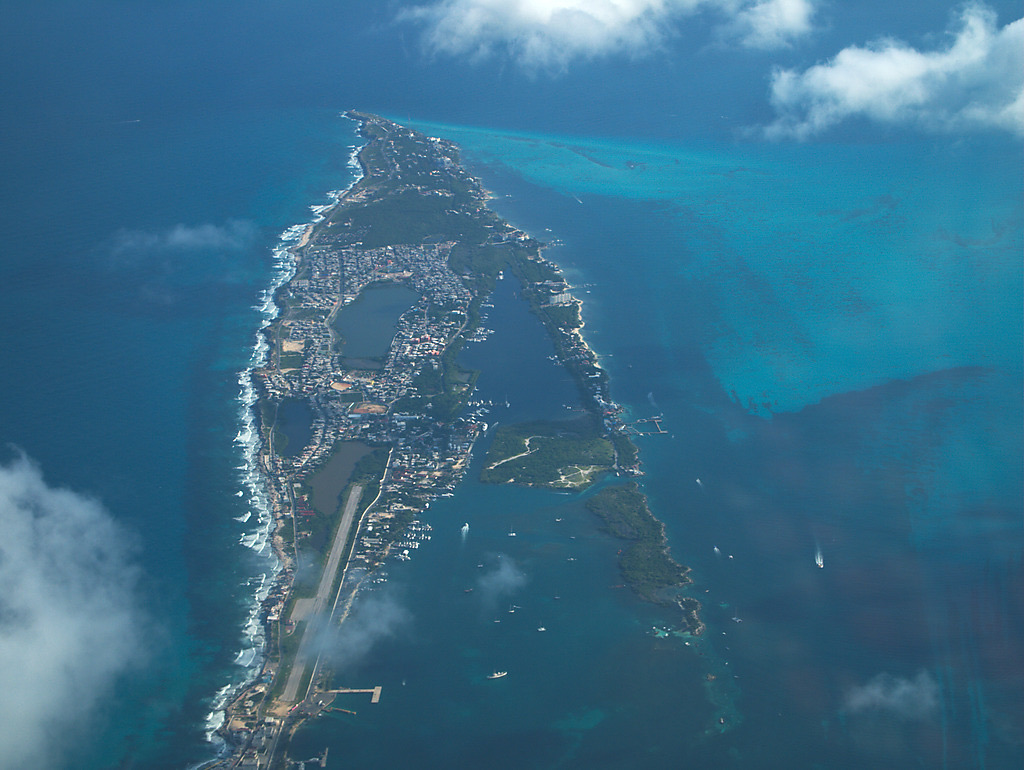
Cozumel handles the classic drift walls; Riviera Maya and the Cenotes turns limestone into light shows between Playa del Carmen and Tulum; Isla Mujeres and Cancún run the summer whale-shark fleet and winter sailfish action. On the Pacific, the Sea of Cortez and Cabo Pulmo pair sea lion play with a protected coral recovery story; Socorro and the Revillagigedos is the liveaboard big-animal pilgrimage; and Guadalupe Island stays on the map only as a closure to state plainly.
Besondere Erlebnisse: Flying Cozumel's Palancar architecture on a two-knot drift; the light beams and haloclines of Dos Ojos and neighboring cenotes; snorkeling amid hundreds of whale sharks off Isla Mujeres in high summer; giant mantas hovering over divers' bubbles at Socorro's cleaning stations; sea lion pups mouthing fins at Los Islotes.
Saisons: Season depends on coast: the Caribbean dives well year-round with its driest window roughly November through May, whale sharks running June through September, and hurricane season June through November; Socorro's liveaboard season runs about November through June with humpbacks midwinter; the Sea of Cortez is warmest and clearest August through November. Cenotes are steady all year.
Die Reiseziele
Cozumel
Riviera Maya & the Cenotes
Isla Mujeres & Cancún
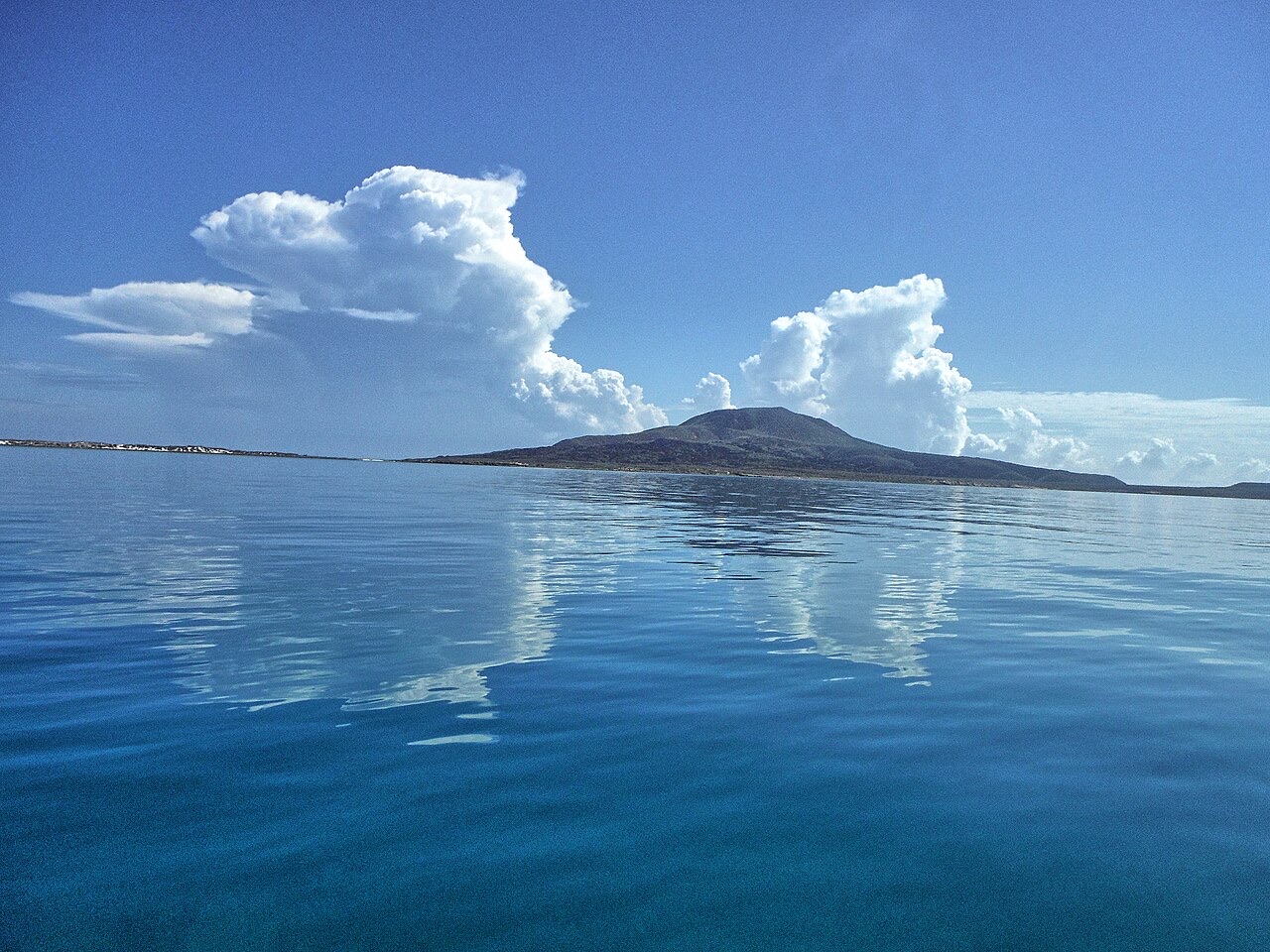
Sea of Cortez & Cabo Pulmo
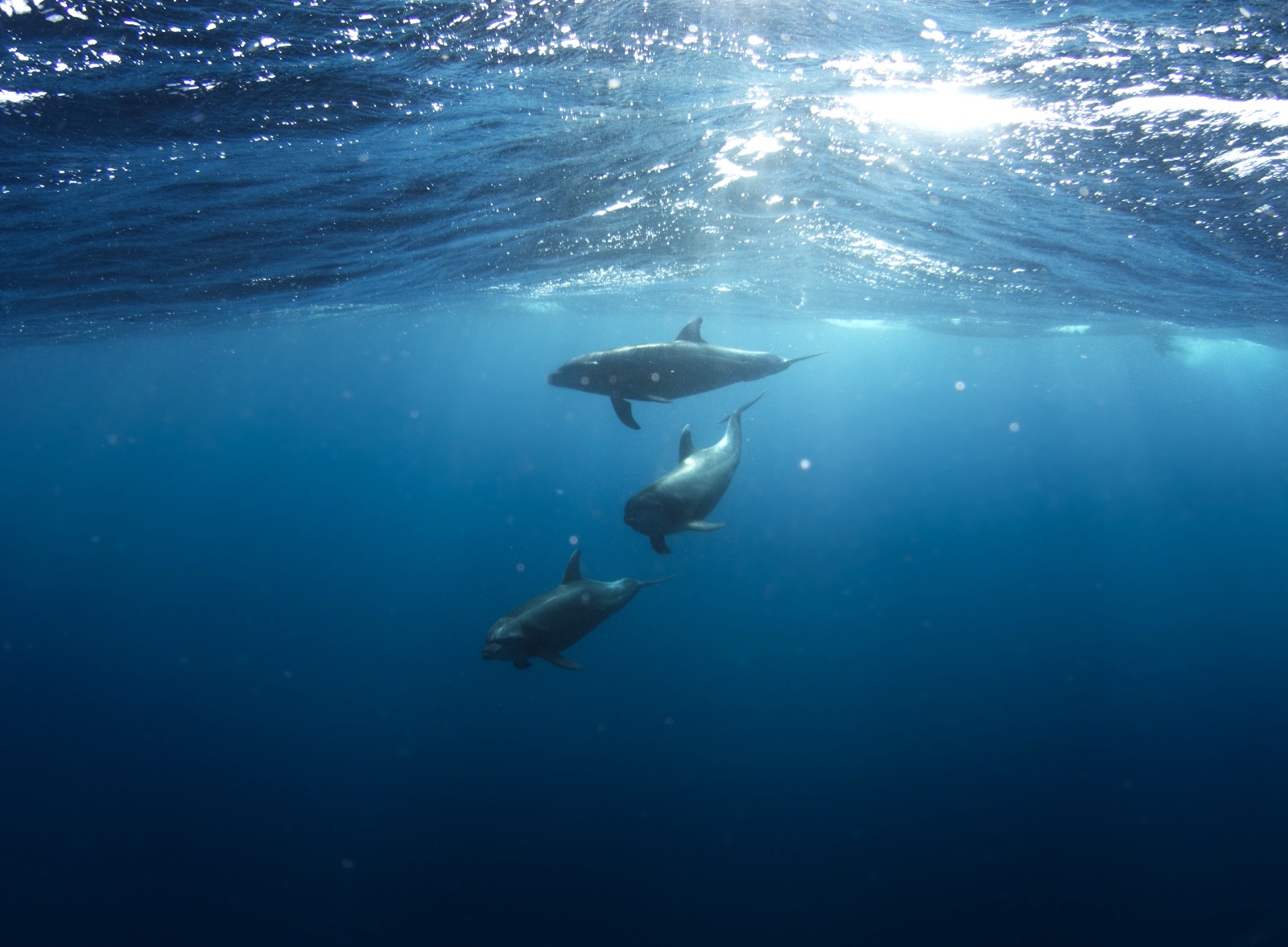
Socorro & the Revillagigedos
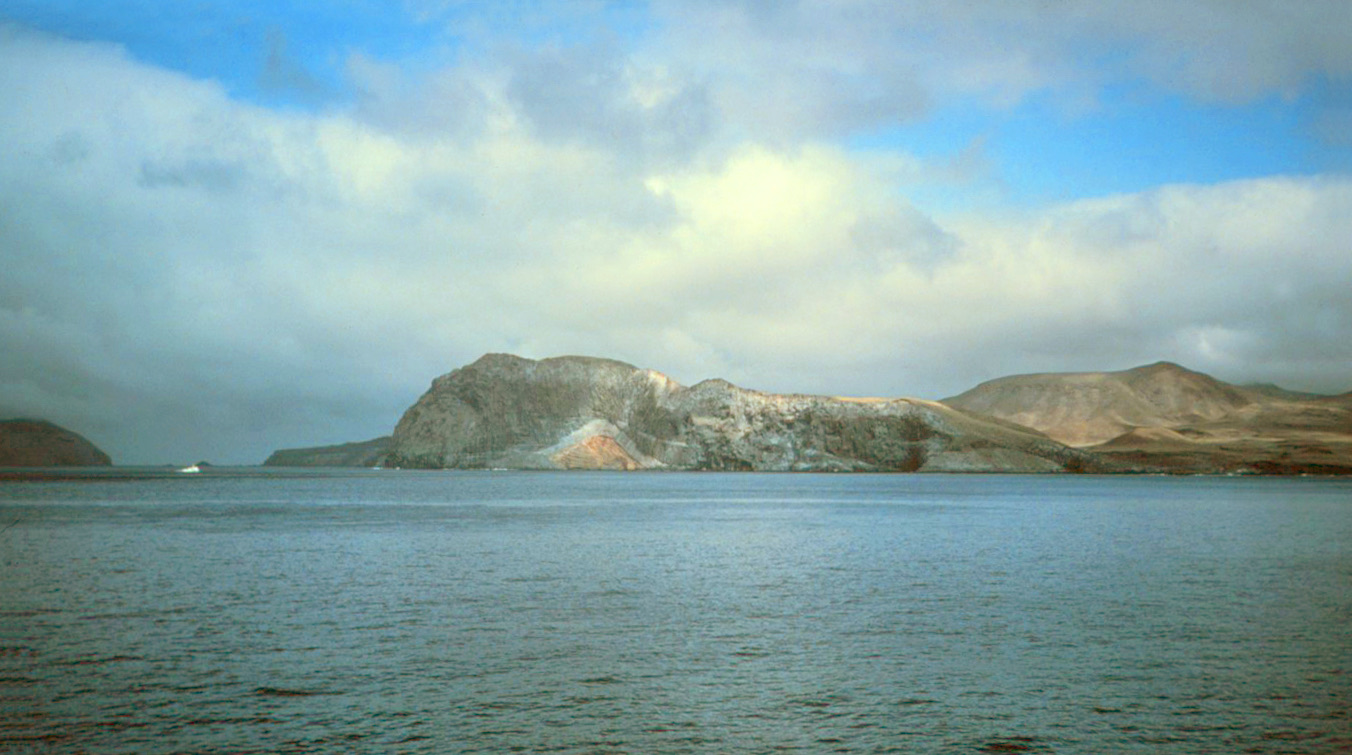
Guadalupe Island
Herausragende Tauchplätze
| Tauchplatz | Ziel | Typ | Tiefe | Level |
|---|---|---|---|---|
| C-53 Felipe Xicotencatl | Cozumel | Wreck | 15–25 m | Intermediate |
| Carwash | Riviera Maya & the Cenotes | Cenote | 3–15 m | Beginner |
| Casa Cenote | Riviera Maya & the Cenotes | Cenote | 2–8 m | Beginner |
| Cenote Angelita | Riviera Maya & the Cenotes | Cenote | 5–40 m | Advanced |
| Chac Mool & Kukulkan | Riviera Maya & the Cenotes | Cenote | 4–14 m | Beginner |
| Colombia Wall | Cozumel | Wall | 12–40 m | Intermediate |
| Dos Ojos | Riviera Maya & the Cenotes | Cenote | 3–10 m | Beginner |
| Palancar Gardens | Cozumel | Reef | 6–25 m | Beginner |
| Paradise Reef | Cozumel | Reef | 5–14 m | Beginner |
| Paso del Cedral | Cozumel | Reef | 10–20 m | Intermediate |
Jeder kartierte Tauchplatz in Mexico →
Meeresleben
Wracks
Die praktischen Infos
Anreise: Cancún (CUN) is the Caribbean gateway, with Cozumel (CZM) served direct or via the Playa del Carmen ferry; the cenote corridor is an easy drive south. For the Pacific, fly to Los Cabos (SJD) or La Paz (LAP); Socorro liveaboards depart Cabo San Lucas on a roughly 24-hour crossing.
Einreise & Visa: Many nationalities enter visa-free as tourists, with entry handled electronically or by stamp at major airports. Verify current requirements and any tourism taxes for your route before travel.
Was Tauchen kostet: Cozumel two-tank boats run roughly USD 90-130 and guided two-cenote days about USD 150-220, while Socorro liveaboards cost approximately USD 3,500-5,500 for nine or ten days; marine-park bracelets and port fees add small amounts throughout.
Sprache: Spanish is the national language; English is spoken throughout the dive industry on both coasts.
Trinkgeld: Tipping 10-15 percent is standard in restaurants, and dive crews are customarily tipped, commonly a few hundred pesos or the equivalent per boat day, more generously on liveaboards.
Reisesicherheit: The dive corridors, Quintana Roo's coast, Baja California Sur, and the liveaboard ports, are heavily touristed and generally feel far removed from the cartel violence that affects other states, but incidents have touched resort areas, so check current advisories, use registered transport, and keep nights simple. Cenote diving is safe within the cavern lines and training limits; the caves beyond them are unforgiving. Guadalupe's closure removed the cage-diving option entirely; do not book gray-market trips.
Dekompressionskammer in der Nähe: Hyperbaric chambers serve the main dive hubs, including Cozumel and the Riviera Maya on the Caribbean side and the Baja ports for the Pacific; Socorro itself is a day's sail from help. Availability changes; route emergencies through your operator, local EMS, and DAN.