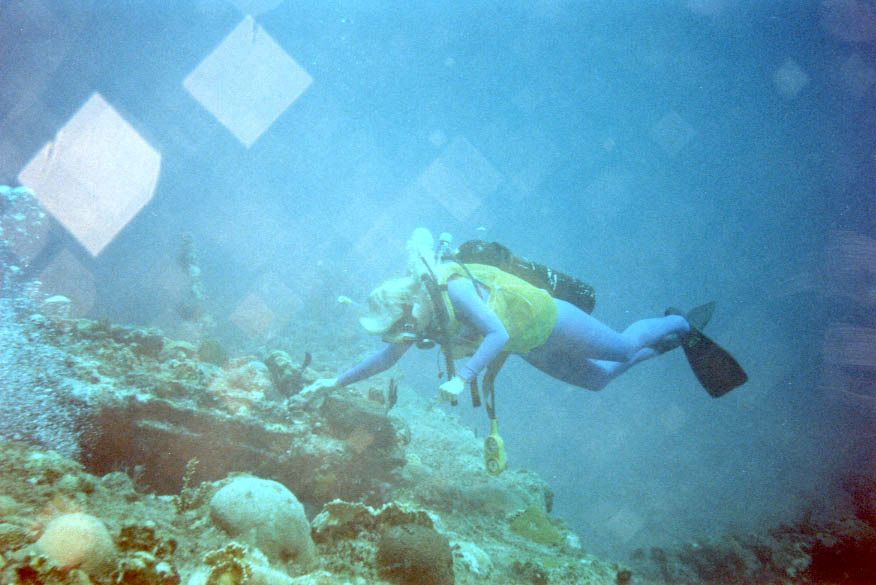
RMS Rhone
Depth is the range from the top of the site to its usual maximum; "recommended cert" is the mainstream-agency level operators usually ask for, not a legal rule. Currents and visibility change daily, so treat everything here as planning ranges.
The Royal Mail Steamer Rhone sank at Salt Island in the great hurricane of October 1867, taking around 123 of the roughly 145 people aboard, and more than a century and a half later she remains the Caribbean's defining wreck dive. The bow section lies on its side in the mid-twenties, hull plates open like a cathedral nave, sheathed in orange cup corals and swirling with silversides. The shallow stern holds the enormous bronze propeller, the famous lucky porthole, and enough light for long, easy exploration. Scenes from the 1977 film The Deep were shot here. Dive her with the respect a grave site deserves.
The moment you come for: Intact coral-sheathed bow section, giant propeller in the shallows, richest wreck history in the region
Topography: Rocky point and sand at Salt Island, wreckage in two depth bands
Current: Current at Black Rock Point varies; the stern shallows can also carry surge.
Entry: National park moorings serve the bow and stern sections separately; most operators run it as a two-tank dive.
Know before you splash
Hazards: Surge near Black Rock Point; open swim-throughs only, with true penetration inappropriate given the wreck's age and status.
Permits & rules: National Parks Trust permit required; arranged by operators.
Conservation: The wreck and surrounding waters form the BVI's Wreck of the Rhone Marine Park; removing anything is illegal.
Nitrox: Worth it here: profiles sit in the range where enriched air meaningfully extends no-stop time (with the training to use it).
Who you'll meet
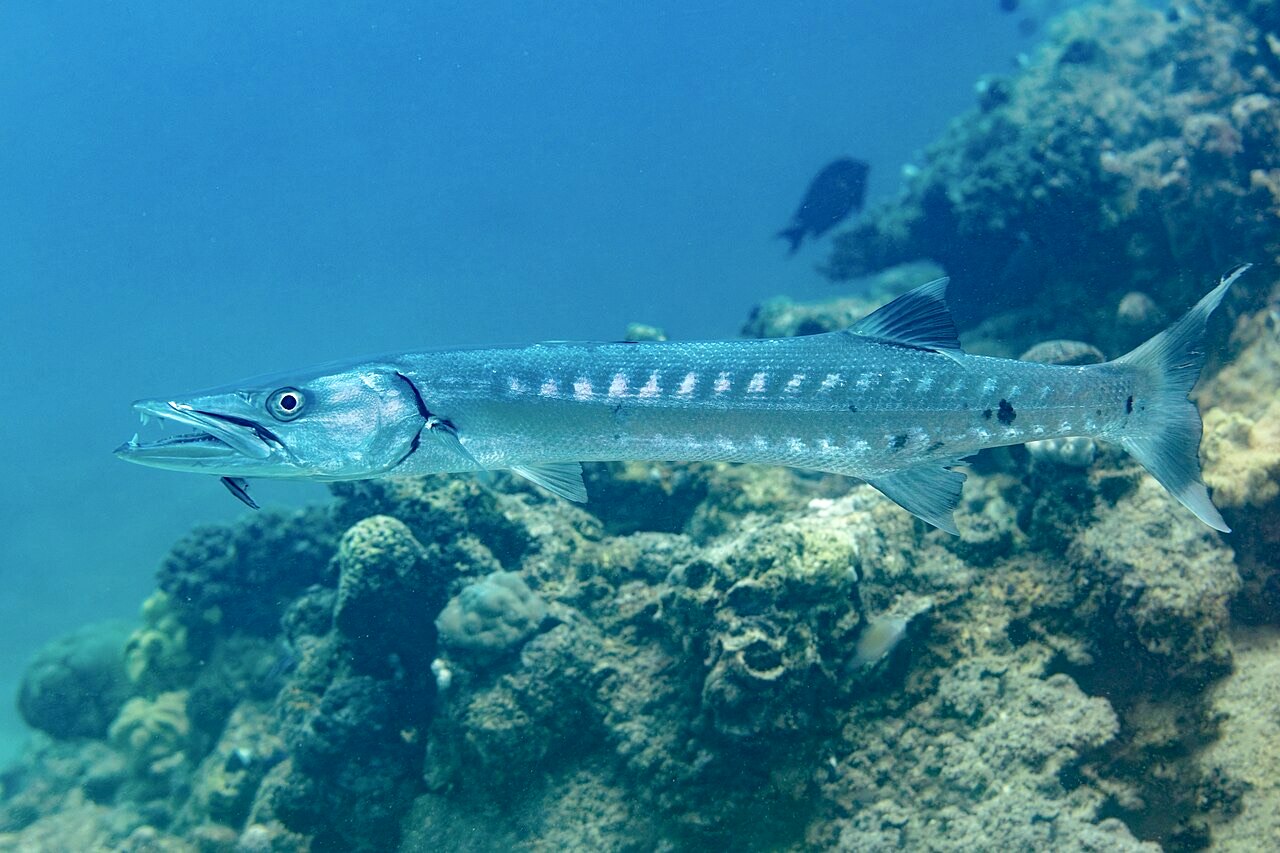
Great Barracuda
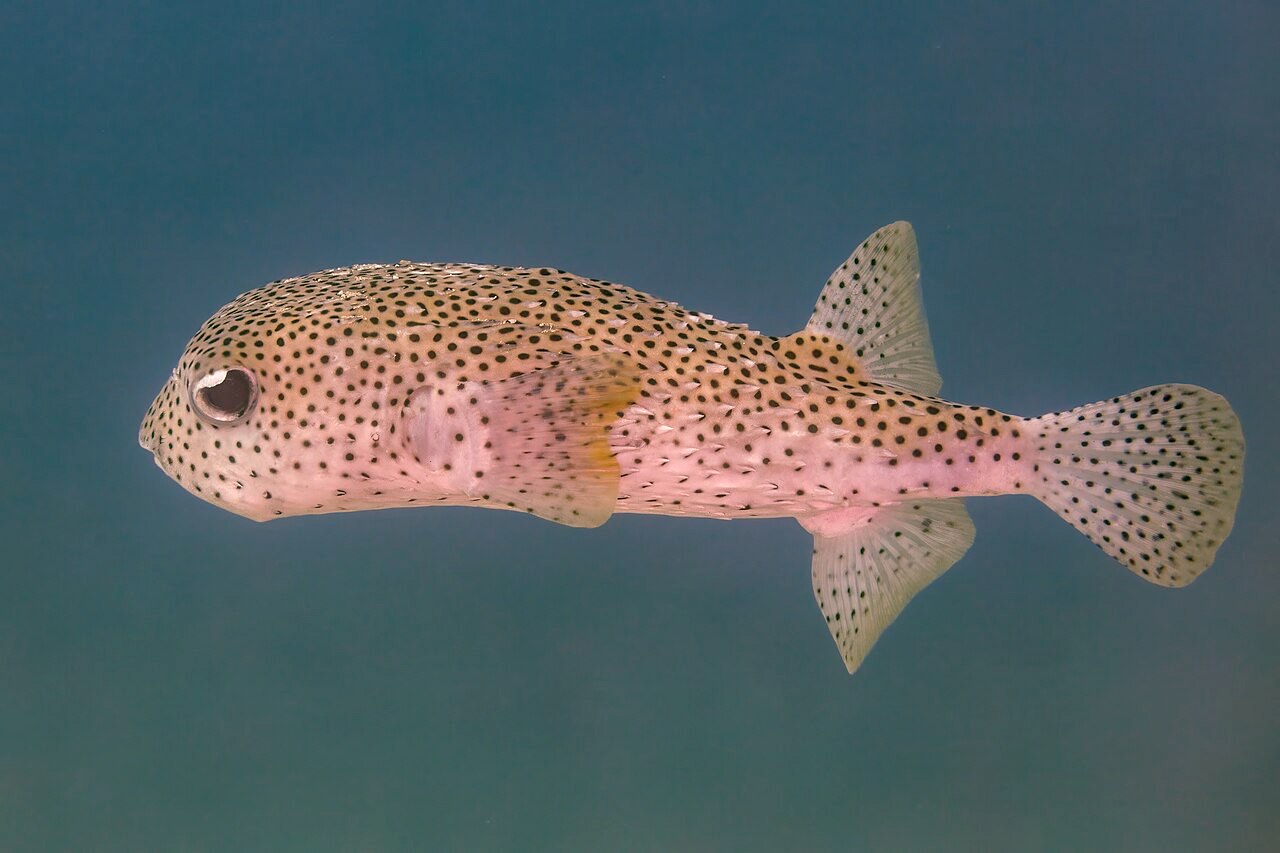
Porcupinefish
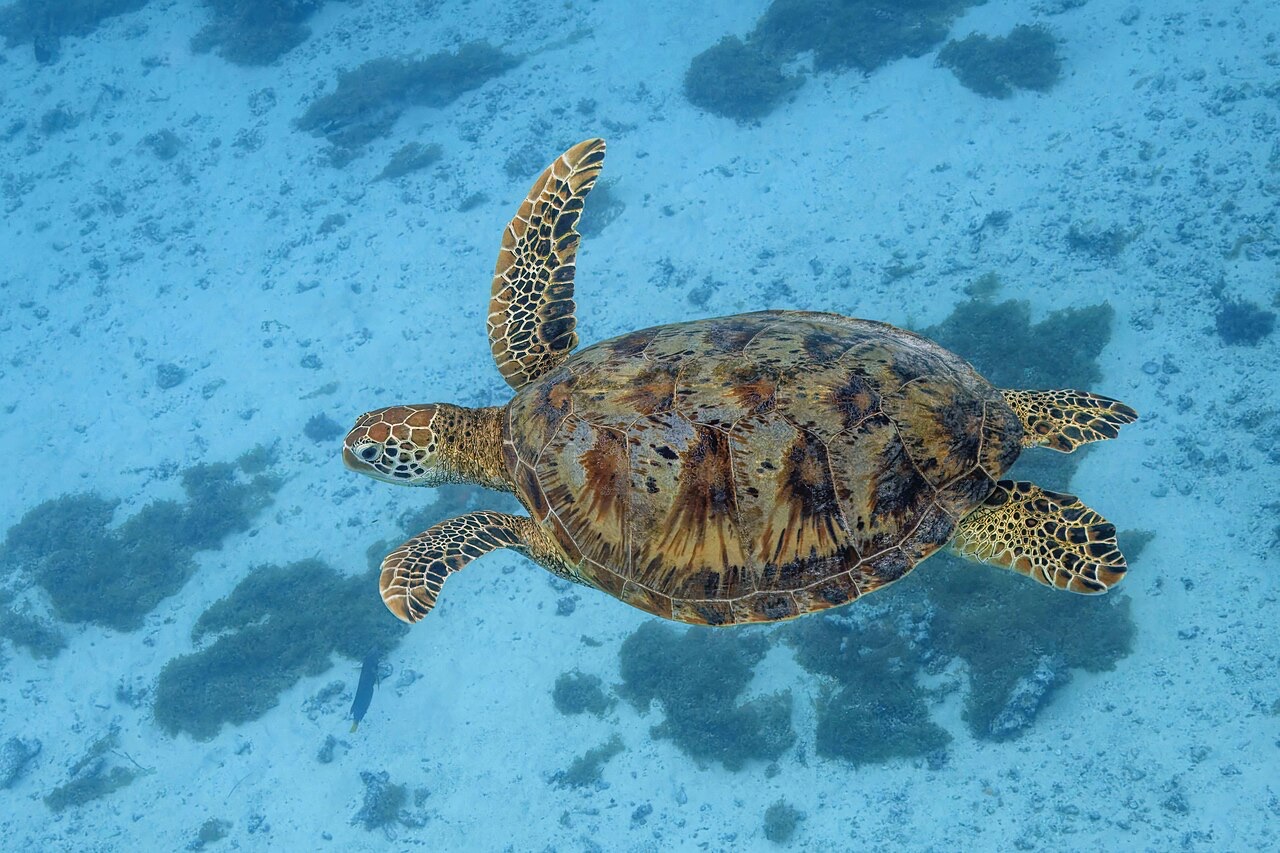
Green Sea Turtle
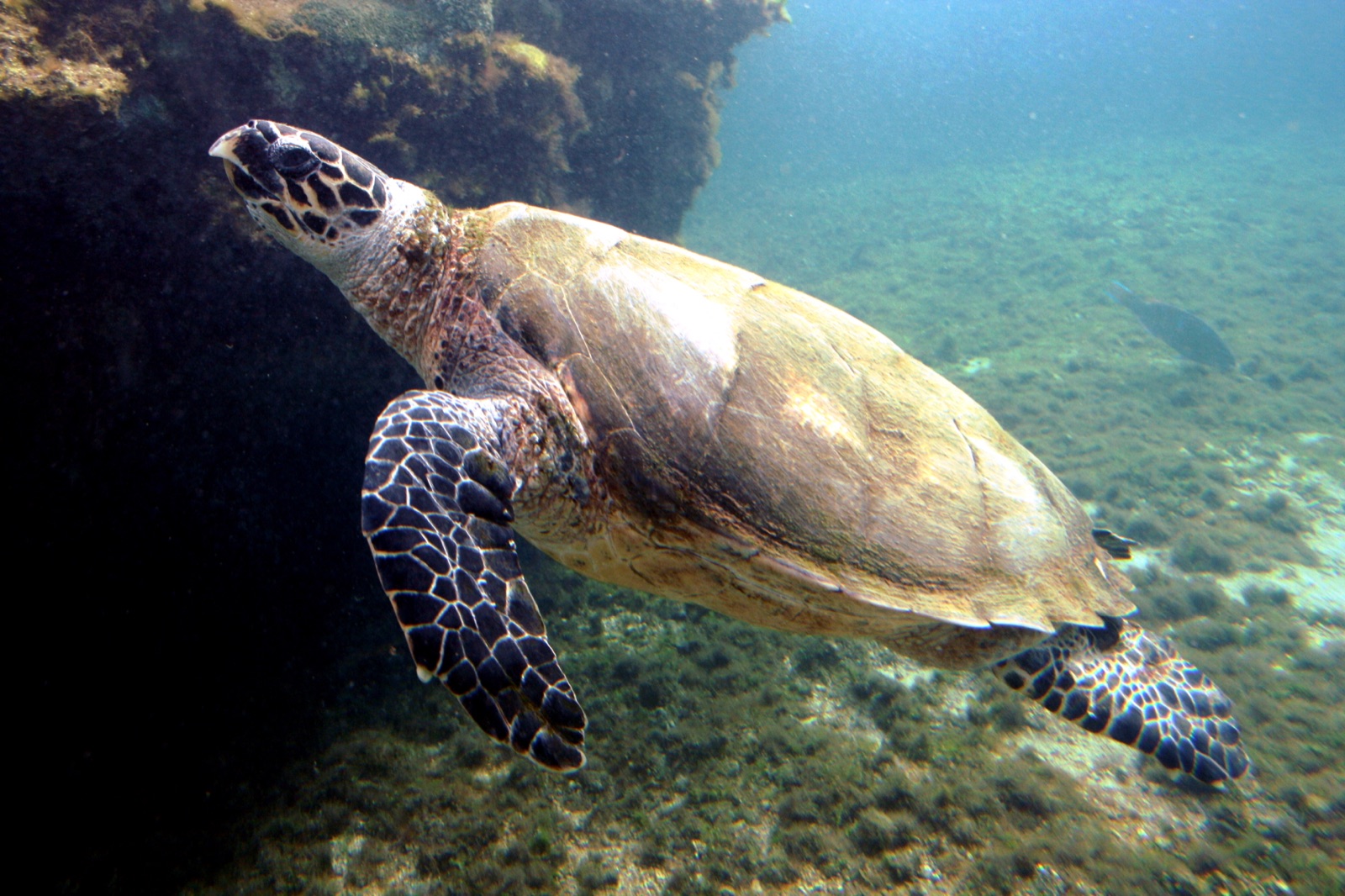
Hawksbill Turtle
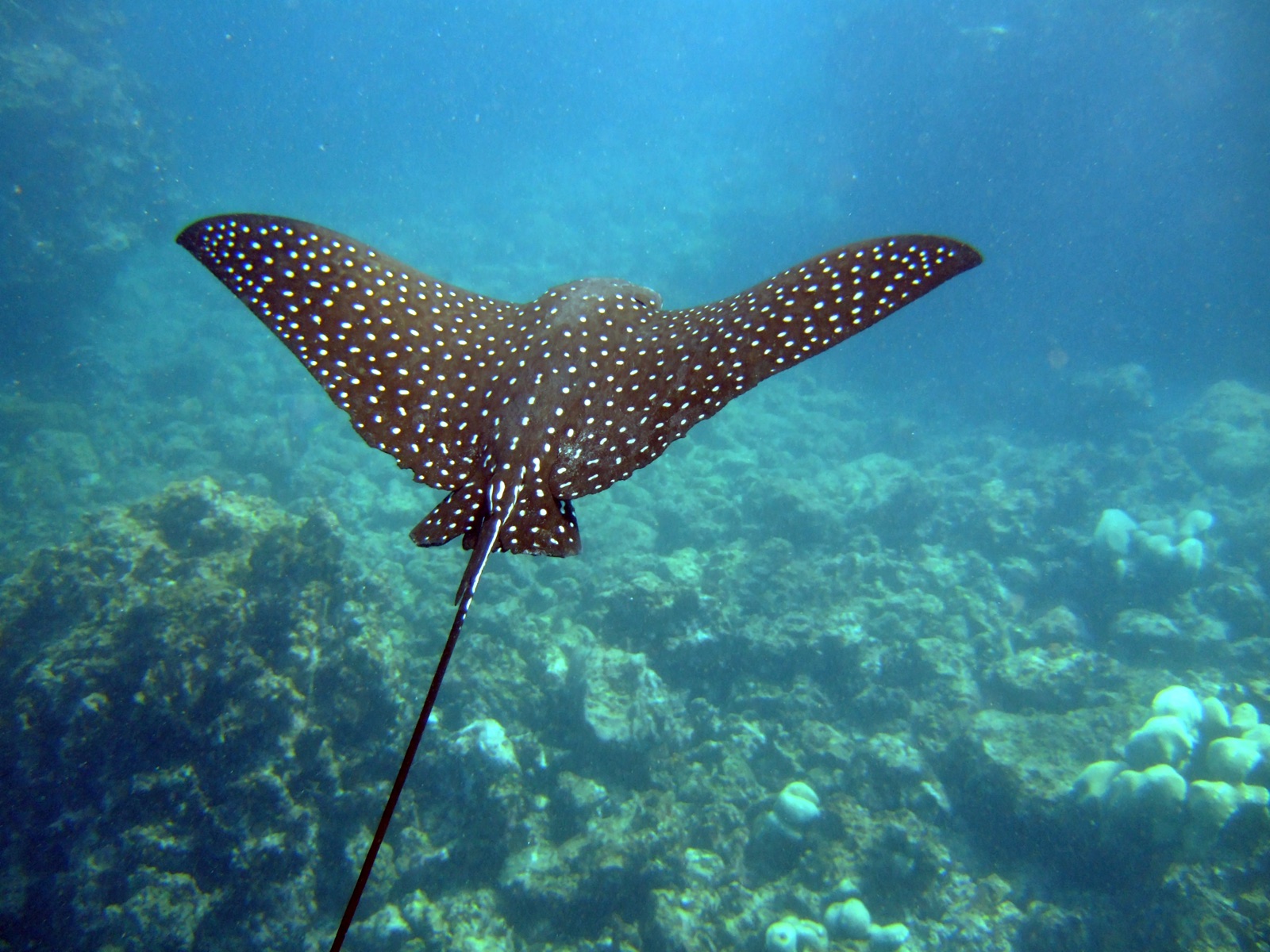
Spotted Eagle Ray
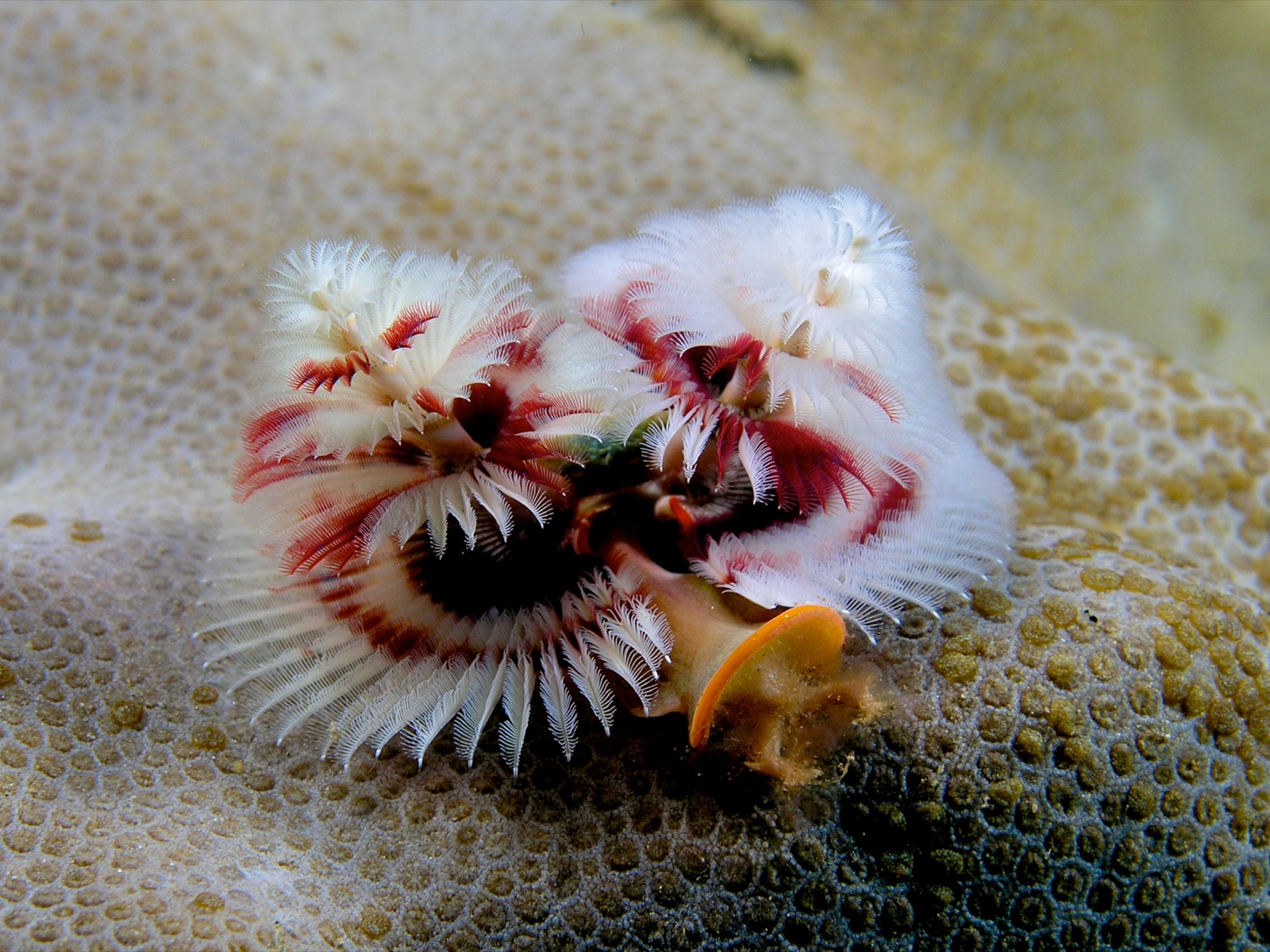
Christmas Tree Worm
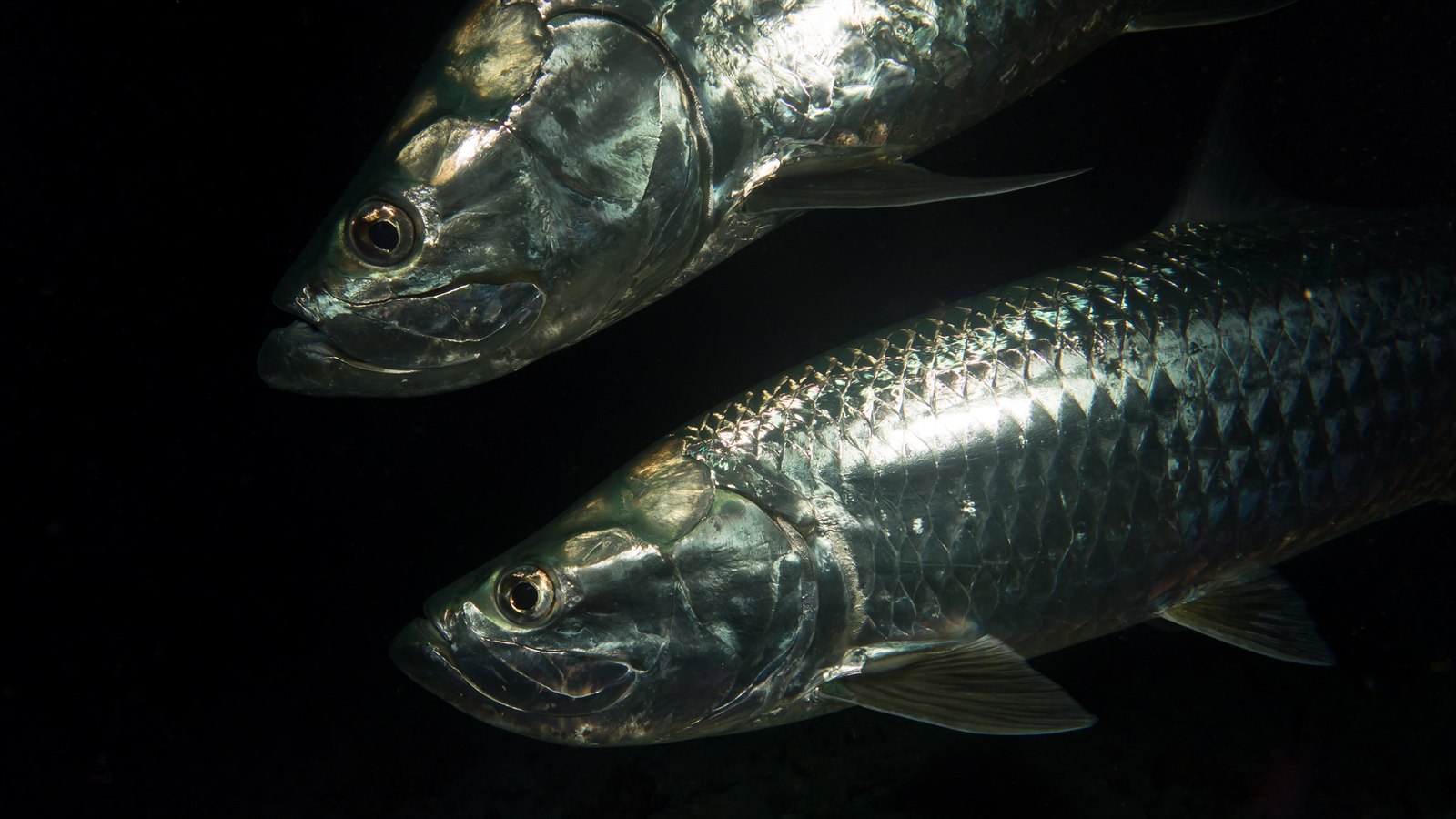
Atlantic Tarpon
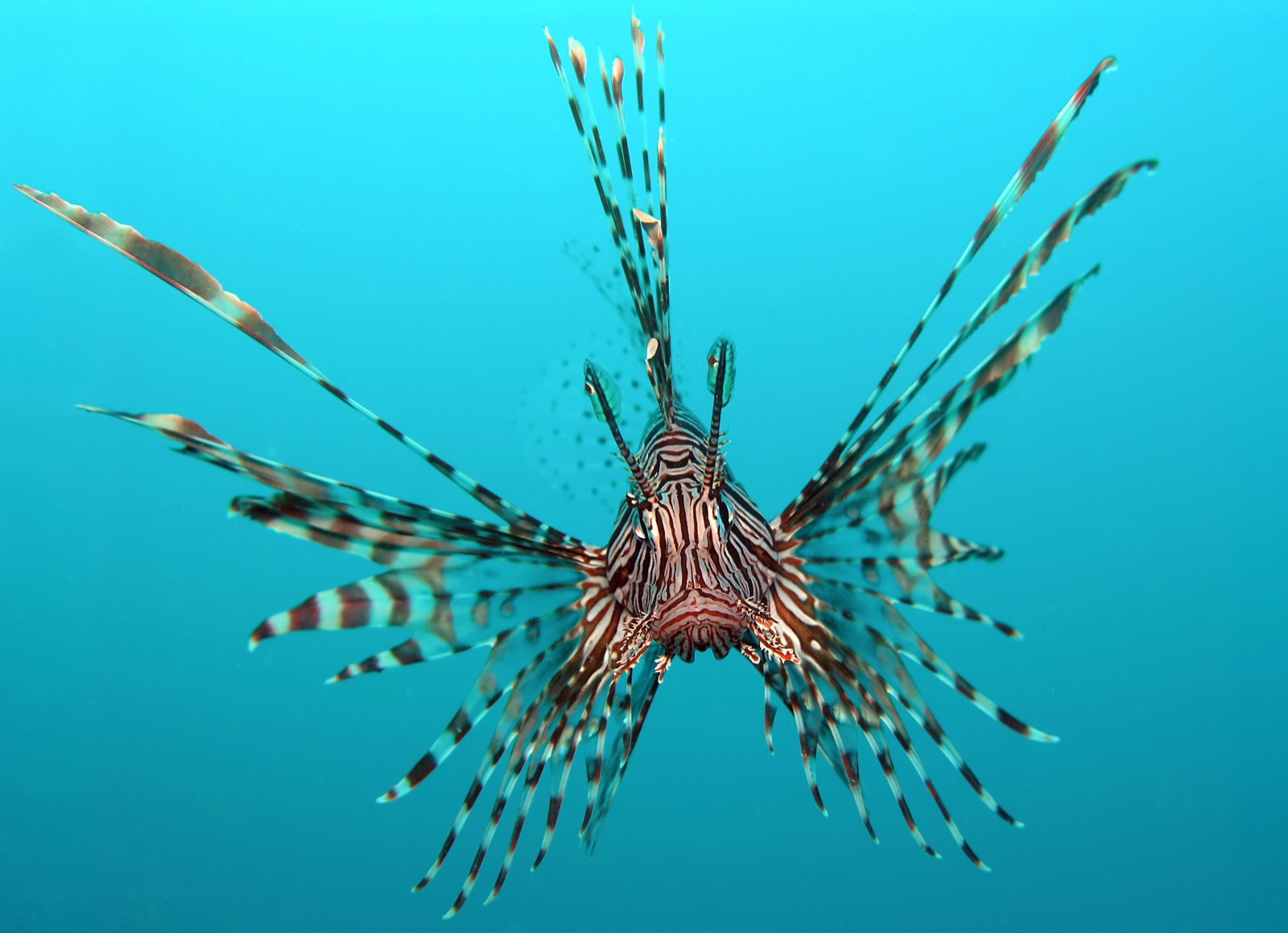
Lionfish
Also recorded nearby
"Charted here" species were listed by our editors from the sources on this page. Counts are GBIF occurrence records: observations logged within about 5 km of the charted position since 1990, matched only against the species in our catalogue. They show what has been seen there, not a promise of what you will see.
For photographers
Wide angle: ★★★★★ · Macro: ★★★☆☆ (editors' 1–5 rating of what this site gives each style of shooting)