Akitsushima
Depth is the range from the top of the site to its usual maximum; "recommended cert" is the mainstream-agency level operators usually ask for, not a legal rule. Currents and visibility change daily, so treat everything here as planning ranges.
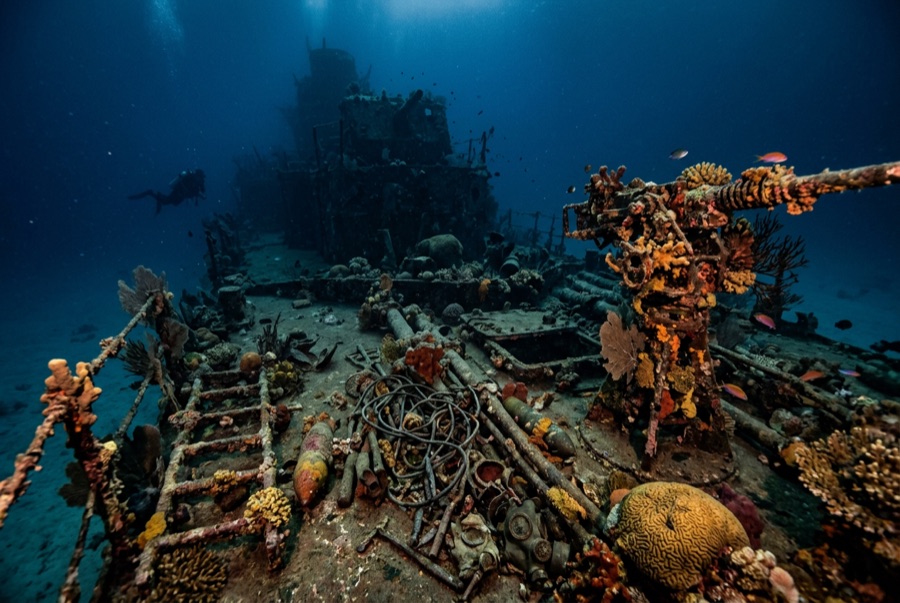
Akitsushima was a true warship, a seaplane tender of about 118 m built to service flying boats, and she fought back when Task Force 38's aircraft found the fleet on 24 September 1944. She lies hard over on her port side at up to 38 m, her huge stern crane collapsed toward the sand where the flying boat once rode. Crew died with the ship, and briefings say so plainly. Divers run the tilted hull past gun positions and the crane lattice, while trained teams enter holds and machinery spaces where fuel-dark corridors demand lights and level heads. Barracuda and snapper school along the shadowed keel line.
The moment you come for: Genuine warship history, the seaplane crane, atmospheric side-lying hull for experienced divers
Topography: Hull on its port side on sand at 36-38 m
Current: Sheltered between islands; mild flow along the hull on exchanges.
Know before you splash
Hazards: Depth, disorienting sideways geometry, and confined silty interiors; penetration is for the trained with a knowledgeable guide.
Conservation: A wartime loss with fatalities; dive with the restraint owed to the dead, and leave all wreckage in place.
Nitrox: Worth it here: profiles sit in the range where enriched air meaningfully extends no-stop time (with the training to use it).
Who you'll meet
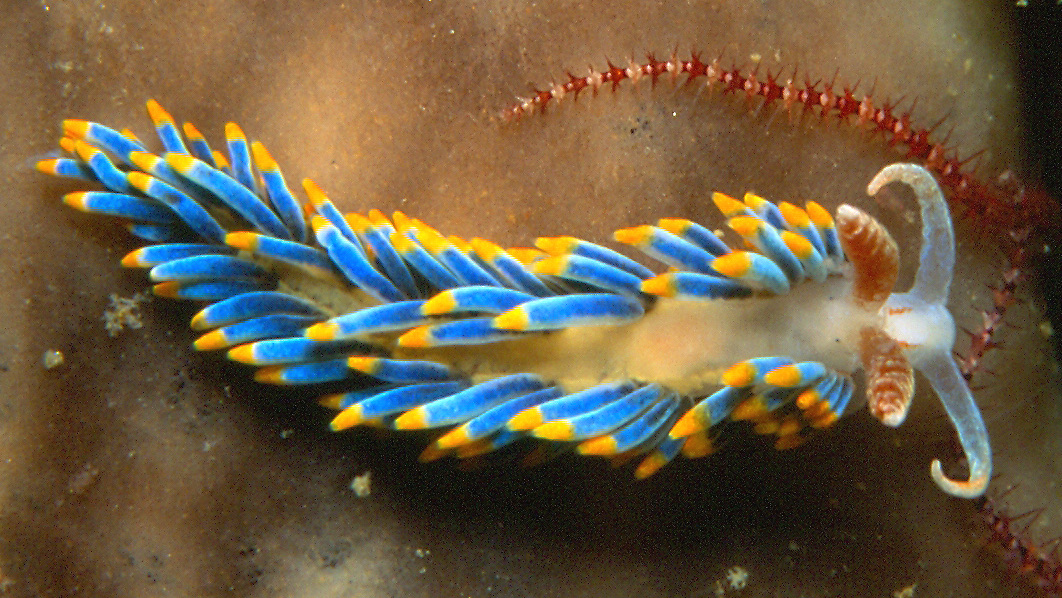
Nudibranchs
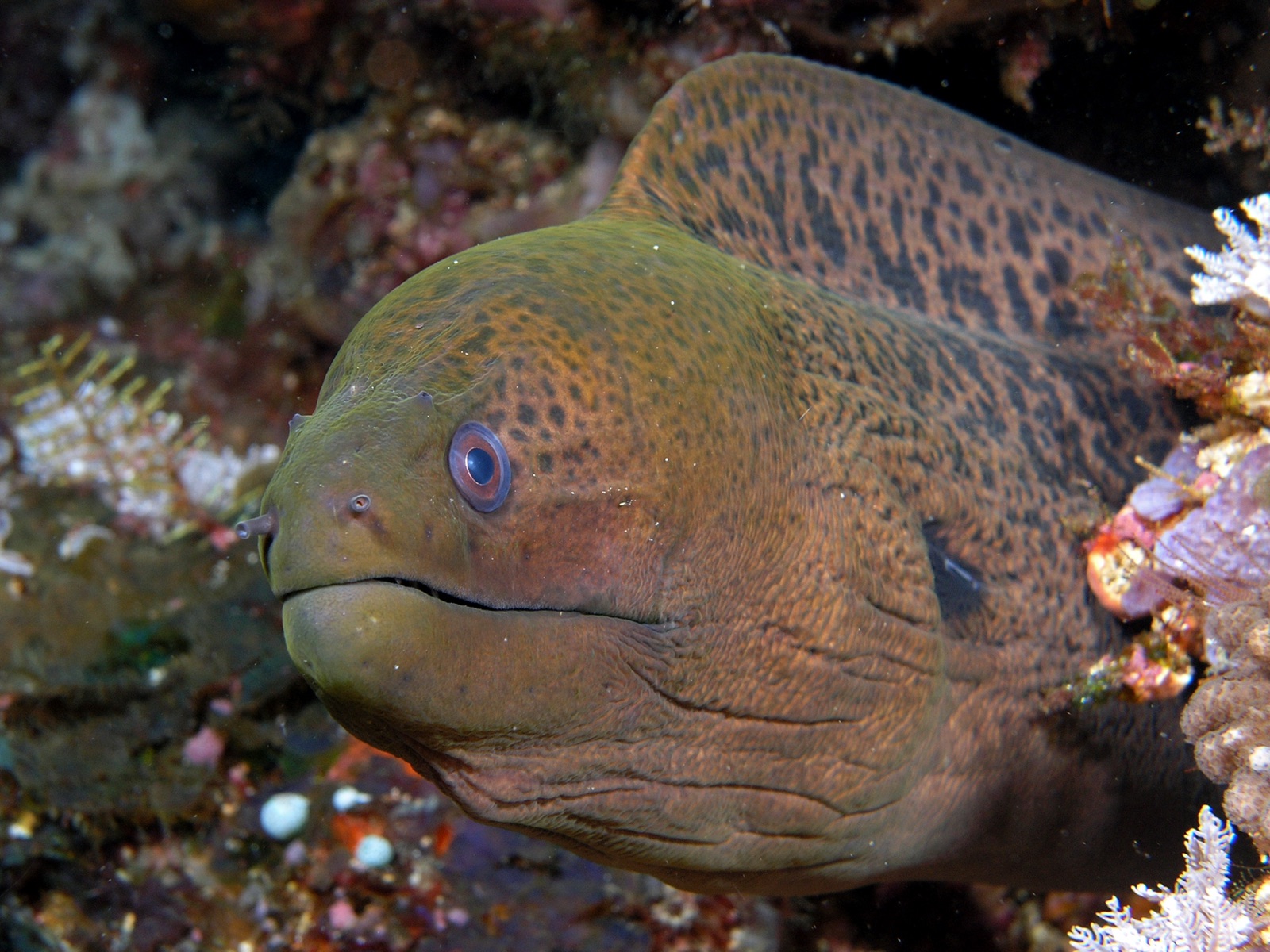
Giant Moray Eel
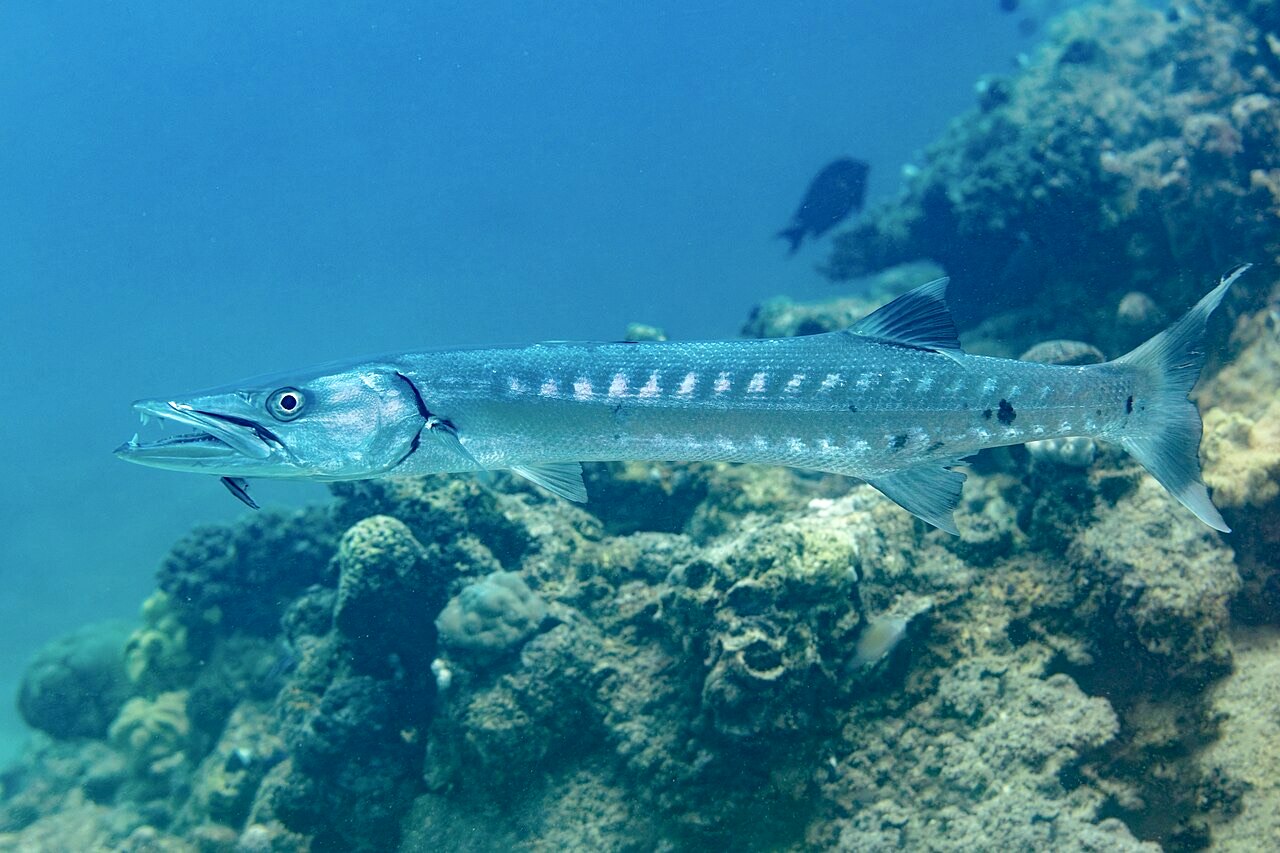
Great Barracuda
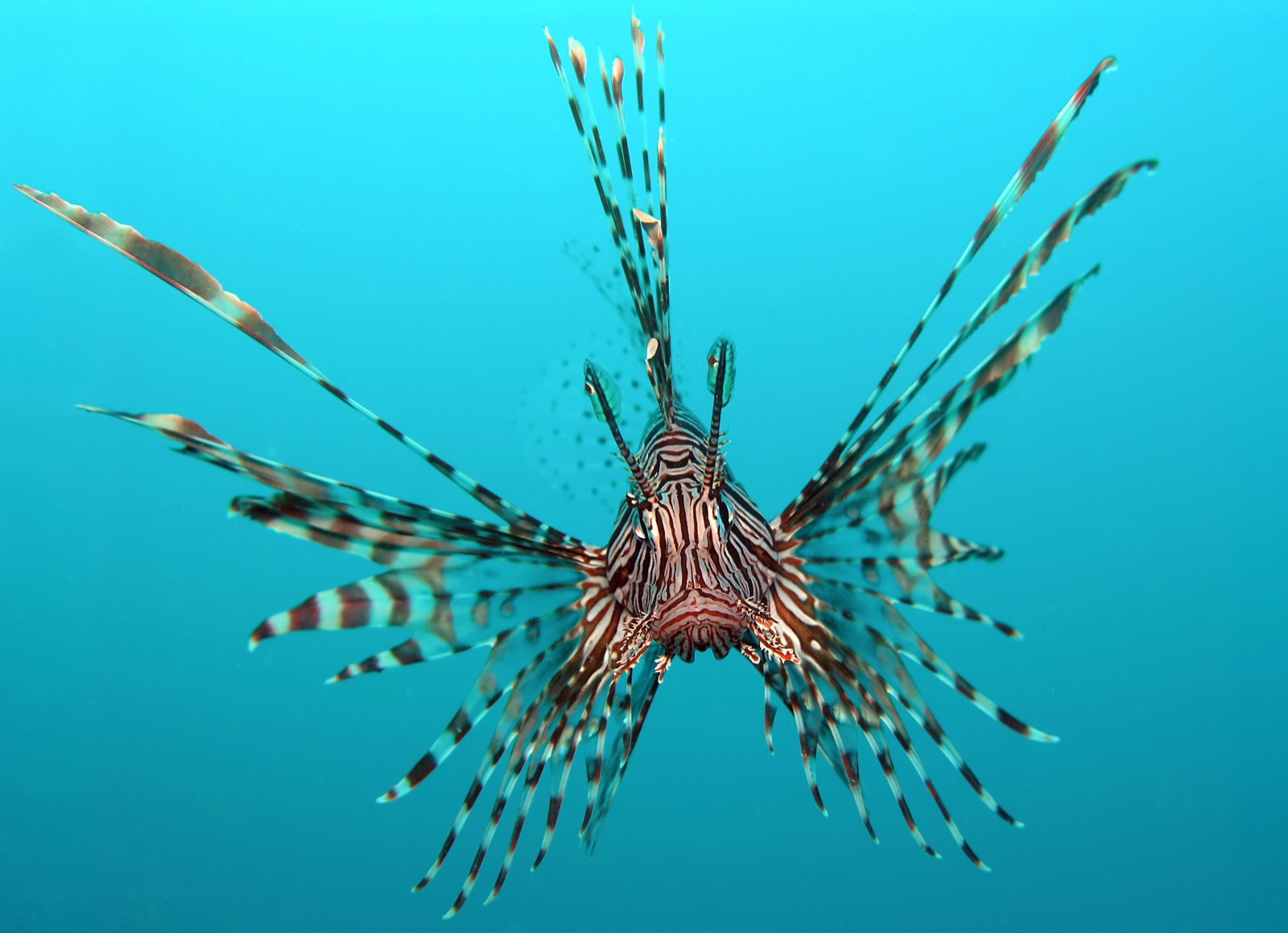
Lionfish
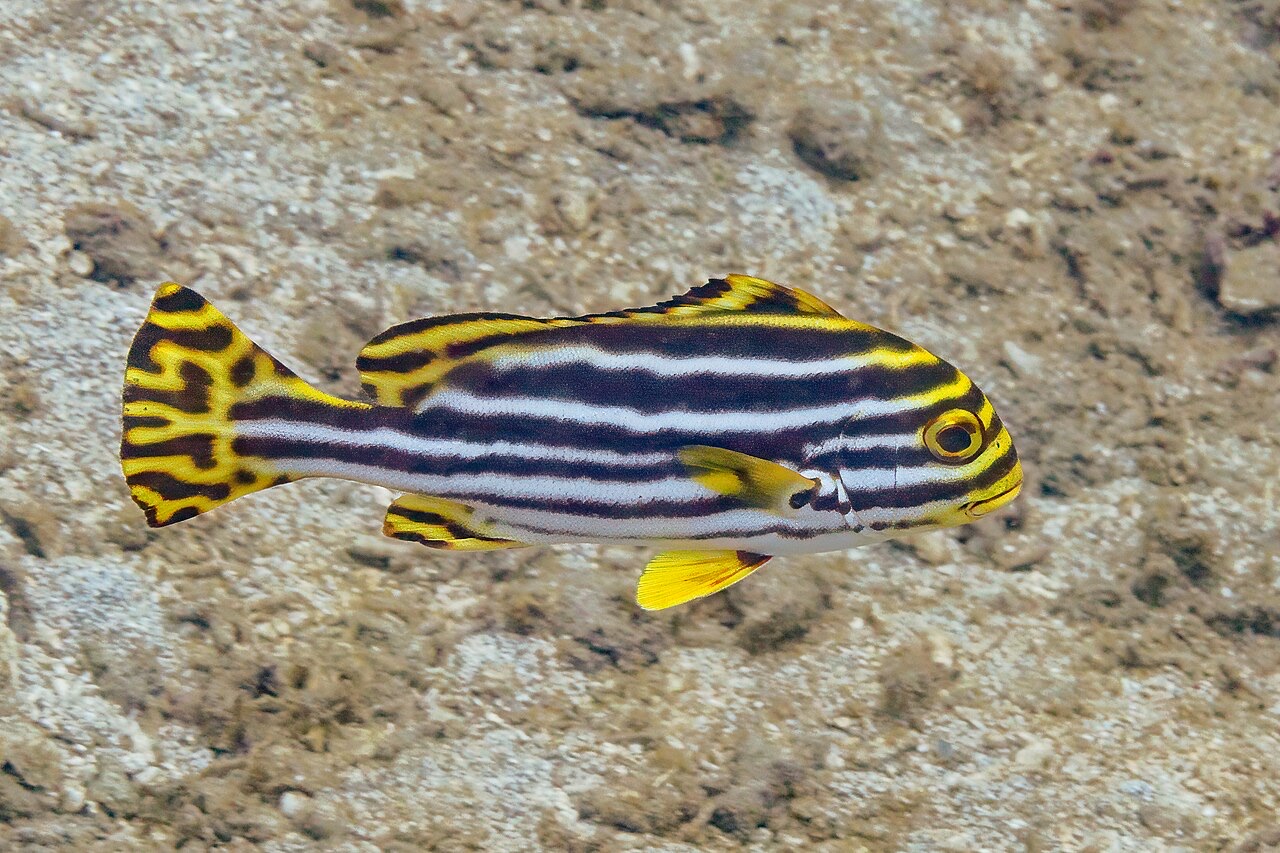
Oriental Sweetlips
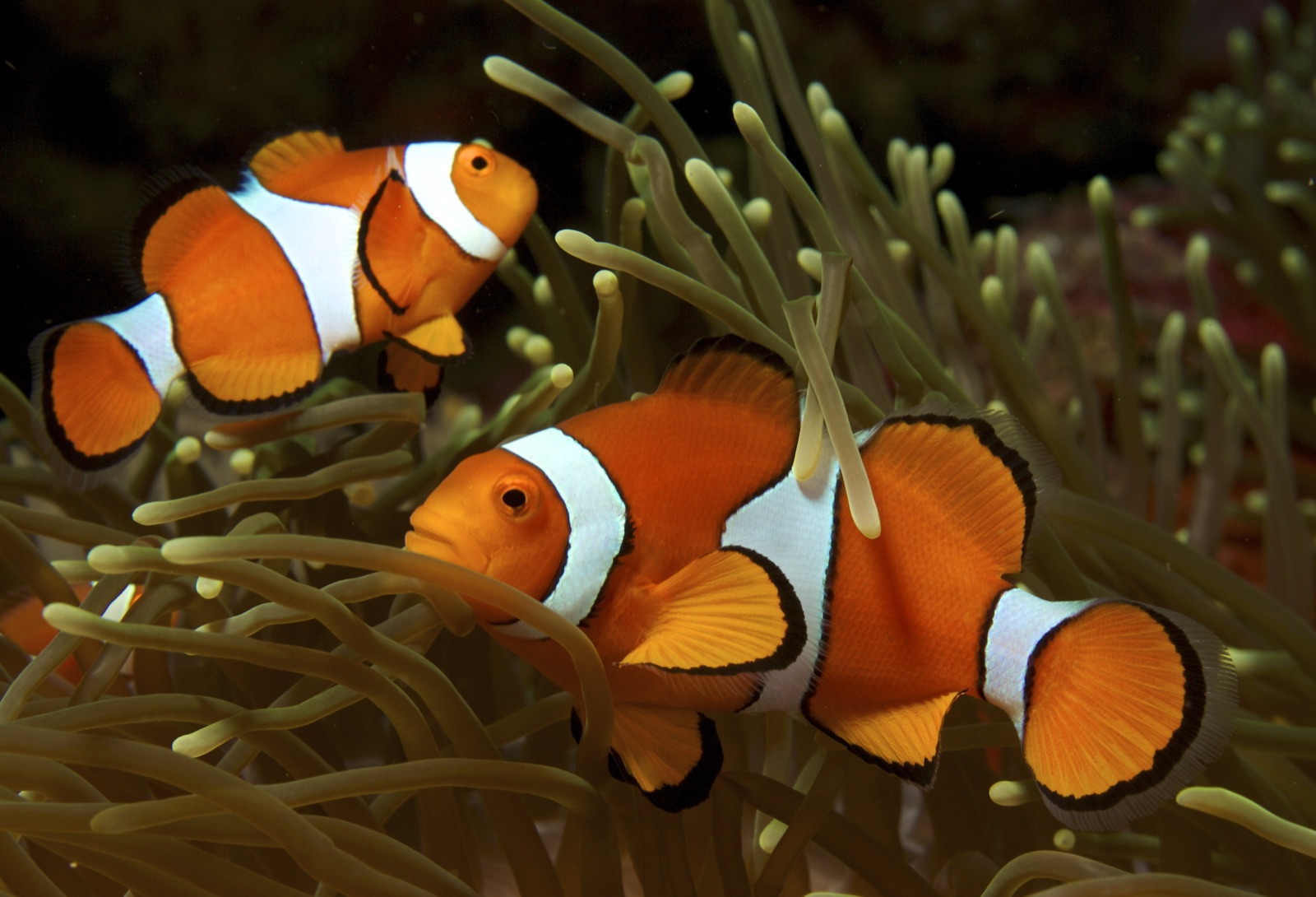
Clownfish & Anemonefish
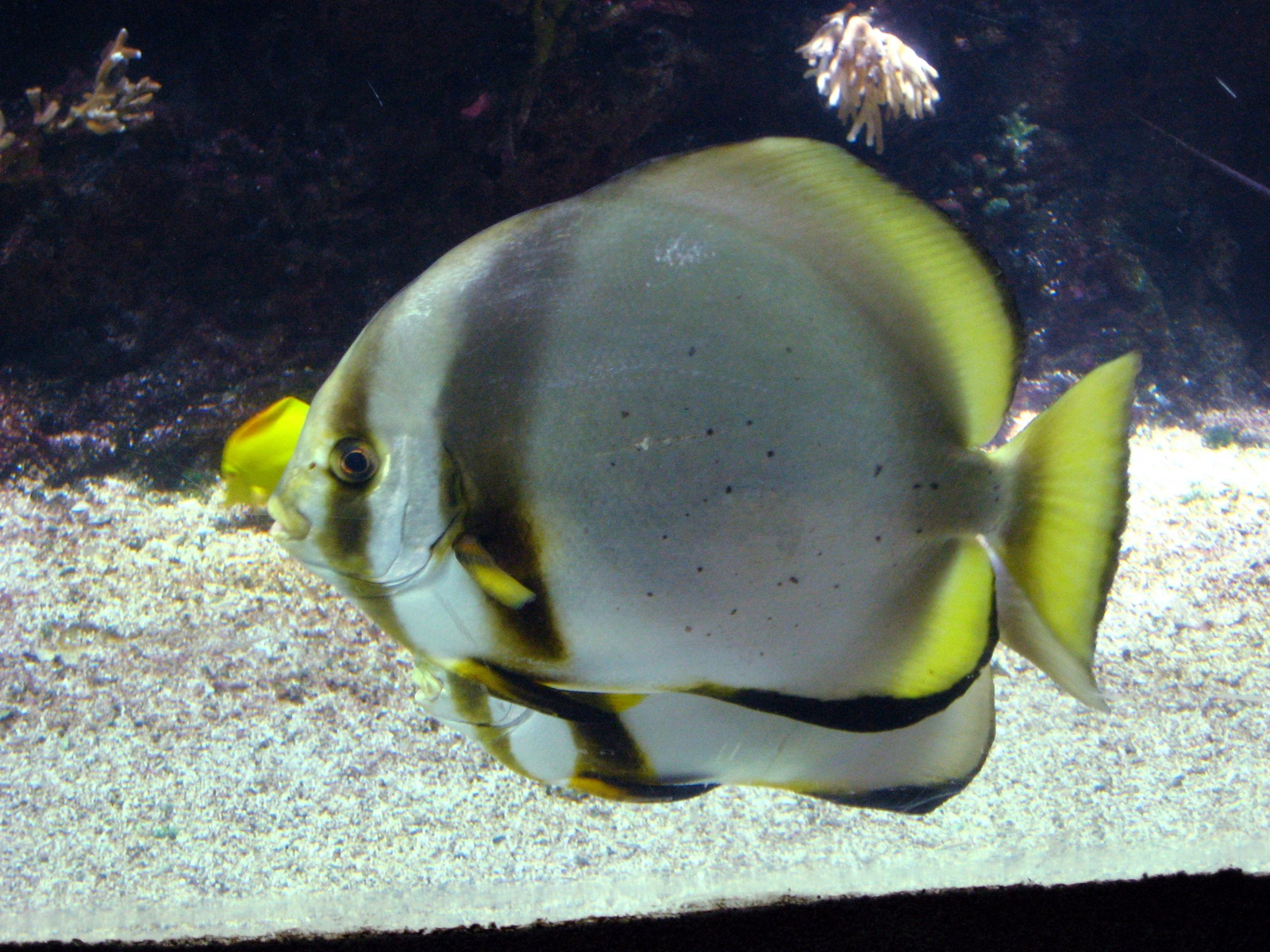
Pinnate Batfish
"Charted here" species were listed by our editors from the sources on this page. Counts are GBIF occurrence records: observations logged within about 5 km of the charted position since 1990, matched only against the species in our catalogue. They show what has been seen there, not a promise of what you will see.
For photographers
Wide angle: ★★★★☆ · Macro: ★★☆☆☆ (editors' 1–5 rating of what this site gives each style of shooting)