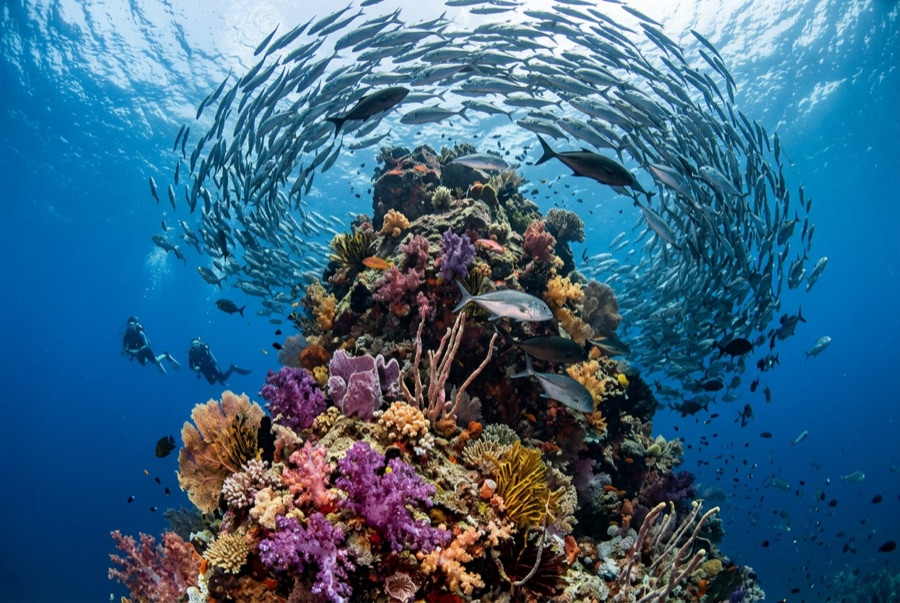
Gordon Rocks
La profondeur correspond à la plage allant du sommet du site jusqu'à son maximum habituel ; le « niveau recommandé » est le niveau demandé en général par les opérateurs auprès des grandes agences, pas une règle légale. Les courants et la visibilité varient chaque jour, traitez donc tout cela comme des plages indicatives de planification.
Gordon Rocks is the best big-animal dive available without boarding a liveaboard: an eroded tuff crater off northeastern Santa Cruz whose rim breaks the surface in three stacks. Inside, the crater floor sits around 32 m; the action concentrates along the rim, where scalloped hammerheads patrol singly or in small schools and eagle rays hold formation against the flow. Sea lions dive-bomb safety stops, turtles wedge into the rock to be cleaned, and the current - the site's engine and its hazard - can shift mid-dive. Locals call it the washing machine without exaggerating much. Day boats run it regularly from Puerto Ayora, making it many divers' first hammerhead encounter.
Le moment pour lequel vous venez: Hammerheads on a day trip, eagle rays stacked in current, sea lion buzz-bys
Topographie: Submerged volcanic crater rim with sand at depth inside
Courant: The eroded crater funnels tide through gaps in the rim - down-currents happen, which is why day boats vet experience.
À savoir avant de plonger
Dangers: Down-currents and washing-machine turbulence at the rim gaps; surge near the stacks.
Conservation: Within the Galapagos Marine Reserve; guided groups only.
Nitrox: Pertinent ici : les profils se situent dans la plage où le nitrox prolonge significativement le temps sans palier (avec la formation pour l'utiliser).
Qui vous croiserez
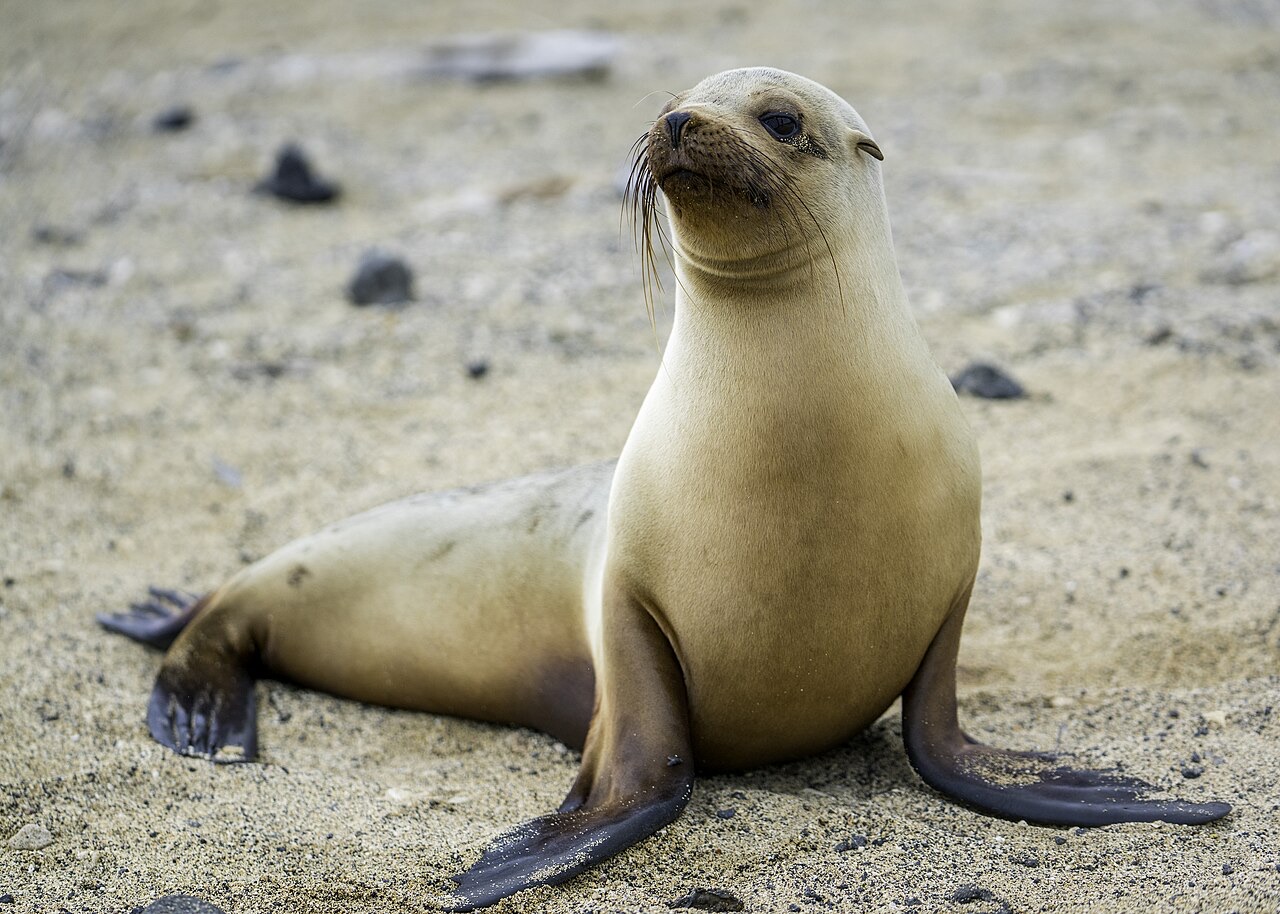
Galápagos Sea Lion
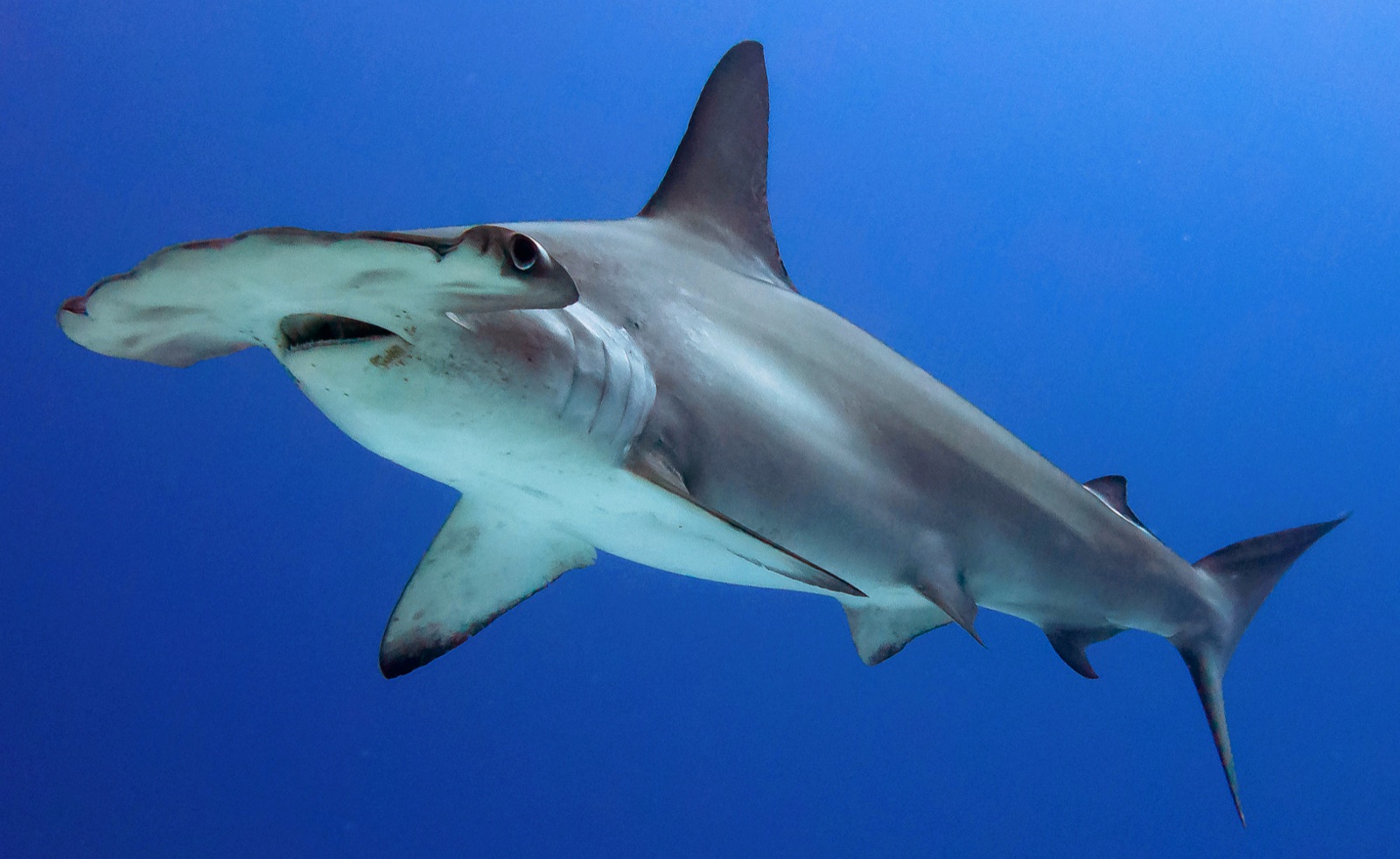
Scalloped Hammerhead
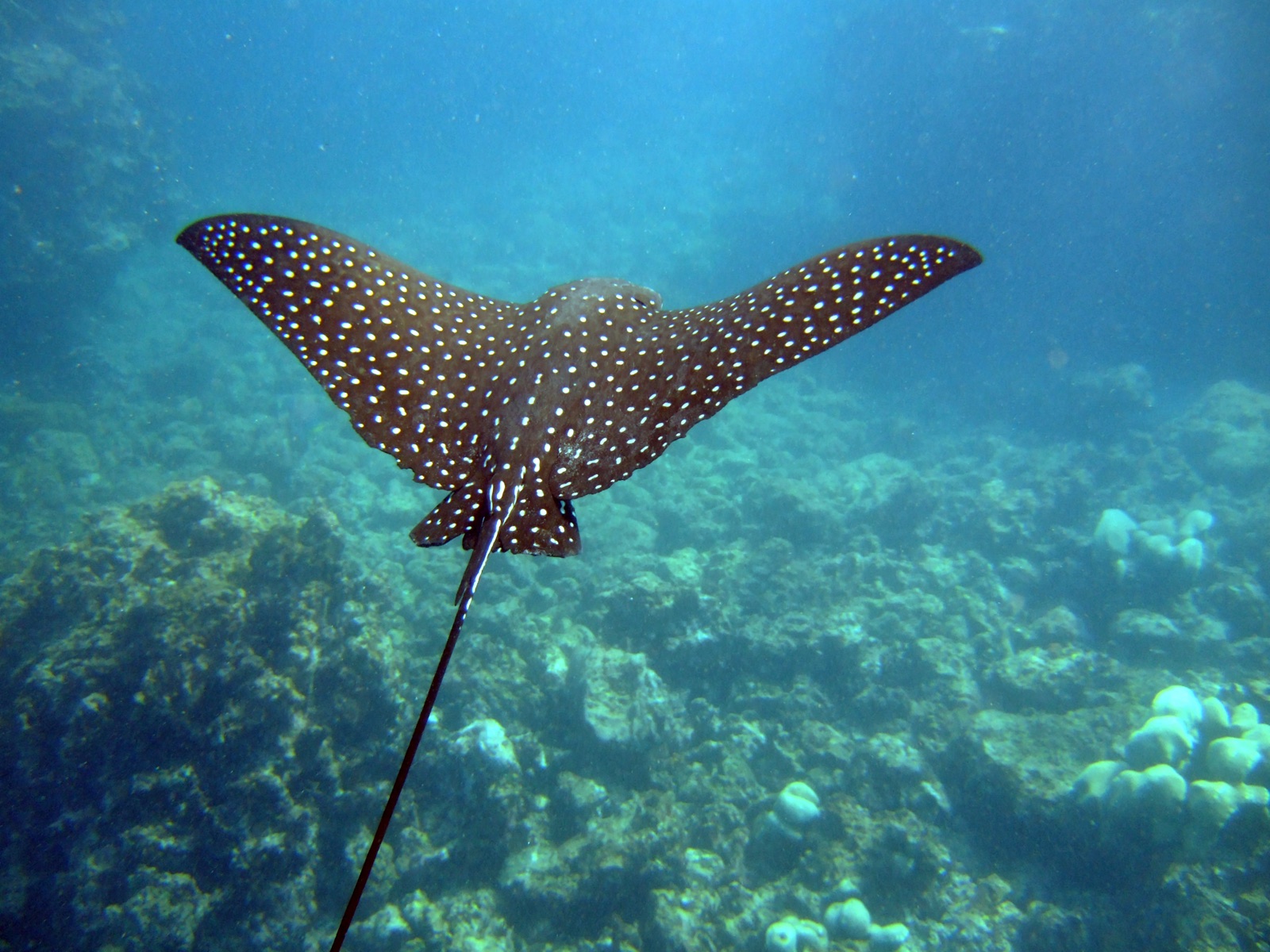
Spotted Eagle Ray
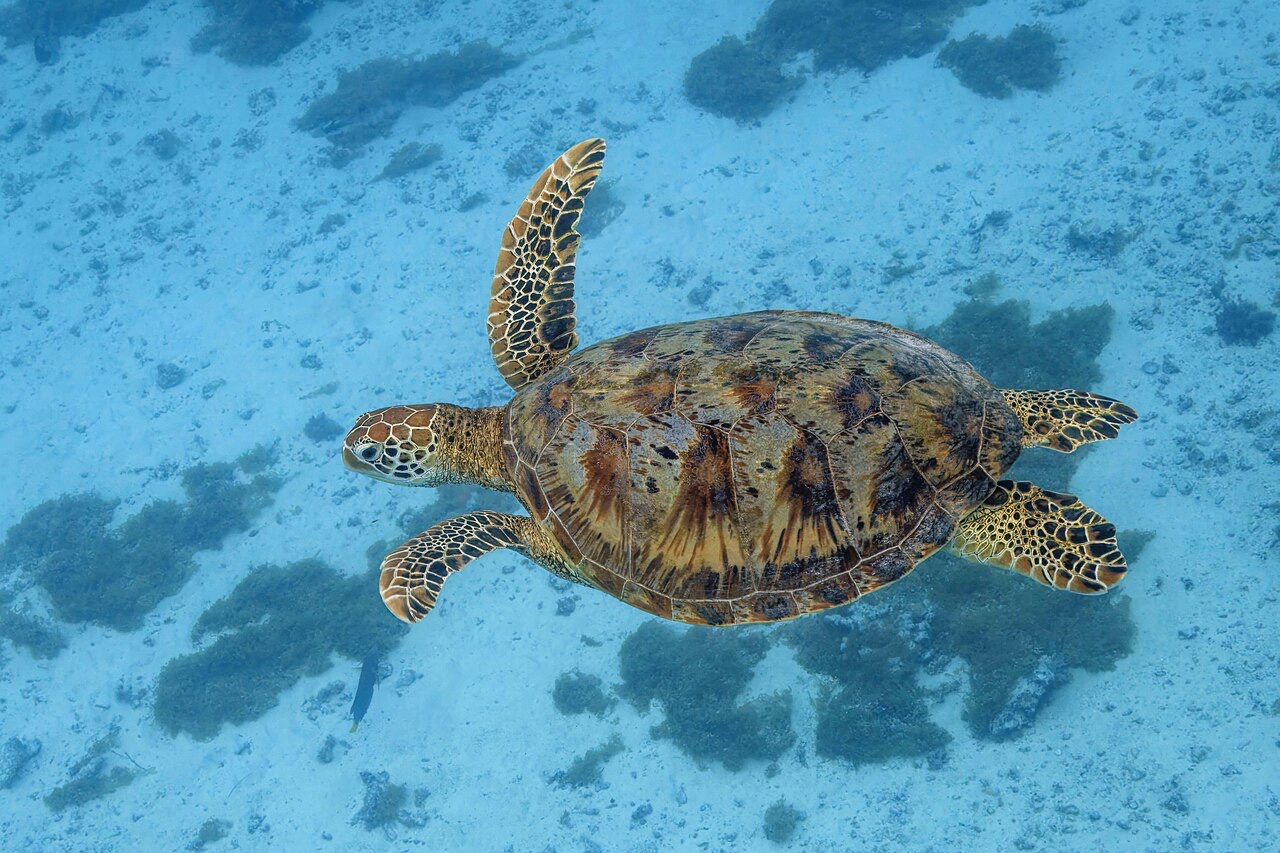
Green Sea Turtle
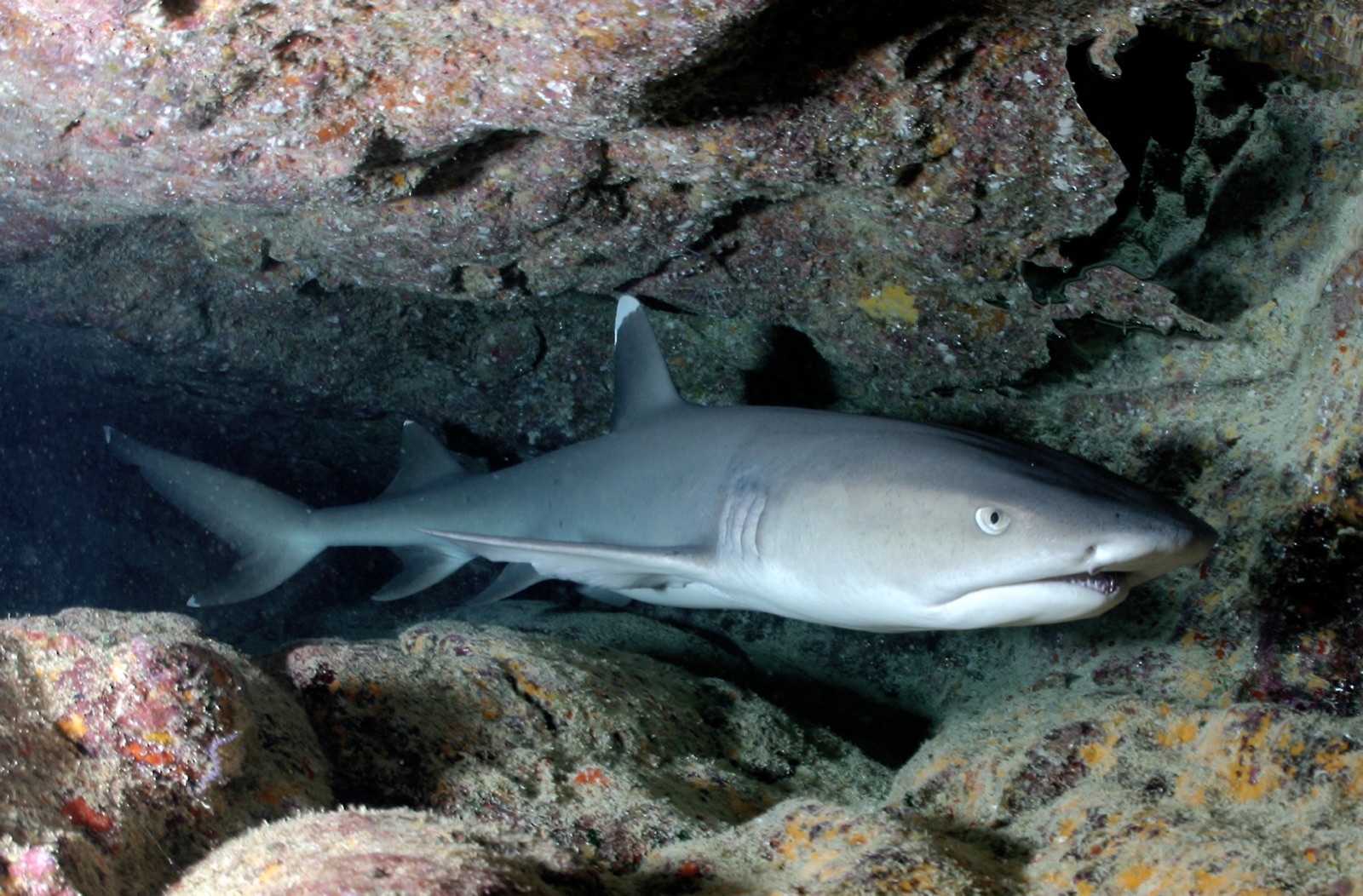
Whitetip Reef Shark
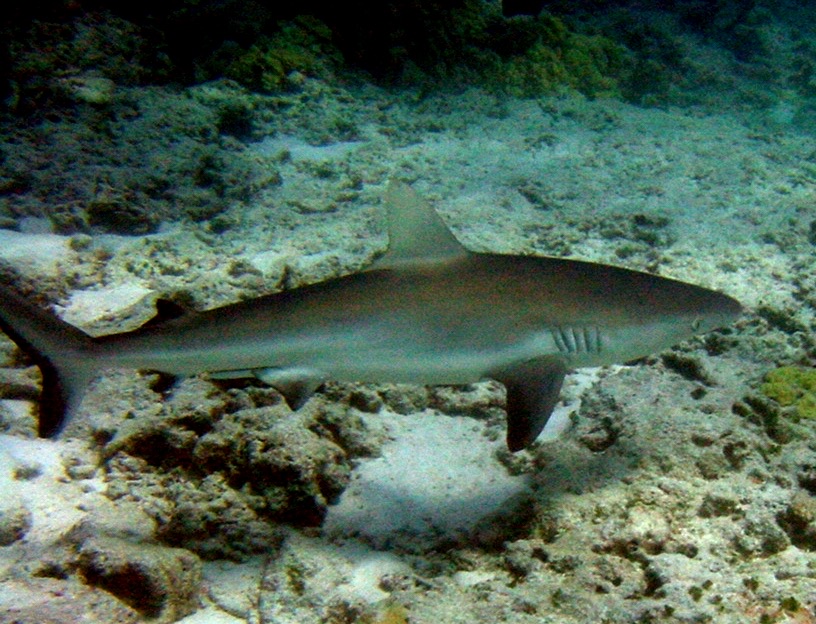
Galápagos Shark
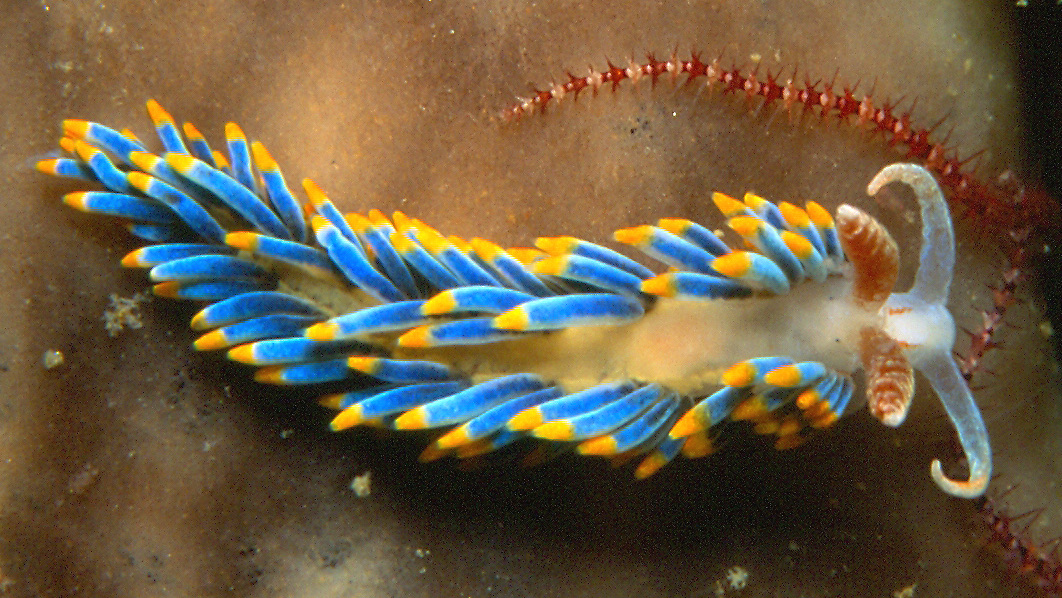
Nudibranchs
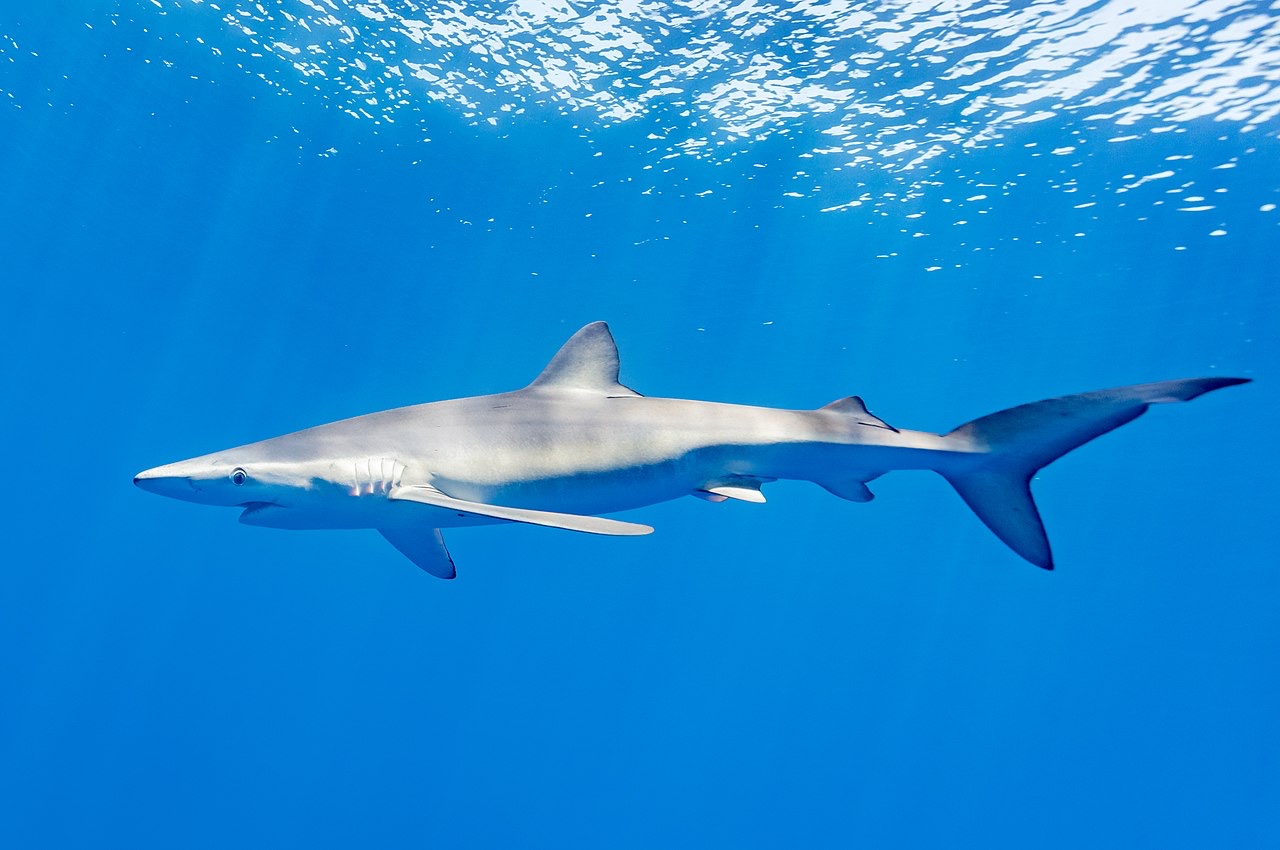
Blue Shark
Également observé à proximité
Les espèces « cartographiées ici » ont été répertoriées par nos éditeurs à partir des sources indiquées sur cette page. Les comptages correspondent aux occurrences GBIF : observations enregistrées dans un rayon d'environ 5 km autour de la position cartographiée depuis 1990, comparées uniquement aux espèces de notre catalogue. Ils indiquent ce qui a été observé à cet endroit, sans garantir ce que vous y verrez.
Pour les photographes
Grand angle: ★★★★☆ · Macro: ★★☆☆☆ (note 1–5 des éditeurs sur ce que ce site offre à chaque style de prise de vue)