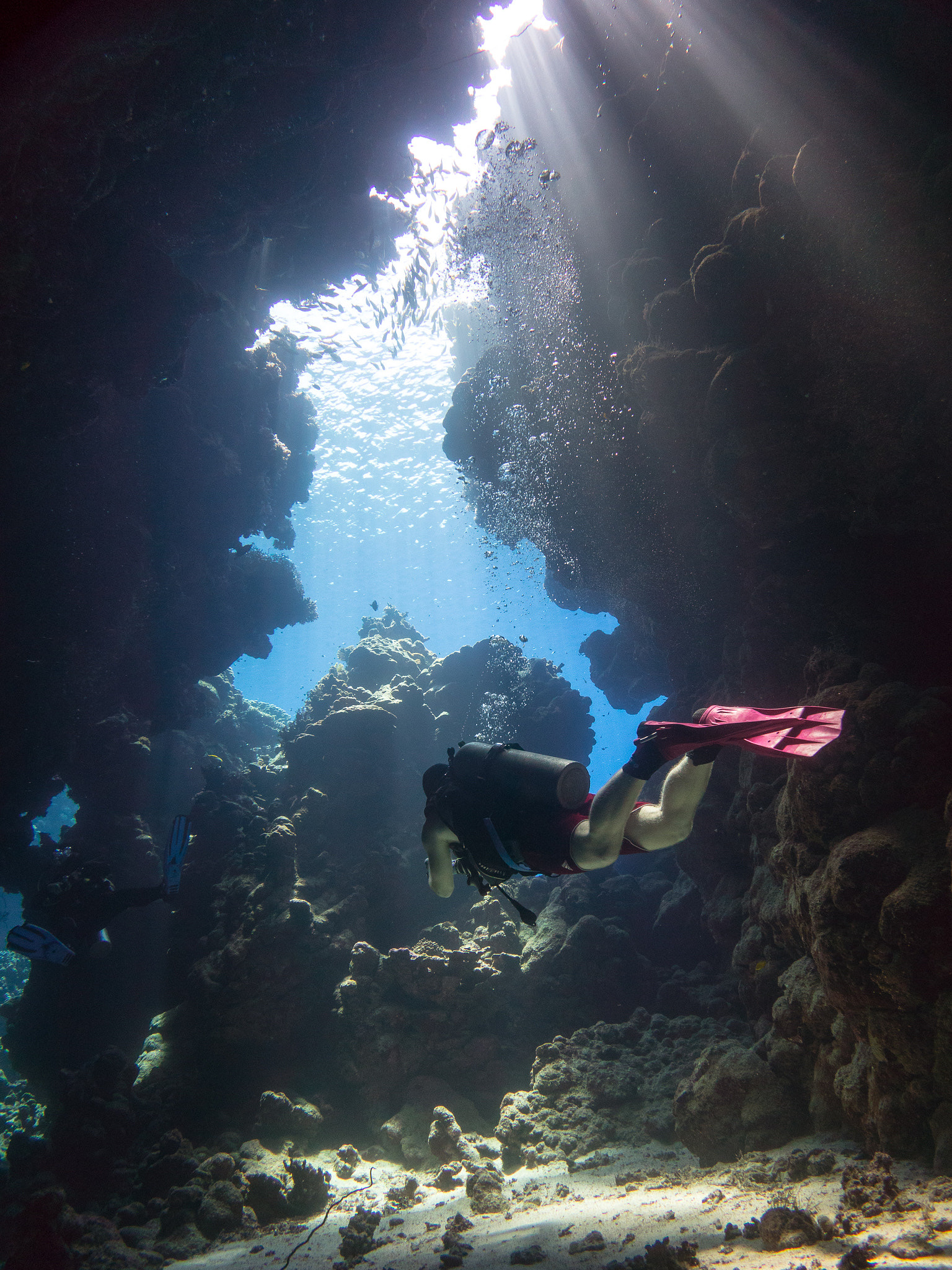
St John's Caves
La profondeur correspond à la plage allant du sommet du site jusqu'à son maximum habituel ; le « niveau recommandé » est le niveau demandé en général par les opérateurs auprès des grandes agences, pas une règle légale. Les courants et la visibilité varient chaque jour, traitez donc tout cela comme des plages indicatives de planification.
The St John's reefs close out Egypt's deep south, and their cave reef is the itinerary's change of key: after days of walls and sharks, divers spend an hour inside the reef instead of beside it. The tunnels are wide, shallow, and repeatedly open to the sky, so sunlight drops through ceiling windows in solid blue columns and no passage feels committed - overhead diving with the anxiety removed. Glassfish pool in the darker corners, morays and sleeping whitetips tuck under ledges, and the sand floors record the day's traffic in fin marks that the surge erases by morning. Photographers surface grinning; so do nervous divers who discover that caverns can be gentle. It pairs naturally with the area's outer walls for a full St John's day.
Le moment pour lequel vous venez: Cathedral light shafts in shallow tunnels; low-stress cavern penetration; the deep south's calmest hour.
Topographie: A reef plate honeycombed with shallow tunnels, skylights, and sand-floored chambers
Entrée: Deep-south itineraries near the Sudanese border; boats moor in the lee and dives run as guided cavern circuits.
À savoir avant de plonger
Dangers: Overhead sections despite the openness; surge pushes through passages on swelly days.
Conservation: Tunnel walls carry fragile growth exactly where hands want to go - trim and buoyancy protect it.
Qui vous croiserez
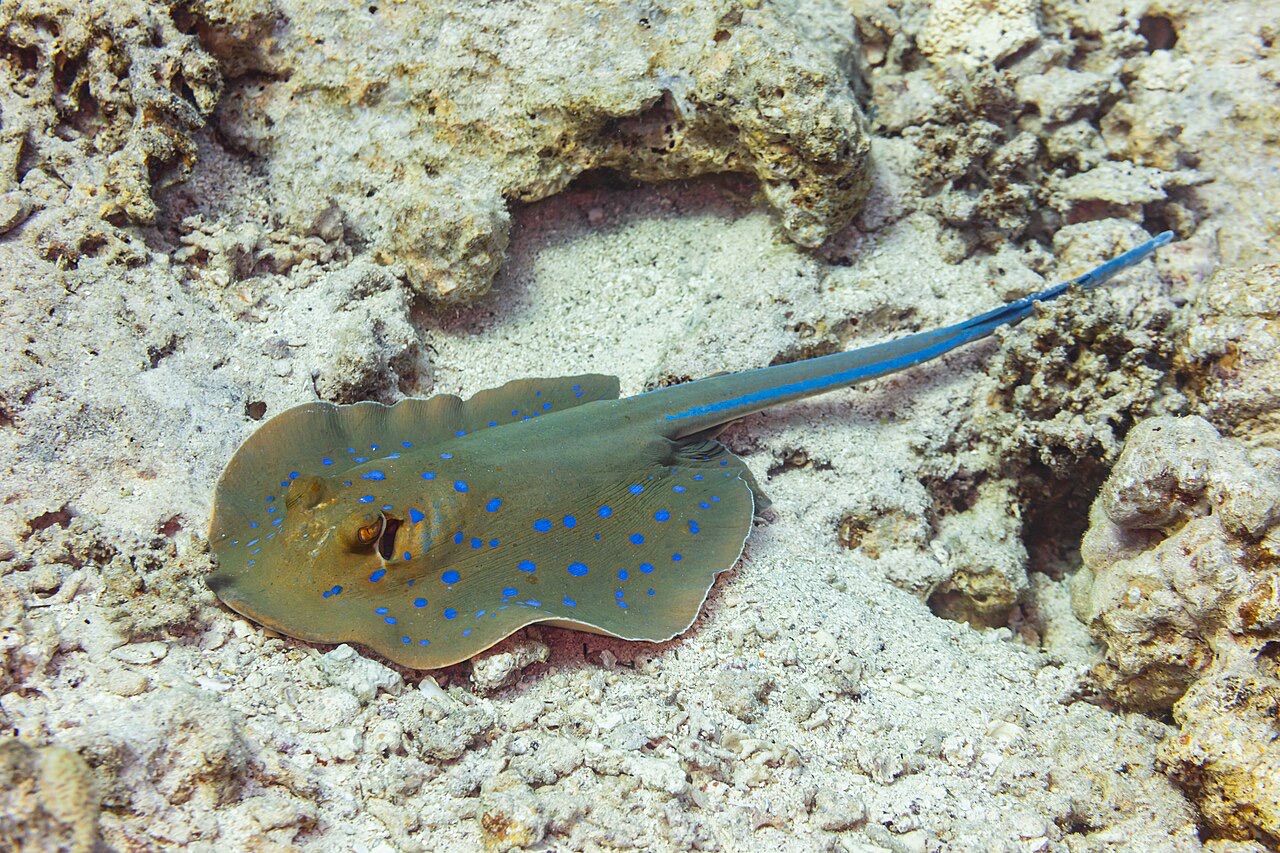
Blue-Spotted Ribbontail Ray
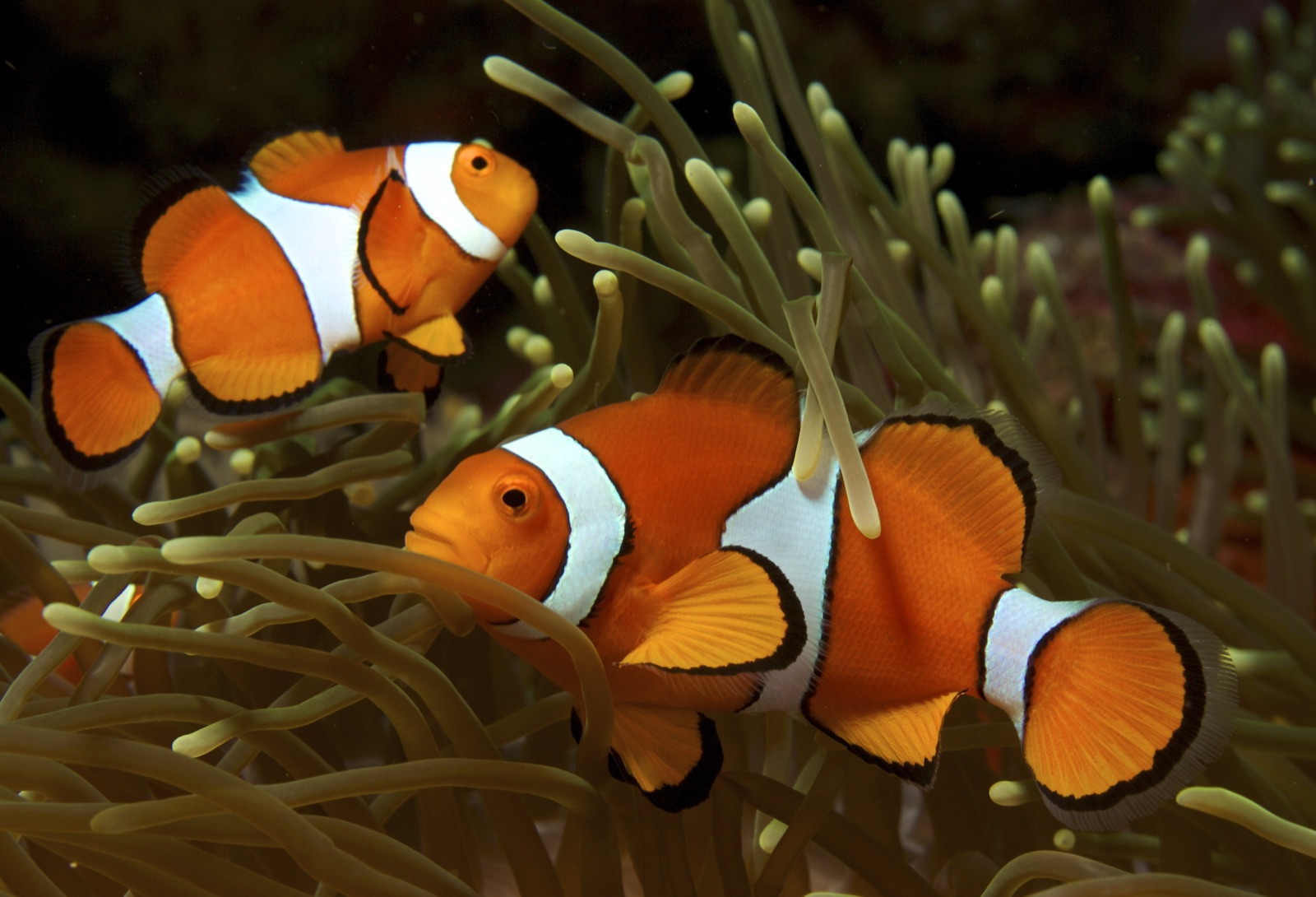
Clownfish & Anemonefish
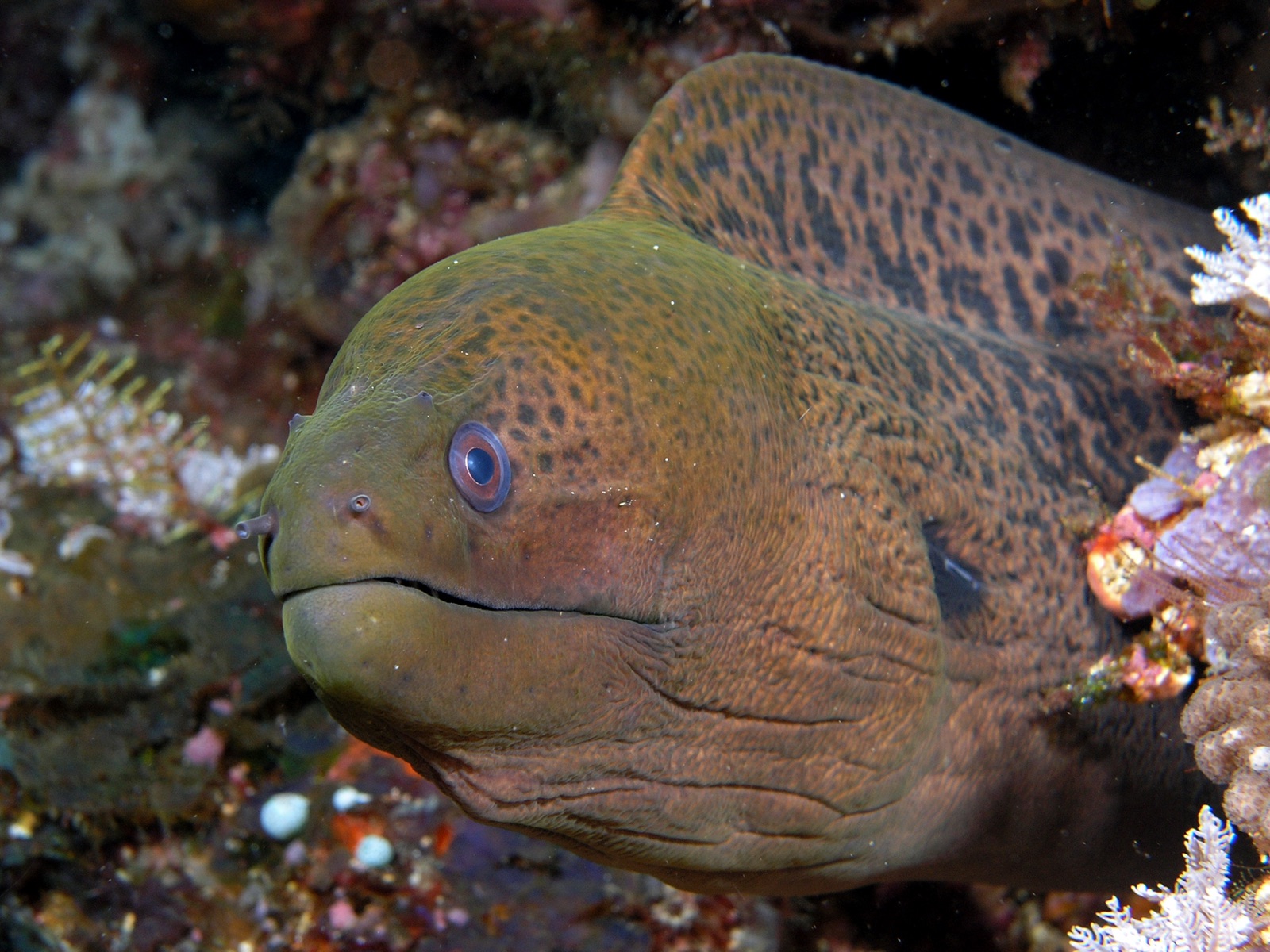
Giant Moray Eel
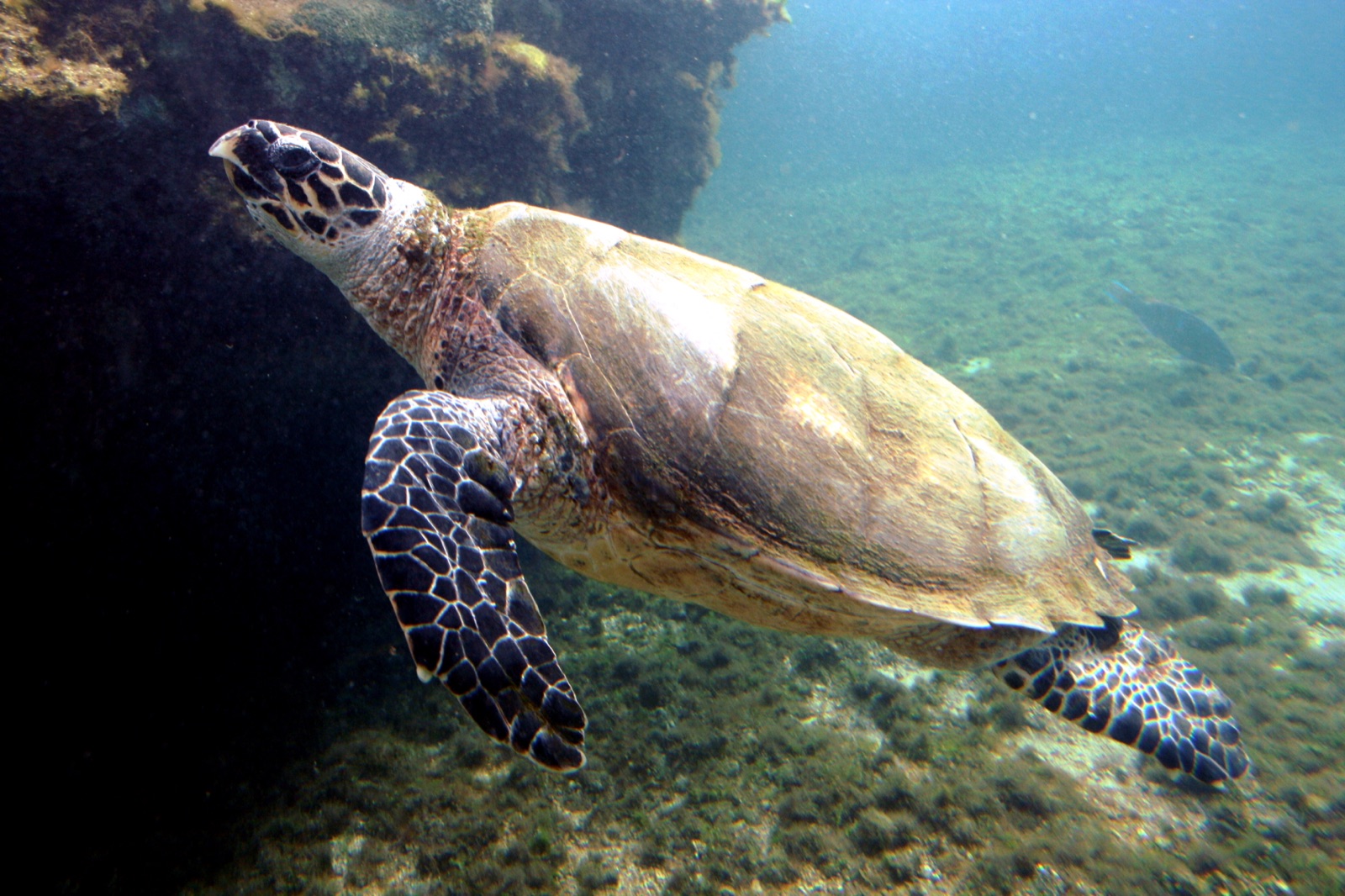
Hawksbill Turtle
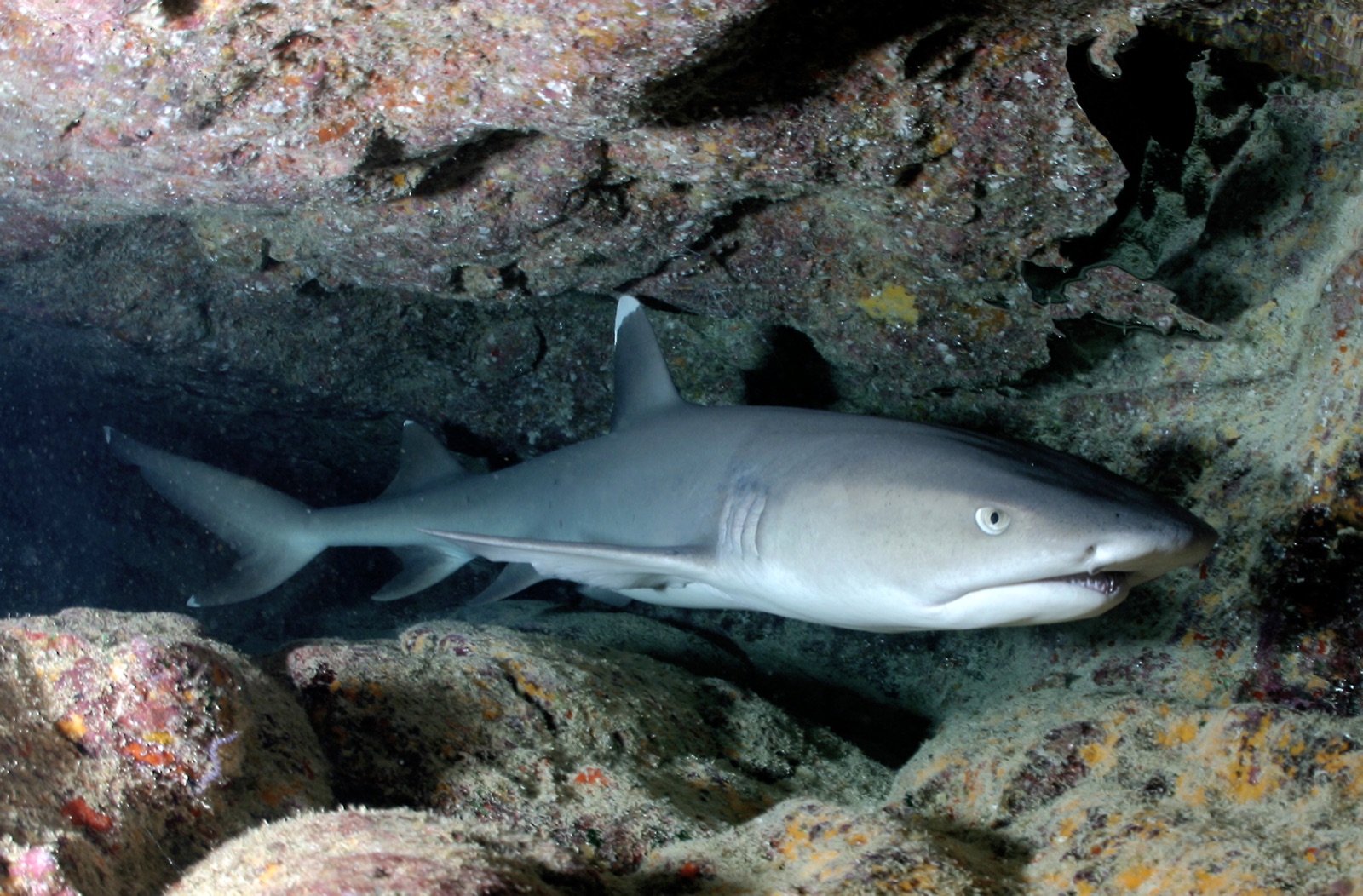
Whitetip Reef Shark
Les espèces « cartographiées ici » ont été répertoriées par nos éditeurs à partir des sources indiquées sur cette page. Les comptages correspondent aux occurrences GBIF : observations enregistrées dans un rayon d'environ 5 km autour de la position cartographiée depuis 1990, comparées uniquement aux espèces de notre catalogue. Ils indiquent ce qui a été observé à cet endroit, sans garantir ce que vous y verrez.
Pour les photographes
Grand angle: ★★★★★ · Macro: ★★☆☆☆ (note 1–5 des éditeurs sur ce que ce site offre à chaque style de prise de vue)