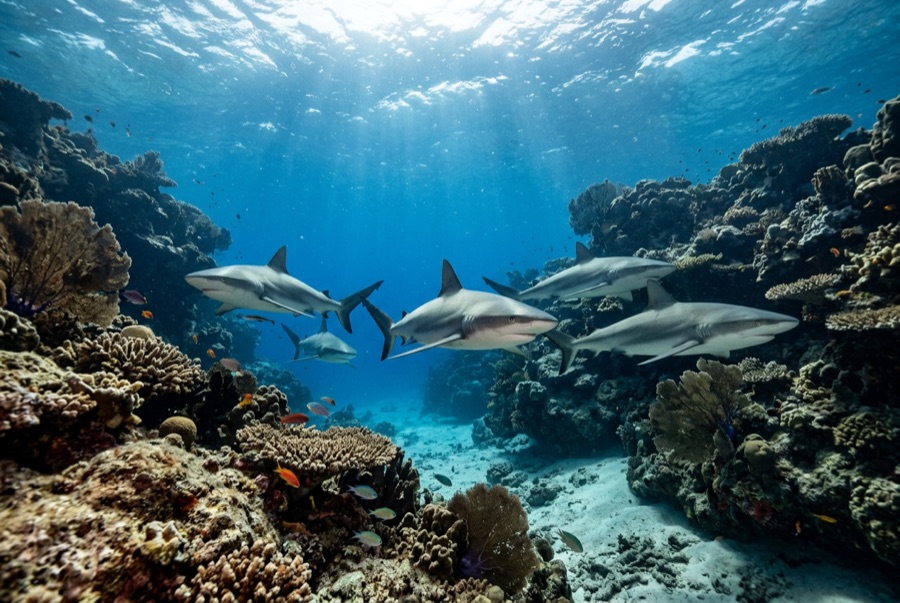
Goofnuw Channel
水深はサイト上部から通常の最大深度までの範囲です。「推奨資格」は多くのオペレーターが求めるメインストリームエージェンシーのレベルであり、法的な義務ではありません。潮流と透明度は日々変わるため、ここに記載の数値はあくまで計画のための目安としてお使いください。
When the northwest side goes quiet in the middle of the year, Yap's mantas commute to Goofnuw Channel on the island's opposite coast, and the dive follows them. The stretch guides call the Valley of the Rays holds a string of coral-head cleaning stations where mantas hover with gills flared while wrasses pick them over: slower, calmer behavior than the winter courtship, and often at shallower depths that stretch bottom time. Divers park on sand, cameras braced, and wait out the rotation as animals cycle between stations. Eagle rays and reef sharks pass through on the tide as supporting cast.
その瞬間のために: Cleaning-station manta encounters at their mid-year best; long, shallow observation time; eagle rays transiting the channel.
地形: Sandy channel with scattered coral heads worked by cleaner wrasse
流れ(カレント): Tide-driven; the incoming phase brings cleaner ocean water and the most manta activity.
エントリー: Northeast-coast channel reached through the mangroves from Colonia; dives set up on the cleaning stations inside.
エントリー前に知っておこう
危険生物・リスク: Tidal current; visibility drops on the outgoing phase; long boat-and-channel transit in weather.
保全: The cleaning stations are working infrastructure for the manta population: never rest on the coral heads or crowd an occupied station.
出会える生物
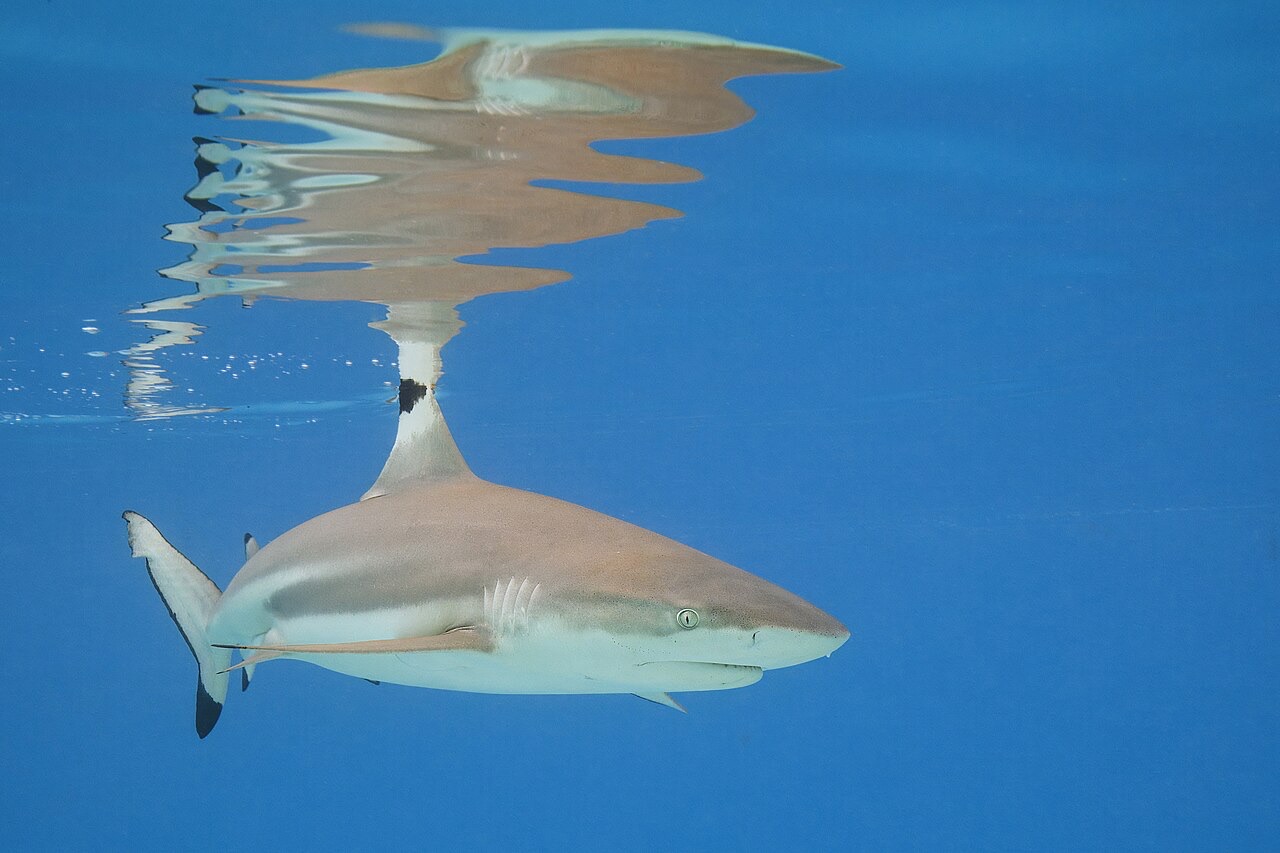
Blacktip Reef Shark
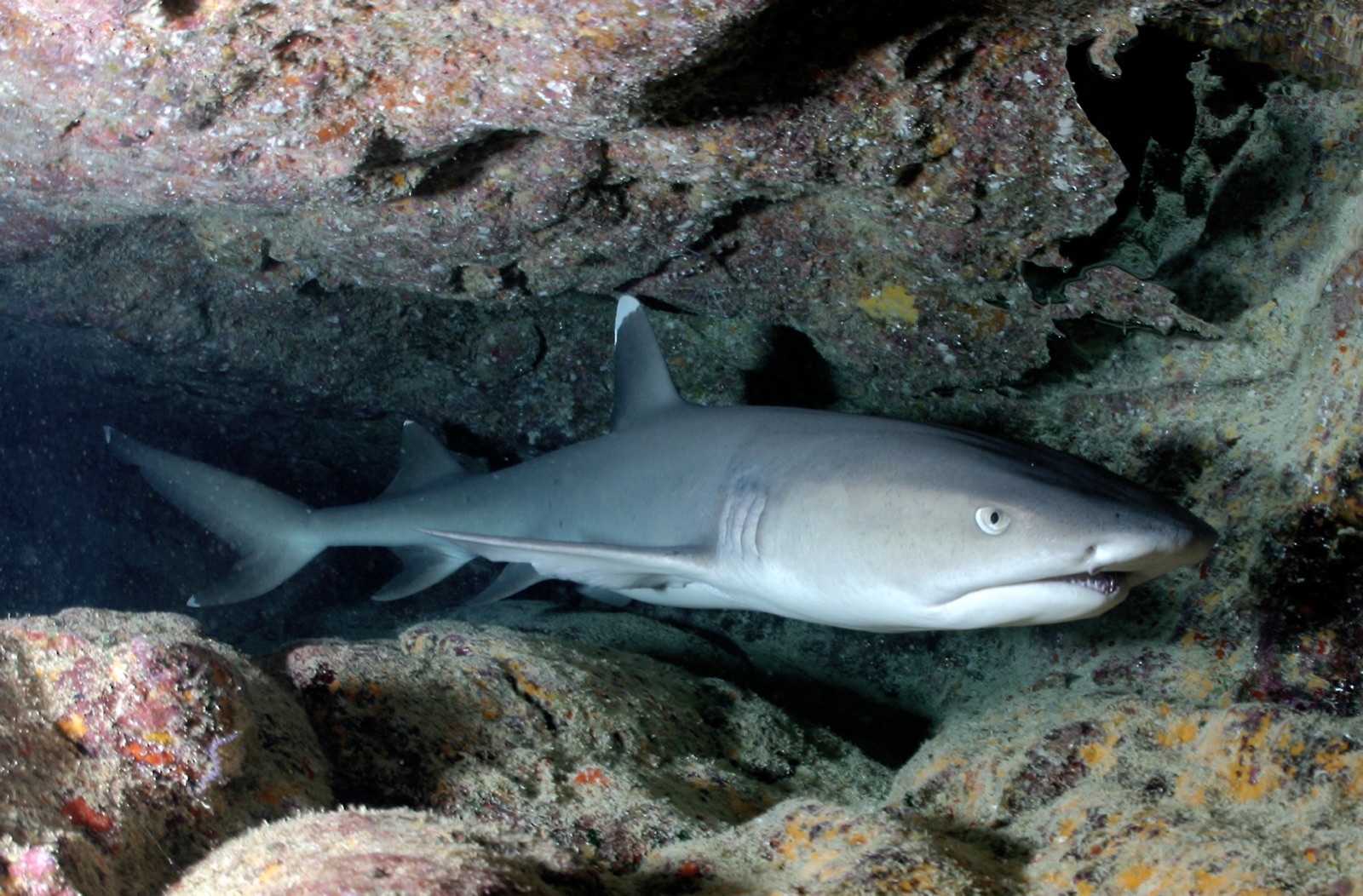
Whitetip Reef Shark
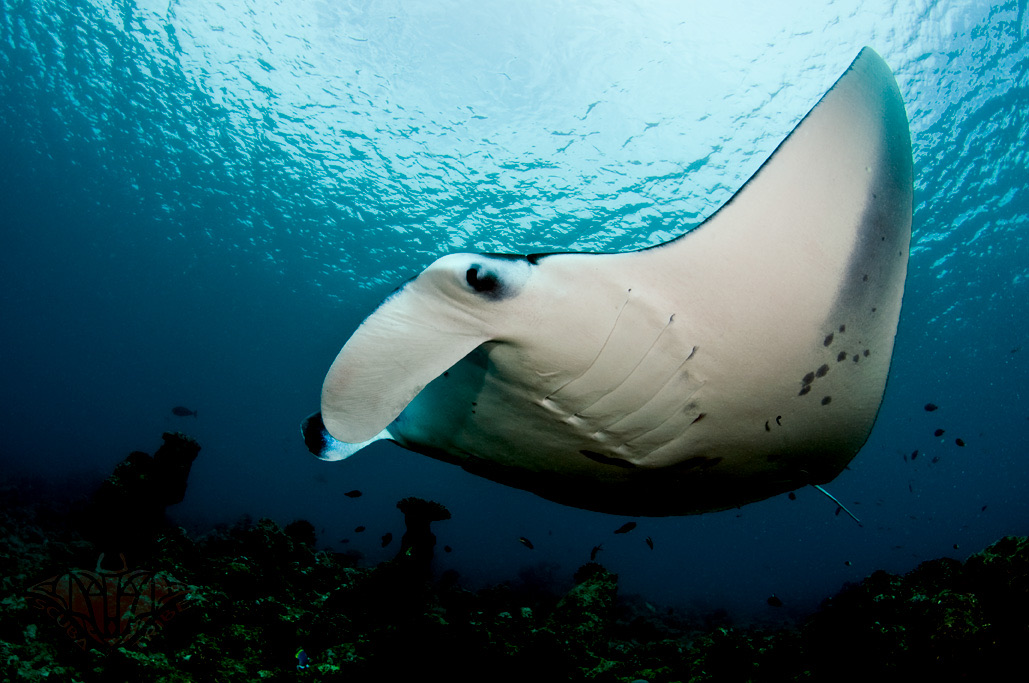
Reef Manta Ray
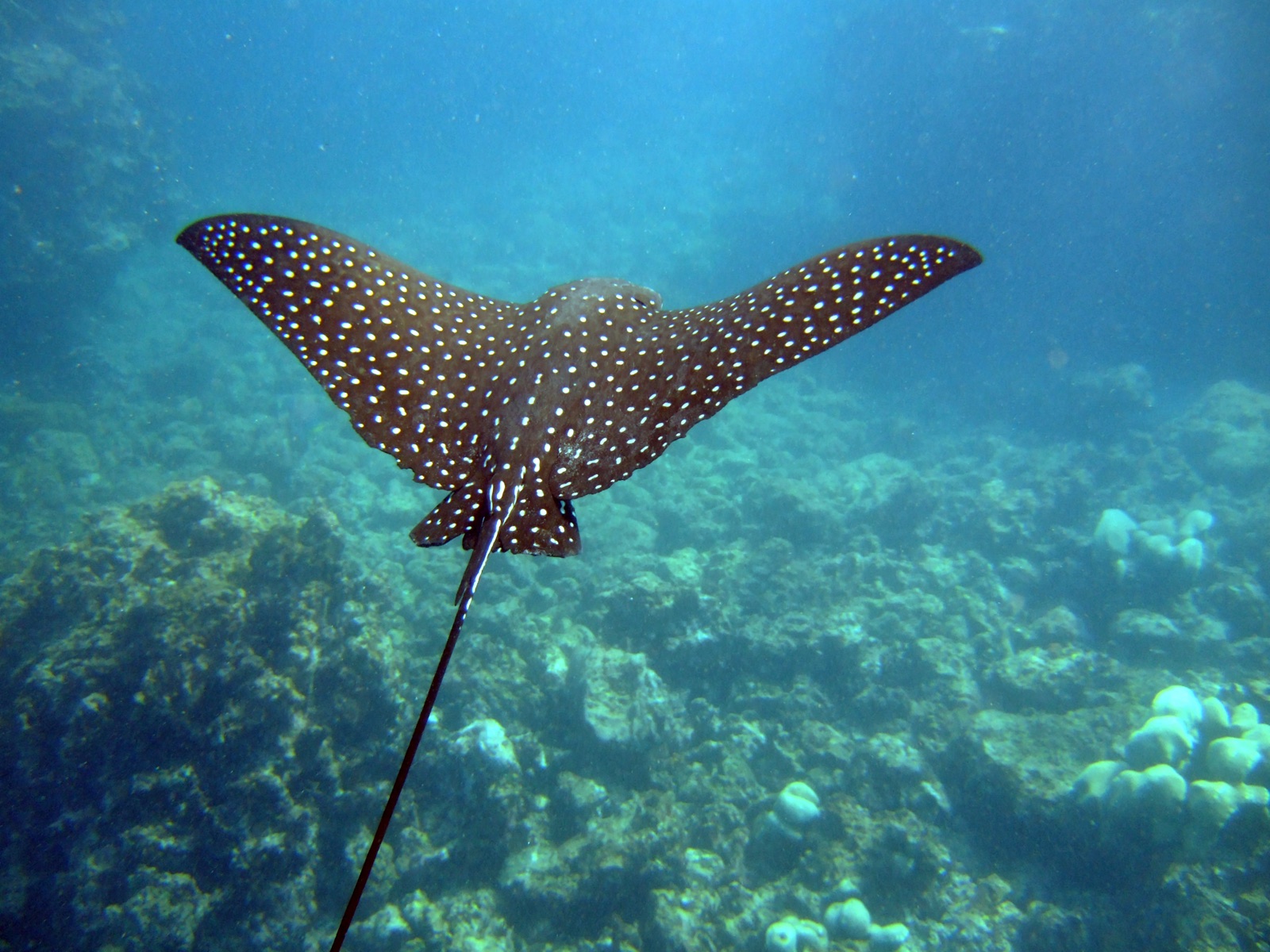
Spotted Eagle Ray
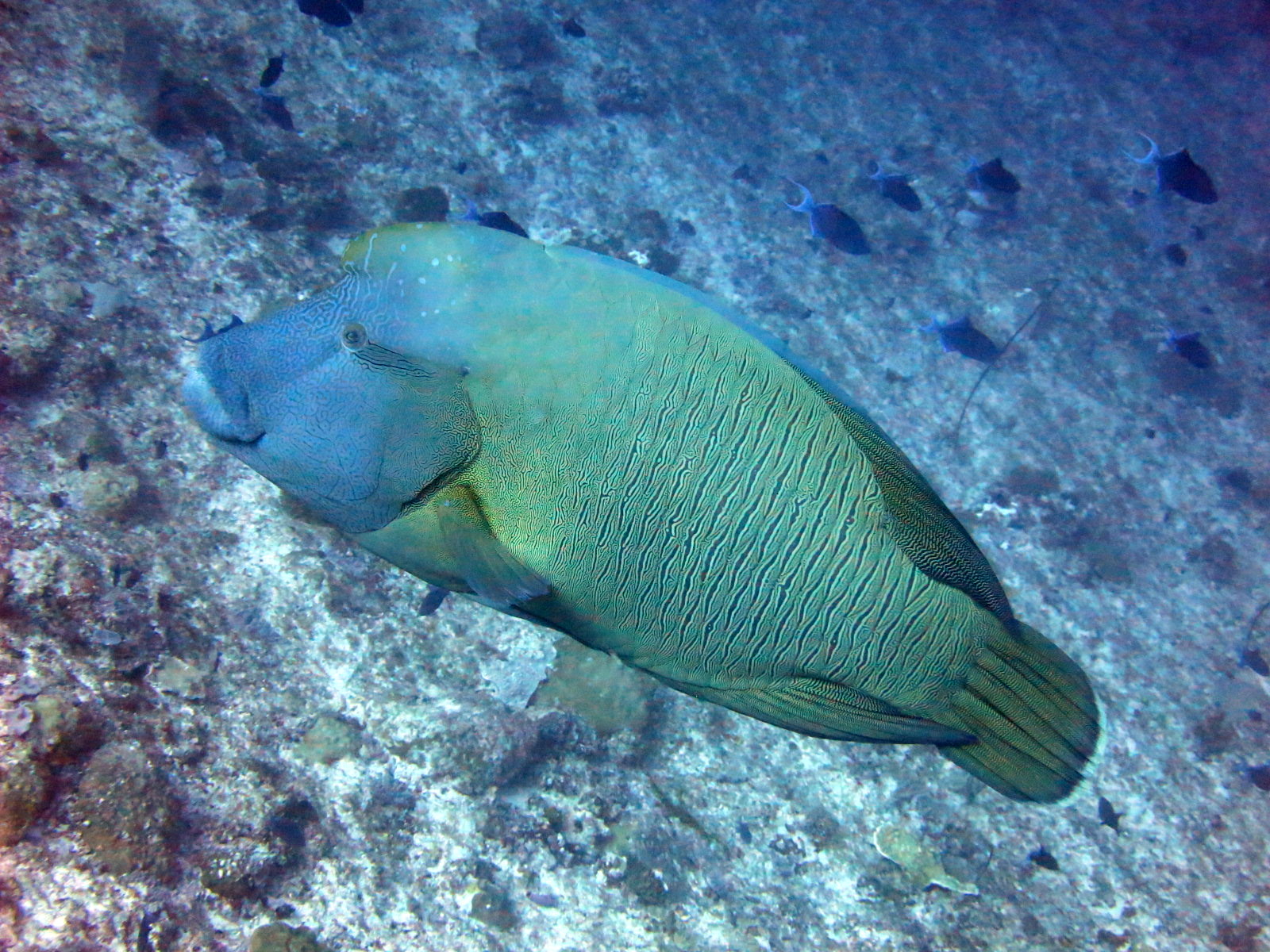
Napoleon (Humphead) Wrasse
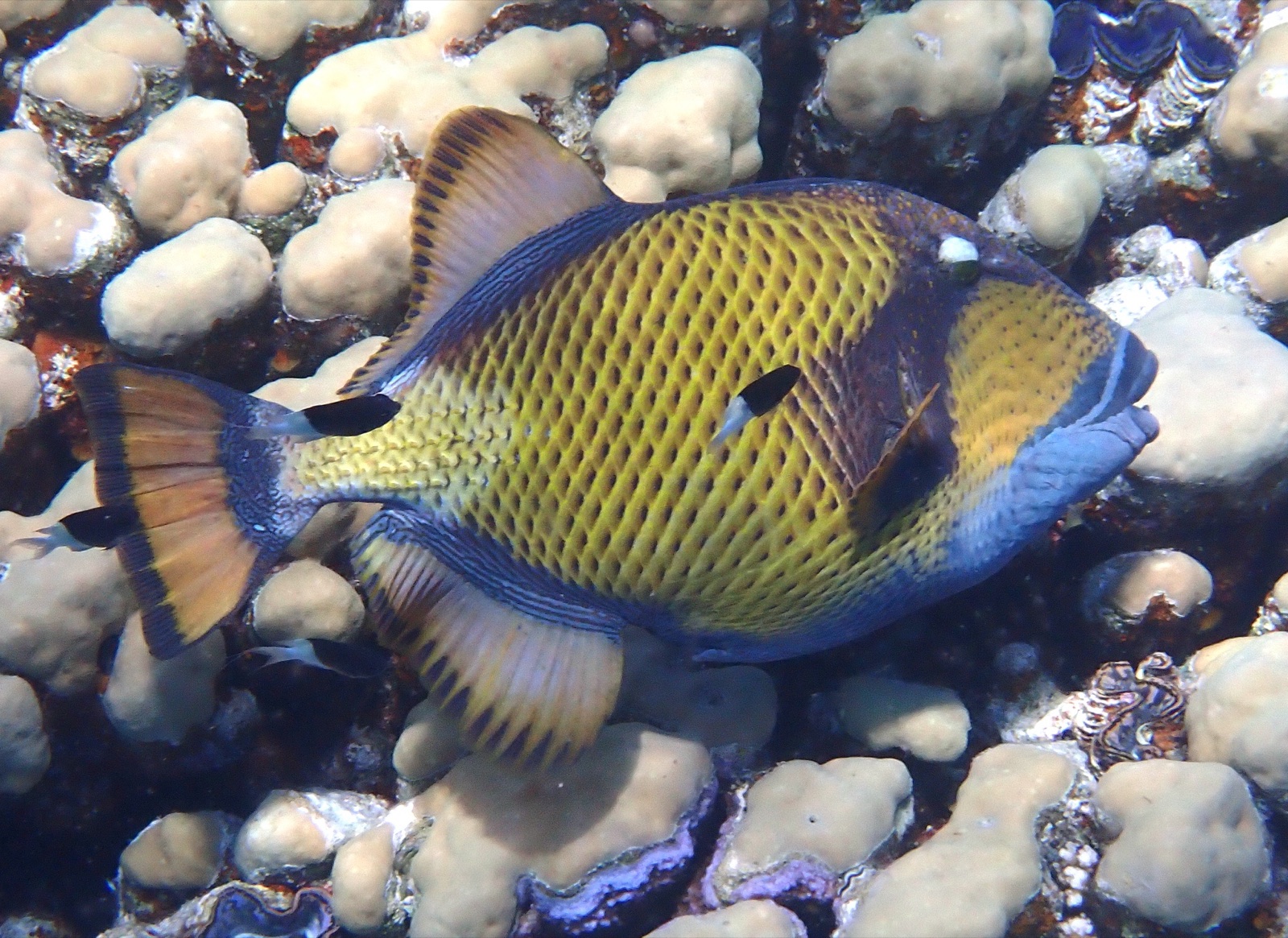
Titan Triggerfish
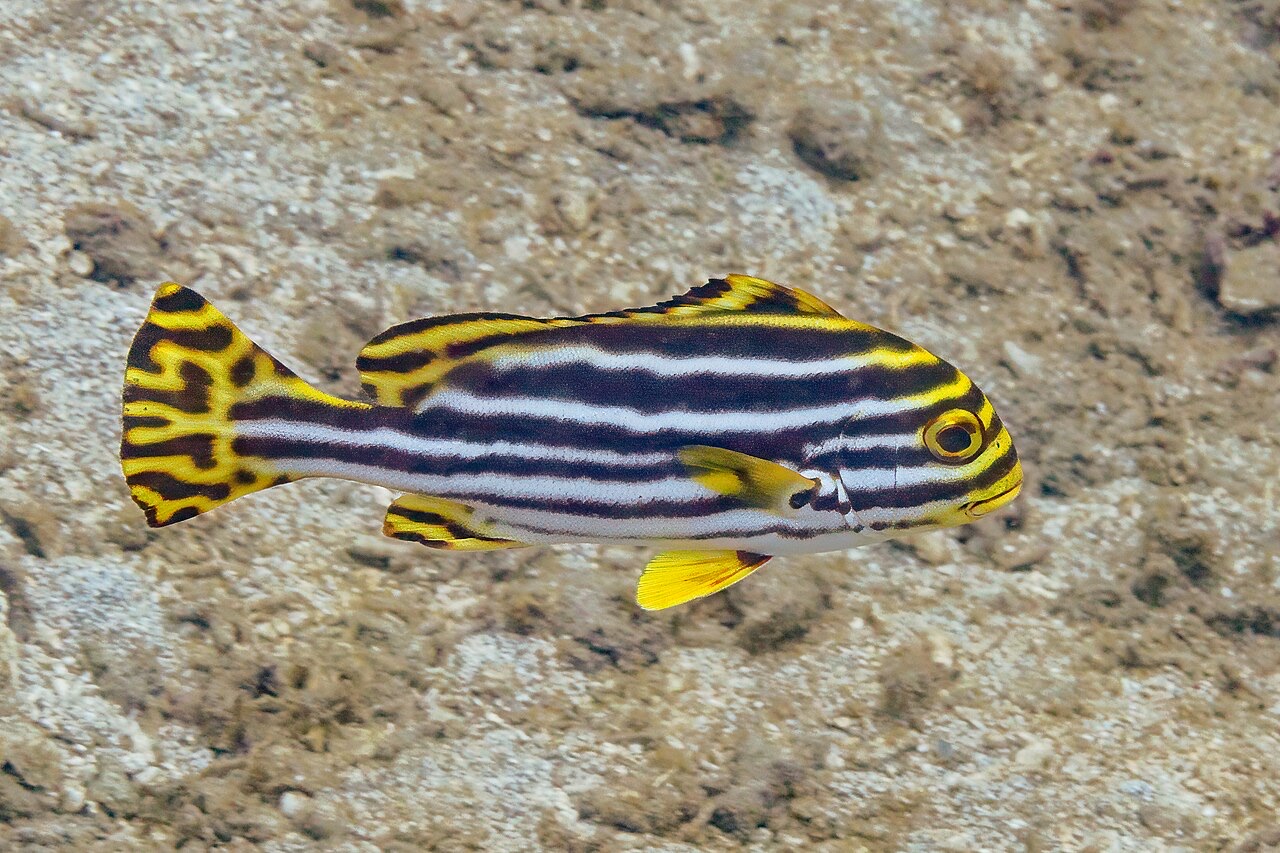
Oriental Sweetlips
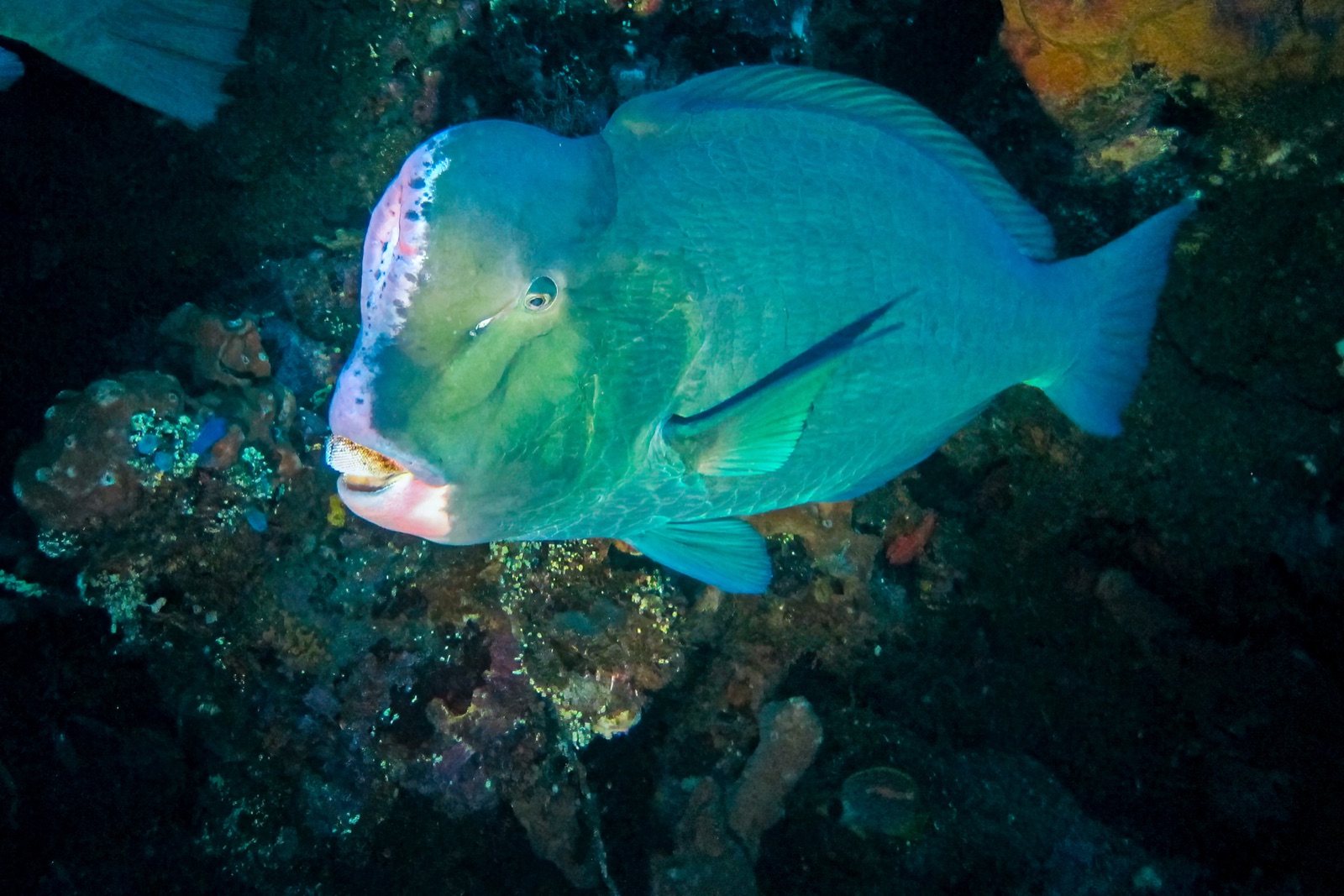
Bumphead Parrotfish
周辺でも記録あり
「ここに記載」の生物種は、このページの情報源をもとに編集部が登録したものです。件数はGBIFの出現記録数で、1990年以降に登録地点から約5km以内で記録された観察データのうち、当サイトのカタログ掲載種に一致したものです。そこで実際に目撃された記録であり、潜水時の遭遇を保証するものではありません。
水中フォトグラファー向け
ワイドアングル: ★★★★☆ · マクロ: ★☆☆☆☆ (各撮影スタイルに対するこのサイトの評価(編集部による1〜5点))