Turtles
Loggerhead Turtle
Caretta caretta · Marine reptile, family Cheloniidae
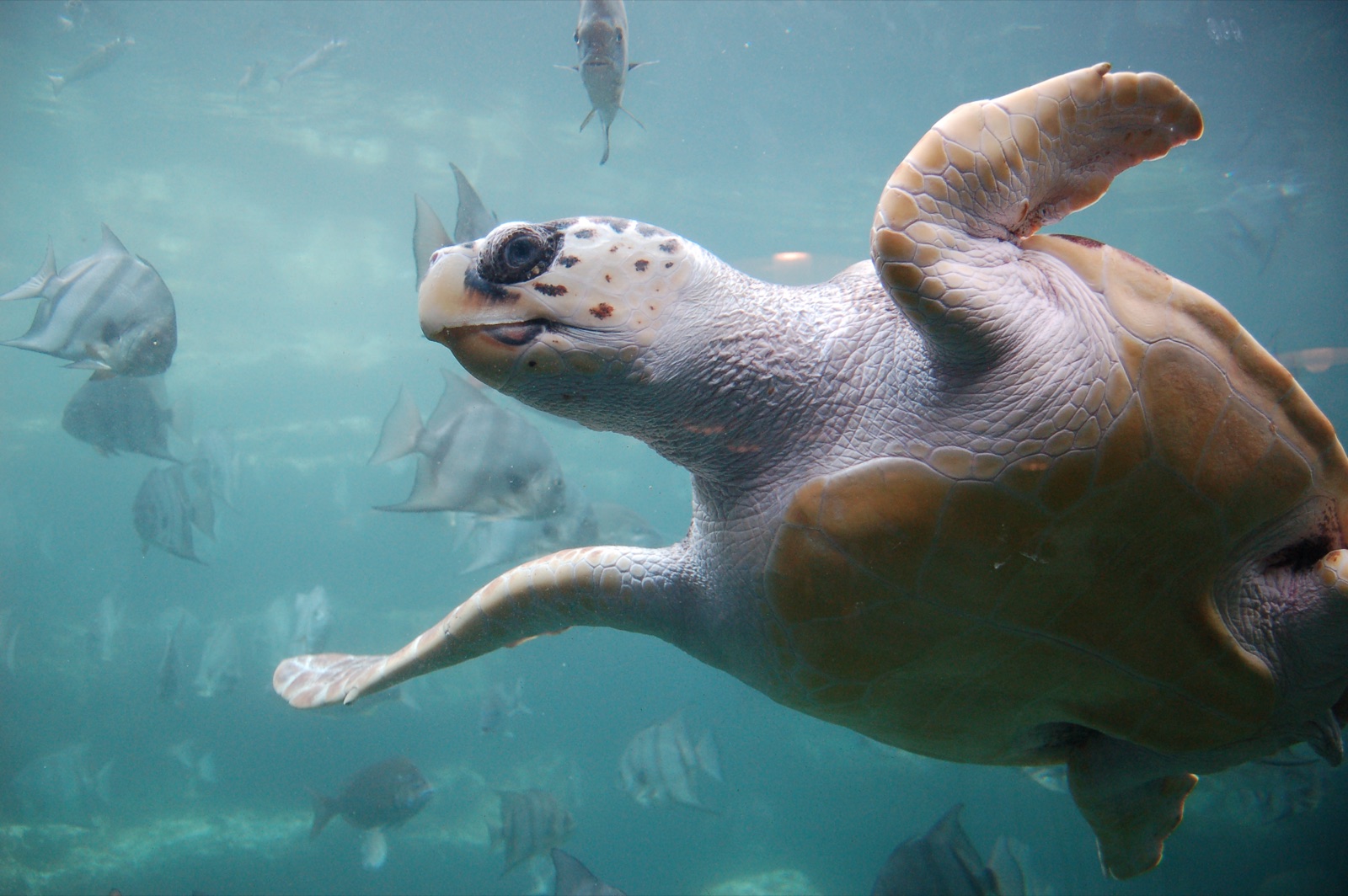
The loggerhead is the heavyweight journeyman of the turtle world: thick-necked, barrel-bodied, its outsized amber head built around jaws that crack conch like walnuts. Divers meet it in less glamorous places than its reef cousins: trudging across shell hash off Florida, wedged on a North Carolina wreck, cruising sandy gutters at Sodwana ahead of summer nesting. What it lacks in delicacy it repays in presence; a big female pushing past resembles slow-moving furniture and utterly ignores you. Its hatchlings ride ocean gyres for years (the 'lost years') before returning to coastal shallows, one of the great migration stories in the sea.
Dónde y cuándo ver uno
"Residente" significa que la mayoría de las inmersiones en ese destino tienen encuentros con ellos; "estacional" significa que su presencia es fiable en los meses indicados; cualquier otra cosa es un extra, no algo con lo que contar.
| Destino | Fiabilidad | Meses | Notas |
|---|---|---|---|
| Florida KeysUnited States | Resident: seen on most dives | Todo el año | |
| Sodwana BaySouth Africa | Seasonal: reliable in season | Nov–Feb | |
| Malta & GozoMalta | Occasional | Todo el año | |
| North Carolina Outer BanksUnited States | Occasional | May–Sep |
El mejor mes, de un vistazo
| Mes | Destinos fiables |
|---|---|
| January | Florida Keys · Sodwana Bay · Malta & Gozo |
| February | Florida Keys · Sodwana Bay · Malta & Gozo |
| March | Florida Keys · Malta & Gozo |
| April | Florida Keys · Malta & Gozo |
| May | Florida Keys · Malta & Gozo · North Carolina Outer Banks |
| June | Florida Keys · Malta & Gozo · North Carolina Outer Banks |
| July | Florida Keys · Malta & Gozo · North Carolina Outer Banks |
| August | Florida Keys · Malta & Gozo · North Carolina Outer Banks |
| September | Florida Keys · Malta & Gozo · North Carolina Outer Banks |
| October | Florida Keys · Malta & Gozo |
| November | Florida Keys · Sodwana Bay · Malta & Gozo |
| December | Florida Keys · Sodwana Bay · Malta & Gozo |
Comprendiéndolos
Hábitat: Hard bottoms, wrecks, ledges, and open shelf waters; less reef-bound than greens or hawksbills
Rango: Temperate and subtropical oceans worldwide: the US Atlantic coast, Mediterranean, southern Africa, Oman, Japan, and eastern Australia hold major nesting populations
Comportamiento: A powerful, big-headed cruiser often met plodding across open sand or hauled up on a wreck deck like a boulder with flippers. Less site-faithful underwater than reef turtles, it covers ocean basins between feeding and nesting grounds; barnacle-crusted shells testify to the mileage.
Dieta: Hard-shelled prey (conch, whelks, crabs, and urchins) crushed with massive jaw muscles housed in the oversized head
Tamaño: normalmente alrededor de 0.9 m; documentado hasta 1.1 m (carapace length; a heavily built turtle commonly well over 100 kg).
Cómo comportarse cerca de uno
Standard turtle rules: no touching or riding, clear path to the surface, and extra distance during nesting season near mating pairs, which are focused and easily stressed.
Conservación
Vulnerable; longline and trawl bycatch remains the central threat, answered in part by hook and excluder-device rules, while beach protection has stabilized several nesting populations.
Puntos conocidos por avistamientos
Los puntos destacados fueron registrados para esta especie por nuestros editores; los números son registros de ocurrencia de GBIF anotados en un radio de unos 5 km de un punto desde 1990.
Ver
Desde los canales oficiales

Wildlife of Monterey | New film in our auditorium

Live Aviary Cam | Monterey Bay Aquarium

Live Aviary Cam | Monterey Bay Aquarium
Los vídeos son enlaces insertados a los canales de sus propios creadores. No alojamos nada y acreditamos todo.