Turtles
Loggerhead Turtle
Caretta caretta · Marine reptile, family Cheloniidae
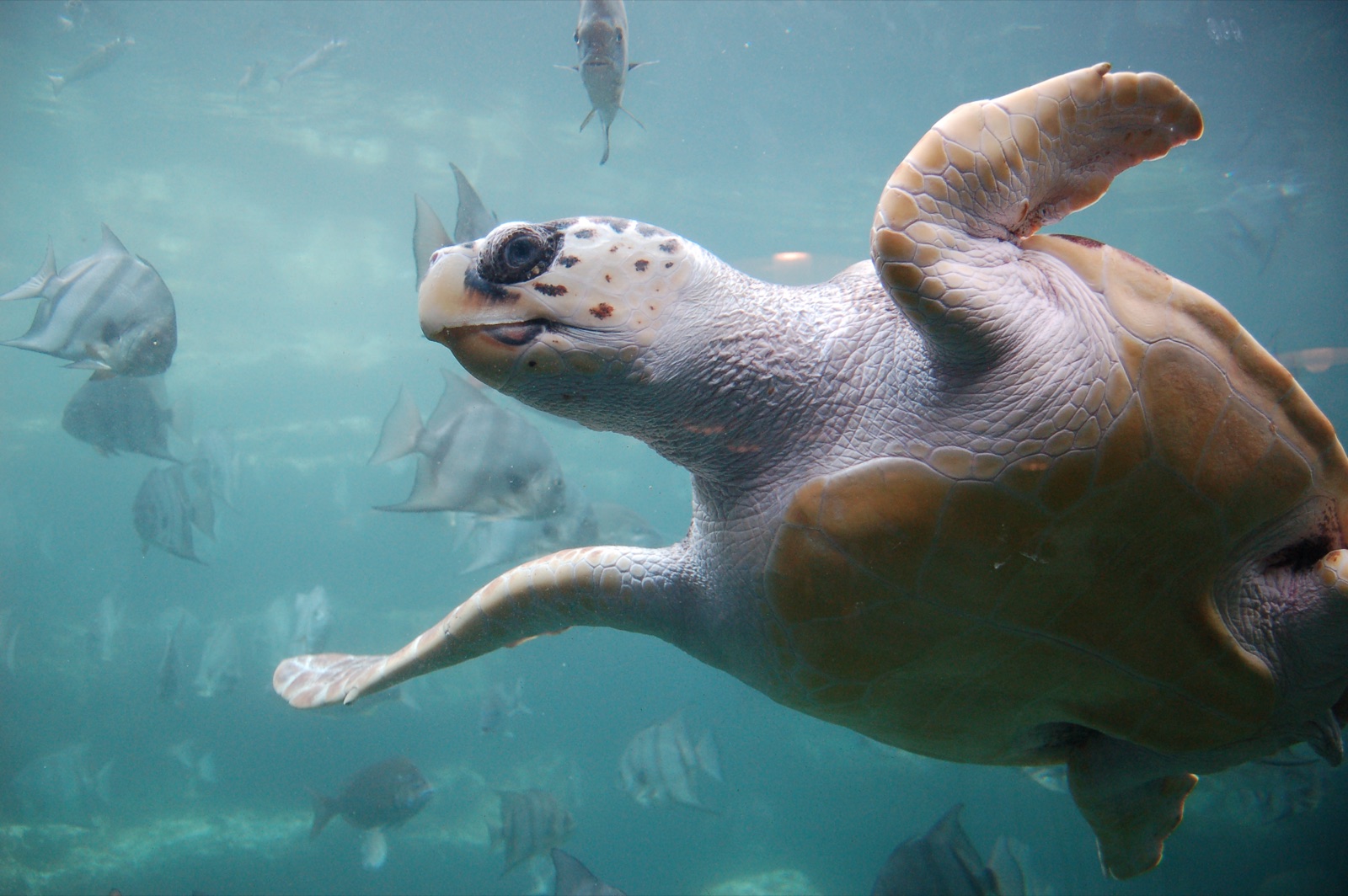
The loggerhead is the heavyweight journeyman of the turtle world: thick-necked, barrel-bodied, its outsized amber head built around jaws that crack conch like walnuts. Divers meet it in less glamorous places than its reef cousins: trudging across shell hash off Florida, wedged on a North Carolina wreck, cruising sandy gutters at Sodwana ahead of summer nesting. What it lacks in delicacy it repays in presence; a big female pushing past resembles slow-moving furniture and utterly ignores you. Its hatchlings ride ocean gyres for years (the 'lost years') before returning to coastal shallows, one of the great migration stories in the sea.
Onde e quando ver um
"Residente" significa que a maioria dos mergulhos naquele destino os encontra; "sazonal" significa presença confiável nos meses listados; qualquer outra coisa é um bônus, não um plano.
| Destino | Fiabilidade | Meses | Notas |
|---|---|---|---|
| Florida KeysUnited States | Resident: seen on most dives | Todo o ano | |
| Sodwana BaySouth Africa | Seasonal: reliable in season | Nov–Feb | |
| Malta & GozoMalta | Occasional | Todo o ano | |
| North Carolina Outer BanksUnited States | Occasional | May–Sep |
Melhor mês, em resumo
| Mês | Destinos fiáveis |
|---|---|
| January | Florida Keys · Sodwana Bay · Malta & Gozo |
| February | Florida Keys · Sodwana Bay · Malta & Gozo |
| March | Florida Keys · Malta & Gozo |
| April | Florida Keys · Malta & Gozo |
| May | Florida Keys · Malta & Gozo · North Carolina Outer Banks |
| June | Florida Keys · Malta & Gozo · North Carolina Outer Banks |
| July | Florida Keys · Malta & Gozo · North Carolina Outer Banks |
| August | Florida Keys · Malta & Gozo · North Carolina Outer Banks |
| September | Florida Keys · Malta & Gozo · North Carolina Outer Banks |
| October | Florida Keys · Malta & Gozo |
| November | Florida Keys · Sodwana Bay · Malta & Gozo |
| December | Florida Keys · Sodwana Bay · Malta & Gozo |
Entendendo-os
Habitat: Hard bottoms, wrecks, ledges, and open shelf waters; less reef-bound than greens or hawksbills
Distribuição: Temperate and subtropical oceans worldwide: the US Atlantic coast, Mediterranean, southern Africa, Oman, Japan, and eastern Australia hold major nesting populations
Comportamento: A powerful, big-headed cruiser often met plodding across open sand or hauled up on a wreck deck like a boulder with flippers. Less site-faithful underwater than reef turtles, it covers ocean basins between feeding and nesting grounds; barnacle-crusted shells testify to the mileage.
Dieta: Hard-shelled prey (conch, whelks, crabs, and urchins) crushed with massive jaw muscles housed in the oversized head
Tamanho: normalmente cerca de 0.9 m; documentado até 1.1 m (carapace length; a heavily built turtle commonly well over 100 kg).
Como se comportar perto de um
Standard turtle rules: no touching or riding, clear path to the surface, and extra distance during nesting season near mating pairs, which are focused and easily stressed.
Conservação
Vulnerable; longline and trawl bycatch remains the central threat, answered in part by hook and excluder-device rules, while beach protection has stabilized several nesting populations.
Pontos mapeados conhecidos por eles
Os locais destacados foram cartografados para esta espécie pelos nossos editores; os números são registos de ocorrência do GBIF num raio de cerca de 5 km do local desde 1990.
Assista
Dos canais oficiais

Wildlife of Monterey | New film in our auditorium

Live Aviary Cam | Monterey Bay Aquarium

Live Aviary Cam | Monterey Bay Aquarium
Os vídeos são ligações incorporadas para os canais dos próprios criadores. Não alojamos nada e creditamos tudo.