Reef Fish
Porcupinefish
Diodon hystrix · Bony fish, family Diodontidae (porcupinefishes); the spot-fin porcupinefish, largest of the family
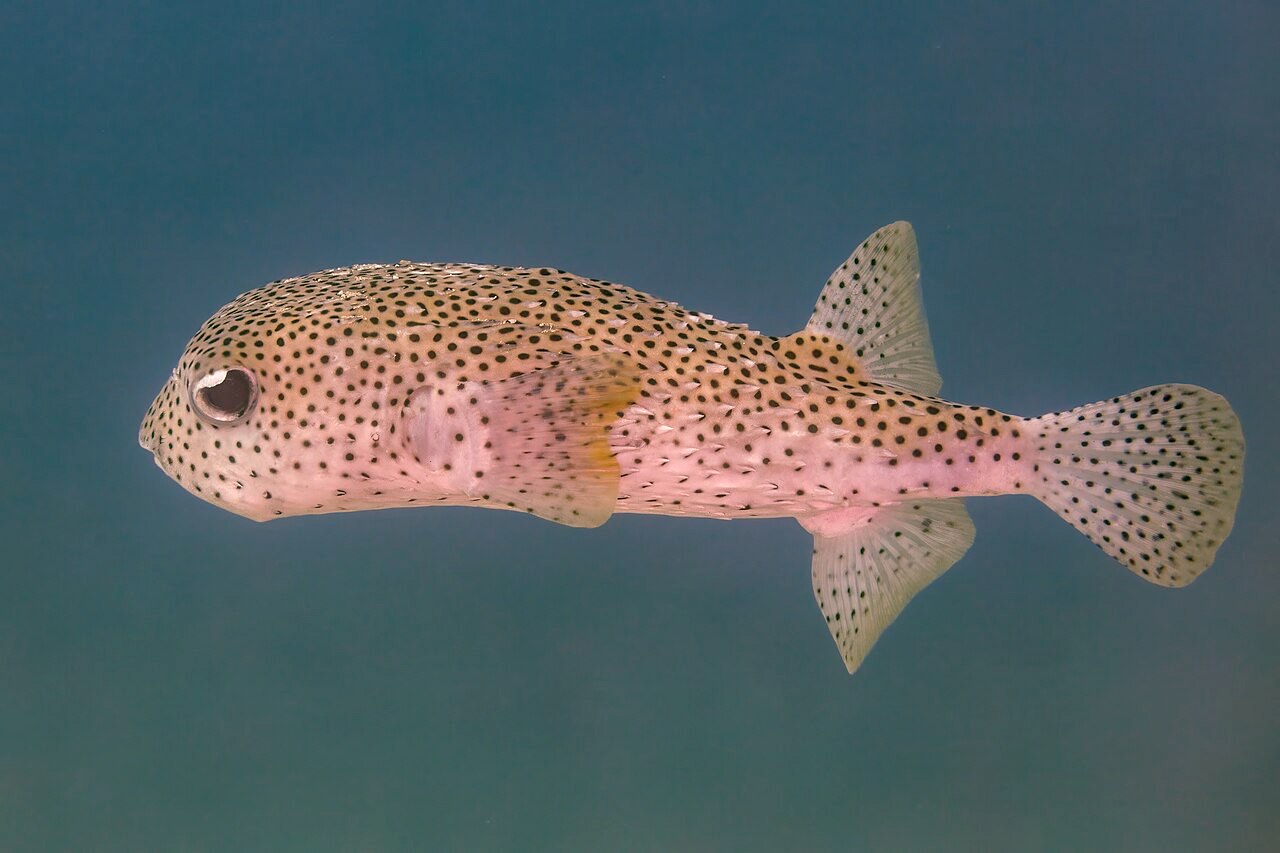
By day a porcupinefish idles under ledges like a parked balloon with oversized, wet eyes: approachable, unhurried, and endearingly awkward, all of which reflects a defense budget spent elsewhere. The body is armored in spines that lie flat until the fish gulps water and inflates into a sphere too large and too spiky to swallow; its tissues can also carry tetrodotoxin. That armory frees it to be calm around divers. Night is the working shift, when it cruises sand and reef cracking urchins, crabs, and mollusks with fused, beak-like tooth plates. The spot-fin porcupinefish is the giant of the family and circles the tropics worldwide, turning up from Caribbean wrecks to Red Sea coral gardens. Never provoke inflation: the display costs the animal dearly, and a stressed fish can swallow air at the surface and die.
Where and when to see one
"Resident" means most dives at that destination encounter them; "seasonal" means reliably present in the listed months; anything else is a bonus, not a plan.
| Destination | Reliability | Months | Notes |
|---|---|---|---|
| CozumelMexico | Resident: seen on most dives | Year-round | |
| BonaireBonaire | Resident: seen on most dives | Year-round | |
| Sharm El Sheikh & Ras MohammedEgypt | Resident: seen on most dives | Year-round | |
| North & South Malé AtollsMaldives | Resident: seen on most dives | Year-round | |
| RoatánHonduras | Resident: seen on most dives | Year-round | |
| Kona, HawaiʻiUnited States | Resident: seen on most dives | Year-round |
Best month, at a glance
Understanding them
Habitat: Ledges, caves, and wreck interiors by day; sand flats, seagrass, and reef margins on night forays.
Range: Circumtropical: Caribbean and western Atlantic, eastern Pacific, Indo-Pacific, and Red Sea.
Behavior: Docile and slow by day, idling under cover; inflates by gulping water into an elastic stomach only as a last resort, erecting spines that lie flat the rest of the time.
Diet: Sea urchins, crabs, and hard-shelled mollusks crushed with fused, beak-like tooth plates at night.
Size: typically around 0.4 m; documented up to 0.9 m (total length; most reef encounters are 30–50 cm fish).
How to behave around one
Approach slowly at eye level and enjoy the stare; never grab, chase, or pin one to trigger the balloon display.
Conservation
Widespread and secure; some are dried and sold inflated as curios, a trade worth refusing.
Charted sites known for them
Highlighted sites were charted for this species by our editors; numbers are GBIF occurrence records logged within about 5 km of a site since 1990.
Watch
From the official channels

Wildlife of Monterey | New film in our auditorium

Live Aviary Cam | Monterey Bay Aquarium

Live Aviary Cam | Monterey Bay Aquarium
Videos are embedded links to their creators' own channels. We host nothing and credit everything.