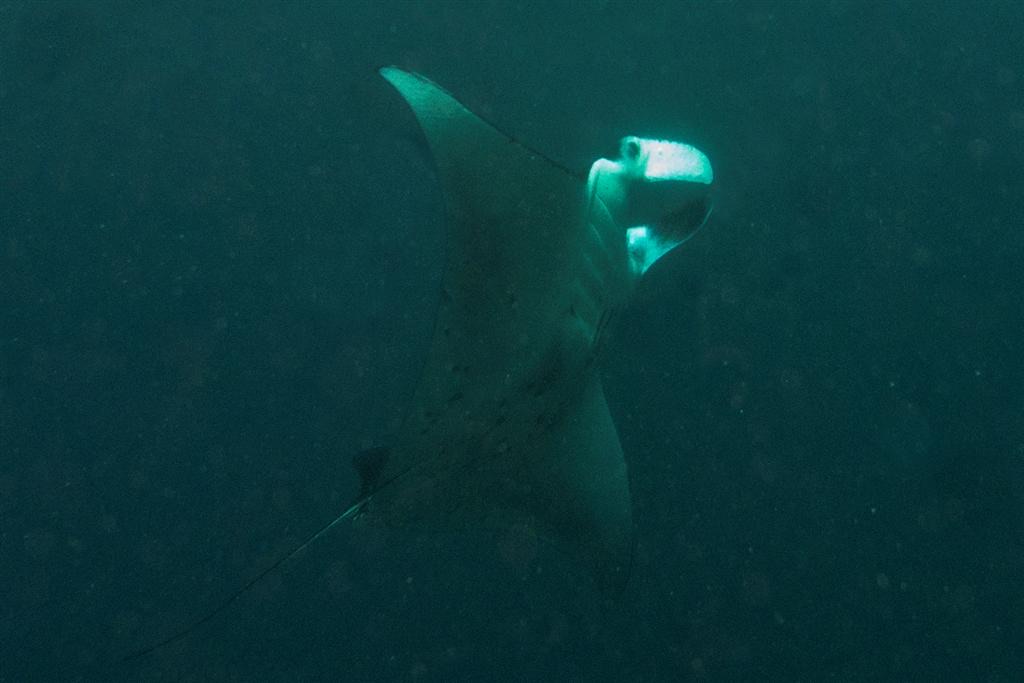
Manta Point (Nusa Penida)
La profundidad es el rango desde la cima del punto de buceo hasta su máximo habitual; la "certificación recomendada" es el nivel que los operadores suelen pedir según las agencias principales, no una norma legal. Las corrientes y la visibilidad cambian a diario, así que trata todo esto como rangos de planificación.
Under the limestone cliffs of southern Nusa Penida, reef mantas keep office hours at Batu Lumbung nearly every day of the year. They circle the cleaning bommies in slow, banking loops, sometimes three or four in view at once, and in plankton-thick periods they switch to barrel-rolling feeding runs at the surface, to the delight of snorkelers. The diving itself is simple: modest depth, a defined circuit, and long waits rewarded by animals with four-meter wingspans passing close enough to fill a fisheye frame. Swell is the gatekeeper, surging over the boulders and occasionally shutting the site for days. Sightings are about as dependable as wild megafauna gets.
El momento por el que vienes: Near-year-round reef mantas; surface feeding behavior; occasional mola cameo in season.
Topografía: Boulder-strewn limestone reef beneath sea cliffs, with several coral-head cleaning stations.
Corriente: Current is usually manageable; the real variable is Indian Ocean swell against the cliffs, which can cancel the trip outright.
Lo que debes saber antes de tirarte al agua
Riesgos: Ocean swell and surge against shallow rock; seasickness on the ride is practically part of the itinerary.
Conservación: The area sits inside the Nusa Penida MPA; operators follow a manta code of conduct and rotate boats at the mooring in busy periods.
A quién encontrarás
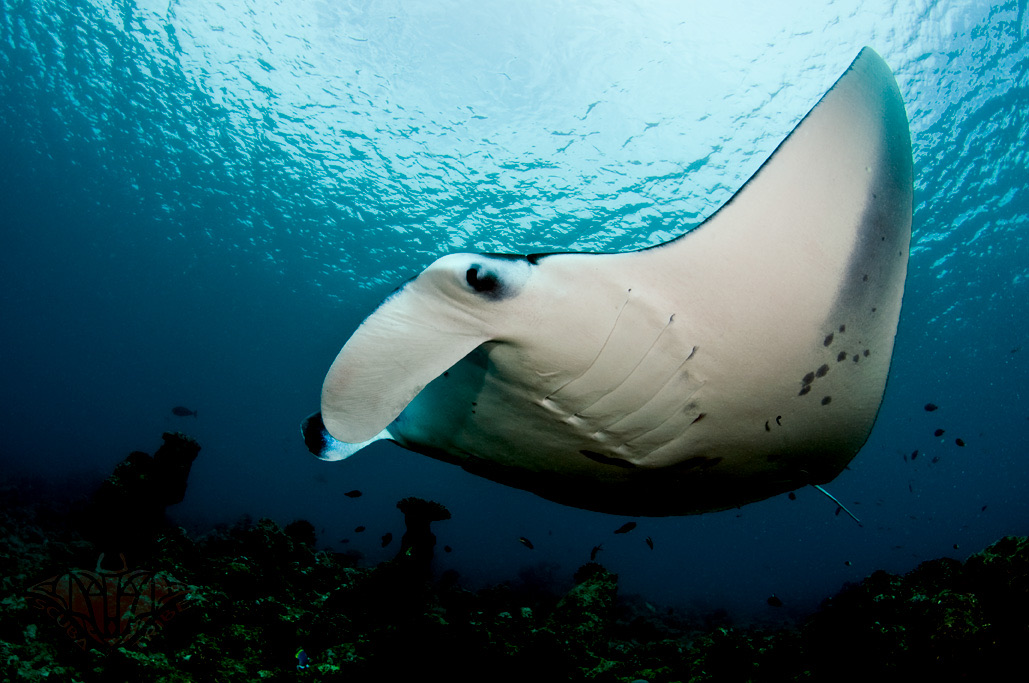
Reef Manta Ray
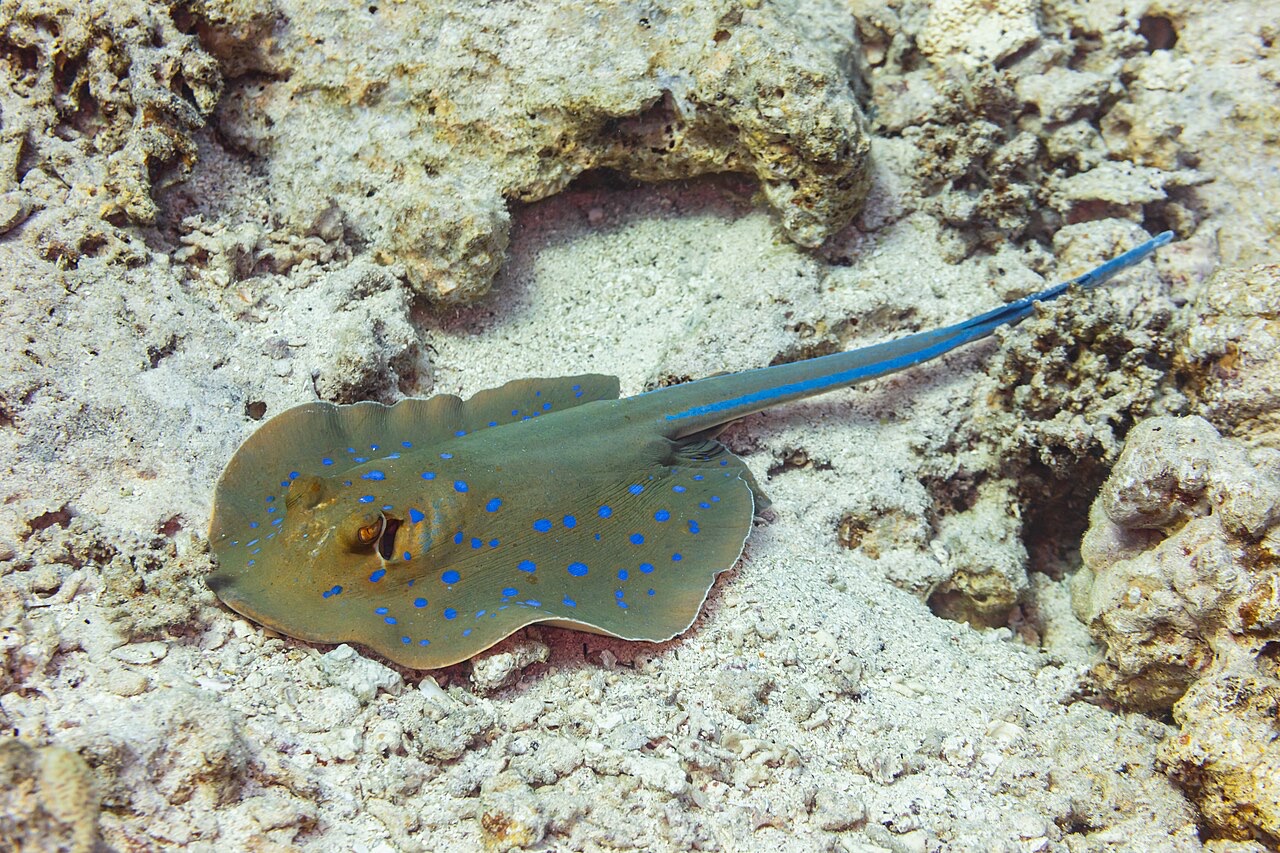
Blue-Spotted Ribbontail Ray
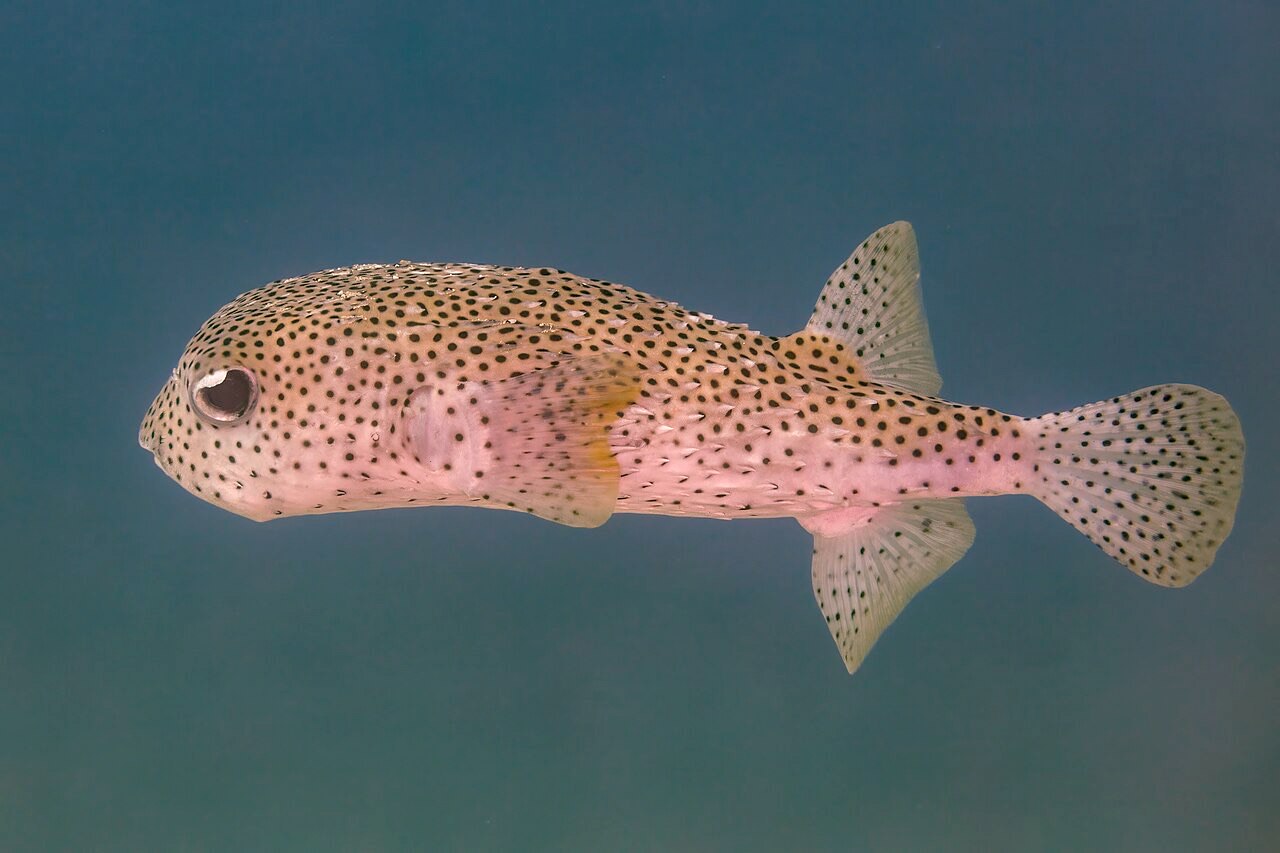
Porcupinefish
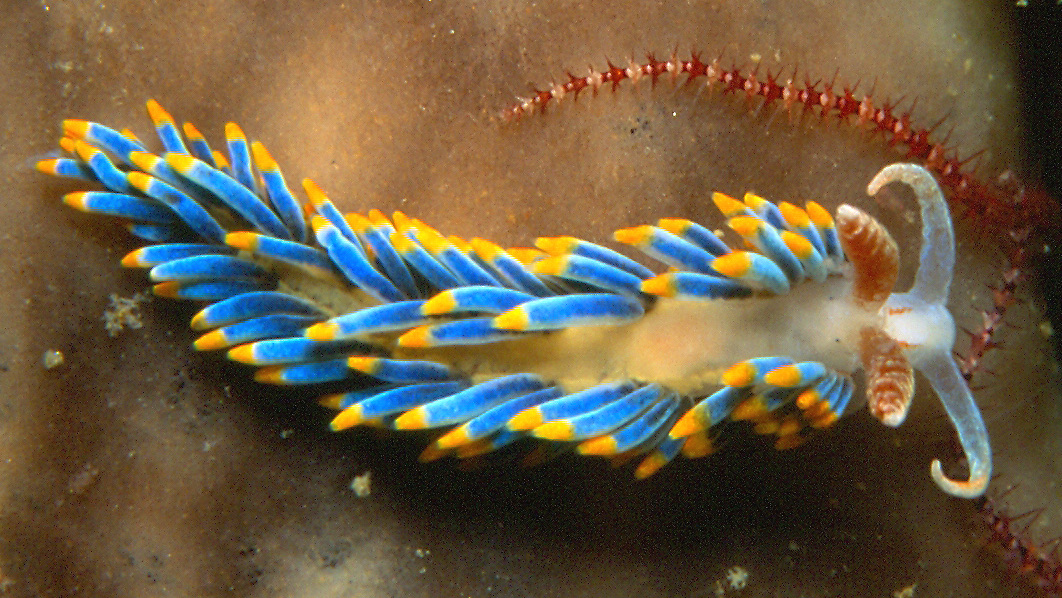
Nudibranchs
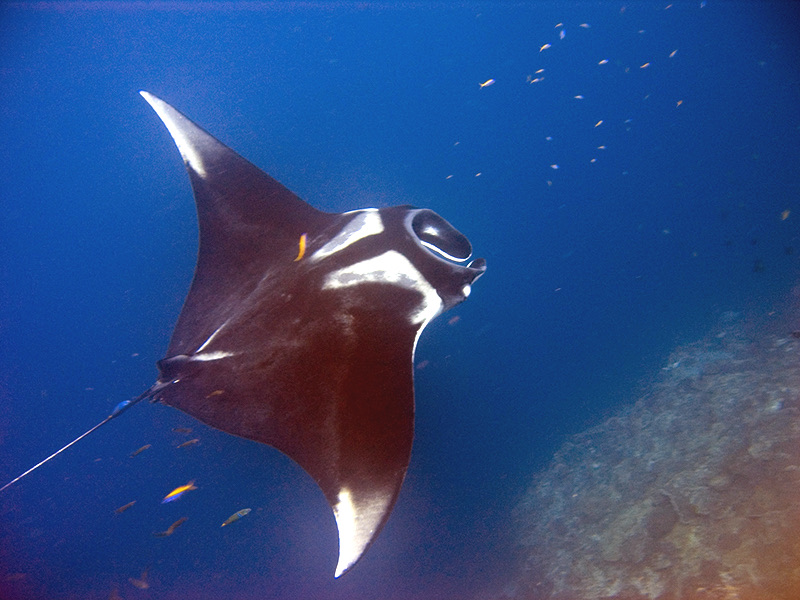
Oceanic Manta Ray
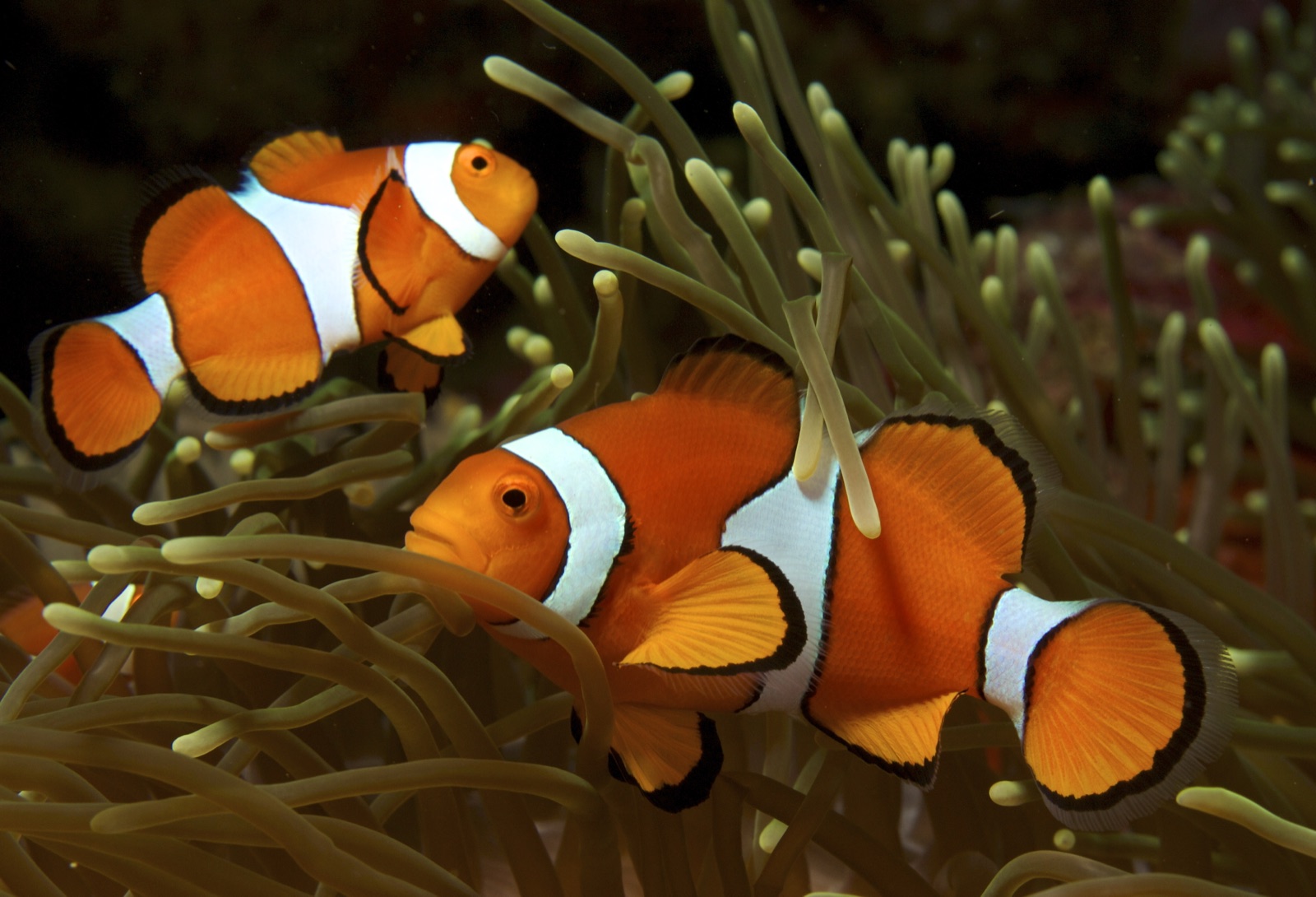
Clownfish & Anemonefish
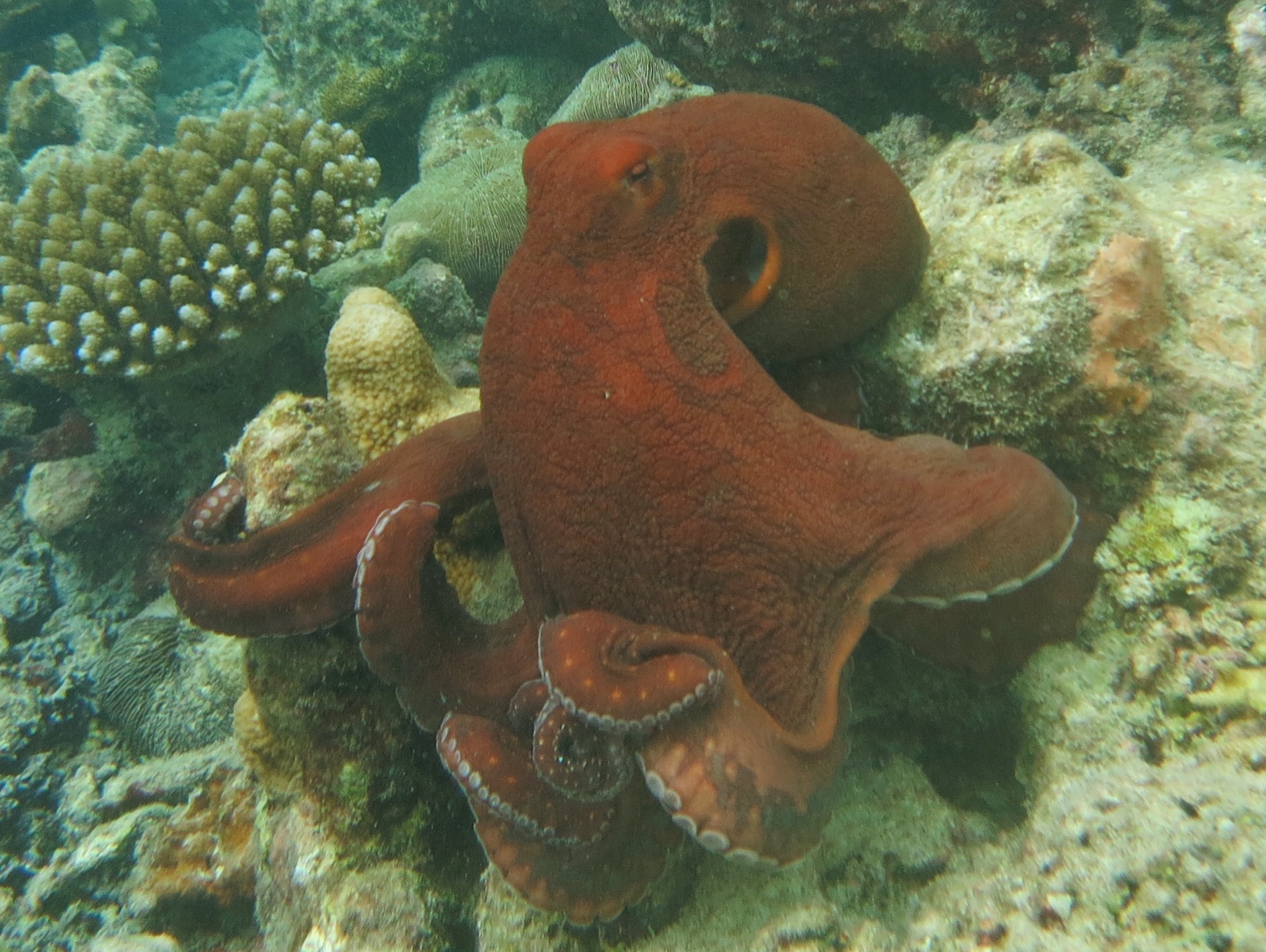
Common Reef (Day) Octopus
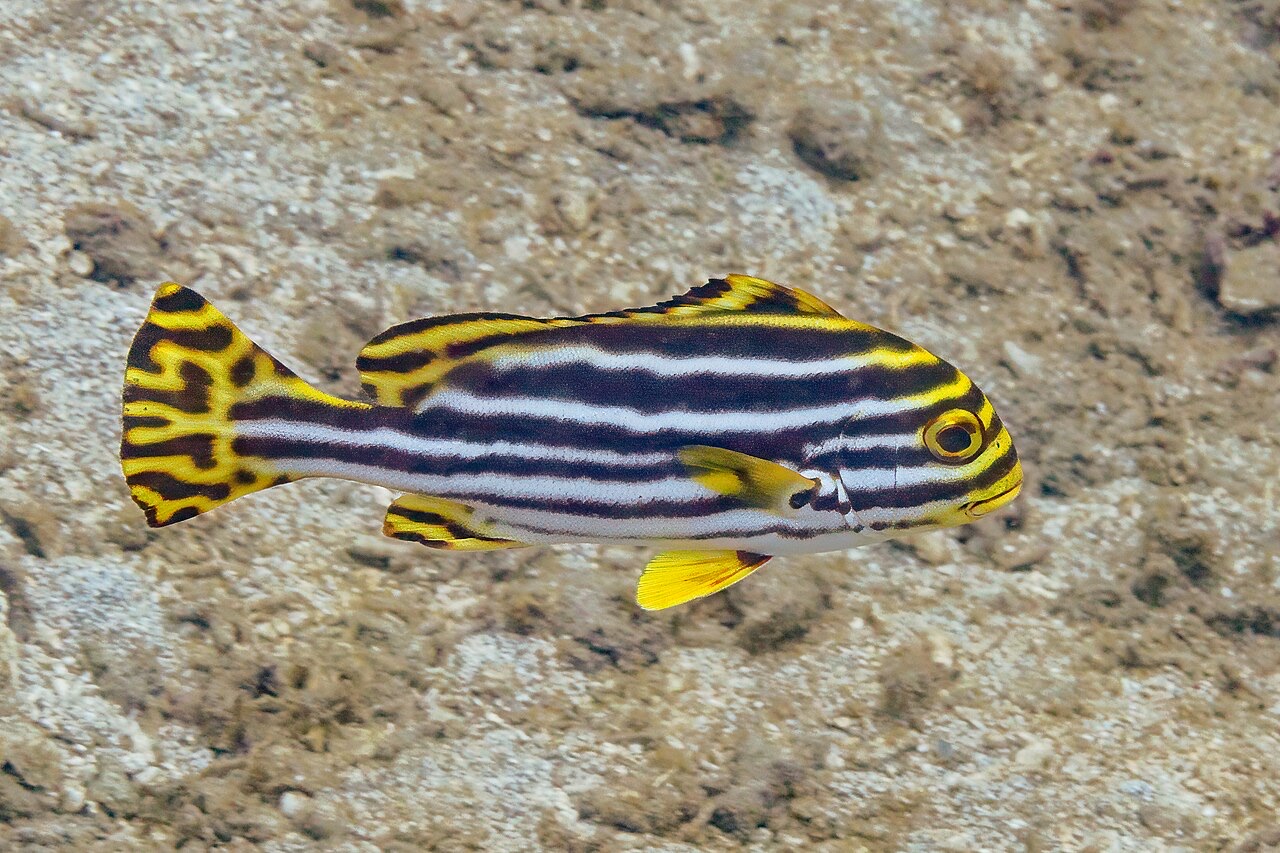
Oriental Sweetlips
También registrado cerca
Las especies "aquí registradas" fueron añadidas por nuestros editores a partir de las fuentes de esta página. Los recuentos son registros de ocurrencia de GBIF: observaciones anotadas en un radio de unos 5 km de la posición registrada desde 1990, cotejadas únicamente con las especies de nuestro catálogo. Muestran lo que se ha avistado allí, no una garantía de lo que verás.
Para fotógrafos
Gran angular: ★★★★★ · Macro: ★☆☆☆☆ (valoración de 1 a 5 de los editores sobre lo que ofrece este sitio para cada estilo de fotografía)