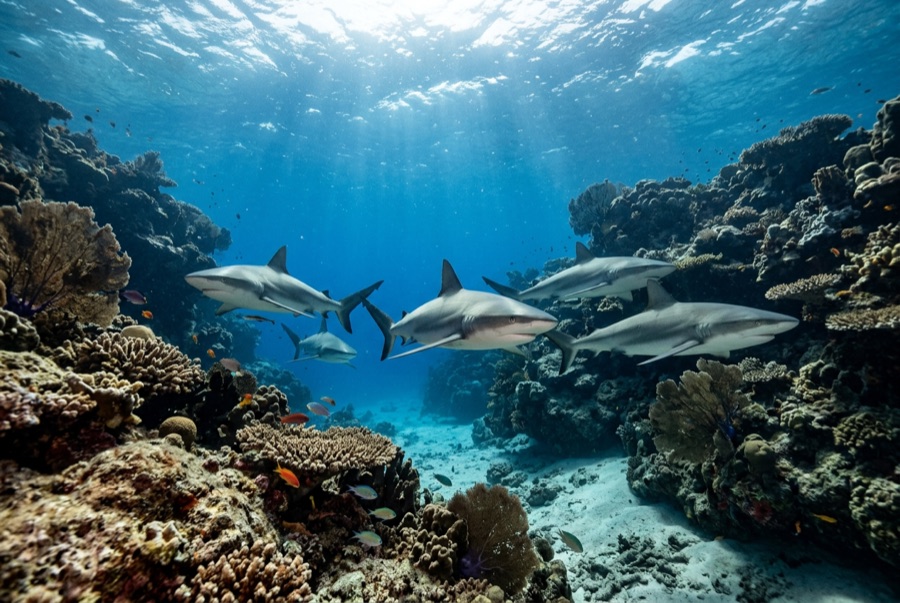
Tumakohua Pass
La profundidad es el rango desde la cima del punto de buceo hasta su máximo habitual; la "certificación recomendada" es el nivel que los operadores suelen pedir según las agencias principales, no una norma legal. Las corrientes y la visibilidad cambian a diario, así que trata todo esto como rangos de planificación.
The wall of sharks is not a figure of speech. On the ocean shoulder of Fakarava's south pass, gray reef sharks hold station in the incoming current by the hundred: layered ranks filling the water column from the shelf down the drop, more sharks in one visual field than most divers see in a career. You settle behind a coral rib, watch the wall shift and breathe, then release into the flow and ride over groupers, snapper, and pink coral gutters to the village jetty. Around the June–July full moons, thousands of spawning camouflage groupers pack the channel and the night dives among hunting sharks become the most intense guided diving in French Polynesia.
El momento por el que vienes: The gray reef shark wall; the grouper aggregation and night hunts around mid-year full moons; a drift finish at Tetamanu's jetty.
Topografía: A narrow reef channel with a coral shelf, a stepped drop-off, and pink-sand gutters running to the lagoon
Corriente: Tidal; the incoming phase gives clear water and the classic dive, finishing over the shallows by the village jetty.
Entrada: Dived from the tiny Tetamanu village at the pass mouth or from liveaboards; drop on the ocean side and ride the incoming tide up the channel.
Lo que debes saber antes de tirarte al agua
Riesgos: Strong current with an outgoing phase that sweeps toward open ocean: dive the right tide; night dives among actively hunting sharks demand tight discipline.
Conservación: A UNESCO biosphere core area and shark sanctuary: no feeding, no touching, and night hunts only with the local guides who set the protocols.
Nitrox: Vale la pena aquí: los perfiles están en el rango donde el nitrox amplía de forma significativa el tiempo sin parada (con la formación necesaria para usarlo).
A quién encontrarás
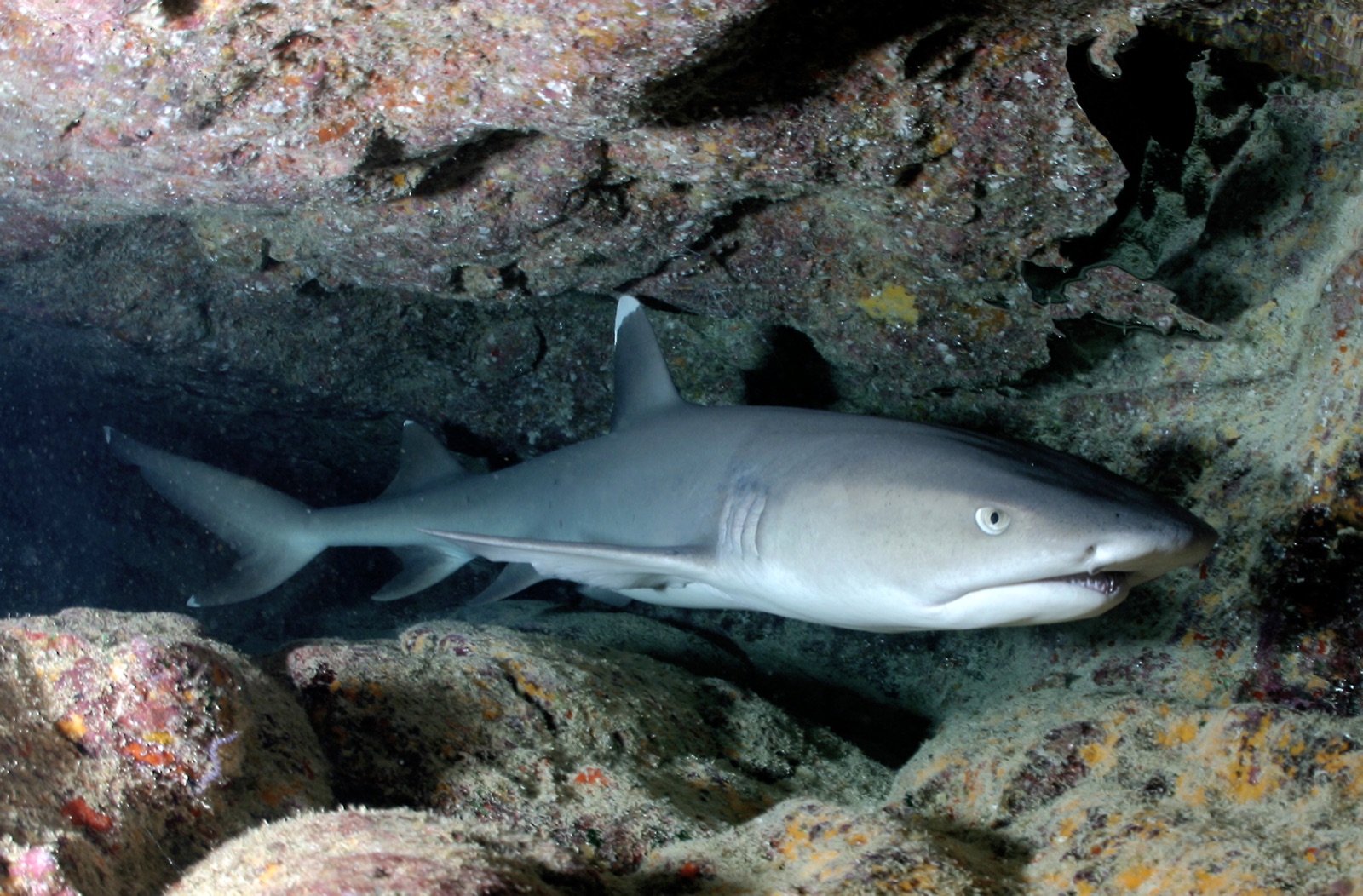
Whitetip Reef Shark
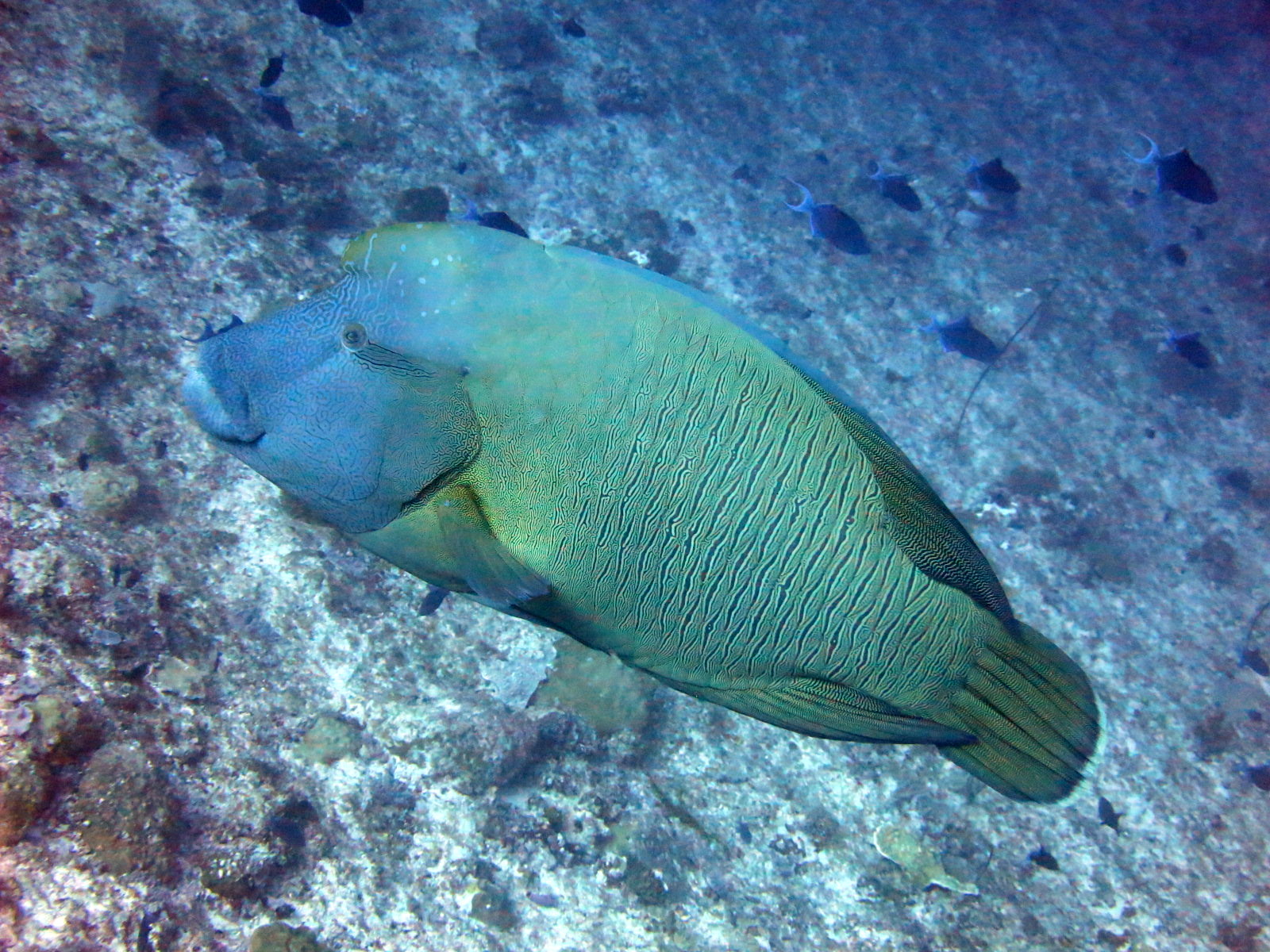
Napoleon (Humphead) Wrasse
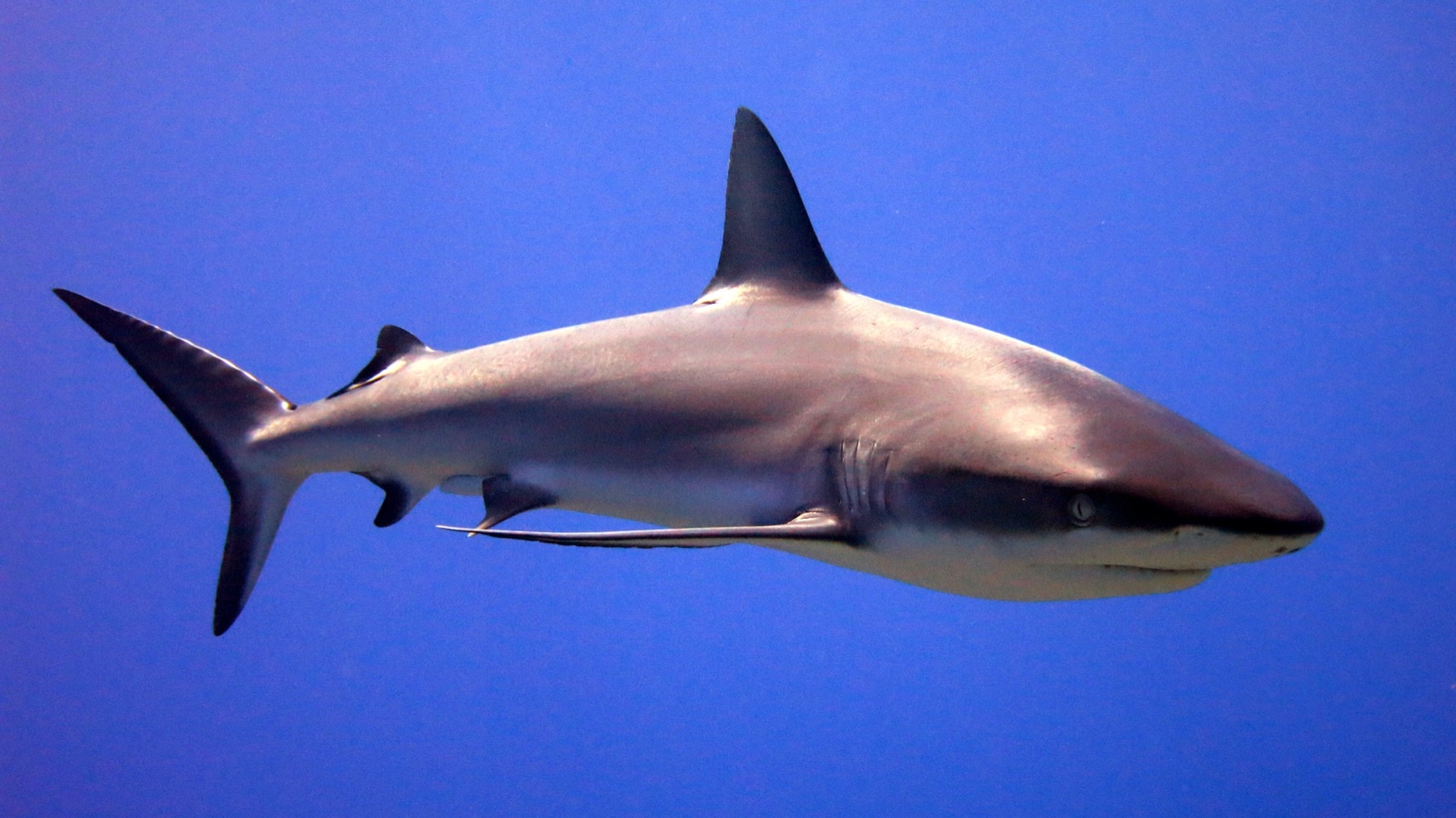
Grey Reef Shark
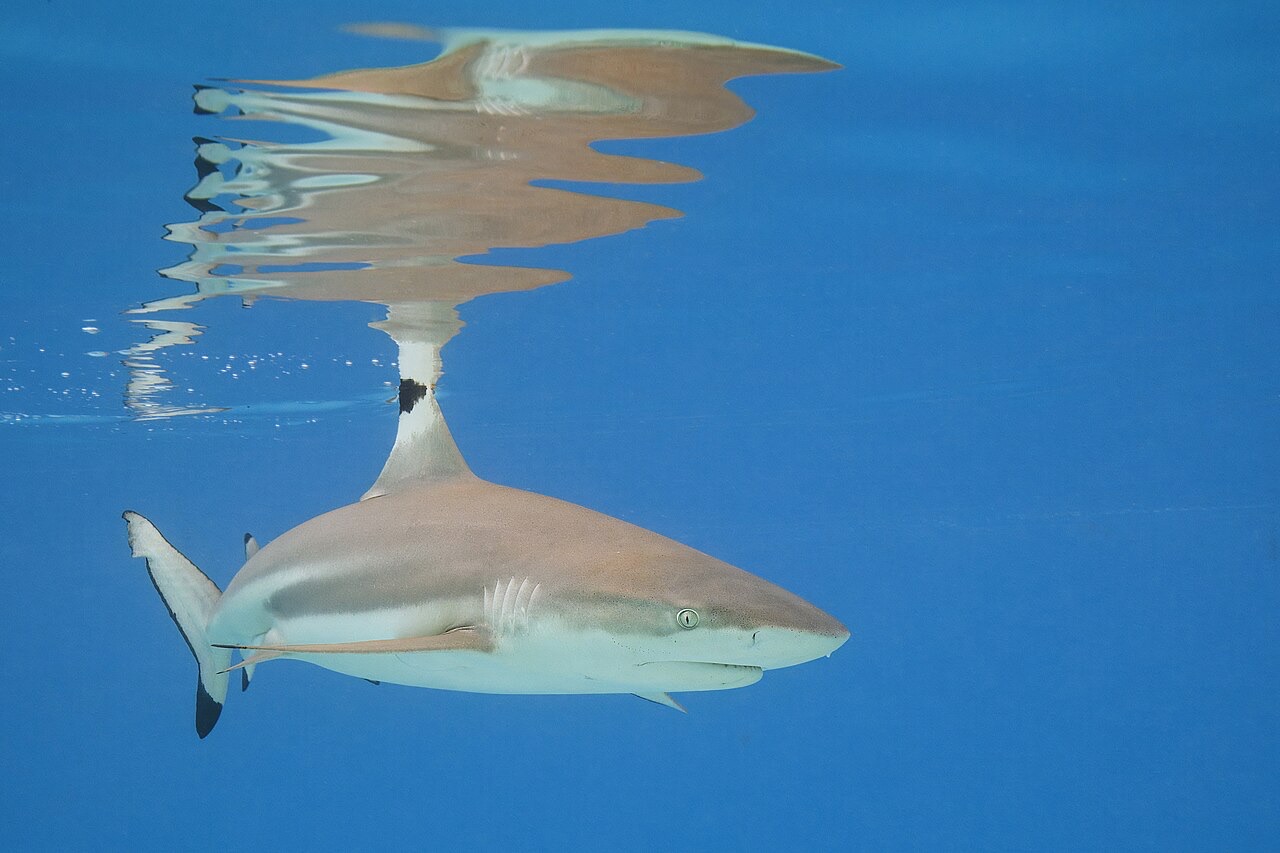
Blacktip Reef Shark
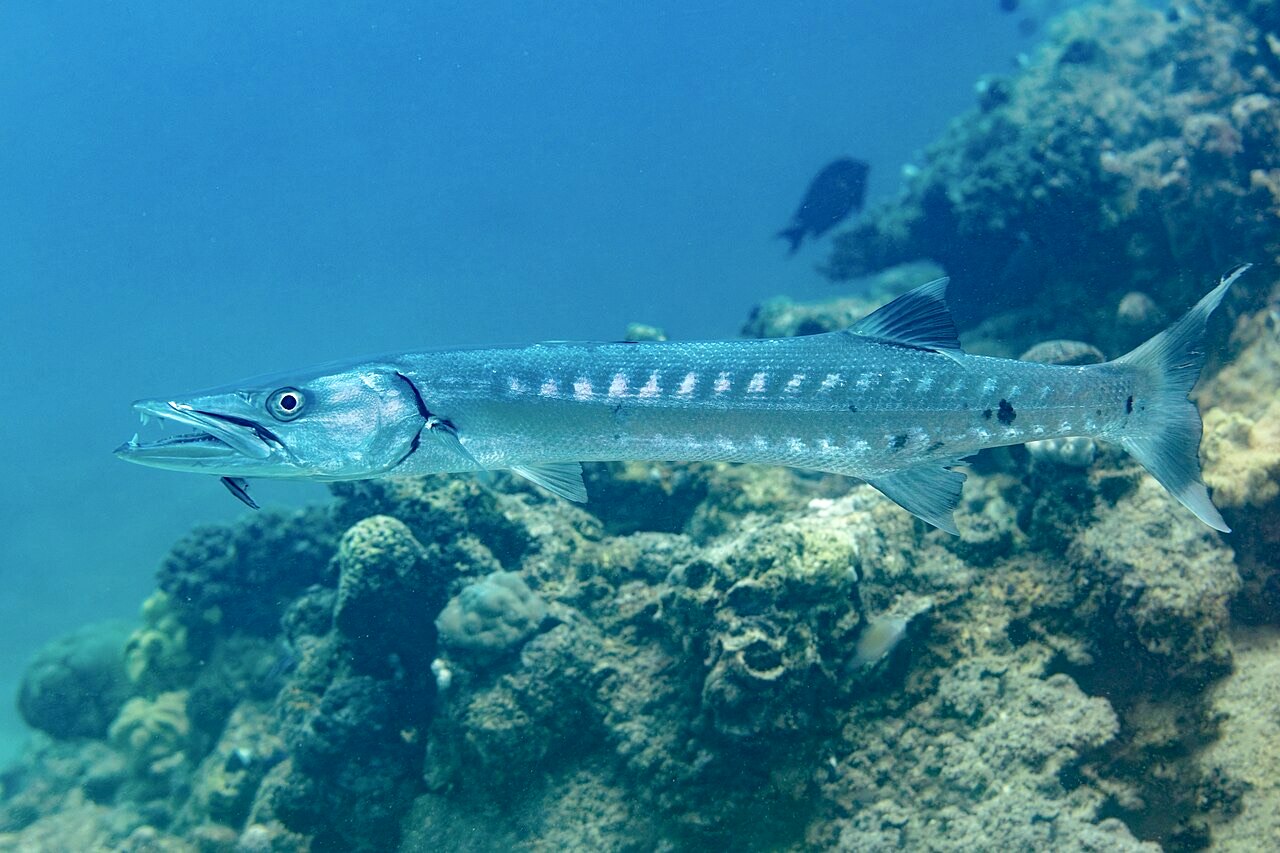
Great Barracuda
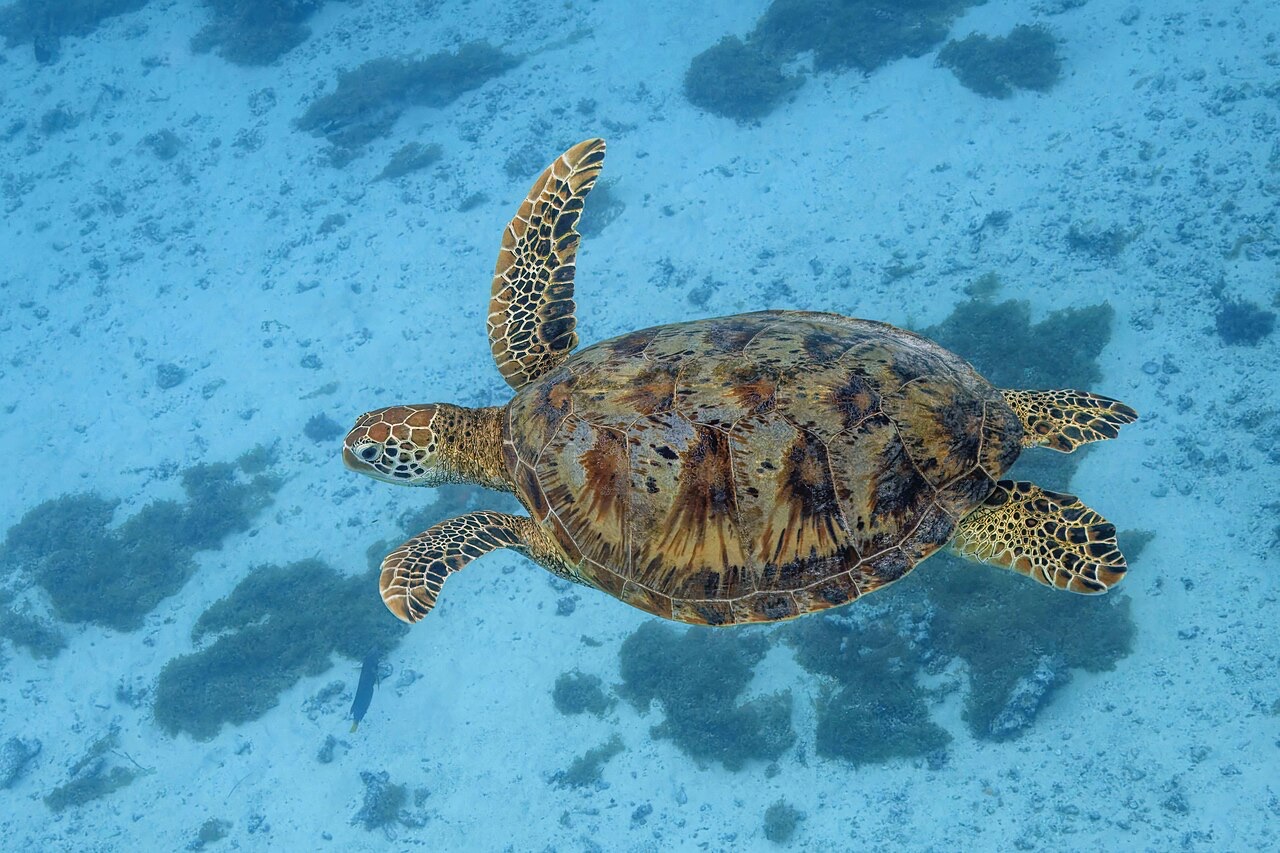
Green Sea Turtle
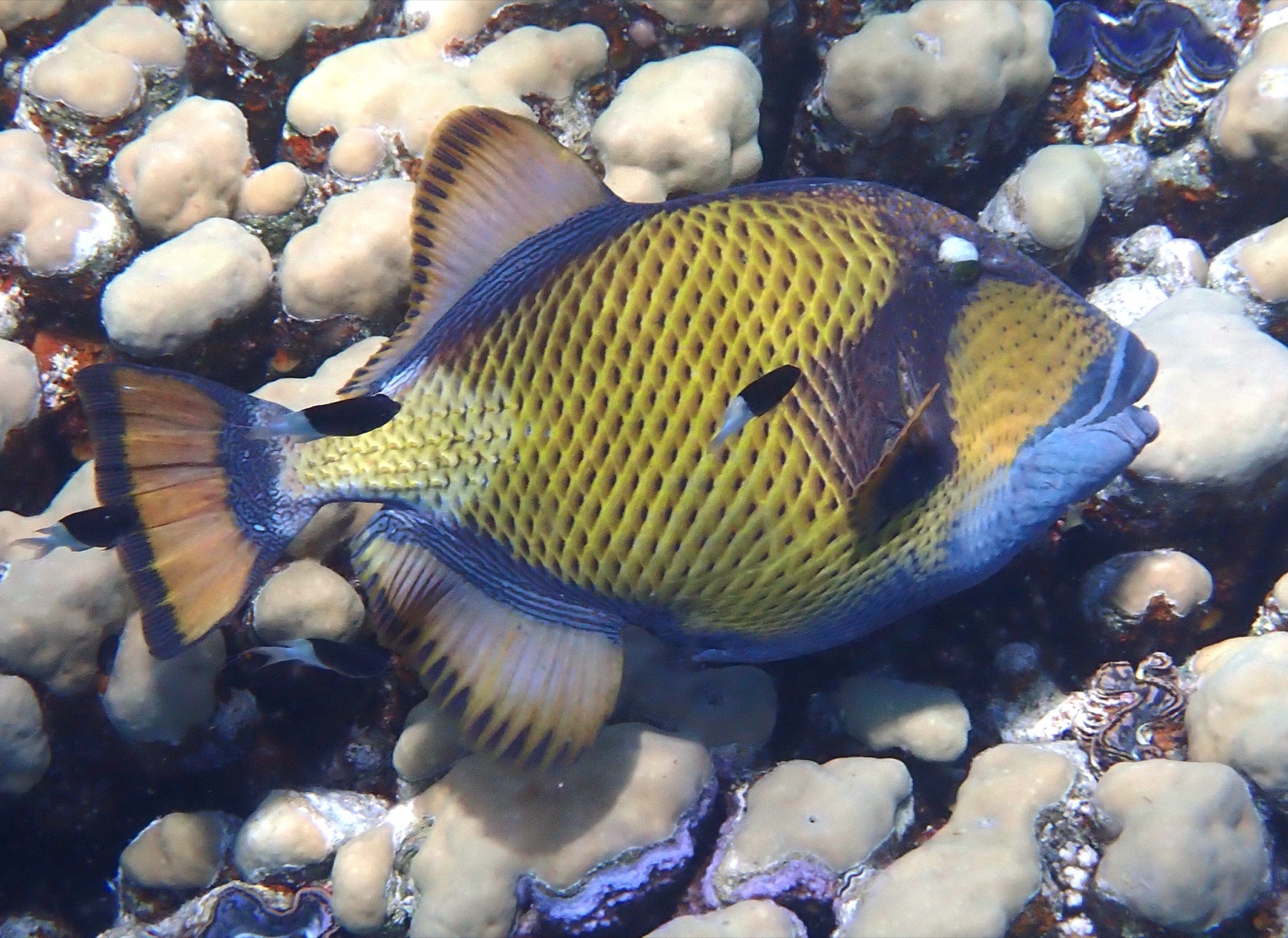
Titan Triggerfish
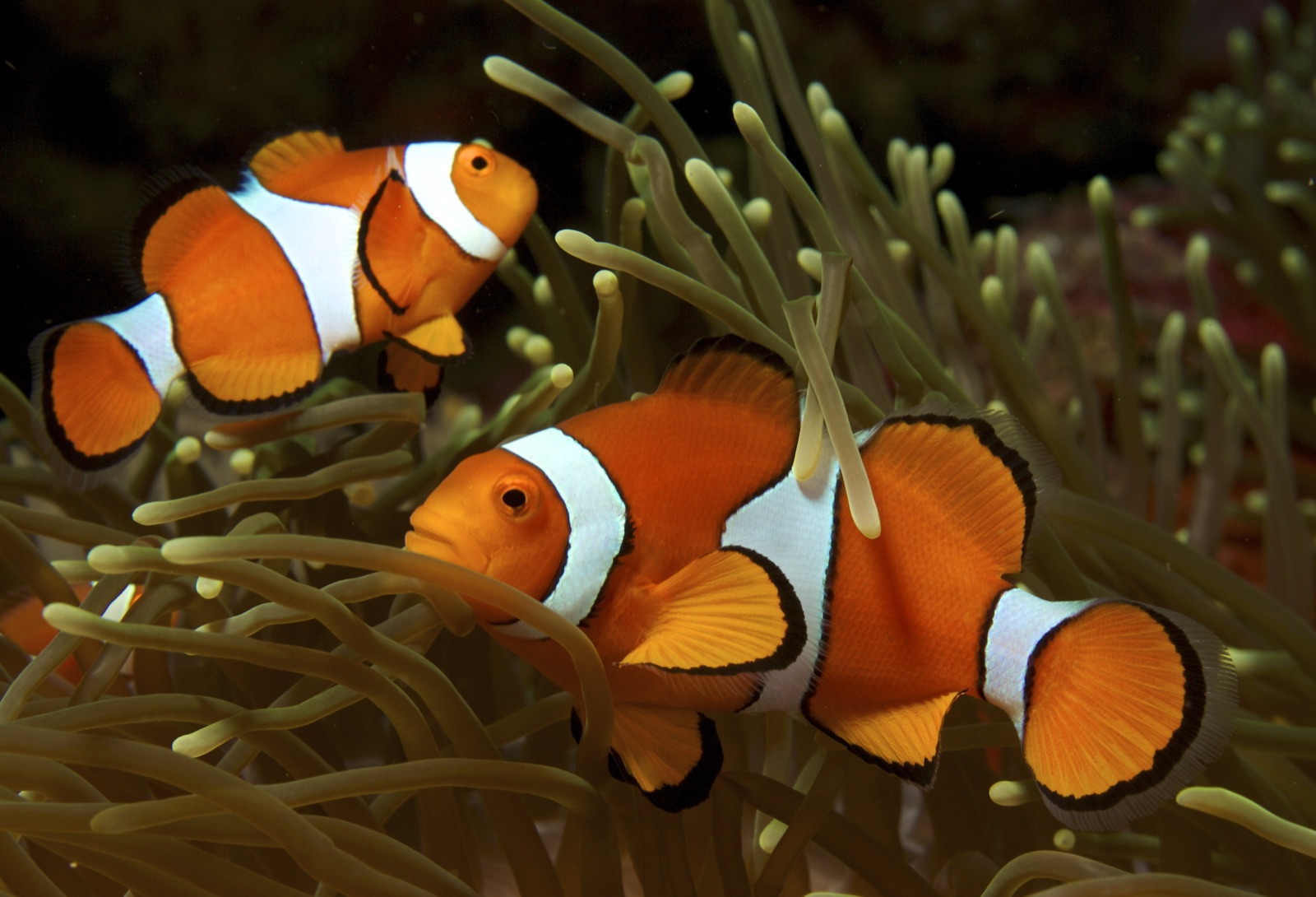
Clownfish & Anemonefish
También registrado cerca
Las especies "aquí registradas" fueron añadidas por nuestros editores a partir de las fuentes de esta página. Los recuentos son registros de ocurrencia de GBIF: observaciones anotadas en un radio de unos 5 km de la posición registrada desde 1990, cotejadas únicamente con las especies de nuestro catálogo. Muestran lo que se ha avistado allí, no una garantía de lo que verás.
Para fotógrafos
Gran angular: ★★★★★ · Macro: ★☆☆☆☆ (valoración de 1 a 5 de los editores sobre lo que ofrece este sitio para cada estilo de fotografía)